
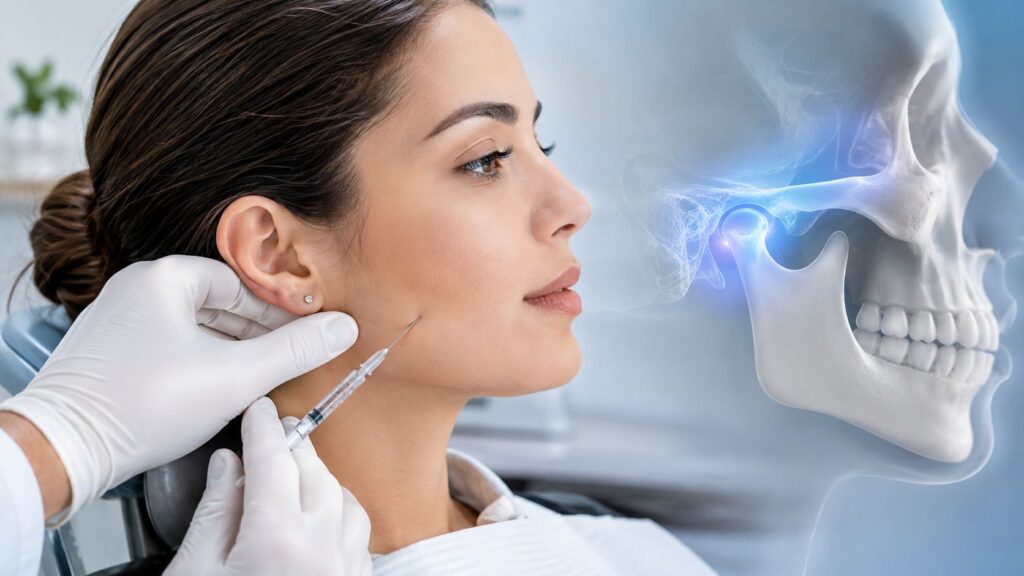
Waking up with a tight jaw, a dull headache behind the eyes, and a tooth that suddenly feels sensitive can make the whole morning feel off before the day has even started. For many Scottsdale patients, that pattern points to TMJ-related muscle strain, not a dental emergency in the traditional sense, but it still deserves real attention. Botox for TMJ pain is one option that comes up often, and the honest answer is that it can help the right patient, but it is not a cure-all and it works best when it's part of a broader jaw-care plan.
At a TMJ-focused dental practice, the goal is to sort out what's driving the pain, whether that's clenching, grinding, joint irritation, or a mix of factors. This guide lays out how Botox works, who tends to benefit, what the evidence says, what the appointment looks like, and how it fits with guards, habit changes, and other care in a Scottsdale setting. The point is simple, give readers a clear, practical path forward instead of hype.
When Jaw Pain Steals Your Morning
A patient rolls out of bed in North Scottsdale, opens the mouth to yawn, and feels a sharp pull in the cheeks and temples. The headache is already there, the teeth feel strangely tender, and chewing breakfast sounds like a bad idea before coffee even starts. That kind of morning is frustrating, and it's exactly the sort of pattern that sends people searching for Botox for TMJ pain.
TMJ and TMD problems are common enough that they don't always get treated early. One review notes that clinical signs appear in up to 60 to 70 percent of the population, yet only about one in four people report symptoms and only 5 percent seek treatment (PMC review). In real life, that means a lot of people keep pushing through jaw pain, assuming it's just stress, a bad pillow, or a tough week.
What this guide covers
It helps to know what this therapy is, and what it isn't. Botox is not a magic fix for every jaw problem, and it's not the first answer for every patient. It is, however, a useful option for muscle-driven TMJ pain, especially when clenching and grinding keep overloading the jaw day after day.
Practical rule: if the pain feels tied to tight chewing muscles, morning soreness, or headaches that track with jaw tension, Botox may be worth discussing.
A good Scottsdale consultation should cover the mechanism, the expected time frame, the evidence, and the trade-offs. It should also cover what happens if the pain is coming from the joint, not the muscles, because that changes the treatment path completely. The most useful discussions are the ones that sound calm, specific, and realistic.
What TMJ and TMD Actually Mean
The temporomandibular joint, or TMJ, is the hinge that connects the jawbone to the skull. It works with the masseter, temporalis, and other muscles to let a person chew, speak, yawn, and clench. TMD, or temporomandibular disorders, is the broader term for the pain, stiffness, clicking, and dysfunction that can involve the joint itself, the muscles around it, or both.
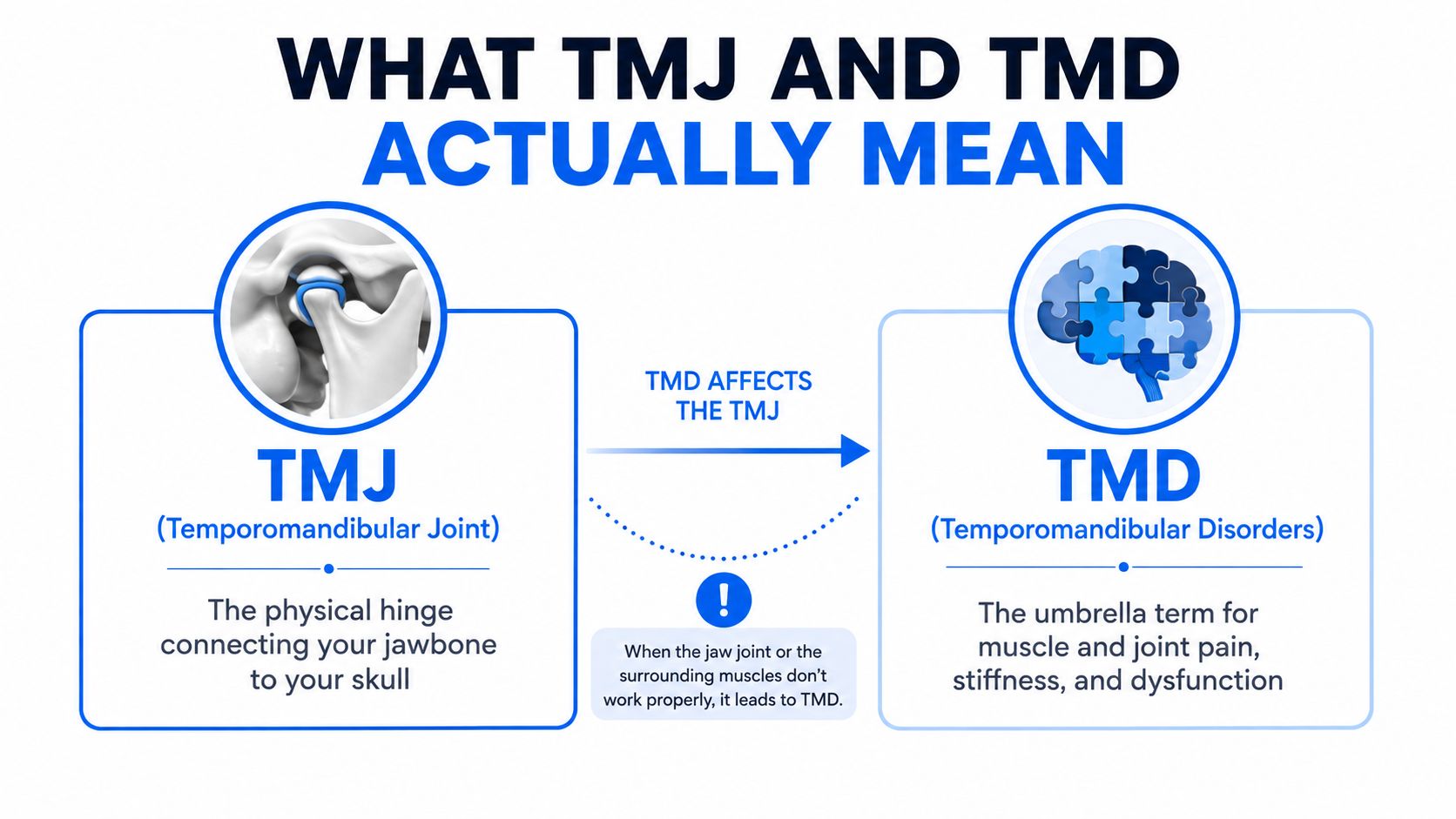
The simplest way to think about it is this. The jaw is a heavily used hinge with powerful cables attached to it. If those muscles are doing too much work, the hinge gets loaded over and over, and the whole system can start to complain.
Common drivers behind the pain
Three patterns show up repeatedly in the chair. First is muscle overload from clenching and grinding, also called bruxism. Second is joint inflammation or disc displacement inside the hinge. Third is injury or arthritis, which can make the joint itself more sensitive and stiff.
The symptoms are often familiar, even when patients don't know the label. Jaw soreness in the morning, headaches, ear fullness, clicking or popping, limited opening, and tooth sensitivity from wear are all common complaints. When those symptoms cluster together, the muscle component matters because it's exactly where Botox can have a role.
For patients who want a plain-language overview of TMJ care, the clinical approach is usually start with the driver, not the symptom. That's why a focused evaluation matters before jumping into injections. A useful primer on that approach is available at TMJ pain information.
How Botox Relaxes an Overworked Jaw
Botulinum toxin type A, or BoNT-A, is a 150-kDa neurotoxin that works by cleaving SNAP-25 in presynaptic nerve terminals. In plain English, it blocks the signal that tells the muscle to contract, so less acetylcholine reaches the muscle and the jaw does not keep firing at the same overactive level.
Why that matters for clenching and pain
The main target muscles are usually the masseter and temporalis. When those muscles calm down, the jaw stops taking the same constant load from clenching and grinding. That does not erase the underlying habit by itself, but it can lower the mechanical pressure long enough for irritated tissues to settle.
Botox may also dampen pain-related chemicals such as glutamate, CGRP, and substance P, which helps explain why some patients notice fewer headaches along with less jaw soreness (mechanism review). The effect is like turning down the volume on a stereo that has been blasting for years. The music is still there, but the system gets a chance to recover.
The effect is temporary by design. That is not a flaw, it is the operating feature that makes repeat planning possible.
The expected window is usually about 3 to 6 months, with some clinical sources describing lower jaw-muscle force for roughly 3 to 4 months after injection (clinical source). That time frame matters because it helps a dentist plan follow-up, reassess symptoms, and decide whether the patient needs another cycle or a different strategy altogether.
Who Is a Good Candidate and What the Appointment Looks Like
The best candidates are usually adults with muscle-driven TMJ pain, chronic clenching or grinding, jaw-related tension headaches, or symptoms that linger even after a custom occlusal guard has been used consistently. Botox is less compelling when the main issue is a structural joint problem without much muscle involvement. That's why the exam matters more than the trend.
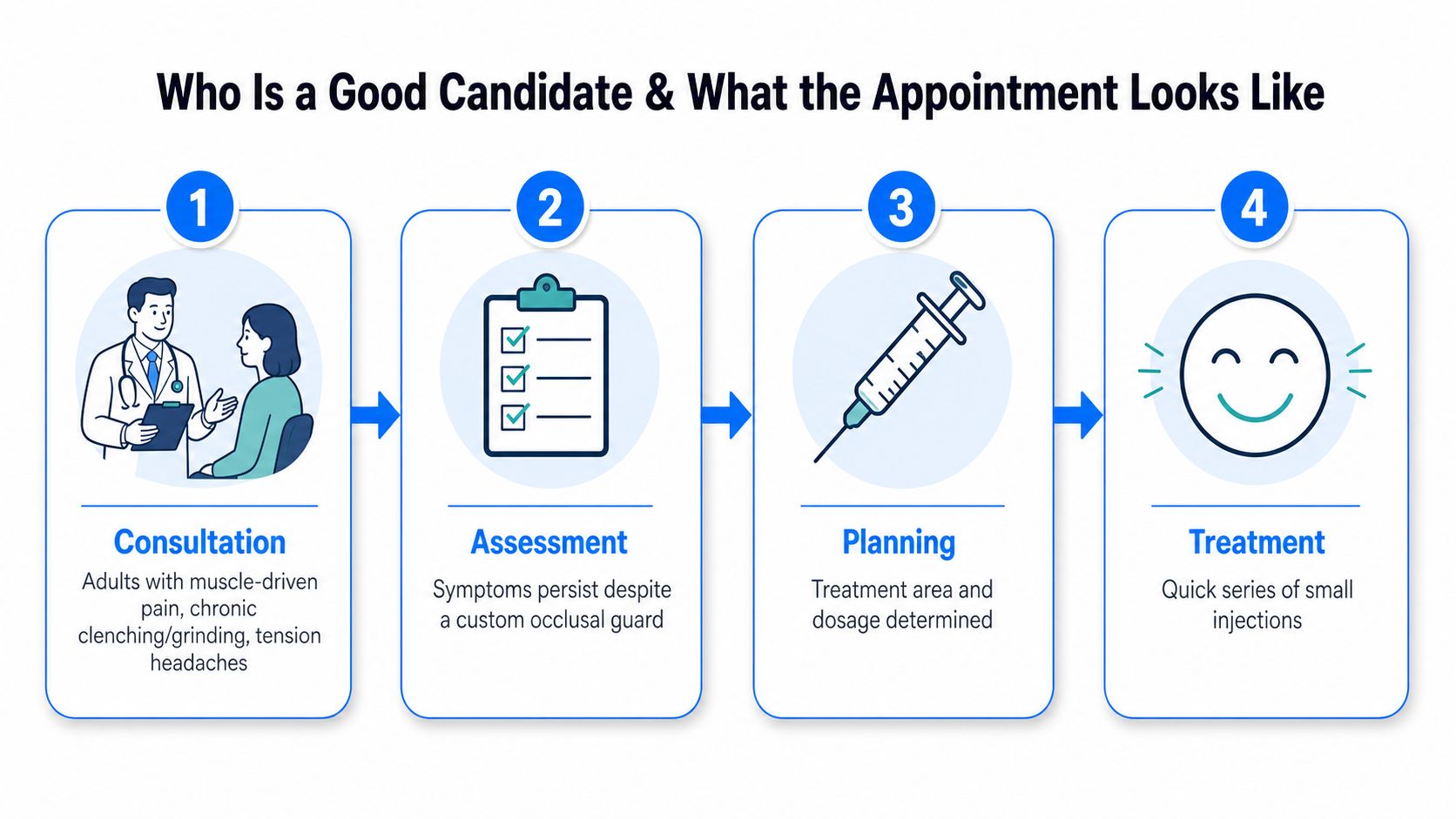
The visit itself is usually straightforward. A TMJ-focused exam includes a consultation, palpation of the masseter and temporalis muscles, and a discussion of whether the symptoms fit a muscle pattern. The clinician then marks the planned injection sites, reviews the dose, and performs a quick in-office series of small injections with a fine needle.
What tends to rule Botox out
Some situations call for caution or a different plan. Pregnancy is generally a reason to avoid treatment. Certain neuromuscular conditions, such as myasthenia gravis, can also make Botox inappropriate. A known allergy to botulinum toxin is another obvious red flag.
Published studies often place total dosing in the 60 to 100 unit range across both sides when the treatment is aimed at muscle-driven pain (2024 meta-analysis). That dose range doesn't replace clinical judgment, but it helps explain why treatment planning should be individualized instead of generic.
For patients comparing options in Scottsdale, the most important takeaway is that Botox is almost always part of a broader plan, not a standalone fix. If the jaw muscles are overworking because of sleep issues, daytime clenching, or stress habits, those drivers still need attention. The injection can calm the muscle, but the long-term plan should still address why the muscle is overworking in the first place.
What the Evidence Shows
Botox for TMJ pain is off-label in the United States because the FDA has not approved it for temporomandibular disorders (Cleveland Clinic overview). That matters because the marketing around this treatment can sound more certain than the science supports. The evidence has improved over time, but it still leaves real room for judgment in the chair.
Mixed results, then a more positive newer review
A 2019 meta-analysis of 12 randomized controlled trials found BTX-A was only slightly better than placebo at 1 month, with a mean difference of −1.74 points on a 0 to 10 pain scale in 60 participants. It showed no significant benefit at 3 or 6 months, and the authors concluded the evidence was insufficient to support routine use for painful TMDs (2019 meta-analysis).
A 2024 meta-analysis of 15 randomized controlled trials involving 504 participants reported significant pain reduction versus placebo at 1 month with MD −1.92 and at 6 months with MD −2.08. The same analysis found that bilateral doses of 60 to 100 units were associated with greater 6-month pain reduction, with MD −2.98 (2024 meta-analysis).
| Evidence snapshot for Botox in TMJ muscle pain | Trials | Participants | Key finding |
|---|---|---|---|
| 2019 meta-analysis | 12 RCTs | 60 in the cited pain analysis | Slight 1-month benefit, no clear 3- or 6-month advantage (2019 meta-analysis) |
| 2024 meta-analysis | 15 RCTs | 504 | Pain reduction at 1 and 6 months, stronger results at 60 to 100 bilateral units (2024 meta-analysis) |
That newer pattern is more encouraging, but it still does not settle every question. Trial quality, injection patterns, and patient selection all matter. In practice, I look at Botox as one part of a broader TMJ plan, especially when muscle overuse is driving the pain.
What outcomes patients care about
Clinical data can also show broader symptom relief. In one ClinicalTrials.gov study, 85 percent of patients reported improvement in pain with opening the mouth, 90 percent improved pain with chewing, 75 percent improved joint clicking or noise, and 70 percent had headaches improve or disappear (ClinicalTrials.gov study). The investigators described the treatment as having minimal adverse effects.
The practical takeaway is balanced. Evidence is growing and more favorable for some patients, but results still vary, and the long-term picture with repeat treatment is not fully settled. That is why I talk about Botox alongside occlusal guards, physical therapy, and the habits or sleep issues that keep the jaw muscles switched on. For readers comparing protection options, night guard guidance is a useful place to start, and patients who want a parallel look at another pain condition can read these Botox migraine treatment insights.
Comparing Botox With Other TMJ Treatments
Botox should be judged alongside the other tools that move the needle for jaw pain. For most bruxism-driven cases, a custom occlusal guard remains the foundation because it protects teeth from wear and reduces load on the joint. If the patient never wears the guard, Botox has less to work with.
Where each option fits
Physical therapy helps when the problem includes tight neck, face, or jaw muscles, limited opening, or postural strain. Behavioral habit reversal matters when daytime clenching or chewing habits keep re-triggering symptoms. Those approaches don't fight the jaw, they retrain the system around it.
NSAIDs and muscle relaxants can help during a flare, but they're usually not a long-term answer by themselves. Steroid or hyaluronic acid injections make more sense when the joint itself is inflamed. Surgery belongs to the much smaller group with structural problems that don't respond to conservative care.
Botox tends to work best as a bridge, especially when muscle overload is the loudest part of the picture.
A Scottsdale patient looking for a conservative starting point often asks about night protection first, and that's sensible. For readers who want the basics on protecting teeth from grinding, see night guard guidance. In practice, the strongest plans usually layer treatments instead of betting everything on one injection.
Risks, Side Effects, Costs, and Long-Term Use
Most side effects are mild and temporary. Common complaints include bruising at the injection site, mild chewing weakness, soreness, and a brief headache. Less common effects can include a temporary change in smile symmetry, dry mouth, or flu-like symptoms. Those reactions are usually short-lived, but they should still be discussed before treatment.
The long-term question people ask most
The biggest issue isn't just whether Botox can help this month. It's whether repeated TMJ cycles stay helpful over time and whether ongoing injections could weaken chewing muscles or affect bone. The evidence base still doesn't clearly establish long-term benefit or harm from repeated use for TMJ pain, and reviews note that the trials have been small, short, and inconsistent (review on longer-term uncertainty).
That uncertainty is why repeat treatment should be planned, not automatic. A patient should know what symptom change counts as success, how long the relief lasted, and whether the jaw still needs support from a guard, physical therapy, or sleep-related care. For some patients, Botox functions as a symptom-management bridge while the underlying drivers are being addressed.
Cost and insurance realities
In practical terms, Botox for TMJ pain is often a few hundred to over a thousand dollars per session, depending on dose and treatment area. Because it's off-label for TMD, many insurance plans do not cover it, though some medical policies may partially cover it when tied to documented migraine or muscle spasm diagnoses. That's where a thoughtful front desk team matters, because patients need realistic numbers before they commit.
For patients who want the broader chronic pain lens, this resource on chronic pain management is a helpful reminder that the best plan often mixes treatment, pacing, and habit changes rather than relying on one fix. At the practice level, Eric Wiitala DDS also helps patients work through insurance, financing, and expectations without making coverage sound better than it is.
Aftercare, Realistic Results, and Scheduling in Scottsdale
After the injections, the first day is usually simple. Patients are commonly told to avoid rubbing the area and to skip intense workouts briefly. Symptoms may start to ease after about a week, while the fuller effect is often felt within two to four weeks. That timeline matters because it keeps expectations grounded.
What patients tend to notice is less clenching, fewer morning headaches, easier chewing, and quieter joint noise. The effect then lasts several months before a repeat session is considered. The best results usually show up when Botox is paired with a custom occlusal guard, sleep or bruxism evaluation, and better home habits, because the muscles don't stay relaxed forever on their own.
What Scottsdale patients can expect
Eric Wiitala DDS in North Scottsdale keeps TMJ care practical and local. The office is at 9755 North 90th Street, Suite B250, Scottsdale, AZ 85258, with Monday through Thursday hours and Friday by appointment. The practice also takes a view that includes nutritional and sleep-related contributors, and it brings more than two decades of experience treating TMJ disorders and bruxism.
That kind of care is useful because jaw pain rarely lives in one box. A patient may need a guard, a bite review, sleep appliance discussion, restorative dentistry, or therapeutic Botox, depending on what's driving the strain. A thoughtful consultation sorts that out before treatment starts.
Schedule a TMJ consultation when jaw pain keeps returning, morning headaches keep showing up, or clenching is wearing down teeth faster than it should. A direct exam can clarify whether Botox makes sense, or whether another part of the TMJ plan should come first.
Eric Wiitala DDS offers TMJ assessments, custom occlusal guards, and therapeutic Botox for jaw muscle symptoms at its Scottsdale office. If jaw pain, clenching, or morning headaches keep interrupting daily life, visit Eric Wiitala DDS to schedule a consultation and get a clear, local treatment plan.