
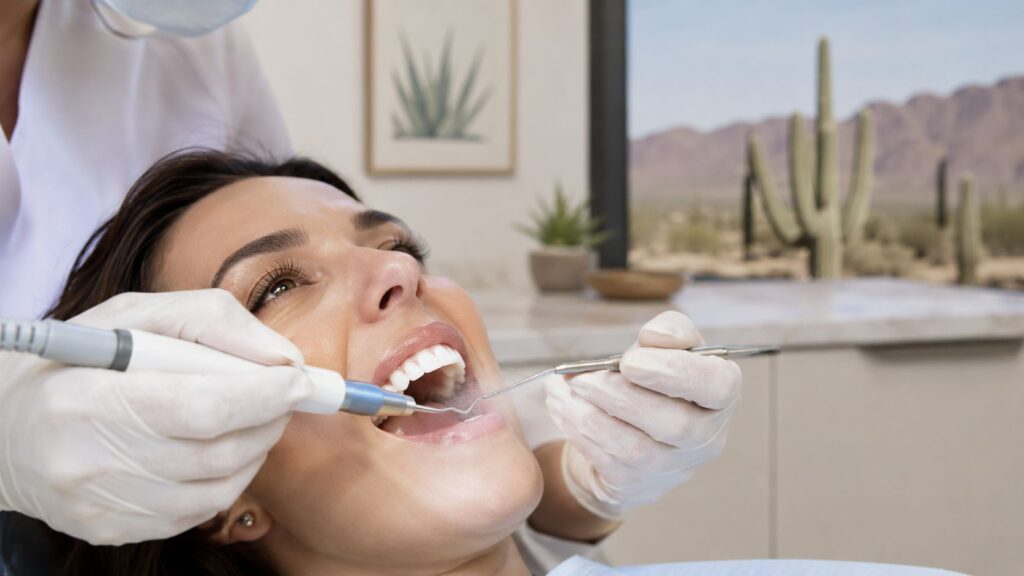
You're sitting in a Scottsdale dental chair, wondering whether the appointment will be uncomfortable, whether the cleaning is really necessary, or whether brushing and flossing at home should be enough. Those are reasonable questions, especially if it has been a while since the last visit or the gums bleed when floss finally reaches them.
A professional teeth cleaning is more than a cosmetic polish. It's a preventive visit that helps a dental team remove hardened buildup, evaluate the gums and teeth, and identify concerns before they become painful or require more involved care. For adults across Scottsdale, it can also be the first practical step toward a complete dental plan, whether that plan involves routine maintenance, gum disease therapy, teeth whitening, restorative dentistry, or an evaluation for dental implants near me.
What Professional Teeth Cleaning Really Means in Scottsdale
A patient arrives at a Scottsdale practice with a rough spot behind a lower front tooth, coffee staining near the gumline, or mild sensitivity in one back tooth. Another may feel completely comfortable. Those details still matter, because they help the hygienist decide where to focus and what questions to ask.
Professional cleaning removes plaque, calculus, and surface stains from above and, when appropriate, just below the gumline. Plaque is soft and can be controlled with brushing and cleaning between the teeth. Calculus, also called tartar, is hardened mineralized plaque that home care cannot safely remove once it has bonded to a tooth.
Scaling uses ultrasonic or sonic instruments and hand tools to loosen and remove calculus. Polishing follows with a low-speed instrument and fine-grit paste, mainly to remove residual surface deposits and stains. Polishing can smooth the tooth surface, but it does not replace scaling or daily plaque control. The FDI chairside guidance explains the clinical purpose of scaling and the proper role of polishing.
Why the Scottsdale setting matters
Scottsdale routines vary widely. Outdoor exercise, restaurant meals, coffee, wine, and Arizona's dry climate may affect comfort, hydration, staining, or how easily plaque collects. These habits do not automatically cause dental disease. A patient who mouth-breathes during exercise, takes medication that causes dry mouth, or sips coffee throughout the day may need different home-care advice from someone with another routine.
The visit also gives the dental team a chance to assess the mouth rather than treat every appointment as a quick polish. Depending on the findings, the dentist may review gum measurements, bite changes, tooth wear, fillings, and areas needing closer attention. X-rays may be recommended when they can clarify concerns that a visual examination cannot show. At a Scottsdale practice, the first-visit process may connect cleaning, examination, and appropriate imaging into one broader assessment.
For dental practices explaining local services clearly, RecensioAI B.V. for dental clinics offers guidance on helping patients understand what to expect before booking.
A professional cleaning is routine care with a practical purpose. It creates a clearer starting point for risk-based recall planning, comfortable home care, and decisions about whether routine maintenance is enough or further evaluation is needed.
What Happens Step by Step During a Cleaning Visit
You arrive at a Scottsdale office unsure whether the visit will involve a quick polish or a closer assessment. Knowing the sequence makes the appointment easier to understand. The order can change with your findings, but a routine cleaning usually follows several familiar steps.
The early checks
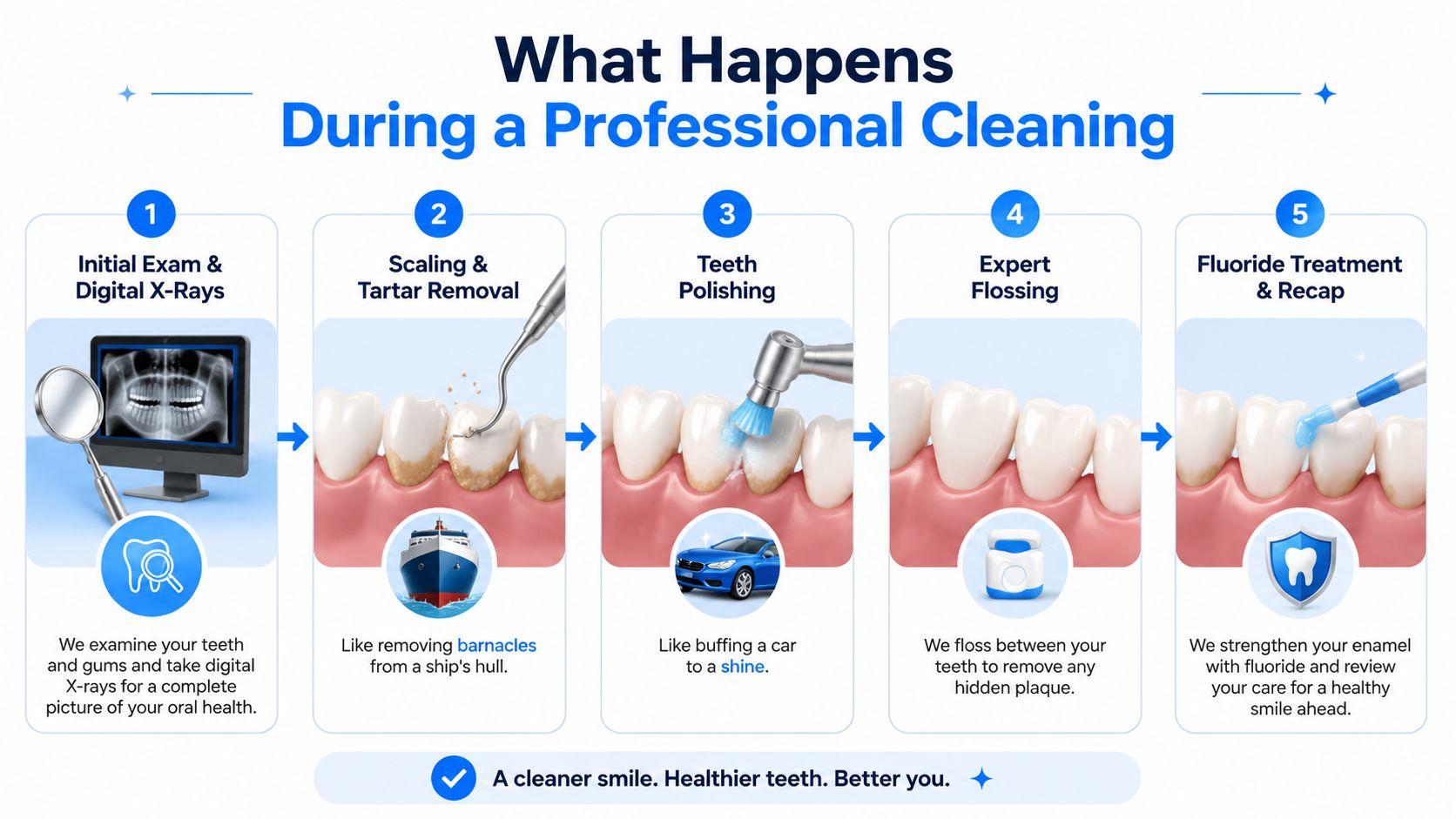
Health history review. The team confirms medications, allergies, medical conditions, dental concerns, and recent changes. Diabetes, pregnancy, blood-thinning medication, dry mouth, and previous gum treatment may affect how the visit is planned.
Visual examination and screening. The hygienist examines the teeth and soft tissues, while the dentist reviews findings that may require a diagnosis. An oral cancer screening is part of this broader assessment. Dental x-rays may be recommended when they can clarify decay, bone levels, or areas that cannot be seen during a visual examination.
Periodontal probing. A small measuring instrument checks the spaces around the teeth. You may feel gentle pressure, especially where the gums are tender. These measurements help the team distinguish routine maintenance from care for periodontal disease.
Removing buildup
Scaling is the main cleaning phase. An ultrasonic scaler can make a faint buzzing sound while spraying cool water. Its vibration helps loosen calculus, and the water flushes the area. Hand instruments provide more precise removal around tight surfaces and sensitive spots.
The process works like removing barnacles from a ship's hull. The goal is to remove deposits attached to the surface while preserving the structure underneath. In the mouth, careful instrumentation targets calculus while protecting the teeth and gum tissues.
Smoothing and finishing
Polishing follows scaling. A spinning rubber cup and gritty paste feel like a small buffing tool, smoothing the tooth surface after deposits and residue are removed. Polishing can reduce surface stains and leave teeth feeling clean, but more pressure is not better. The FDI chairside guidance explains the clinical purpose of scaling and the proper role of polishing, including the use of low-speed equipment and fine-grit paste because excessive polishing can create enamel microabrasions.
The hygienist then flosses between the teeth. This removes remaining debris and shows how tightly the contacts fit. Home flossing remains part of daily care, while professional flossing can reveal bleeding, tight contacts, rough fillings, or places where your technique needs adjustment.
Fluoride may be recommended when your risk profile supports it. The visit ends with a dentist exam, time for questions, and practical home-care guidance. A routine appointment commonly takes roughly 45 to 60 minutes, although the length depends on the amount of buildup, the examination, and whether additional care is needed.
The following video provides another visual explanation of the process:
Routine Cleaning Versus Periodontal Maintenance
A Scottsdale patient with healthy gums may leave with a routine cleaning plan, while a neighbor with treated gum disease receives periodontal maintenance. The instruments can feel similar, but the goals differ.
A routine prophylactic cleaning is designed for patients whose gums are healthy or stable without active periodontal disease. It removes plaque, calculus, and surface stains as preventive care. Periodontal maintenance is continuing therapy for someone with a history of gum disease, attachment loss, or bone loss after periodontal treatment. The aim is to monitor and control a disease process that can return.
The difference is similar to tidying a well-kept room versus checking a room that has needed repairs. Both involve cleaning, yet the second requires closer inspection and attention to areas that may need more work.
| Feature | Routine Prophylactic Cleaning | Periodontal Maintenance |
|---|---|---|
| Primary purpose | Preventive removal of plaque, calculus, and stains | Ongoing control after gum disease treatment |
| Typical patient | Healthy gums or stable low-risk condition | History of periodontitis, bone loss, or periodontal therapy |
| Instrumentation | Supragingival and limited subgingival cleaning as indicated | More structured subgingival instrumentation based on periodontal findings |
| Recall approach | Often about every six months for healthy adults | Frequently individualized at a shorter interval |
| Evaluation | Routine gum and tooth assessment | Repeated periodontal measurements and disease monitoring |
Maintenance may include more careful cleaning below the gumline, periodontal charting, localized treatment, and a shorter recall interval. Insurance may process the services under different codes, but the clinical findings should guide the recommendation, not the billing label alone.
Patients who want to review common gum findings before an appointment can read the practice's periodontal gum disease information.
The evidence supports a risk-based distinction. In adults without severe periodontitis, a research synthesis found little or no difference in gingivitis, probing depths, or quality of life over two to three years between scheduled six-month or twelve-month scale-and-polish visits and no scheduled scale-and-polish. The evidence review emphasizes that the value of cleaning depends on periodontal risk rather than a universal interval.
Clinical rule: A routine cleaning maintains a healthy situation. Periodontal maintenance manages a previous disease process.
Skipping recommended maintenance can matter even when the mouth feels comfortable. Inflammation and attachment changes may develop without pain. Ongoing periodontal assessments let the hygienist and dentist spot returning disease and adjust care before it becomes harder to control.
How Often You Should Actually Schedule a Cleaning
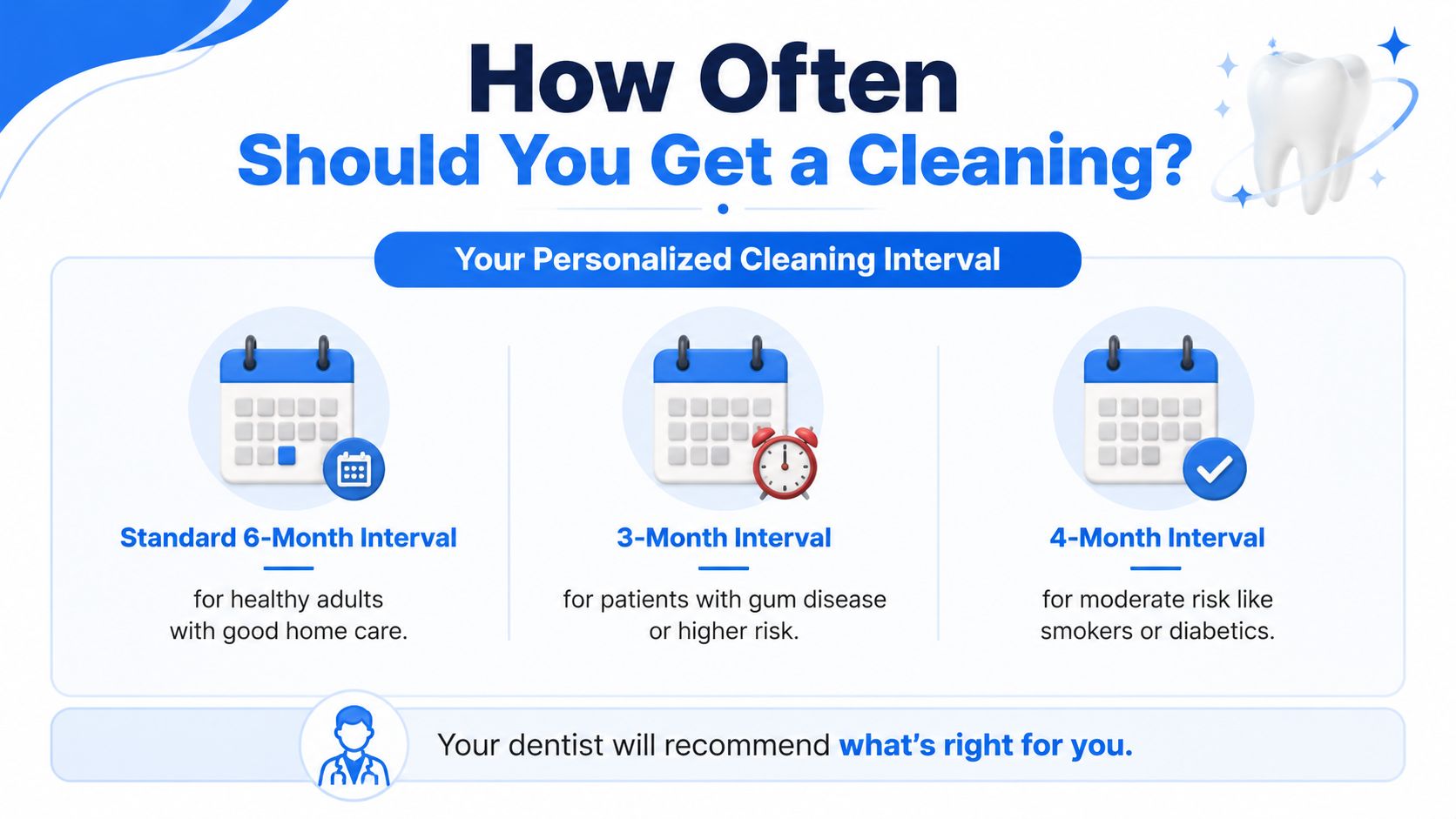
A six-month cleaning may suit a healthy adult, but it is a starting point, not a rule for every mouth. Your recall interval should reflect what the clinician finds, how quickly calculus returns, your periodontal history, and how consistently plaque is controlled at home. Cleveland Clinic describes this individualized approach to routine and higher-risk dental visits
Some adults do well with visits about every six months. Others need appointments every three to four months when gum inflammation, past periodontal disease, or other risk factors require closer follow-up. The schedule works like a feedback loop. Each examination supplies information that can confirm the interval or show that it needs to change.
A practical risk framework
A standard interval may fit when the gums are healthy, bleeding is minimal, home care is consistent, and tartar buildup remains limited. A shorter recall can make sense when the same concerns return between visits.
Factors that may support closer scheduling include:
- Previous gum disease: A periodontal history may call for maintenance visits rather than routine prophylaxis.
- Smoking or vaping: Tobacco exposure can complicate gum health and may mask bleeding, so professional assessment matters.
- Diabetes: Blood sugar management and gum inflammation can influence one another. Your dental team may coordinate recommendations with your broader care.
- Dry mouth: Medication-related dryness can make plaque control and decay prevention more difficult.
- Orthodontic appliances: Brackets, wires, and retainers add surfaces where plaque can collect.
- Dental implants: Implant care includes checking the surrounding tissues and reviewing home-care technique.
- Rapid tartar buildup: Some people accumulate calculus quickly despite careful brushing and interdental cleaning.
Children, pregnant patients, and people with cognitive or dexterity challenges may also need an individualized plan. Health changes, new medications, appliances, and changes in home-care ability can all alter the appropriate interval.
A quick self-check before booking
Bleeding gums, persistent bad breath, visible tartar, new sensitivity, or a long gap since your last examination are good reasons to contact the office. These signs do not set the recall interval by themselves, but they help the team plan the appointment and decide whether an examination should happen alongside the cleaning.
The check-up visit process at Dr. Eric Wiitala's office can help Scottsdale patients understand what to expect when they need an examination with their cleaning. The final recommendation should come from a hygienist or dentist who has examined your mouth, rather than from a fixed rule found online.
Benefits Beyond a Brighter Smile
A polished smile is the most visible result, but it's only one part of professional cleaning. Removing surface stains can make teeth look fresher, especially when coffee, tea, wine, or other staining foods have collected around uneven areas. Cleaning may also leave the mouth feeling smoother and breath feeling fresher.
The preventive value comes from what the team can remove and what the team can see. Plaque around the gumline contributes to inflammation, while calculus creates a rough surface that home brushing can't eliminate. Cleaning also gives the hygienist a chance to reinforce brushing and interdental care in the areas a patient consistently misses.
Finding small concerns early
A cleaning appointment can support a wider dental examination. The dentist may identify early decay, a cracked filling, enamel wear associated with bruxism, or changes between teeth that require dental x-rays. Soft-tissue changes can also prompt further assessment. When a patient reports snoring, poor sleep, or jaw discomfort, the discussion may expand to sleep-related breathing issues or TMJ evaluation.
This doesn't mean every cleaning detects a serious condition. It means the appointment creates a regular opportunity for trained professionals to notice changes that may be difficult for a patient to see at home.
Why prevention needs context
Professional cleaning shouldn't be marketed as a cure-all. A major evidence review found that, for adults without severe periodontitis, scheduled scale-and-polish appointments at fixed intervals produced little or no difference in several gum outcomes over two to three years compared with no scheduled appointments. That review supports risk-based scheduling rather than treating every patient identically.
The value may be more concentrated in patients with visible calculus, bleeding on probing, periodontal history, dry mouth, appliances, implants, or other risk factors. The ADA notes that systematic reviews haven't reached consensus on one optimal recall frequency for preventing cavities or periodontal disease because available studies are limited. The ADA's home-care guidance discusses the uncertainty around a single recall schedule.
A clean feeling is pleasant. A personalized maintenance plan is more useful.
Professional cleaning also shouldn't replace treatment when disease is present. Gum disease may require periodontal therapy, restorative care may be needed for decay, and a damaged or missing tooth may call for a crown, bridge, tooth extraction, or dental implants. Cleaning helps the team see which path fits the patient's mouth.
Preparing for Your Visit and Caring for Your Teeth Afterward
A first cleaning visit is easier when the team has the right information before you sit back in the chair. You do not need an elaborate preparation routine, and vigorous brushing right before the appointment can irritate your gums without changing what the hygienist needs to examine.
Before the appointment
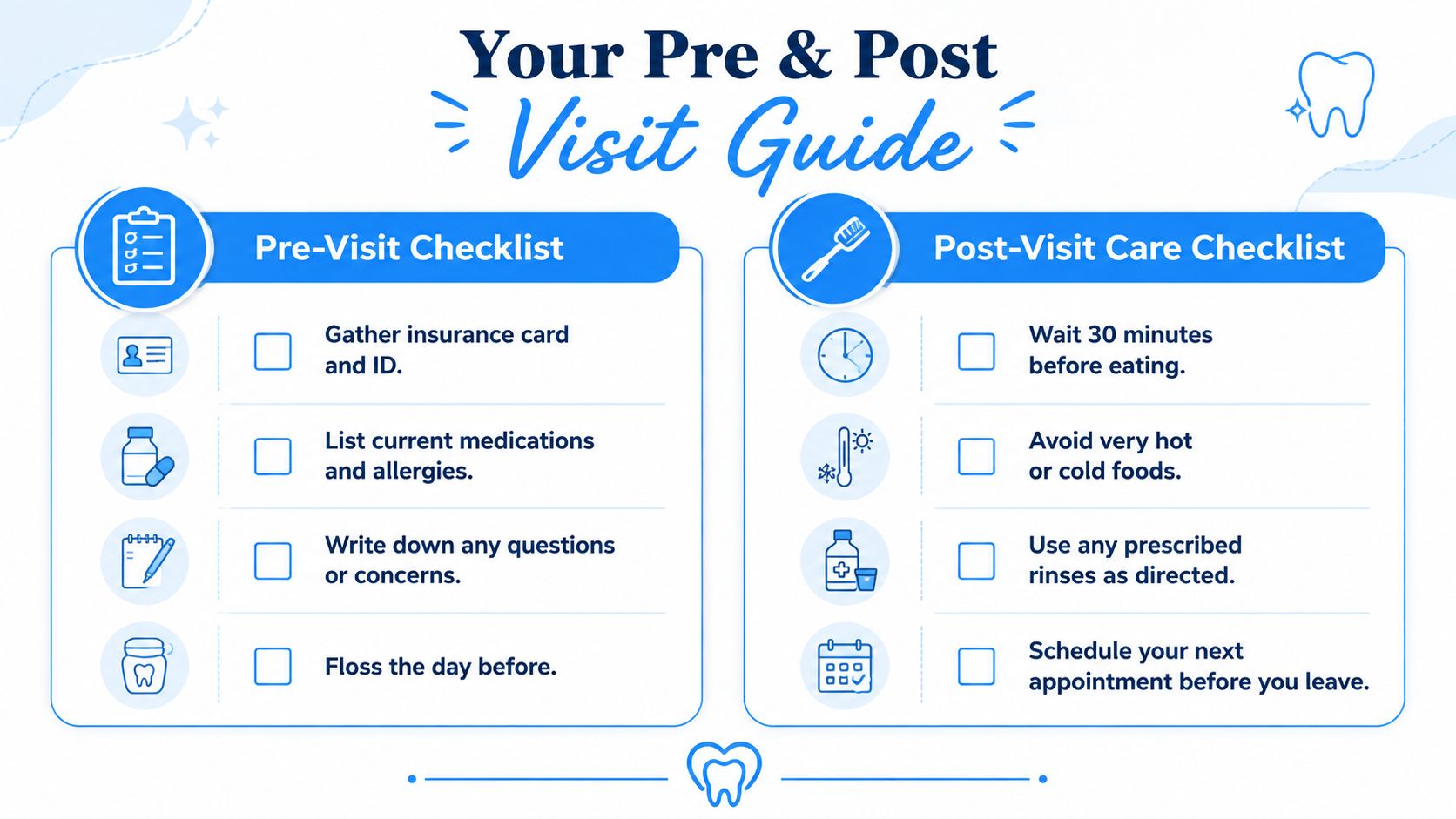
- Bring identification and insurance information: The front desk can update your records and review benefits.
- List medications and supplements: Include anything that may affect bleeding, allergies, dry mouth, or healing.
- Write down symptoms: Note bleeding, sensitivity, bad breath, jaw tension, tooth pain, or rough areas.
- Brush and floss normally: Gentle, consistent care gives a more useful picture than over-scrubbing.
- Arrive a few minutes early: Updated forms and medical history help the clinical team plan safely.
Bring questions about whitening, fillings, orthodontic aligners, dental implants, or emergency dental services. A cleaning visit is a good time to ask whether a concern can be addressed during the appointment or needs a separate consultation.
Insurance coverage varies by plan. Some plans include preventive cleanings at full benefit, while periodontal maintenance may use a different billing code and have different eligibility rules. Ask the office to verify benefits before treatment when possible. Financing may be available for care outside preventive coverage.
After the cleaning
Mild gum tenderness or temperature sensitivity can last briefly, especially after substantial buildup is removed or sensitive areas are cleaned. If fluoride is applied, the team will explain any eating and drinking instructions. Follow that guidance, choose less irritating foods and drinks while your mouth feels tender, and return to normal brushing and flossing as directed.
Products such as hygienic patient care items can support a home routine, though individualized instruction remains more useful than any single product. Before leaving, confirm the recommended recall interval and schedule the next visit while the plan is fresh.
Daily brushing and flossing between visits help professional cleaning support the broader care plan. If soreness persists or feels unusual, contact the dental office for guidance.
Why Scottsdale Patients Choose Dr. Eric Wiitala
A first cleaning can raise questions beyond plaque removal. Will someone explain what they find? Can the visit connect to concerns such as sensitivity, sleep, bite, or a damaged tooth? Patients seeking a dentist in Scottsdale, AZ often value both careful clinical work and an appointment they can manage comfortably.
Dr. Eric Wiitala has more than 20 years in practice, and the office reports that he graduated from the Indiana University School of Dentistry in 1999. His practice includes general, cosmetic, restorative, implant, sleep, and TMJ services. That range can help connect a hygiene visit with a broader dental concern when the findings support it.
Technology supports that conversation. Ultrasonic scalers remove deposits efficiently, while intraoral cameras can show patients the area being discussed. Digital records make findings easier to review and reduce repeated paperwork. The tools are useful because they clarify the conversation, not because technology replaces professional judgment.
Comfort is part of clinical care
Small adjustments can change how a patient experiences the chair. A neck pillow may reduce strain, a blanket can help someone settle, and noise-canceling headphones may make the ultrasonic sound less distracting. A calm pace also gives patients time to request a pause or ask what happens next.
Comfort supports communication. Patients who feel at ease may be more willing to mention bleeding, sensitivity, or concerns about a periodontal evaluation. Those details help the team explain which findings need attention and which can be watched through routine care.
Dr. Wiitala's work also includes attention to nutritional health and continuing education in cosmetic dentistry, sleep apnea, and Botox therapies. The office can coordinate hygiene with periodontal charting, oral cancer screening, and bite assessment. This keeps the cleaning visit connected to the patient's overall oral health rather than treating it as an isolated polish.
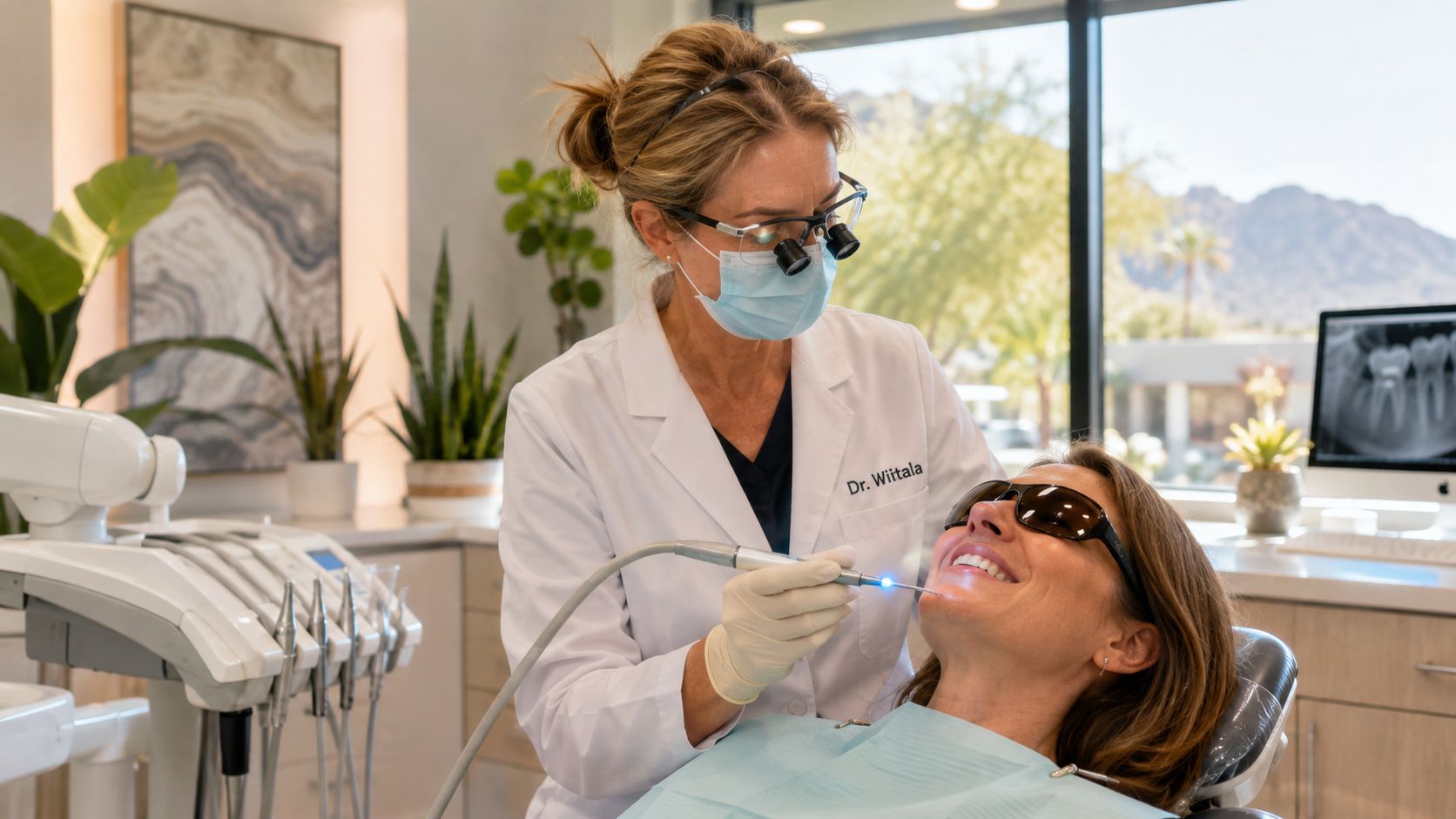
A routine question can reveal a different next step. Someone searching for a cosmetic dentist near me may want to discuss whitening or veneers. A patient searching for dental implants near me may first need an evaluation of gum health and bone support. Sudden pain may call for a tooth extraction consultation or emergency dental services instead of a routine cleaning.
Patients can schedule online, request insurance verification, or call the Scottsdale front desk at (480) 657-6981. The office is located at 9755 North 90th Street, Suite B250, Scottsdale, AZ 85258.
Common Questions About Professional Teeth Cleaning
Do cleanings hurt?
A routine visit usually involves pressure, vibration, water, and brief sensitivity rather than sharp pain. Inflamed gums or periodontal disease can make cleaning more uncomfortable, especially around deeper deposits. Tell the hygienist if a sensation feels too intense, so the team can pause, adjust technique, or discuss numbing when appropriate.
Can ultrasonic scaling damage enamel?
Proper scaling targets calculus, not healthy enamel. The ultrasonic instrument uses vibration and water to loosen deposits, while hand instruments refine areas that need more control. Polishing should remain measured. As noted in the FDI chairside guidance discussed earlier, overly aggressive polishing can create enamel microabrasions.
Can brushing, flossing, or a water flosser replace cleaning?
Daily home care controls plaque, but it cannot remove hardened calculus, particularly when deposits sit below the gumline. Brushing and interdental cleaning help prevent new buildup; professional instruments address mineralized deposits already attached to the teeth. Good results depend on both parts working together.
Does insurance cover two visits each year?
Some plans provide full preventive benefits for two cleanings per year. Coverage still depends on plan language, eligibility, waiting periods, and whether the visit is coded as routine cleaning or periodontal maintenance. The Scottsdale office can review benefits before treatment, although the plan determines what it pays.
How long does the appointment take?
A healthy adult cleaning commonly takes 45 to 60 minutes. Periodontal maintenance may take 60 to 90 minutes, depending on the areas requiring attention and examination findings. A separate procedure may require another appointment.
Questions about scheduling can arise outside office hours. Information about automated phone answering for small business explains how offices organize after-hours communication, while clinical questions still require a qualified dental team.
You do not need to know the correct code or recall interval before calling. The team can review your records, discuss symptoms, and recommend whether you need a routine cleaning, periodontal evaluation, new patient exam, tooth extraction consultation, or another service.
Eric Wiitala DDS offers hygiene visits, dental examinations, periodontal evaluation, restorative care, cosmetic dentistry, dental implants, and support for sleep and TMJ concerns in Scottsdale. Visit Eric Wiitala DDS to request an appointment, confirm insurance details, or arrange a cleaning plan based on your oral condition and risk profile.