
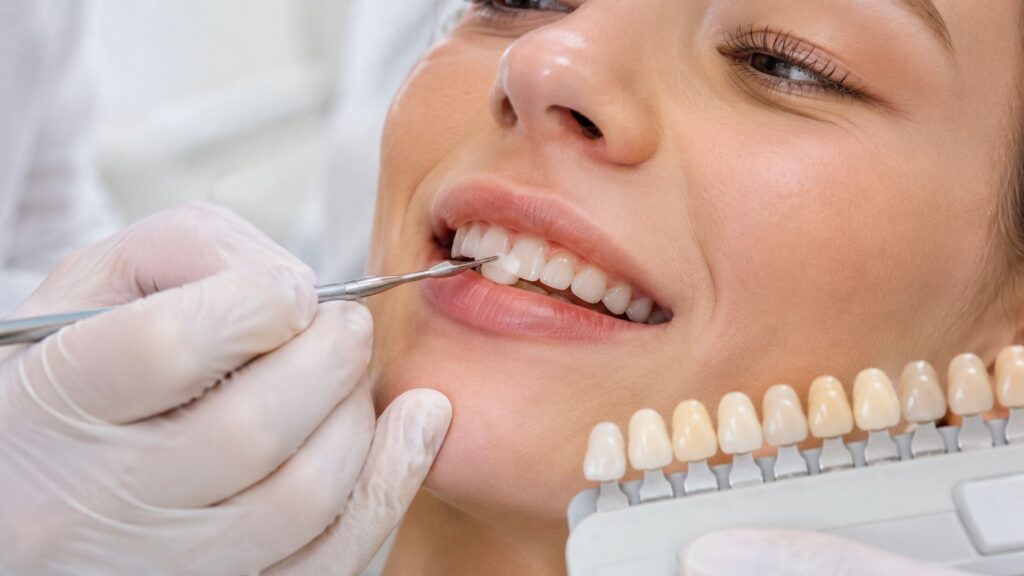
Dental bonding is a conservative cosmetic and restorative procedure where tooth-colored composite resin is applied, shaped, and hardened directly onto a tooth to repair chips, close small gaps, or reshape teeth, typically completed in a single visit. It's usually a minimally invasive option that preserves more natural tooth structure than veneers or crowns.
A Scottsdale professional may notice the problem in an ordinary moment, such as catching a reflection before a meeting and seeing a small chip on a front tooth. Another patient may have a modest space between the front teeth that has always affected their smile, even though the teeth are healthy. For these concerns, bonding can create an immediate visual improvement without committing to extensive preparation.
Understanding Dental Bonding for Your Smile
What the procedure actually does
Dental bonding uses a tooth-colored composite resin that a dentist applies directly to the tooth. The material can be shaped to rebuild a chipped edge, make a slightly undersized tooth look more balanced, or close a selected small space. Once the shape and shade are right, a curing light hardens the resin, and the surface is polished.
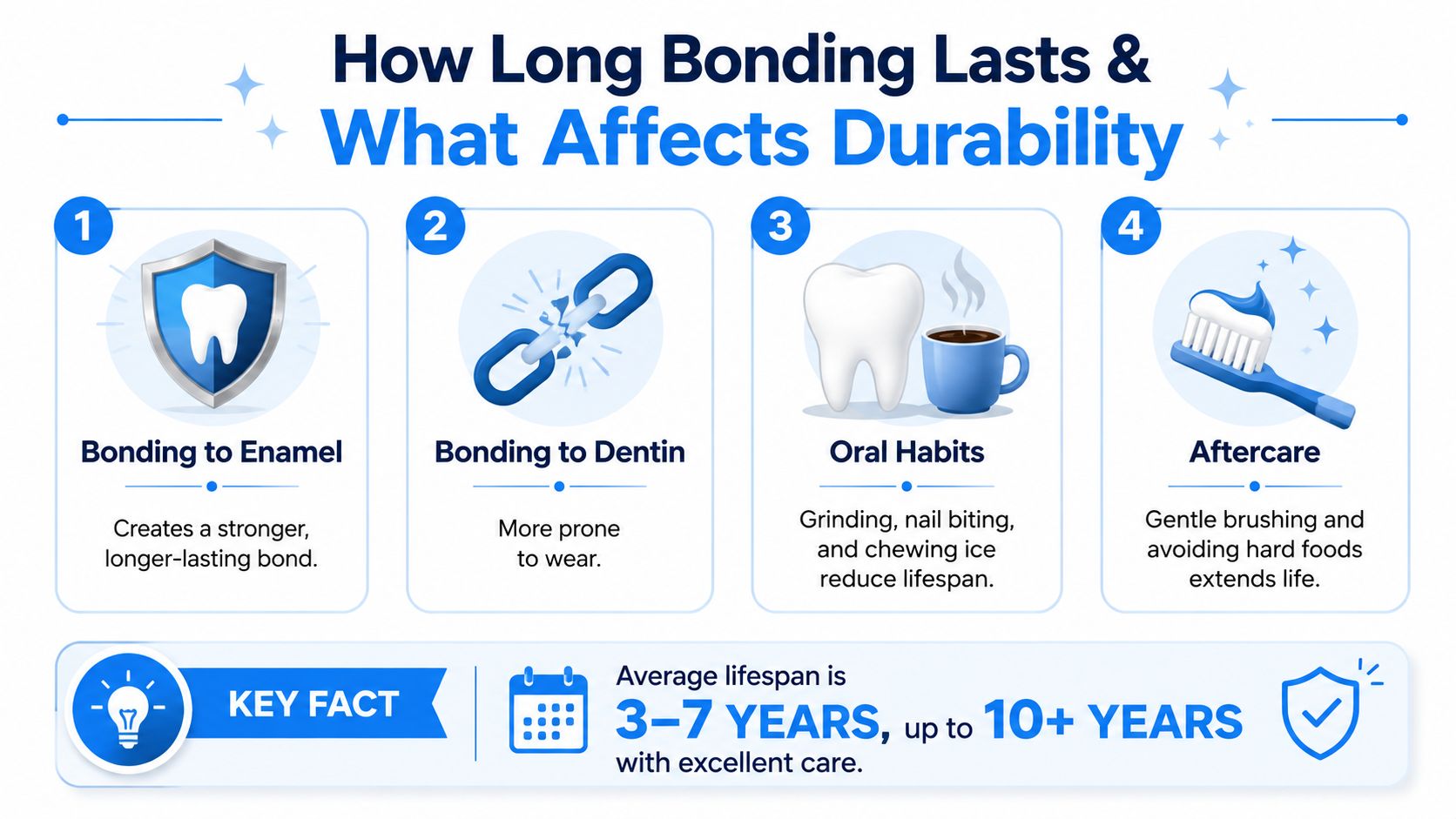
Bonding is more than placing filling material on a tooth. It relies on micromechanical and chemical adhesion, meaning the dentist prepares the surface so the adhesive system can connect the composite with the enamel or dentin. The bond is generally strongest and most predictable on enamel, while dentin bonding is more technique-sensitive because the hybrid layer may degrade over time, as explained in this review of dental adhesive durability.

Why tooth condition matters
The phrase “cosmetic bonding” can sound like one standard treatment, but the right approach depends on the tooth underneath. A small enamel chip is different from a repair involving dentin, an old filling, exposed root structure, or an enamel-development condition. The material, adhesive strategy, isolation, bite, and finishing process all influence the result.
Dental bonding's history reflects that careful development. In 1955, Buonocore introduced phosphoric-acid etching, which created micromechanical retention instead of relying only on surface contact. Dr. Rafael Bowen's methacrylate-based resin composites in the early 1960s helped establish the composite materials used in modern restorations. Enamel etching gained broad acceptance in the 1970s, particularly after the International Symposium on Enamel Etching in 1974, according to this historical review of adhesive dentistry.
For Scottsdale patients, Eric Wiitala DDS evaluates whether the concern is primarily cosmetic, restorative, or related to bite and tooth structure. That assessment helps determine whether bonding is appropriate, or whether a filling, veneer, crown, orthodontic treatment, or another form of dental care would provide a more suitable result.
What Happens During the Bonding Procedure
Bonding begins with an examination, not with resin. Eric Wiitala DDS checks the tooth, neighboring teeth, gums, and bite to determine whether the planned change is cosmetic, restorative, or affected by tooth structure. Decay, a crack, or another underlying concern may need treatment before reshaping begins.
The preparation and shade selection
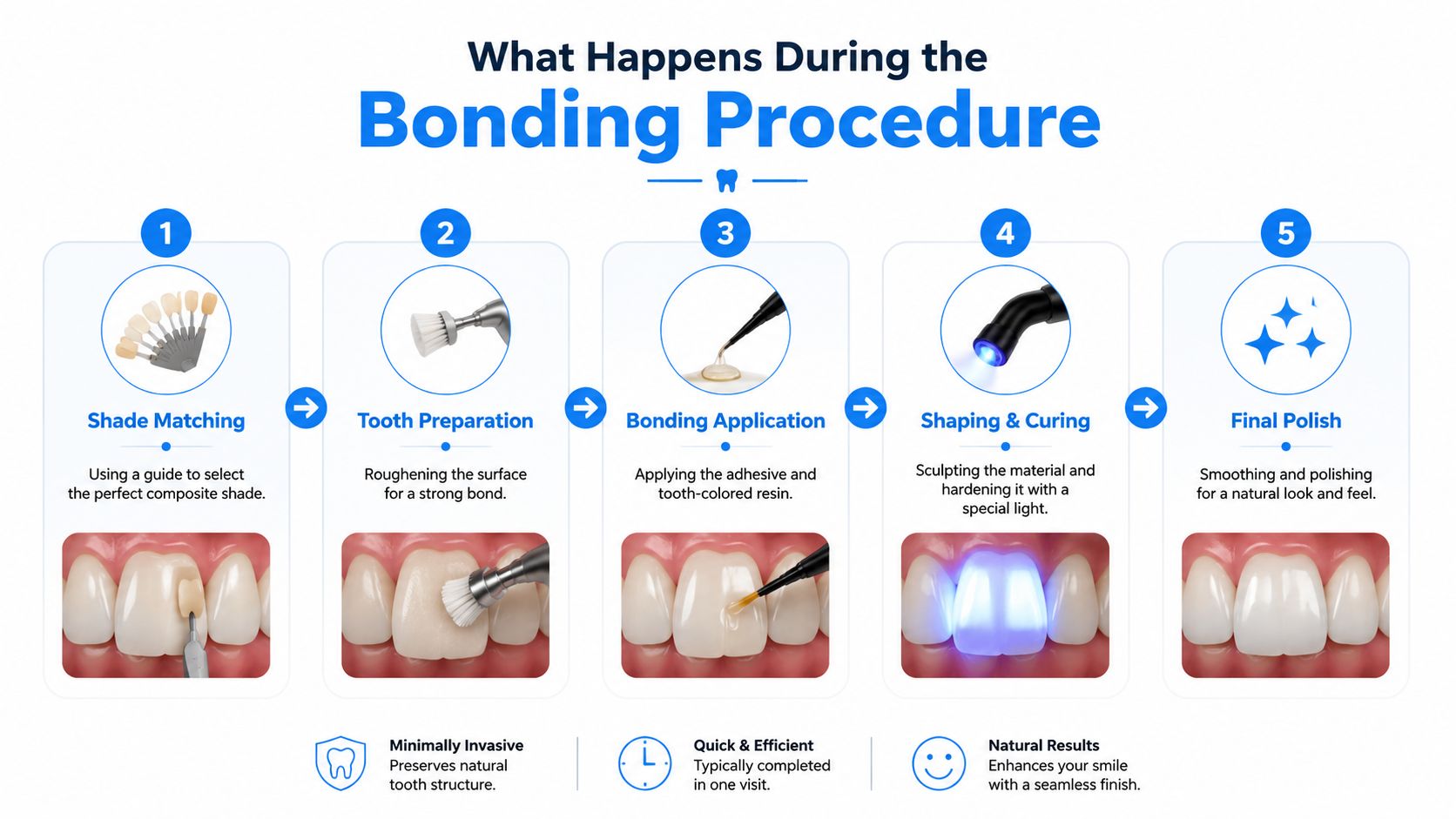
Shade selection comes before placement because composite can be influenced by the surrounding teeth and the tooth's moisture level. The dentist compares a shade guide with the smile, then cleans the treatment area. Isolation helps keep saliva and moisture away while the adhesive is applied, especially when the repair involves a less protected surface.
The surface is conditioned with a mild acidic gel. With an etch-and-rinse approach, the dentist rinses the gel and gently dries the area before applying the adhesive. On dentin, the surface must remain appropriately moist rather than overly dry, and moisture control becomes part of the bonding technique. The adhesive is liquid and is spread over the prepared area before composite resin is placed in controlled layers.
Sculpting, curing, and polishing
The dentist adds composite in increments instead of covering the tooth with one flat mass. Each layer can reproduce contours, edge position, and the way the tooth meets its neighbors. A specialized blue curing light hardens each increment, allowing the shape to develop gradually.
Practical rule: The final appearance depends as much on contour and polishing as it does on resin shade.
After curing, the dentist checks the bite and removes excess material. Polishing creates a natural luster and a smooth feel against the tongue. Bonding often needs little or no anesthesia when treatment is limited and cavity removal is unnecessary. Appointment length depends on the number of teeth and the complexity of the reshaping, so consultation provides the appropriate time estimate.
A short video can help patients visualize the chairside sequence:
Which Dental Issues Bonding Can Fix
Dental bonding works best when the desired change is modest and the tooth has enough healthy structure to support the composite. A consultation remains important because the same visible concern can have different causes.
Situations that may suit bonding
Bonding can be considered for:
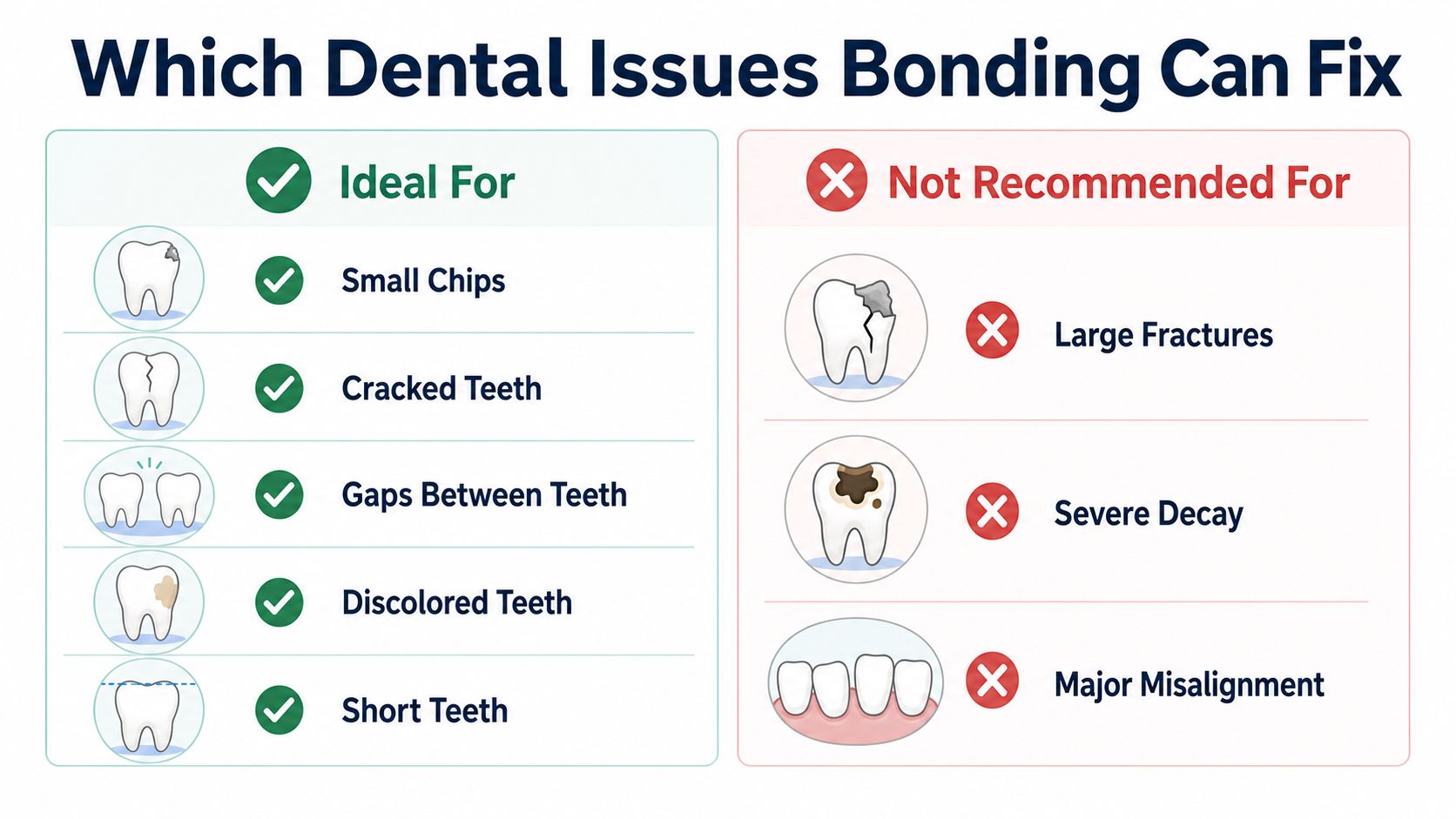
- Small chips: Minor edge fractures, particularly those involving less than one-third of the tooth, may be rebuilt with composite.
- Selected spaces: Small gaps can sometimes be closed with bonding. Some dental guidance identifies spaces around 2 to 3 millimeters as a range where bonding may be appropriate, while wider spaces can require a different plan, as discussed in this overview of composite bonding for gaps.
- Localized discoloration: A small area of discoloration that doesn't respond to teeth whitening may be masked with carefully shaded composite.
- Tooth shape concerns: Slightly short, narrow, or uneven teeth can be reshaped for improved visual balance.
- Exposed root surfaces: Bonding may cover selected root surfaces exposed by gum recession, although the dentist must assess gum health and the cause of the recession.
- Low-stress filling repairs: Old metal fillings in suitable areas may be replaced with tooth-colored composite when the tooth and bite support that choice.
When another treatment may be safer
Bonding isn't designed to replace a large amount of missing tooth structure. A large cavity or fracture may need a crown, while severe misalignment may respond better to clear aligners or another orthodontic approach. A gap that's too wide can make added resin look bulky or disproportionate.
Heavy clenching or grinding also changes the risk assessment. Strong bite forces can chip the composite, especially when the material is placed on an edge that receives repeated stress. The underlying substrate matters, too. Enamel generally offers the more reliable bonding surface, while dentin requires greater attention to moisture control, adhesive selection, and case design. Research on enamel disorders supports condition-specific planning, including prioritizing enamel bonding with an etch-and-rinse technique for fluorosis and molar-incisor hypomineralization, as described in this evidence-based review of enamel bonding protocols.
Eric Wiitala DDS can assess whether bonding fits the tooth's condition, the patient's bite, and the intended cosmetic change rather than treating every chip or gap the same way.
Bonding Compared to Veneers and Other Options
A small chip appears after lunch, and you want the tooth to look natural without removing more healthy structure than necessary. Dental bonding may suit that situation, but the best choice depends on the tooth's condition, the desired change, the bite, and how easily the result can be repaired later.
Porcelain veneers can change the shape and color of several teeth at once. They generally require irreversible enamel preparation and laboratory fabrication. Bonding is shaped directly on the tooth during the appointment, often with little or no enamel removal. It can be repaired or added to more easily if a small area chips, while a damaged veneer may require replacement. Bonding can, however, be more vulnerable to surface staining and wear over time, particularly at exposed edges.
Crowns cover more of a tooth and may be appropriate when a fracture or decay has weakened its structure. Because crown preparation removes more tooth material, it is a different type of restoration from cosmetic bonding. Orthodontic treatment changes tooth position and spacing rather than masking those concerns with composite, so it may be better suited to broader crowding or gaps.
The practical choice also depends on the goal. Whitening may address overall tooth color, while bonding can reshape a chipped edge or cover a localized discoloration that remains afterward. A small Scottsdale chip may need only a conservative repair. A larger fracture may require restorative treatment, and a patient seeking broader alignment changes may need an orthodontic evaluation.
| Treatment | Cost Per Tooth | Lifespan | Enamel Removal | Visits Required |
|---|---|---|---|---|
| Dental bonding | Varies by case and practice | Depends on material, tooth condition, bite, and maintenance | Usually minimal or none | Often a single visit |
| Porcelain veneers | Varies by case and practice | Depends on preparation, bite, care, and material | Irreversible preparation is generally required | Consultation plus preparation and placement visits |
| Dental crowns | Varies by case and practice | Depends on tooth condition, fit, bite, and maintenance | Significant tooth reduction is generally required | Usually more than one appointment |
| Orthodontic treatment | Varies by case and treatment plan | Designed to reposition teeth, with retention afterward | No routine enamel reduction for tooth movement | Multiple visits over an extended treatment period |
Evidence from related resin restorations also shows why clinicians avoid promising one universal service life. A systematic review of resin-bonded bridges analyzed about 2,300 cases, reporting survival of 91.4% after 5 years and 82.9% after 10 years. It found de-bonding in 15% of cases and veneering-material chipping in 4.1% over 5 years, as reported in this systematic review of resin-bonded bridge outcomes. Those results concern resin-bonded bridges, not every cosmetic bonding case, but they highlight the role of material choice, preparation, bite, and case selection.
Patients can review the differences in this comparison of veneers and bonding before discussing which option fits their tooth condition with Eric Wiitala DDS.
How Long Bonding Lasts and What Affects Durability
A bonded edge may look unchanged for years, while another needs attention sooner. The difference usually comes from the tooth's condition, the kind of repair, bite pressure, and daily habits. Bonding is a conservative restoration, so its service life is shaped by how well the material is matched to the tooth and protected after placement.
The tooth underneath sets the starting point
Bonding behaves differently on intact enamel, exposed dentin, and areas already weakened by wear or decay. The surface must be clean and well isolated during treatment, and the restoration's shape must suit the forces that reach it. A small cosmetic addition at the front of a tooth generally faces different demands than a repair near a chewing surface. The review of resin bonding to tooth structure explains why adhesive performance depends on the bonding system, testing conditions, and the tooth surface involved.
Bite dynamics can shorten bonding's service life. Clenching and grinding repeatedly load a bonded edge, raising the chance of a chip or separation. Chewing ice, biting fingernails, opening packages with the teeth, and chewing hard non-food objects can create sudden force in the same area. A custom nightguard may help protect the restoration when nighttime grinding is present.
Maintenance protects the investment
Composite can absorb pigments from coffee, tea, red wine, tobacco, and other strongly colored foods more readily than porcelain. This explanation of staining and composite bonding describes why surface staining can develop even when the bonding remains firmly attached. Daily care cannot make composite permanent, but it can preserve the polish and help the dental team spot roughness, wear, or discoloration before a small concern becomes a larger repair.
Useful habits include:
- Use gentle tools: A soft-bristle toothbrush and non-abrasive toothpaste help protect the polished surface.
- Protect against grinding: A custom nightguard may be appropriate when bruxism is present.
- Avoid using teeth as tools: This reduces sudden force on bonded edges.
- Keep regular examinations: Professional cleaning, polishing, and bite checks help monitor the restoration.
Polishing can refresh a dull or lightly stained surface, but it cannot replace composite that has fractured or worn away. Examination also helps determine whether the issue comes from surface discoloration, bite stress, or a change in the tooth underneath. That distinction guides the next step, whether the restoration needs maintenance, repair, or replacement.
Why Scottsdale Patients Choose Eric Wiitala DDS
A small chip, gap, or uneven edge can affect more than appearance. Scottsdale patients considering cosmetic bonding often want the result to look natural in conversation, feel comfortable when they bite, and remain appropriate for the tooth's condition. Eric Wiitala DDS begins with the tooth, the surrounding smile, and the patient's goals rather than treating every case as a standard cosmetic repair.
Dr. Eric Wiitala has more than 20 years in practice, including training in cosmetic dentistry. That experience supports close attention to shade, translucency, contour, and tooth length, along with the clinical details that influence bonding, such as moisture control, adhesive selection, and bite forces.
A material-selection and planning approach
The office uses mercury-free, tooth-colored restorative materials, including composite options for appropriate repairs. Before treatment, patients can discuss how the proposed material is expected to look, how it may respond to daily use, and what maintenance it requires. This conversation helps clarify whether bonding fits the problem or whether another type of care would better protect the tooth.
The shade-matching process considers the surrounding teeth, lighting, and the planned shape of the restoration. Isolation also matters. Keeping saliva and moisture away during placement gives the adhesive a cleaner surface to work with, while checking the bite afterward helps prevent unnecessary pressure on a newly bonded edge.
Patients can also review their goals through digital smile design at Eric Wiitala DDS before making broader cosmetic decisions. Seeing the proposed direction can make it easier to discuss proportions, symmetry, and whether a subtle change is preferable to a larger one.
The practice provides preventive, restorative, cosmetic, implant, clear aligner, gum, and bite-protection care. That range helps the team assess whether a chip or gap relates to decay, wear, bruxism, recession, or alignment. Scottsdale patients can discuss bonding alongside examinations, x-rays, whitening, and other indicated care.
Common Questions About Dental Bonding
Does dental bonding stain?
It can. Composite resin is more porous than porcelain, so pigmented drinks, foods, and tobacco can darken the bonded area more readily. Professional polishing may improve surface staining, but deeper discoloration may require repair or replacement.
Does bonding hurt?
Bonding is typically comfortable, and anesthesia may not be needed when the work is limited to the outer tooth surface. Anesthetic may be appropriate when the dentist is treating decay or working near the nerve. The planned treatment and the condition of the tooth determine what the patient feels.
Is bonding reversible?
Bonding is generally considered reversible or repairable because the dentist usually removes little or no healthy enamel for a minor cosmetic application. Etching changes the surface so the adhesive can attach, but it doesn't create the same level of tooth reduction associated with a prepared veneer or crown. The dentist still needs to evaluate the specific tooth before promising that no alteration will occur.
Does insurance cover it?
Cosmetic bonding is commonly an out-of-pocket service. Bonding used to repair decay, trauma, or a functional defect may qualify for partial coverage depending on the patient's plan, the tooth involved, and the insurer's rules. The practice's billing team can review benefits before treatment.
Should whitening happen before bonding?
Usually, whitening should be completed before cosmetic bonding because composite resin doesn't respond to bleaching agents. Matching the composite after the natural teeth reach the desired shade helps prevent a visible mismatch.
Patients with a chipped tooth, small gap, discoloration, worn edge, or old filling can schedule an evaluation with Eric Wiitala DDS in Scottsdale to determine whether bonding is suitable. The practice can also help patients who are comparing cosmetic dentistry with restorative treatment, orthodontics, dental implants, or an emergency dental service for an urgent injury.
Eric Wiitala DDS offers personalized dental bonding evaluations in Scottsdale, with attention to tooth structure, bite forces, shade, and the patient's smile goals. Patients can visit Eric Wiitala DDS to request a consultation and discuss whether bonding, whitening, veneers, restorative care, or another treatment best fits the smile.