
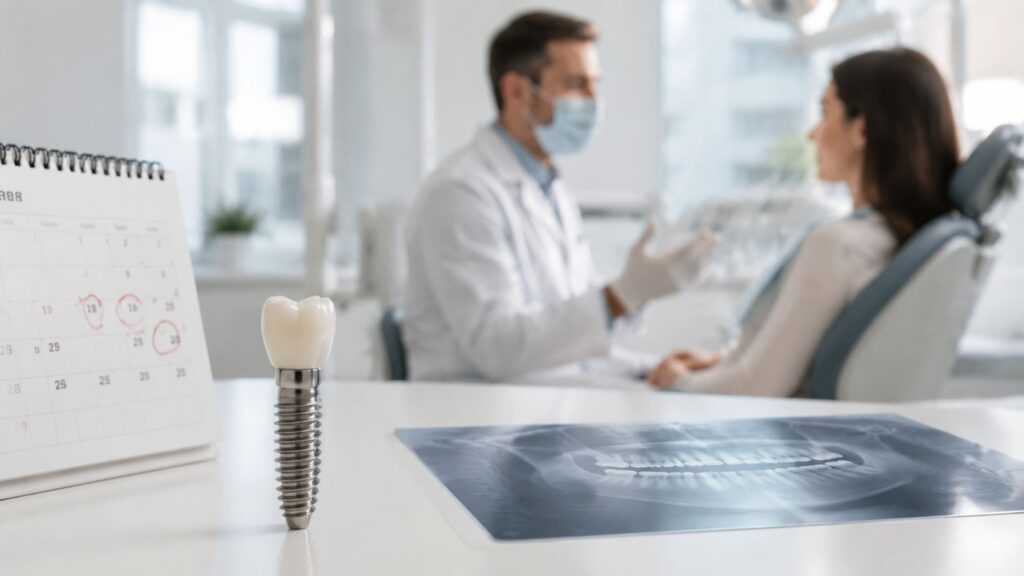
A typical dental implants timeline runs 4 to 9 months from consultation to final crown, but the exact duration depends on whether extractions, bone grafting, or immediate placement are involved. For patients searching for a dentist near me in Scottsdale, AZ, the safest plan is based on the condition of the tooth, gums, and jawbone, not on a generic calendar estimate.
Someone with a failing tooth may be dealing with discomfort, difficulty chewing, or worry about how a missing tooth will affect a smile. A patient who has already lost a tooth may be comparing dental implants near me with a bridge or removable appliance and wondering whether treatment can happen quickly. At Eric Wiitala DDS in Scottsdale, Dr. Eric Wiitala helps patients understand each stage, from tooth extraction and imaging through healing and final restoration.
The implant journey isn't identical for everyone. Some patients can have an implant placed when a tooth is removed, while others need the socket or jawbone to heal first. Bone grafting, gum health, medical history, and the type of replacement tooth can all reshape the practical schedule.
Your Dental Implants Timeline Starts with a Consultation
A patient may arrive after losing a visible front tooth, or after hearing that a cracked molar can no longer be restored. The first question is usually simple: “How soon can the tooth be replaced?” The more useful question is whether the surrounding bone and gum tissue can support a stable, natural-looking result.
At Dr. Eric Wiitala's Scottsdale practice, the first appointment is used to answer that question carefully. A new patient exam can include a review of the tooth, neighboring teeth, bite, gums, and overall dental health. Dental x-rays and, when appropriate, 3D imaging help show the bone available for implant support and identify whether tooth extraction, grafting, or another restorative service belongs earlier in the plan.

What the first visit should clarify
A productive consultation should leave the patient with a clear understanding of:
- The condition of the tooth: A compromised tooth may need a tooth extraction before implant placement, while a restorable tooth may be treated with a crown or other restorative option.
- The state of the jawbone: Bone volume and quality influence whether placement can happen immediately or must follow healing or grafting.
- The intended restoration: A single-tooth crown, bridge, or full-arch solution requires different planning.
- The complete calendar: The estimate should account for surgery, healing, temporary teeth when appropriate, and the final crown.
Dr. Wiitala has practiced dentistry for more than 20 years and is recognized as one of the Valley's Top Dentists by PHOENIX magazine, as reported by the practice. That experience supports a measured approach for Scottsdale patients who want clear answers without pressure to choose the fastest procedure.
Patients can also review candidacy considerations through the practice's dental implant candidacy information. Those preparing questions or coordinating a visit may find a free consultation scheduling form useful for organizing appointment requests and patient details.
The consultation isn't a promise that every case will follow the shortest schedule. It's the point where the dental implants timeline becomes personal, based on clinical findings rather than an online average.
Planning Your Treatment and Preparing for Surgery
The planning phase determines whether the proposed schedule is realistic. A CBCT scan can create a three-dimensional view of the jaw, allowing the dental team to assess bone density, review the position of nerves and sinus spaces, and plan the implant location. This information matters because an implant needs a stable foundation and a position that supports the final bite and appearance.
Four planning decisions
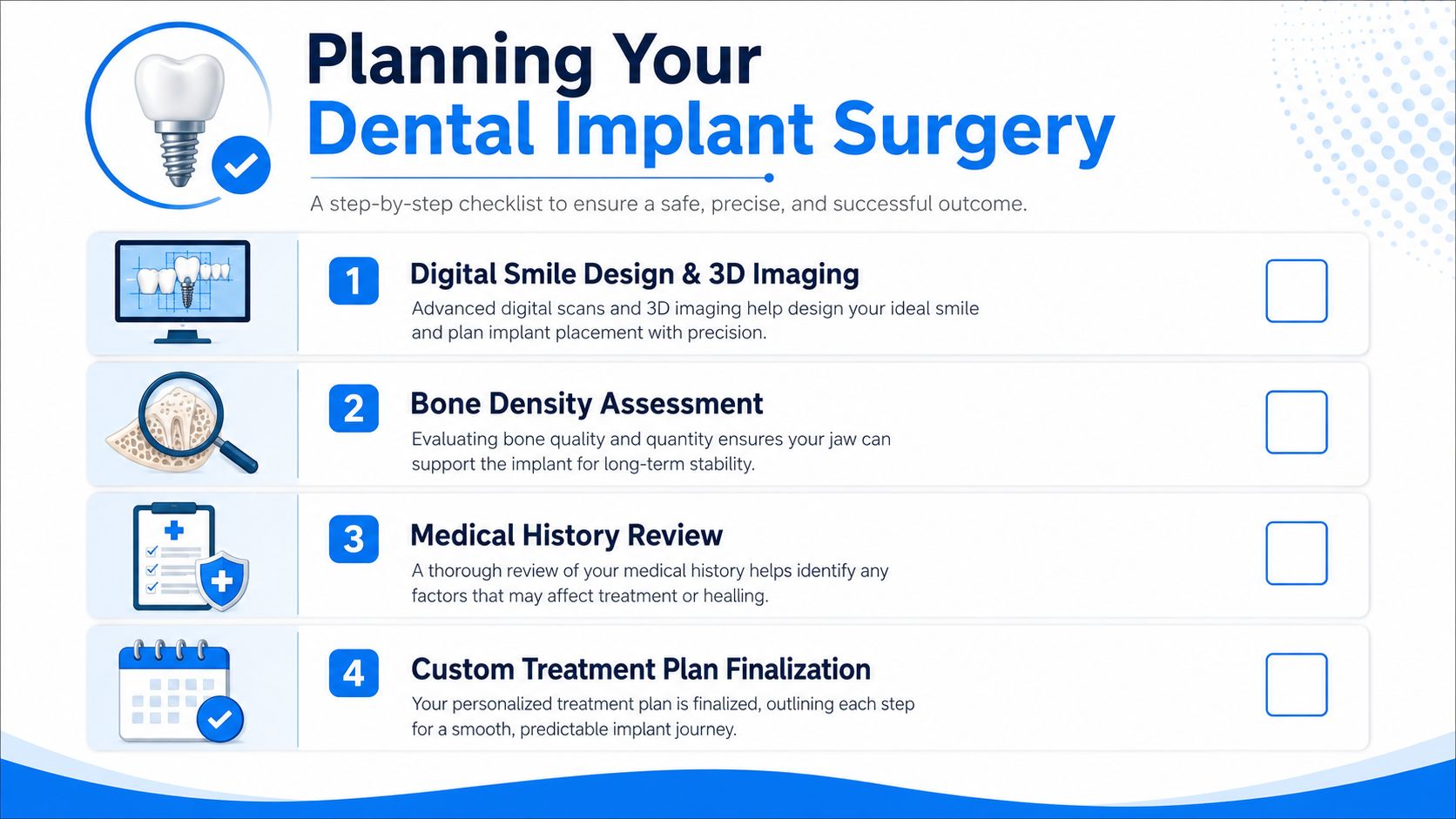
Digital smile design and 3D imaging help connect the planned tooth with the surgical position. The visible crown shouldn't be planned separately from the implant underneath it.
Bone density assessment identifies whether the extraction site can accept an implant or needs additional support. If the bone isn't ready, grafting may become a separate stage rather than a minor detail.
Medical history review covers medications, gum disease, smoking, systemic health conditions, and factors that may affect healing. Patients should provide an accurate medication list and discuss any condition that could influence surgery or recovery.
Custom treatment plan finalization brings the findings together. The plan should explain the proposed placement protocol, temporary tooth options, restoration type, expected appointments, and contingencies that could alter timing.
Modern implant dentistry grew from a biologic discovery. The timeline is commonly dated to 1952, when Swedish researcher Per-Ingvar Brånemark discovered that titanium can bond irreversibly with living bone. By 1965, he had placed the first osseointegrated dental implants in a human patient, marking a shift toward the biologically anchored approach used in implant dentistry today. The history is documented in this milestone account of Brånemark's 1965 implant work.
Preparing for the appointment
Patients should arrange transportation if sedation is planned, allow time for recovery, and prepare soft foods that won't require heavy chewing. The team can also discuss insurance, billing, and financing options before surgery so financial questions don't interrupt clinical decisions. Resources such as coordinated care plan templates can help patients organize questions, appointments, and responsibilities, although the dental office's plan remains specific to the individual case.
Rushing into surgery without adequate imaging or medical review can create avoidable complications and extend the schedule. Careful planning may feel slower at the beginning, but it gives the dentist a better chance to select the right implant position and healing strategy.
Choosing the Right Placement Timing Protocol
The implant may be placed at the same appointment as extraction, or the dentist may wait for the gum tissue or bone to heal. These choices are not interchangeable. The safest option depends on the extraction site, the amount of remaining bone, the condition of the soft tissue, the visibility of the tooth, and the patient's health.
| Protocol | Timing After Extraction | Survival Rate | Key Considerations |
|---|---|---|---|
| Immediate placement | Same day as extraction | 98.4% at 2 years, with an annual failure rate of 0.82% | Faster placement, but higher risks of gingival recession and implant exposure |
| Early placement after soft-tissue healing | 4 to 8 weeks | 95% to 100% | Allows soft tissue to heal and may reduce complications |
| Early placement after partial bone healing | 12 to 16 weeks | 95% to 100% | Provides additional bone healing before surgery |
| Delayed placement after complete bone healing | More than 6 months | 92% to 100% | Common, predictable approach when the site needs extended healing |
The survival and complication comparisons come from a review of implant placement timing after extraction, available through the clinical evidence on immediate, early, and delayed placement.
Why immediate placement isn't always faster
Immediate placement sounds attractive because it combines extraction and implant surgery. In selected cases, that can shorten the number of separate surgical stages. It doesn't automatically shorten the full journey to a final crown, however, because the implant still needs stability and the gum contour still needs to mature.
The front of the mouth deserves particular caution. Recession or implant exposure can affect the appearance of the result, so a slightly later protocol may offer a better balance between speed and soft-tissue control. A patient with thin tissue, an active infection, limited bone, or an unfavorable extraction site may be better served by healing first.
When early or delayed placement makes sense
Early placement after 4 to 8 weeks allows soft-tissue healing before implant surgery. Placement after 12 to 16 weeks gives the site more time for partial bone healing. Delayed placement after more than 6 months remains a common choice when the socket or graft needs complete bone healing.
Practical rule: The fastest surgical date isn't necessarily the fastest route to a stable, attractive final tooth.
Dr. Wiitala evaluates the proposed extraction site, esthetic demands, bone and gum conditions, and medical context before recommending a protocol. That individualized decision is especially important for patients searching for a cosmetic dentist near me because appearance and long-term tissue stability matter alongside chewing function.
Understanding the Osseointegration and Healing Phase
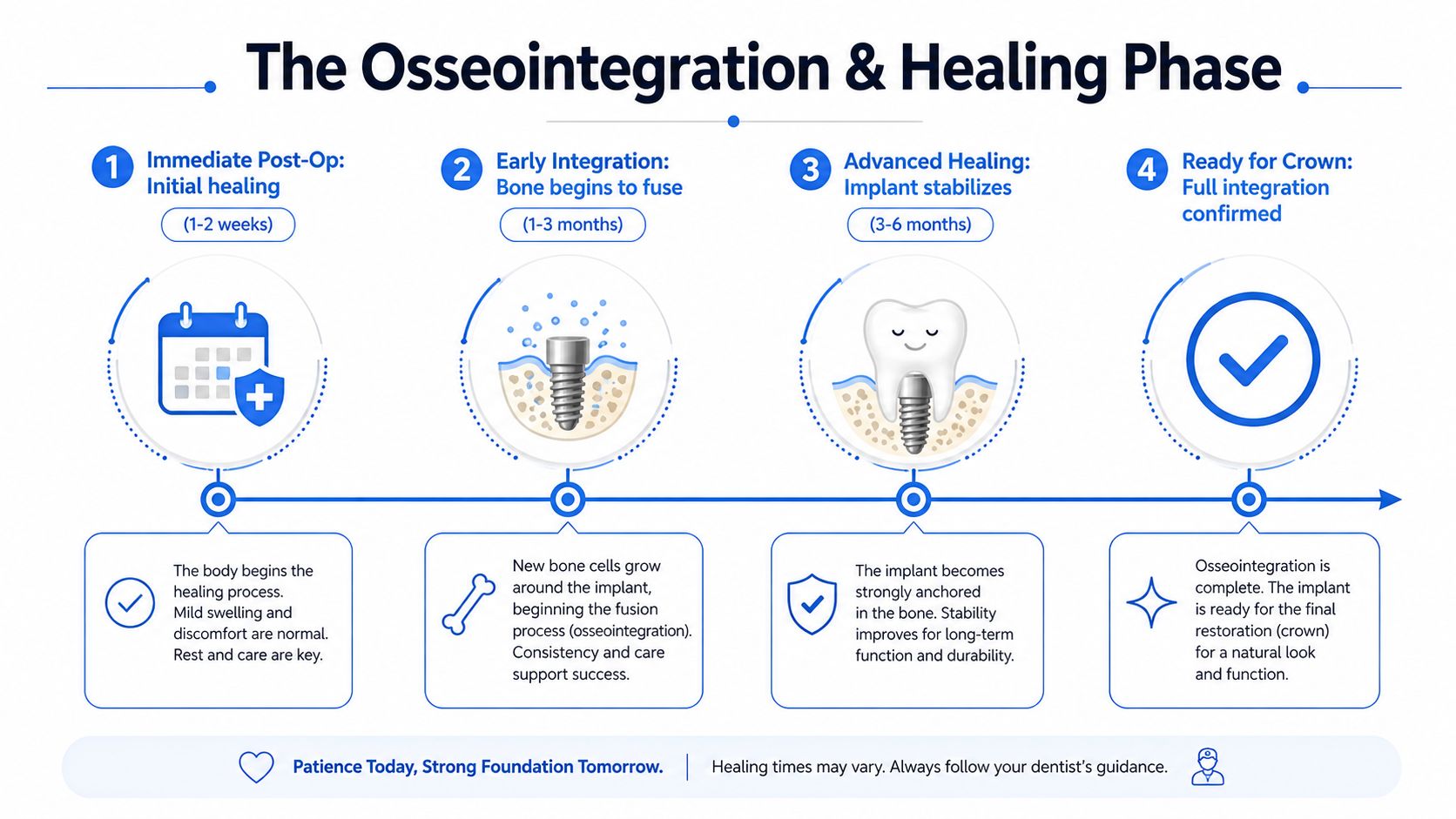
After implant placement, the visible gum may improve before the implant is ready to support a final tooth. Soft-tissue healing around the gum typically takes about 2 to 4 weeks, while osseointegration, the process in which bone bonds with the implant, usually takes 3 to 6 months. The healing schedule is biological, so a patient may feel comfortable well before the internal foundation is ready.
What happens after surgery
During the first 24 to 72 hours, a blood clot forms and the body begins early repair. Swelling, mild soreness, and a small amount of bleeding can occur, and the patient generally follows instructions for rest, oral hygiene, and soft foods.
During the first week, swelling should trend downward and the wound should stabilize. Patients often choose foods that are soft and easy to chew, keeping pressure away from the surgical site. Worsening pain, persistent bleeding, fever, or drainage should prompt a call to the dental office rather than being dismissed as normal healing.
The bone-bonding phase generally starts between 6 weeks and 3 months after surgery, according to this overview of the dental implant osseointegration timeline. Follow-up visits allow the dentist to evaluate gum healing, hygiene, comfort, and the developing stability of the implant.
How grafting changes the calendar
Bone grafting adds a healing consideration that a simple three-to-six-month estimate can hide. A patient-satisfaction study found that healing before final restoration averaged 4 months without bone augmentation and 6 months with augmentation, showing that grafting can materially change the timeline. The findings are available in this study of patient satisfaction and implant treatment timing.
A temporary tooth, bridge, or removable appliance may help the patient smile during healing, depending on the location and treatment design. Temporary teeth still require care. Patients should avoid biting hard foods directly on an unhealed site and follow the office's cleaning instructions.
The key checkpoint is not just the passage of time. The dentist must confirm that the implant is sufficiently integrated for the planned restoration. Patience protects the foundation that makes the final crown functional and comfortable.
Completing Your Restoration with Abutment and Crown Placement
Once healing is confirmed, the implant moves from a hidden foundation to a finished tooth. The abutment connects the implant post to the crown, bridge, or full-arch restoration. Depending on the surgical design, the gum may need to be prepared around the implant before the connector and final tooth are fitted.
The final appointments
At the abutment stage, the dentist checks the tissue and connection, then records the shape of the area and the patient's bite. Impressions or digital records guide the laboratory in creating a restoration that fits the space and works with the surrounding teeth.
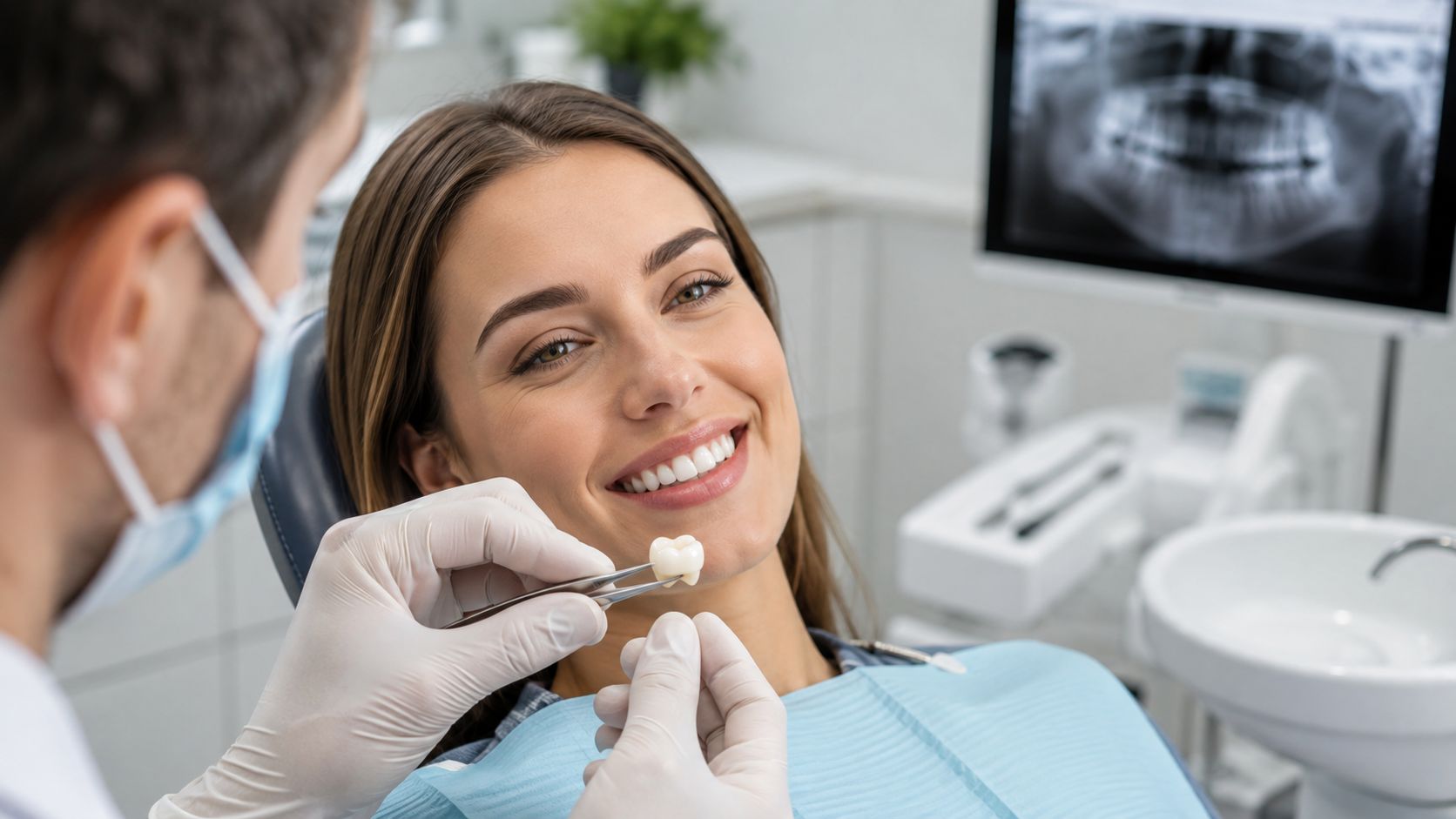
The final crown is designed for color, contour, and bite alignment. Patients should expect the dental team to assess how the restoration contacts neighboring teeth and how it feels during chewing. A small adjustment can make a meaningful difference in comfort.
Patients with a temporary restoration should follow the recommended food restrictions and avoid using the temporary tooth to tear or crush hard foods. After final placement, the patient can gradually return to normal chewing as comfort allows, while maintaining brushing, interdental cleaning, and professional dental care.
Immediate loading versus traditional loading
Immediate loading means attaching a temporary tooth soon after implant placement. It can be predictable only with careful case selection, preparation, and adequate primary stability. A systematic review reported mean weighted survival of 97.4%, with cumulative survival of 97.66% at 5 years and 96.94% at 10 years, as reported in this systematic review of immediate implant loading.
Those figures don't mean immediate loading suits every patient. Short implants and poor bone quality can increase the risk of implant loss, so the treatment team must prioritize stability over convenience. Traditional loading waits for the integration phase before the final restoration, which may feel slower but can be the more appropriate choice when the site needs protection.
Patients can review the practice's implant crown procedure to understand how the final restoration fits into the broader treatment process. The finished tooth should be cared for like a natural tooth, with regular examinations and cleaning to protect the gum tissue around it.
Factors That Can Change Your Timeline and Next Steps
The dental implants timeline can become shorter when an extraction site has strong bone and healthy tissue, or longer when the patient needs grafting, periodontal treatment, or staged restoration. Gum disease must be addressed because inflamed tissue can compromise the environment around an implant. Smoking, systemic conditions such as diabetes, medications, nutrition, bone density, and the number of teeth being replaced can also influence scheduling and healing.
A single front tooth may require careful soft-tissue planning for appearance. Full-arch treatment, including All-on-Four solutions, involves a broader surgical and restorative design. Temporary teeth and staged healing can make the calendar look different from the schedule for one implant, even when the patient feels ready to move forward.
Same-day placement can reduce the delay between extraction and implant surgery, but it doesn't remove the biological healing period. The choice works when the site and patient meet the clinical requirements. If the conditions aren't favorable, waiting can reduce complications and create a more predictable path to the final restoration.
Dental implants have become a mainstream treatment category. Recent market analysis estimates the global dental implants market at about USD 5.56 billion in 2025, while industry reporting notes that nearly 3 million Americans have received a dental implant and about 500,000 more are added each year. These figures appear in global dental implants market analysis, but an individual patient still needs a personal evaluation rather than a market-wide expectation.
Scottsdale patients can schedule a consultation at 9755 North 90th Street, Suite B250, or call (480) 657-6981 to discuss a missing tooth, failing tooth, tooth extraction, or full-arch restoration plan. The team can also help patients who are comparing restorative dentistry, cosmetic dentistry, emergency dental services, cleaning and exams, or other dental care needs.
Eric Wiitala DDS evaluates dental implants, tooth replacement, gum health, and restoration options in a personalized Scottsdale consultation. Visit Eric Wiitala DDS to request an appointment and discuss a dental implants timeline that fits the patient's clinical needs.