

A patient in Scottsdale may notice the pattern halfway through a tense work meeting. The jaw feels tired, the temples ache, and the teeth are pressed together even though there's no food to chew. By the end of the afternoon, the muscles near the ears can feel tight, and the chewing surfaces may look flatter than they once did. A bruxism day guard can add a thin layer of protection, but it works best as part of a broader plan for awareness, posture, stress, and jaw comfort.
Adults who search for a dentist near me after recognizing daytime clenching often need more than a generic mouthpiece. The right decision depends on whether the problem happens while awake, during sleep, or in both settings. A Scottsdale consultation can separate those patterns and determine whether a custom appliance, habit training, TMJ care, or a combination makes sense.
When You Catch Yourself Clenching During the Day
The first clue is often a small one. During a video call, a patient may realize that the tongue is pressed against the roof of the mouth, the shoulders are raised, and the teeth have been touching for several minutes. During a long drive, the same patient may grip the steering wheel, tighten the jaw, and arrive with a dull headache along the temples.
Common daytime signs include sore masseter muscles, flattened chewing surfaces, temple headaches, and a tight feeling near the ears. These symptoms suggest that the jaw has been carrying pressure for hours, even if there has been no obvious grinding sound. Some patients also notice cheek scalloping, tooth sensitivity, or a tired feeling when speaking and chewing.
A useful explanation of the causes of this pattern appears in this guide to what causes jaw clenching. The important point is that daytime clenching often becomes automatic. A person may recognize it only after pain, tooth wear, or a reminder from a partner or colleague.
A practical observation: At rest, the upper and lower teeth generally shouldn't remain pressed together. Awareness of that separation gives the jaw a chance to stop loading.
A daytime appliance can act like a cushion between the teeth. Because a typical day guard is designed to be relatively thin, it can help interrupt tooth contact while a patient continues working, speaking, and attending meetings. It doesn't remove the muscle signal that created the clench, and it doesn't resolve every cause of jaw discomfort.
Some patients also explore general approaches to muscle tension alongside dental care. A neutral overview of how CBD may ease muscle knots may be useful for readers researching comfort strategies, although any supplement or wellness product should be discussed with a qualified healthcare professional, especially when medications or medical conditions are involved.
Bruxism is common enough that occlusal appliances are widely used for mechanical protection. A 2024 meta-analysis estimated combined sleep and awake bruxism at 22.22% globally, with estimates of 21% for sleep bruxism and 23% for awake bruxism, while results varied by region and diagnostic method (review of global bruxism prevalence). Those figures don't determine whether one Scottsdale patient needs a day guard. A clinical history and examination still matter.
What Daytime Bruxism Actually Is
Awake bruxism is usually a habit of muscle activity, not a problem of having a strong bite. During concentration, anxiety, computer work, driving, or demanding conversations, the jaw muscles may tighten without conscious permission. The teeth then touch repeatedly, sometimes lightly and sometimes with enough force to create soreness and wear.
The steering-wheel analogy helps. A driver may grip the wheel too tightly in traffic without realizing it. The hands remain functional, but the extra effort creates fatigue. Daytime clenching can work the same way. The jaw may stay partly engaged while a patient reads an email, solves a problem, or listens during a meeting.
Sleep bruxism follows a different pattern. It occurs during sleep and is linked to sleep-related motor activity and arousals rather than the conscious habits of a person at a desk. A useful comparison is a restless engine cycling at night. The person isn't choosing each bite or grind, and a morning report of sore muscles may be the first indication that anything happened.
What patients can track
A brief awareness log can reveal when the jaw starts working unnecessarily:
- Situation: Meetings, driving, screen work, exercise, or difficult conversations may precede the clench.
- Body position: A forward head position or raised shoulders can accompany jaw tension.
- Contact: The patient can note whether the teeth are touching or whether the jaw is relaxed.
- Symptoms: Temple pressure, ear-area tightness, tooth sensitivity, and muscle fatigue can show the effect.
A day guard places a barrier between the teeth, but it doesn't teach the brain to stop sending the clenching signal. Systematic reviews have found that splints don't reliably or predictably reduce sleep or awake bruxism activity, so their practical role is primarily mechanical protection and symptom management rather than a cure (systematic review of occlusal splints for bruxism).
That distinction prevents a common disappointment. A patient may wear a well-fitted appliance and still notice the jaw muscles tightening during a stressful presentation. The guard may reduce tooth-on-tooth contact, but awareness, habit retraining, and treatment of related TMJ symptoms address a different part of the problem.
Day Guard vs Night Guard at a Glance
You notice your teeth touching while answering emails, driving, or listening in a meeting. That pattern is different from grinding during sleep, even though both can strain the teeth and jaw. A day guard is designed for an awake person who can speak, remove it for meals, and respond to reminders. A night guard is designed for unconscious loading, when the wearer cannot notice or interrupt the habit.
A daytime appliance acts like a buffer between opposing teeth. It can interrupt direct contact, spread force across a broader area, and protect teeth or restorations. It does not switch off the clenching signal, so wearing it does not replace awareness or habit training. The low-profile design also needs to remain practical for conversation and ordinary work.
Nighttime appliances are generally worn during sleep, but the schedule depends on the examination and treatment plan. A review of splint use notes that people with daytime parafunctional habits may sometimes need temporary daytime wear, while some plans recommend splints for only a limited period to reduce the risk of negative dependence (review of splint use in bruxism and TMD care).
| Feature | Day Guard | Night Guard |
|---|---|---|
| Primary setting | Awake clenching during work, driving, or concentration | Sleep grinding or clenching |
| Typical profile | Light and low profile, with suitable designs measuring about 1 to 1.5 mm (daytime appliance design and treatment modalities) | Usually more substantial, with the design selected for nighttime forces |
| Material approach | Acrylic or another rigid material chosen for discreet daytime wear | Rigid, soft, or layered construction selected after examination |
| Wear window | Selected daytime activities, removed for meals and cleaning | During sleep, according to the dentist's instructions |
| Main purpose | Reduce tooth contact and redistribute daytime force | Protect teeth and restorations during unconscious loading |
| Behavioral effect | May remind the wearer to separate the teeth, but does not retrain the habit | Protects against wear, but does not cure sleep bruxism |
A person who repeatedly catches the teeth together while awake may need a day guard assessment. Reports of grinding during sleep point toward a night guard assessment. Some patients have both patterns, so choosing one appliance from a single symptom can leave part of the problem untreated.
The useful life of any appliance depends on its fit, material, force level, and daily habits. Guidance on how long night guards last can provide context, but a day guard needs its own review because daytime wear follows a different pattern.
Materials and Design of a Daytime Guard
A daytime appliance must protect the teeth without becoming the most noticeable part of a conversation. Its construction therefore favors a thin, discreet profile that allows speaking, breathing, and ordinary workday activities. A light-duty design uses a thin acrylic profile rather than a bulky block of plastic.
The material may be clear PMMA, reinforced heat-cured acrylic, or another rigid dental material selected by the clinician and laboratory. The choice depends on the patient's force level, tooth wear, restorations, comfort, and expected wear time. Someone who lightly touches the teeth during meetings may need a different design from someone who clenches repeatedly while concentrating at a desk.
A guard should fit the person's daytime pattern, not just copy a night appliance.
Why the design matters
A flat-plane surface can spread contact across a consistent area instead of allowing individual teeth to lock tightly together. Lingual coverage may improve retention while keeping the visible portion discreet. The dentist also considers speech, lip closure, breathing comfort, and whether the appliance places unwanted pressure on the teeth.
A two-layer appliance shows why material choices affect size and feel. One documented hard and soft design uses a 1 mm soft polyurethane inner layer and a 3 mm hard copolyester outer layer, with a reported finished thickness of about 2 to 2.5 mm. That construction is more substantial than the lightest daytime option. It may suit a different force pattern, but a thicker appliance can be more noticeable during speech and routine activities.
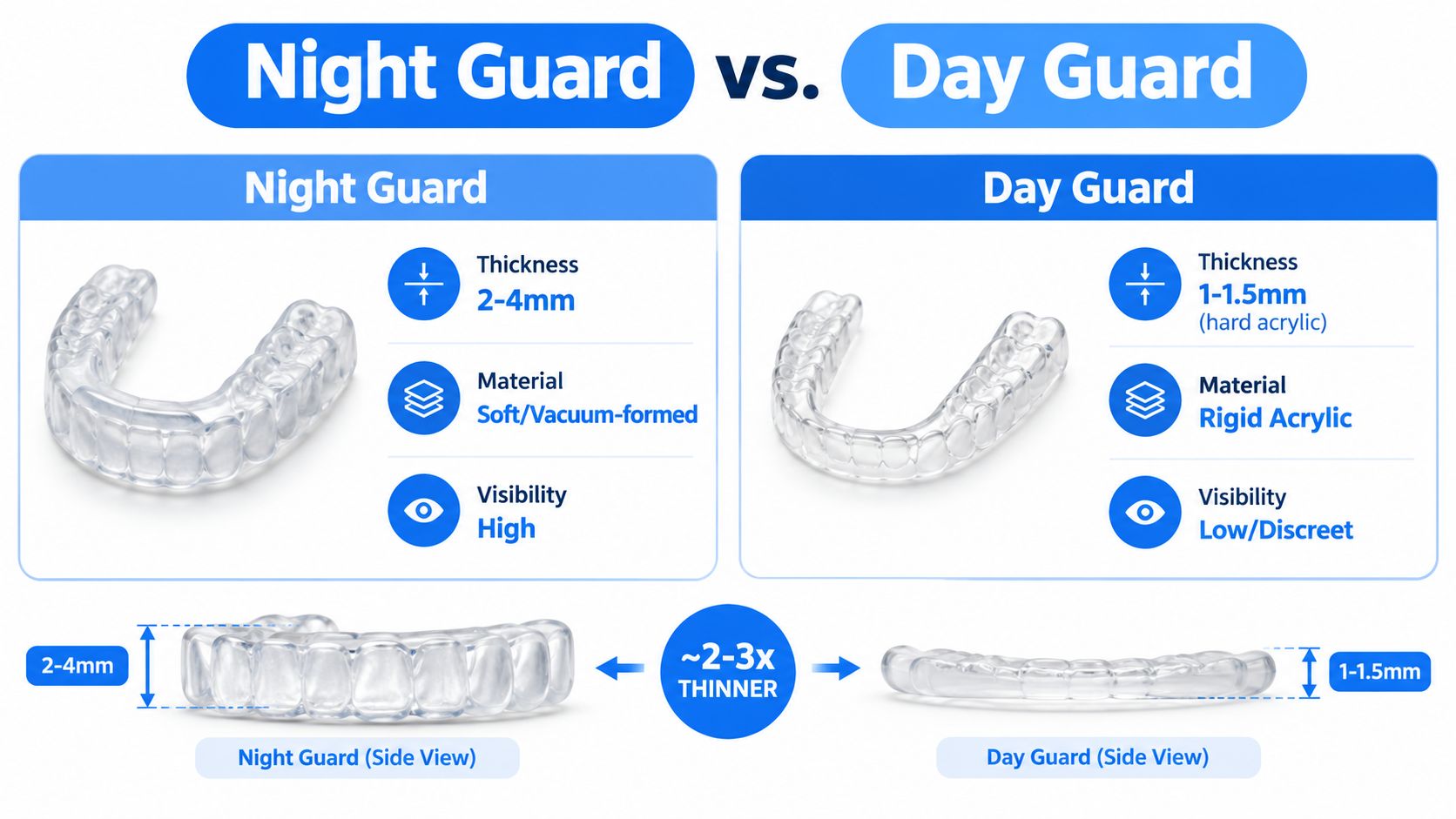
The dentist may avoid a design that changes the back-tooth relationship more than necessary during the day. A large vertical change can make speaking awkward and leave the jaw feeling more tired. The appliance should reduce tooth contact while still allowing the patient to function naturally.
A day guard can also act as a physical reminder to separate the teeth. It cannot, by itself, remove the clenching habit. The best design protects the teeth and supports awareness without pretending to retrain daytime behavior.
Fit matters as much as the plastic. Accurate records, balanced contacts, and careful adjustment help the guard feel like a protective layer rather than an obstacle. Heavily restored or missing teeth, TMJ symptoms, and significant wear may call for a different appliance strategy.
How a Scottsdale Dentist Fits a Day Guard
The appointment begins with listening. A Scottsdale dentist asks when the clenching occurs, whether symptoms appear during meetings or driving, how the jaw feels in the morning, and whether anyone has heard nighttime grinding. The examination can include palpation of the chewing muscles, evaluation of the TMJ, inspection for wear lines, and discussion of posture, stress, sleep, and daily routines.
The next step is recording the teeth. A practice may use a digital intraoral scan or a traditional impression, depending on the clinical situation and office workflow. Both methods aim to capture the arches accurately so the laboratory can create an appliance that seats fully and remains stable.
What the laboratory needs
A bite record helps show how the upper and lower teeth meet. For a thin appliance, small discrepancies can affect comfort, speech, and the way force is distributed. The dentist and laboratory use the records to select the shape, coverage, retention, and surface design.
At the try-in appointment, the dentist checks whether the guard rocks, presses on one tooth, or creates an uneven contact. The patient may count aloud or read a short passage so the team can assess speech clarity and lip closure. The clinician also checks whether the appliance remains secure without excessive pressure.
A fitting should answer three questions: Does the guard stay in place, does the bite feel even, and can the patient function comfortably while wearing it?
The first days can feel unfamiliar. Saliva flow may seem different, and the patient may become more aware of the jaw muscles because the appliance changes tooth contact. That awareness isn't automatically a sign of failure, but persistent pain, an uneven bite, or difficulty keeping the lips closed calls for an adjustment.
A follow-up visit gives the dentist a chance to review wear marks and symptoms. The patient can bring observations from work meetings, driving, meals, and quiet periods. Those details help determine whether the appliance is providing protection while the broader habit plan develops.
Why a Guard Alone Is Only Half the Fix
A guard protects teeth and may reduce direct loading between opposing surfaces. It doesn't switch off the muscle instruction to clench. Expecting a day guard to retrain the habit by itself is similar to expecting a seatbelt to prevent a driver from making a dangerous maneuver. The belt reduces injury risk, but it doesn't change the behavior that caused the risk.
Daytime bruxism often follows focus, tension, posture, or emotional pressure. That makes habit work especially relevant during waking hours. Sleep bruxism requires a different clinical discussion because the person isn't consciously responding to a meeting, keyboard, or traffic.
The four supporting parts of care
Habit reversal begins with a cue. A colored dot on a monitor, a phone reminder, or a note beside the steering wheel can prompt the patient to check whether the teeth are touching. The desired response is gentle separation, relaxed lips, and a comfortable resting jaw, not forceful opening.
Desk ergonomics can lower the background load. A patient may benefit from placing the screen at a comfortable height, supporting the forearms, and allowing the shoulders to drop. These changes don't cure bruxism, but they can make it easier to recognize tension before it becomes a prolonged clench.
Stress and stimulant patterns deserve attention. A dentist can discuss when symptoms increase, whether work pressure corresponds with jaw fatigue, and whether caffeine or poor sleep seems to coincide with more clenching. A personalized plan may involve stress-management support or referral when the problem extends beyond dentistry.
TMJ-focused care has a place when symptoms persist. Physical therapy, guided exercises, bite assessment, or other conservative care may be considered when pain, restricted movement, or joint symptoms accompany the clenching. Occlusal equilibration should be considered only when a dentist identifies a clinical reason for it, not as an automatic response to every sore jaw.
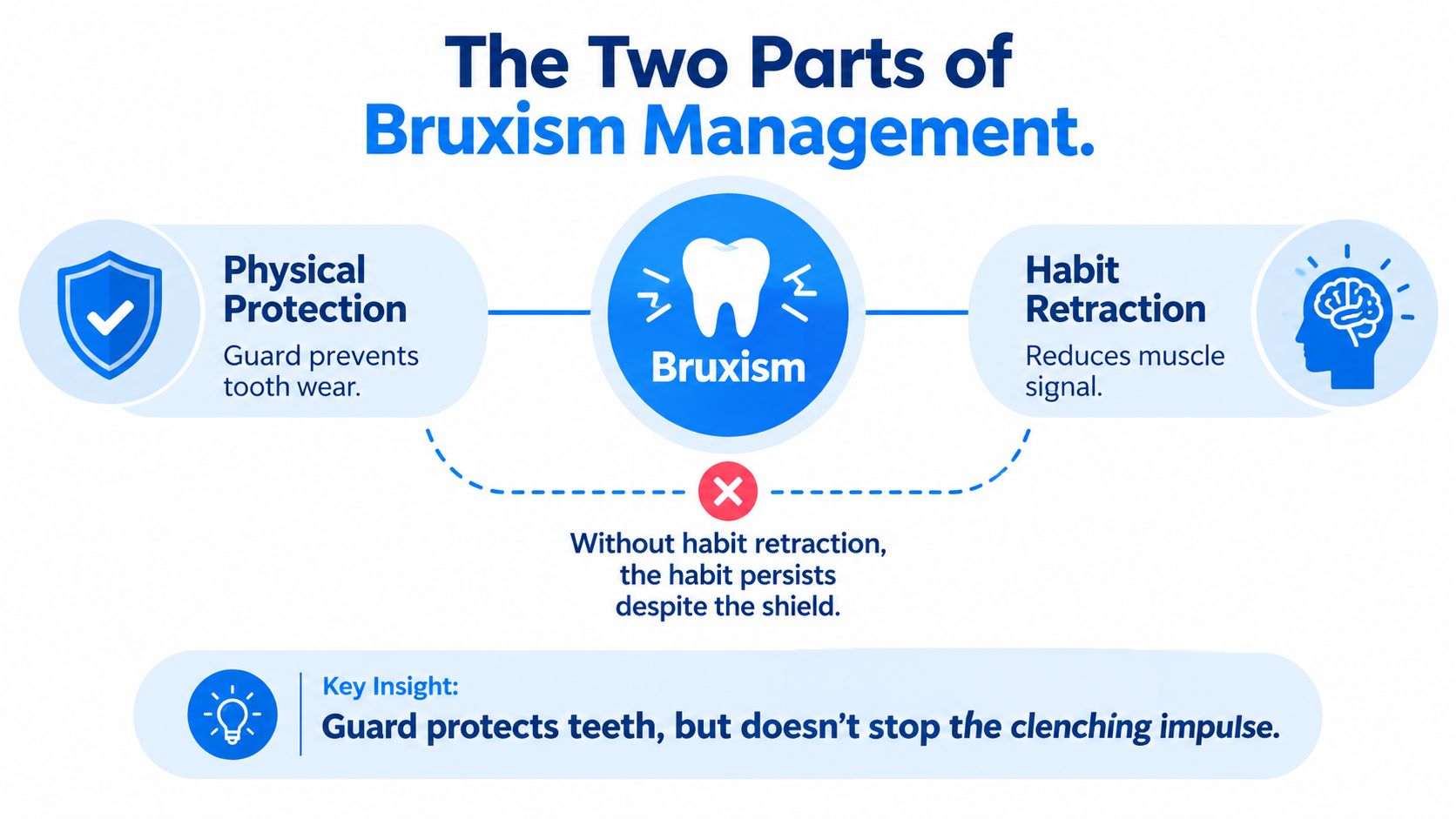
The guard remains valuable because tooth protection matters while behavior changes take time. A review of bruxism management notes that daytime bruxism can often be addressed through habit training that keeps the teeth separated (clinical overview of bruxism). That is the gap many appliance-only explanations miss.
A Scottsdale dental evaluation can therefore produce a layered plan. The appliance protects the teeth, the patient practices awareness, and the dental team watches for signs that the jaw or bite needs additional attention.
Caring for Your Day Guard and Knowing When to Replace It
A thin acrylic appliance needs consistent care. After each wear, the patient should rinse it with cool water, brush it gently with a soft toothbrush and mild non-abrasive soap, and allow it to air-dry on a clean surface before placing it in a ventilated case. Toothpaste can scratch acrylic, and a scratched surface can become harder to keep clean.
Hot water can distort the fit. The same risk applies to leaving the guard in a hot car or near another heat source. Alcohol-containing mouthwash may also be unsuitable for the appliance material, so the dentist's cleaning instructions should take priority.
A simple inspection routine
The patient can examine the guard regularly under good light:
- Cracks: A fracture can change how the appliance distributes pressure.
- Bite perforations: A hole or thin spot may show that the material is wearing through.
- Loose fit: Movement can allow pressure to concentrate on individual teeth.
- Persistent odor or buildup: This may indicate that cleaning or drying habits need improvement.
A replacement decision should follow the condition of the appliance and the dentist's review, not an arbitrary calendar. Daytime use, clenching intensity, material, and cleaning all affect wear. A patient shouldn't continue using a guard that has cracked, worn through, or changed shape.
A Scottsdale dentist should be contacted if jaw pain increases, the bite feels uneven, or the appliance creates new pressure. New tooth mobility, chipped enamel, or worsening headaches also deserve professional assessment. At that point, self-management has reached its limit, and the clinician needs to determine whether the guard is worn, poorly balanced, or inadequate for the underlying problem.
Scheduling a Day Guard Consultation in Scottsdale
A consultation makes sense when daytime clenching keeps returning despite repeated reminders to relax the jaw. The visit isn't only about ordering plastic. It gives the dentist an opportunity to identify the pattern, examine its effects, and decide whether a custom appliance, habit retraining, TMJ treatment, or a combined approach fits the patient.
The symptom history may include jaw fatigue, temple headaches, tooth sensitivity, and tightness near the ears. The dentist may ask whether symptoms increase while driving, working at a screen, concentrating, or attending meetings. A medication list and a short description of current stressors can make that conversation more useful.
What the examination can show
The clinical assessment may include:
- Chewing muscles: Palpation can reveal tenderness or overactivity.
- TMJ function: Opening, closing, joint sounds, and movement can guide the next step.
- Teeth: Flattened surfaces, wear lines, cracks, and restorations may show how force has affected the mouth.
- Soft tissues: Cheek scalloping or other contact marks can support the history of daytime pressure.
- Resting position: The dentist can assess whether the patient recognizes a relaxed jaw position.
If a custom appliance appears appropriate, the practice can take an impression or digital scan during the evaluation process. The laboratory then fabricates the guard according to the selected material and design. A later fitting visit allows the dentist to refine contacts, retention, speech comfort, and the patient's ability to close the lips naturally.
Scottsdale patients may also need related dental care uncovered during the examination. A damaged tooth may require a tooth-colored filling or crown, while a missing tooth may lead to a discussion about dental implants near me or other restorative options. A patient who wants to address discoloration after the functional issue is stable may ask about a cosmetic dentist near me, teeth whitening, bonding, or veneers. These services shouldn't replace a bruxism evaluation, but a complete dental plan can address several concerns in one setting.
The same practice can evaluate routine needs such as cleaning and exams, dental x-rays, new patient exams, periodontal care, and restorative dentistry. Patients with sudden swelling, severe dental pain, a broken tooth, or trauma should ask whether an emergency dentist appointment is appropriate rather than waiting for a routine guard consultation.
Residents of Scottsdale and nearby communities such as Paradise Valley and Tempe can bring a list of symptoms, current medications, stressful activities, and questions about appliance wear. That information helps the dentist distinguish a daytime habit from sleep-related grinding and prevents a one-size-fits-all recommendation.
A day guard can be a sensible protective tool, but its value comes from the plan around it. The right consultation connects the appliance to the patient's bite, muscles, daily habits, TMJ status, and wider dental needs.
Eric Wiitala DDS offers custom occlusal guards, TMJ pain assessment and management, preventive care, restorative dentistry, cosmetic services, and dental implant consultations for Scottsdale patients. Patients who recognize recurring daytime clenching can visit Eric Wiitala DDS to request an appointment and discuss a personalized bruxism plan.