
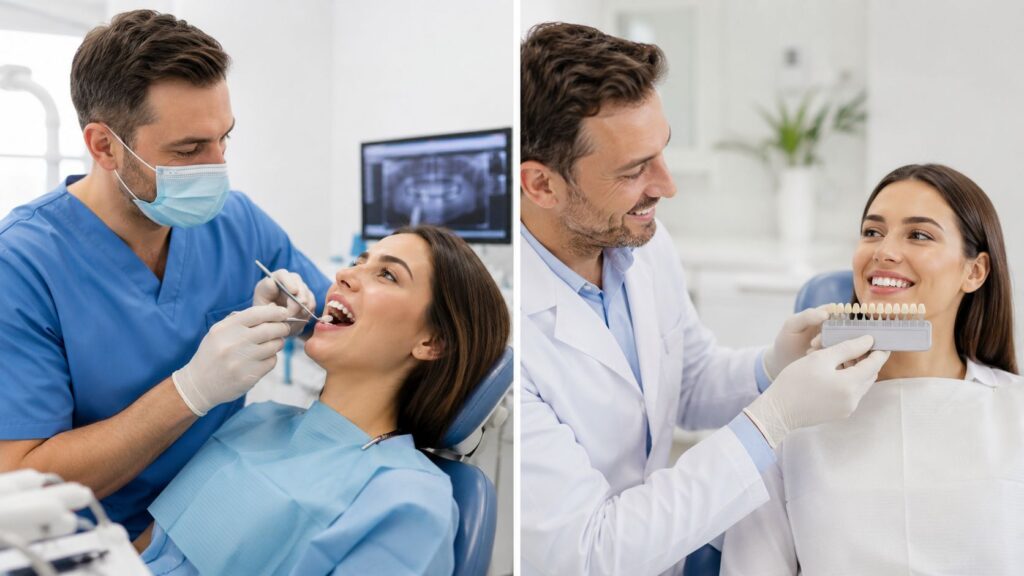
A patient in Scottsdale may start the day with a sensitive tooth, a chipped edge, or gums that bleed during brushing, then begin searching for a dentist near me before wondering whether a brighter smile requires a separate cosmetic dentist near me. That confusion is understandable. A cracked tooth may need restorative care, but the final treatment can also improve its appearance. Stains may seem cosmetic, yet a thorough examination can reveal decay, worn enamel, or gum concerns that should be addressed first.
The practical answer to cosmetic dentistry vs general dentistry isn't choosing one forever. General dentistry protects the health, comfort, and function of the mouth. Cosmetic dentistry improves the appearance of the smile. At Eric Wiitala DDS in Scottsdale, Arizona, patients can discuss both needs within a thorough dental evaluation, including preventive care, restorative treatment, smile enhancement, dental implants, clear aligners, sleep-related breathing care, and TMJ management.
Table of Contents
- Finding the Right Dental Care in Scottsdale
- Understanding the Core Differences Between General and Cosmetic Dentistry
- Comparing Common Procedures and Treatments
- Where Function and Aesthetics Overlap
- How to Decide Which Type of Care You Need
- Benefits of Choosing a Comprehensive Dental Practice
- What to Expect at Your First Visit in Scottsdale
Finding the Right Dental Care in Scottsdale
A Scottsdale resident named Elena notices a dull ache when drinking something cold. She also dislikes a darkened front tooth from an old filling. Her online searches shift quickly from “dentist near me” to “cosmetic dentist near me,” but neither search alone answers the key question. Should she book a routine examination, ask about teeth whitening, or seek an urgent evaluation for the painful tooth?
The safest starting point is the concern that may affect health. Pain, sensitivity, swelling, bleeding gums, a broken tooth, or difficulty chewing call for a general dental evaluation before elective cosmetic treatment. A dentist needs to determine whether decay, infection, gum disease, tooth wear, or an unstable restoration is driving the problem. Treating the cause first creates a sound foundation for any later smile improvement.
One practice can address both goals
General and cosmetic care often work together. A tooth-colored filling can remove decay and preserve a natural-looking appearance. A crown can reinforce a compromised tooth while restoring its shape. An implant can replace a missing tooth, support chewing, and help the smile look complete.
That combination matters for patients who don't want to repeat their history at multiple offices. Eric Wiitala DDS provides care for adults and families in Scottsdale, with services that include routine check-up visits, professional hygiene, restorative dentistry, cosmetic dentistry, dental implants, clear aligners, and selected sleep and TMJ therapies. The practice is located at 9755 North 90th Street, Suite B250, Scottsdale, AZ 85258.
Practical rule: If a smile concern comes with pain or loss of function, health assessment comes first. Appearance can be improved as part of the same treatment plan or after the mouth is stable.
A new patient exam is also appropriate for someone who feels fine. Cavities and gum problems may not cause obvious symptoms at first, and a dental examination with dental x-rays can identify concerns that aren't visible in a mirror. Patients seeking a brighter smile can then receive advice based on the actual condition of their teeth, gums, bite, and existing restorations.
Understanding the Core Differences Between General and Cosmetic Dentistry
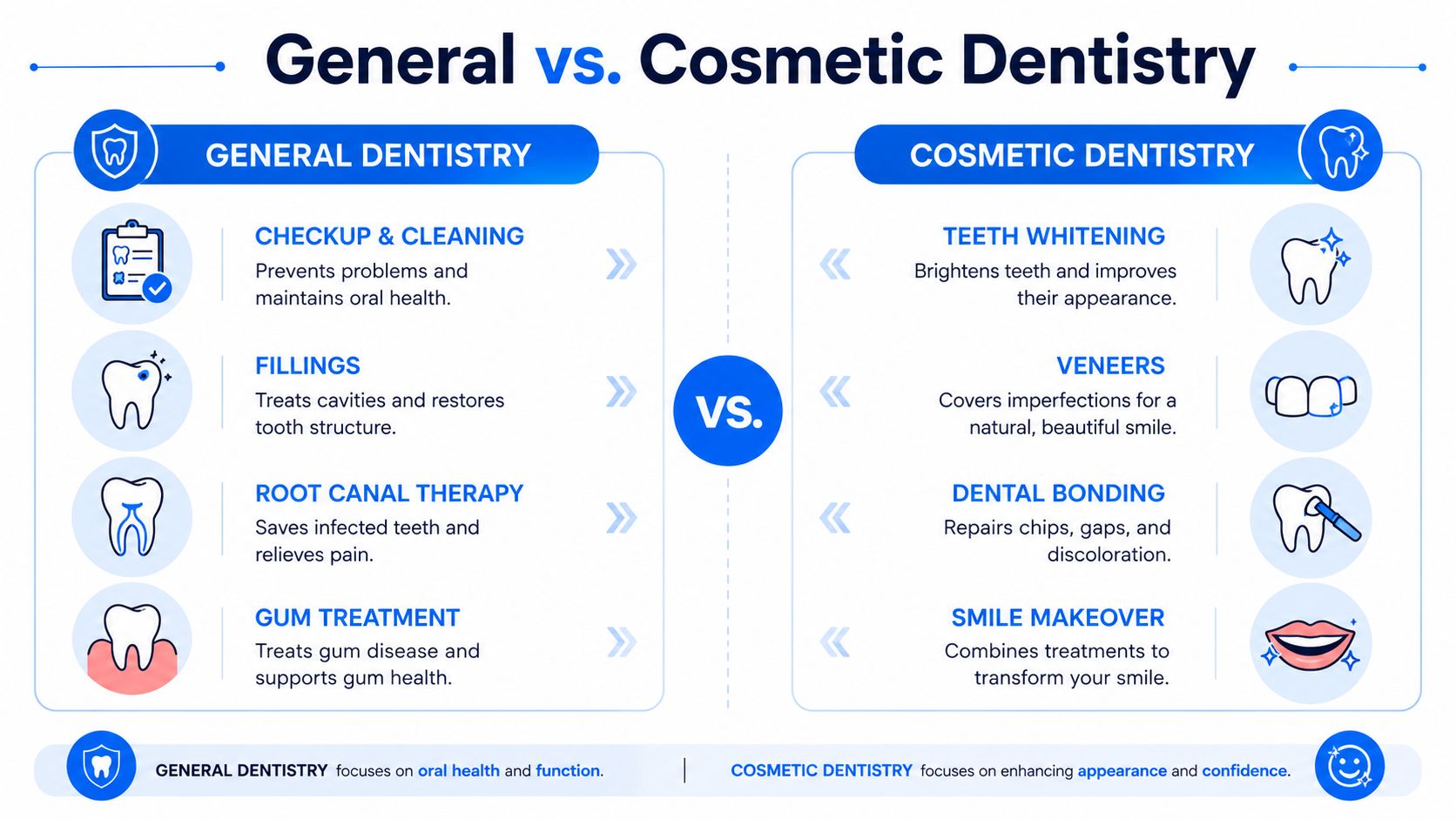
General dentistry is health-centered. It focuses on preventing, diagnosing, and treating oral disease, including cavities, gum disease, infection, damaged teeth, and tooth loss. Routine examinations, cleanings, dental x-rays, fillings, periodontal therapy, crowns, bridges, and tooth extraction all belong within the broader general and restorative care pathway.
Cosmetic dentistry is appearance-centered. It focuses on the color, shape, alignment, proportion, and symmetry of the smile. Teeth whitening, bonding, porcelain veneers, and clear aligners may be selected when the main concern is discoloration, small gaps, uneven edges, or mild alignment issues.
The two fields share the same foundational dental education. Cosmetic dentistry adds a focused interest in aesthetic diagnosis, material selection, smile design, and the relationship between teeth, gums, lips, and facial features. A dentist offering both services can evaluate whether an aesthetic request also involves disease, structural weakness, bite pressure, or tooth preservation.
Different purposes, connected decisions
General dentistry serves the everyday needs of oral health. The global burden of oral conditions affected about 3.5 billion people in 2017, including 2.3 billion cases of untreated permanent-tooth caries, 796 million cases of severe periodontitis, and 267 million people with total tooth loss, as summarized by global oral-health statistics. Those conditions explain why preventive examinations, hygiene care, fillings, gum treatment, tooth extraction, and tooth replacement remain central to dental care.
Cosmetic dentistry is newer and more commercially dynamic than general dentistry's long-established preventive and restorative base. A market estimate placed the global cosmetic dentistry market at USD 33.6 billion in 2022, with a projection of USD 89.03 billion by 2030 and a 13.5% CAGR, according to Grand View Research's cosmetic dentistry market analysis. The estimate reflects demand for whitening, veneers, bonding, clear aligners, and aesthetic crowns, which frequently complement routine dental care rather than replace it.
Patients looking for Scottsdale general care can review general dentistry services before scheduling. The important distinction is simple: general dentistry asks, “How can the mouth remain healthy and functional?” Cosmetic dentistry asks, “How can the smile look better?” A responsible plan asks both questions when both matter.
Comparing Common Procedures and Treatments
The procedure itself doesn't always reveal whether care is general or cosmetic. A filling may treat decay and blend with surrounding enamel. A crown may reinforce a weakened tooth and restore its visible shape. An implant may replace a missing tooth while supporting chewing and the appearance of the smile.
| Procedure | Category | Primary Goal |
|---|---|---|
| Check-up, hygiene, and dental x-rays | General dentistry | Prevent, detect, and manage oral disease |
| Tooth-colored filling | General and cosmetic overlap | Remove decay and restore tooth form |
| Periodontal evaluation and therapy | General dentistry | Manage gum health and inflammation |
| Tooth extraction | General or urgent restorative care | Remove a tooth that can't be predictably maintained |
| Teeth whitening | Cosmetic dentistry | Reduce stains on natural teeth |
| Dental bonding | Cosmetic and restorative overlap | Repair small chips, reshape edges, or close limited spaces |
| Porcelain veneers | Cosmetic dentistry | Change selected teeth's color, shape, or proportion |
| Clear aligners, including SureSmile | Cosmetic and orthodontic care | Improve alignment and, where appropriate, bite relationships |
| Crown | General and cosmetic overlap | Reinforce and restore a compromised tooth |
| Bridge | Restorative and cosmetic overlap | Replace a missing tooth or teeth |
| Dental implant | Restorative and cosmetic overlap | Replace a missing tooth and restore chewing function |
| All-on-Four solution | Restorative and cosmetic overlap | Support a full-arch replacement for an edentulous or near-edentulous case |
General care, cosmetic care, and the middle ground
Routine check-ups, professional hygiene, dental x-rays, periodontal therapy, and tooth extraction address health, disease, or function. A tooth extraction isn't a cosmetic procedure, even though removing a hopeless tooth may be necessary before a future bridge or implant restores the smile.
Whitening, veneers, and bonding are more directly aesthetic. Whitening affects natural teeth, so existing crowns, bridges, veneers, and fillings may not change shade in the same way. Bonding can be conservative for a small repair, but it still requires realistic expectations about staining, wear, polishing, and possible maintenance.
Patients comparing materials and treatment approaches can review veneers versus bonding before a consultation. For readers researching related appearance-focused procedures, Spa Black's lip filler block guide provides context about an adjacent cosmetic treatment topic. It shouldn't replace a dental examination, but it may help explain why patients often consider smile design alongside other facial aesthetic choices.
Durability deserves more attention
Veneers aren't interchangeable with crowns. A systematic review reported approximately 90% to 96% survival for ceramic veneers over 10 to 15 years, while resin composite laminate veneers had a pooled survival rate of 88% across the reviewed studies, with follow-up ranging from 24 to 97 months, as reported in the systematic review of contemporary dental veneers. These figures describe study findings, not a guarantee for an individual patient.
The same review noted that veneers preserve about 50% to 70% more tooth structure than crowns, while crowns provide more mechanical reinforcement and require more aggressive preparation. That difference makes diagnosis essential. A veneer may suit a primarily cosmetic concern involving color or shape, while a crown may be more appropriate for a tooth weakened by decay, a large restoration, cracks, or substantial loss of structure.
Where Function and Aesthetics Overlap
The strongest treatment plans don't force health and appearance into separate categories. They ask what the tooth needs to remain stable and what the patient wants the smile to look like after treatment. A mercury-free, tooth-colored filling can restore a cavity while blending with the tooth. A crown can protect a compromised tooth and recreate a natural contour. An implant can replace missing structure without leaving a visible gap.
The tooth should determine the treatment
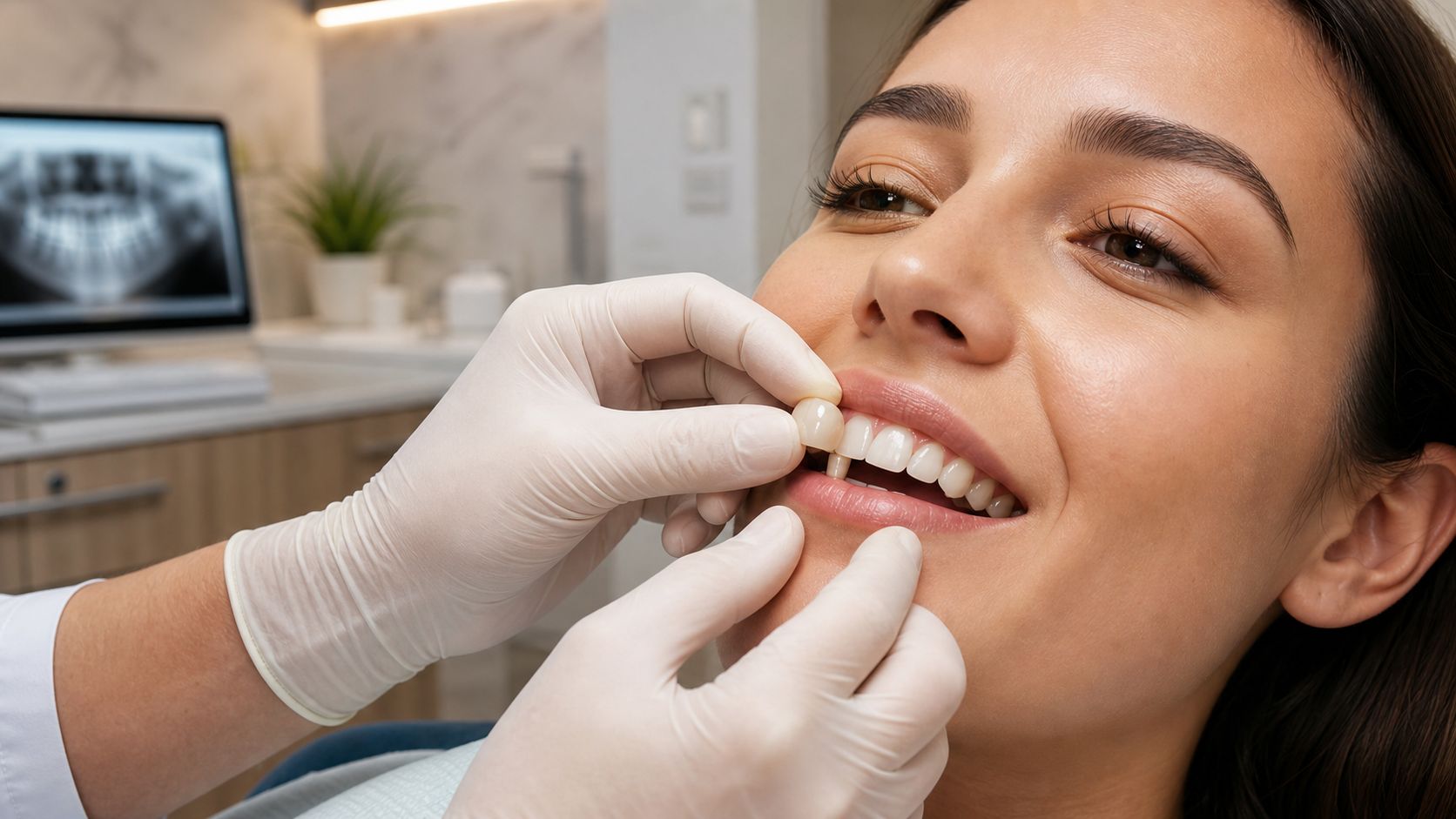
Aesthetic preference matters, but it shouldn't override tooth preservation. If a front tooth has a small chip, bonding may repair the edge with limited intervention. If several teeth have discoloration but remain healthy and structurally sound, whitening may be a reasonable first consideration. If a tooth has significant structural damage, a crown may offer reinforcement that a purely cosmetic option can't provide.
The American Dental Association's restorative caries treatment guidance emphasizes caries removal approaches and direct restorative materials for primary and permanent teeth. That framework reflects a central general-dentistry principle: treatment must address disease mechanics, not just what appears in a photograph.
Patients should also ask what happens after treatment. Whitening may require maintenance as new stains develop. Bonding may need polishing or repair. Veneers require permanent enamel reduction, and their long-term success depends on bite forces, hygiene, material choice, and the condition of the supporting teeth. Implants and crowns also need regular examinations and professional cleaning.
The ethical question isn't whether cosmetic dentistry is “real dentistry.” The more useful question is whether an aesthetic treatment is medically prudent, minimally destructive, and consistent with the patient's goals. Professional ethics literature continues to discuss beneficence, autonomy, justice, and the tension between avoiding harm and respecting patient choice, as reflected in the ethics discussion indexed by PubMed.
A treatment plan should therefore include alternatives, expected longevity, risks, maintenance, and cost. Patients deserve to know when a less invasive option may meet the goal and when a stronger restoration may better protect the tooth.
The following video offers another visual explanation of treatment considerations:
How to Decide Which Type of Care You Need
The decision becomes easier when symptoms and goals are separated. A patient who wants a brighter smile but also has bleeding gums shouldn't begin with veneers. A patient with a broken tooth shouldn't book whitening before checking whether the tooth can be restored. The right first appointment depends on what the mouth is communicating.
Start with the most urgent concern
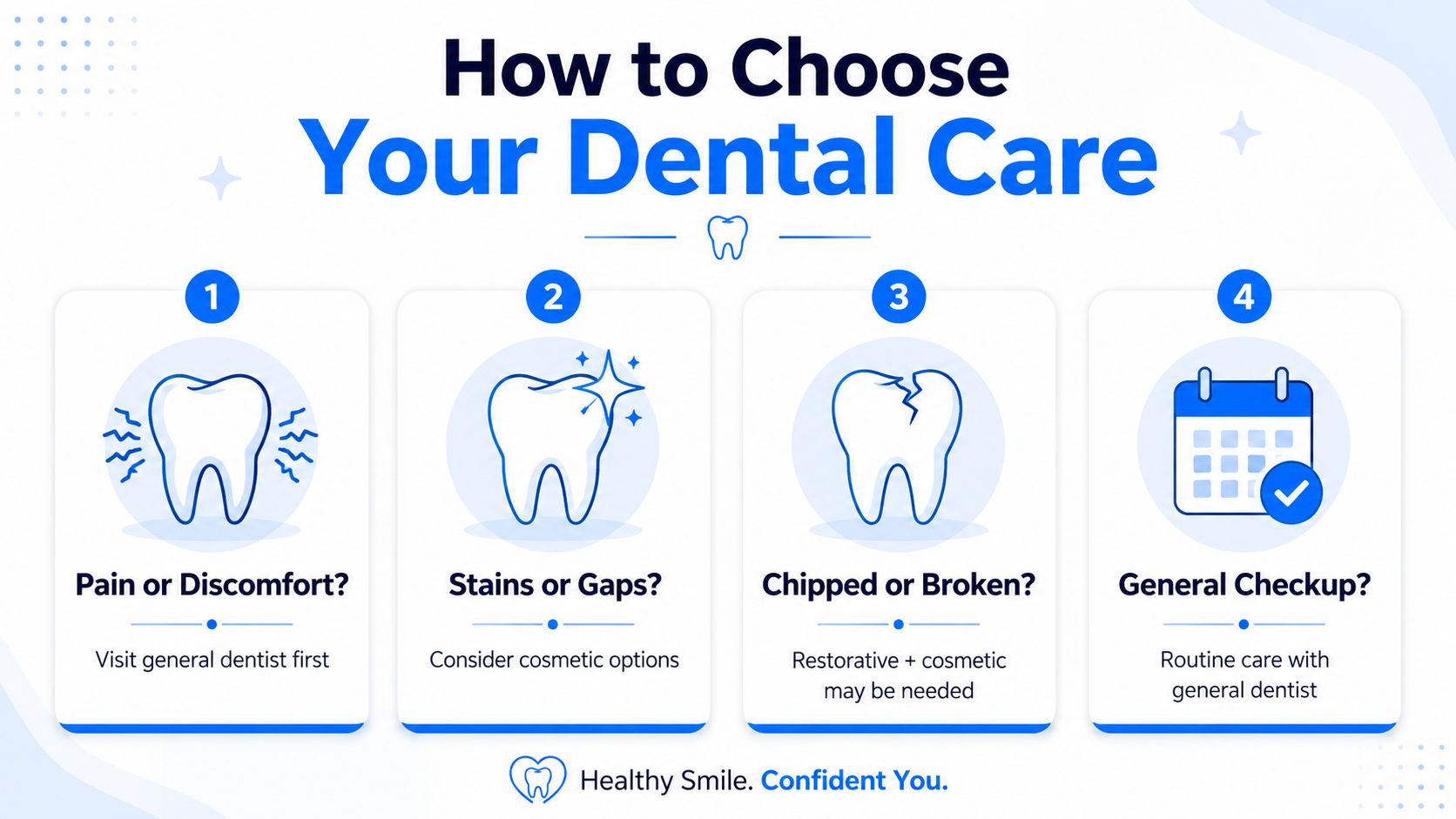
Pain or sensitivity: A new patient exam, dental x-rays, and a general evaluation should come first. The dentist may identify decay, a damaged restoration, infection, gum disease, or bite-related wear.
Swelling, trauma, or a loose tooth: An emergency dentist evaluation may be appropriate. Tooth extraction is sometimes necessary when a tooth can't be saved, but replacement planning with a bridge or dental implant can follow once the area is ready.
Stains, uneven edges, or small gaps: A cosmetic consultation can help identify whether teeth whitening, bonding, veneers, or clear aligners fit the concern. Healthy teeth and gums remain the starting point.
A chipped or broken tooth: Restorative and cosmetic care may overlap. Bonding may suit a minor defect, while a crown may be better when the tooth needs reinforcement.
Consider the whole bite
Missing teeth, unstable dentures, clenching, grinding, TMJ discomfort, and bite changes can affect more than appearance. A dental implant, bridge, or All-on-Four solution may improve chewing and smile completeness, but the treatment plan should account for gum health, available support, bite forces, and maintenance.
Chronic snoring and sleep apnea concerns also deserve a thorough assessment rather than a cosmetic appointment alone. Eric Wiitala DDS addresses sleep-related breathing issues with oral appliance therapy and evaluates TMJ pain, bruxism, and bite protection with custom appliances or other indicated care.
General dentistry remains the logical first step for many patients because it establishes whether the mouth is healthy enough for elective treatment. The broader disease burden described earlier makes that sequence practical, not merely cautious. Once decay, gum disease, infection, and unstable teeth are managed, patients can make cosmetic decisions with a clearer understanding of prognosis and alternatives.
Benefits of Choosing a Comprehensive Dental Practice
A practice that provides general and cosmetic care can keep the treatment plan connected from the first examination through maintenance. The dentist who monitors gum health can also assess whether whitening, bonding, veneers, aligners, crowns, or implants fit the patient's condition. That continuity reduces the risk of making an appearance decision without considering the supporting teeth, bite, or long-term cleaning needs.
Eric Wiitala DDS provides preventive, restorative, cosmetic, implant, orthodontic, sleep, and TMJ-related services in Scottsdale. Dr. Eric Wiitala graduated from Indiana University School of Dentistry in 1999, has more than 20 years in practice, and is recognized as one of the Valley's Top Dentists by PHOENIX magazine, according to the practice's published information. The practice also reports training in cosmetic dentistry, sleep apnea, and Botox therapies, along with an approach that considers nutritional health and minimally invasive options.
Clear planning protects patient choice
Patients should receive more than a recommendation and a fee. They should understand what each option changes, how much natural tooth structure it uses, whether it can be repaired or revised, what maintenance it requires, and how the result may age.
A 2024 pilot study of general dentists found significant variation in cosmetic treatment plans and fees for the same standardized patient scenario. Some dentists recommended aesthetic care even when the patient hadn't stated a cosmetic concern, and dentists in privileged areas were about twice as likely to prescribe cosmetic treatments as dentists in less privileged areas, according to the published pilot study. The finding supports a direct recommendation for patients: ask why a cosmetic procedure is being proposed and what less invasive alternatives exist.
An office like this can also support practical needs beyond treatment selection. Eric Wiitala DDS provides new patient protocols, insurance and billing support, financing options, and patient education. Public testimonials on the practice website describe professional, gentle care and long-term relationships with patients in the Scottsdale community.
The benefit isn't just convenience. It's having oral health, function, appearance, and maintenance considered together before an elective or restorative decision is made.
What to Expect at Your First Visit in Scottsdale
A first visit at Eric Wiitala DDS begins with a review of the patient's concerns, oral health history, current symptoms, and smile goals. A thorough examination and dental x-rays help identify problems that may not be visible during a casual smile assessment. The appointment can also clarify whether the next step involves preventive care, periodontal therapy, restorative dentistry, cosmetic dentistry, dental implants, clear aligners, or urgent treatment.
Patients should bring a list of medications, information about prior dental work, and a clear description of discomfort, sensitivity, clenching, snoring, or cosmetic concerns. Specific details help the dental team distinguish a routine request from a problem that needs prompt attention.
Treatment planning is collaborative. The dentist explains available options, expected outcomes, maintenance needs, costs, and relevant alternatives before care begins. A patient asking about teeth whitening may learn that a cleaning is appropriate first. Someone searching for dental implants near me may need an evaluation of the missing area, neighboring teeth, gums, bite, and overall restorative plan. A patient searching for an emergency dentist can receive guidance based on symptoms and the condition of the affected tooth.
The Scottsdale office is at 9755 North 90th Street, Suite B250, Scottsdale, AZ 85258. Office hours are Monday through Thursday, with Friday appointments available by arrangement. Insurance and billing support, along with financing options, can help patients understand the practical side of treatment.
Eric Wiitala DDS offers general, restorative, cosmetic, implant, orthodontic, sleep, and TMJ care for Scottsdale patients who want a treatment plan built around both oral health and smile goals. Patients can visit Eric Wiitala DDS or call (480) 657-6981 to schedule a new patient examination or request a cosmetic dentistry consultation.