

Gum disease treatment costs in Scottsdale can start around $128 for a periodontal evaluation and rise to $2,337 for a single implant when a tooth is lost to gum disease. For many patients, the answer sits somewhere in between, because the final bill depends on severity, insurance coverage, and whether care starts early or after the disease has advanced.
A patient may notice bleeding gums, bad breath, or tenderness and assume the fix will be a simple cleaning. In reality, gum disease often needs a full episode of care, not one appointment, and that can include diagnosis, deep cleaning, maintenance visits, surgery, and sometimes tooth replacement.
Understanding Gum Disease Treatment Costs in Scottsdale
A Scottsdale patient who has been putting off care for months usually wants one direct answer, but gum disease treatment cost depends on where the disease sits on the spectrum. A simple checkup and detailed periodontal evaluation can be very different from deep cleaning, gum surgery, or replacing a tooth that can no longer be saved. The price also changes with how many areas of the mouth are affected, because periodontal care is often billed by quadrant rather than as one flat fee.
What the bill usually includes
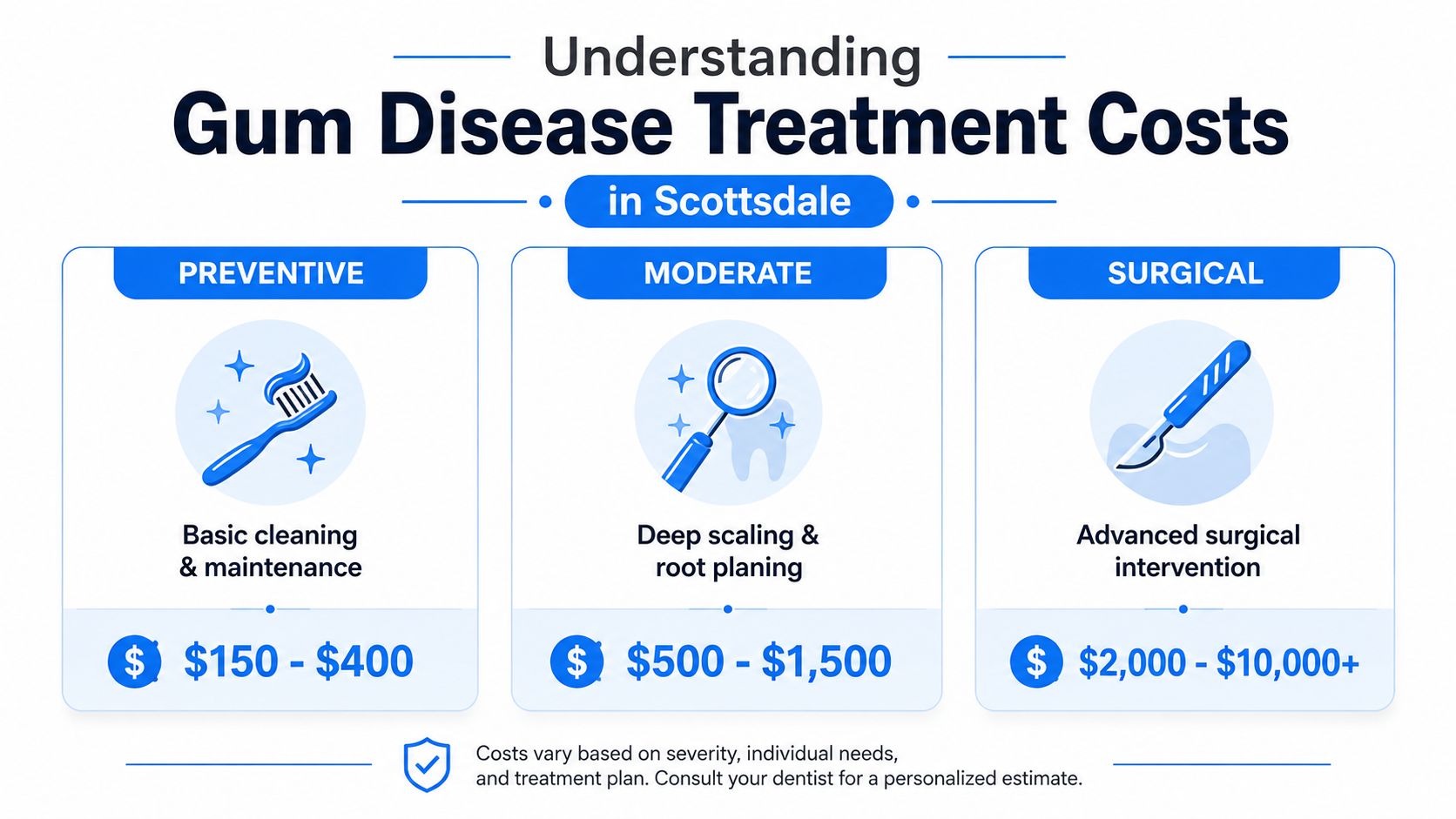
A practical estimate starts with the visit itself, then adds treatment steps as needed. A periodontal evaluation is around $128, while non-surgical periodontal treatment often runs $150 to $435 per quadrant, or roughly $600 to $1,400 for full-mouth deep cleaning depending on how widespread the disease is. When disease is more advanced, surgery can move the total into the $2,000 to $10,000 range, and some full-mouth plans reach $5,000 to $12,000+ when grafting or multiple procedures are involved.
Practical rule: the bill usually grows with the number of affected quadrants, not just with the label on the diagnosis.
| Global vs Local Gum Disease Cost Perspective | Direct Treatment Costs | Productivity Losses |
|---|---|---|
| Global estimate, 2024 | US$357 billion per year | US$188 billion annually |
| Worldwide periodontitis analysis, 2019 | US$186 billion | US$142 billion |
| U.S. prior estimate | US$3.49 billion | Not stated |
| 32 European countries, 2018 | €2.52 billion | Not stated |
Those broader figures help explain why dentists treat gum disease as a serious chronic condition, not a small hygiene issue. They also show why patients in Scottsdale should ask for a written treatment plan instead of a single quick quote, because diagnosis, deep cleaning, follow-up maintenance, and any tooth replacement can each carry their own cost.
Why an episode-of-care estimate matters
The best way to think about costs is as a full episode of care. That means the patient is not just paying for the first visit, but for the sequence that follows, including reevaluation and ongoing maintenance if the gums need long-term management. A quote that leaves out maintenance can look lower than the actual total.
A calm, transparent estimate gives patients a much better sense of what to expect. It also makes it easier to compare options before disease advances and the treatment plan becomes more complex.
How Disease Severity Drives Treatment Costs
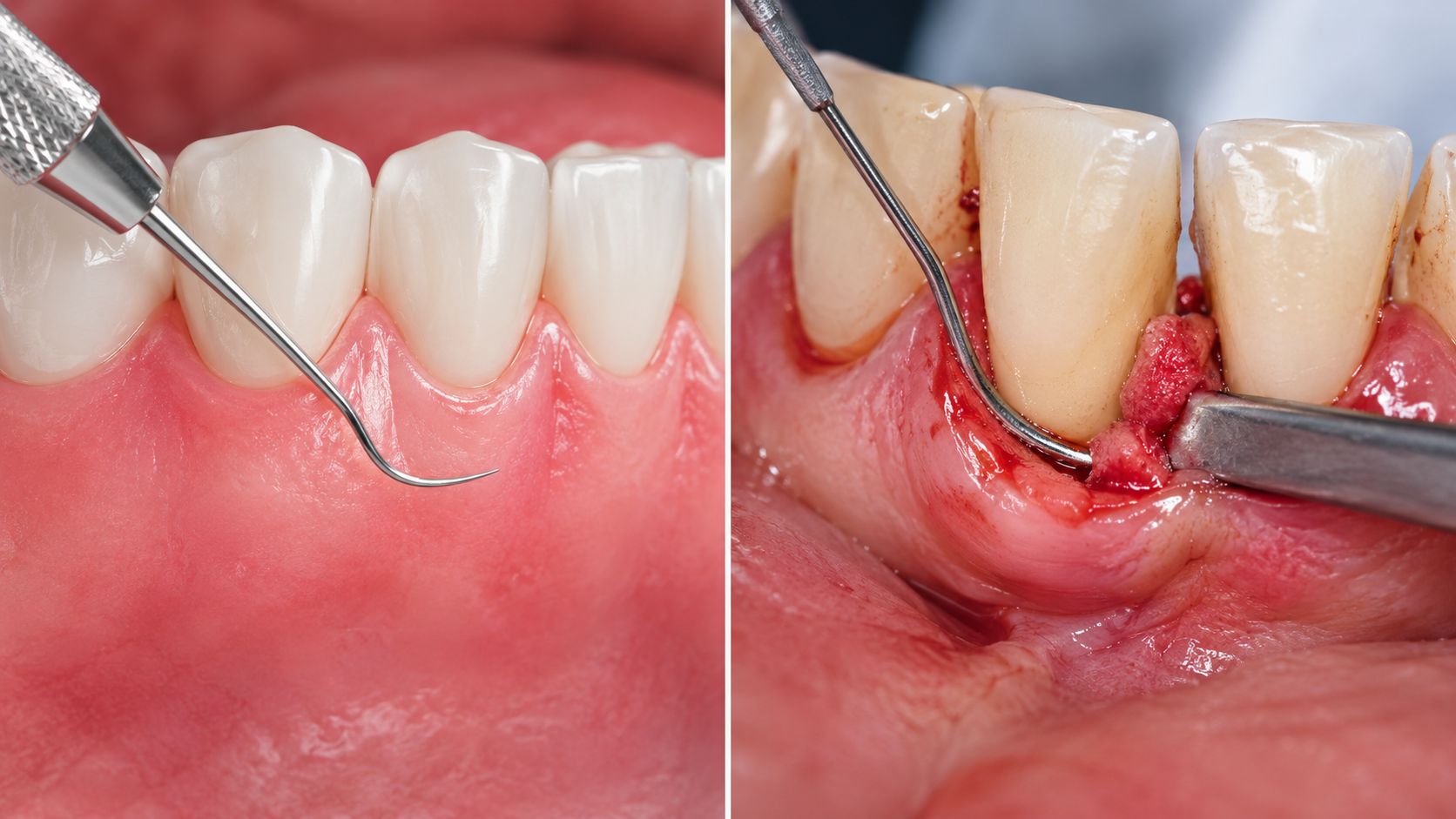
A patient with early gingivitis usually faces a very different bill than someone with deep pocketing and bone loss. The difference comes from what has to be done to stop the disease, remove infection, and keep the teeth stable. Early cases often stay limited to simpler care, while advanced cases spread into multiple stages of treatment.
From reversible inflammation to deeper damage
Early gum problems can often be managed with preventive care and better home hygiene. Moderate disease may require scaling and root planing, and once the disease progresses, the focus shifts from cleaning the gums to more invasive work, including surgery or tissue repair. The price rises because the visit is no longer just about removing buildup. It is about treating deeper pockets, protecting supporting bone, and preventing further loss.
The cost structure also changes because scaling and root planing is typically billed per quadrant, not as one flat fee Real Dental Costs. That matters for patients with generalized disease, since more affected areas mean more procedures, more appointments, and more time in the chair. A patient with one localized site may keep the total relatively contained, while widespread disease can turn into a much larger episode-of-care cost. In Scottsdale, that full-care view matters because early treatment can often stop the bill from expanding into surgery and later replacement work.
What advanced care adds
Advanced care can include flap surgery, grafting, laser-assisted therapy, and in some cases implant planning when teeth cannot be saved. Those steps add cost because they address structural loss, not just surface inflammation. If the gums have receded and the root is exposed, a gum graft may also be part of the plan, as explained in our gum grafting procedures guide.
A tooth lost to gum disease can also create a replacement cost on top of treatment. That is one reason delayed care is so expensive. A dental implant used to replace a tooth lost to gum disease can cost about $2,337 Humana gum disease treatment cost guide, which shows how quickly a treatment plan can move from control to reconstruction.
A video overview can help patients understand why the type of procedure matters as much as the diagnosis itself.
The deeper the pockets and the greater the bone loss, the more the plan shifts from cleaning to rebuilding.
That is the cost lesson patients need to hear early. Prompt treatment usually means fewer steps, less chair time, and a lower total bill. Waiting until the disease has damaged the supporting tissues usually means a longer path, more appointments, and more restorative work later.
Comparing Non-Surgical and Surgical Treatment Options
Patients often ask whether they can avoid surgery. In many cases, the answer is yes, at least at first. The right choice depends on how far the disease has progressed, how much inflammation is present, and whether the gums respond to deep cleaning alone.
| Gum Disease Treatment Options and Cost Ranges | Cost Range | Typical Use Case |
|---|---|---|
| Scaling and root planing | $180 to $300 per quadrant on one benchmark, with other published ranges reaching $150 to $435 per quadrant | Moderate disease, deep cleaning below the gumline |
| Periodontal maintenance | $100 to $300 per visit | Ongoing care after active treatment |
| Periodontal surgery | $2,000 to $10,000 | Deeper pocketing, tissue access, more advanced disease |
| Full-mouth advanced treatment | $3,500 to $12,000+ | Severe disease with multiple procedures |
| Single implant replacement | $2,337 | Tooth loss from gum disease |
The non-surgical path usually starts with scaling and root planing, which removes bacteria and hardened deposits from below the gums. One dental-insurance resource reports an average of $180 to $300 per quadrant, and notes that many dental insurance plans cover at least half of the procedure CareCredit gum disease care guide. That option is often the first line of care because it targets the infection before more invasive steps are needed.
Surgery enters the picture when simple debridement isn't enough. Gum grafting, flap surgery, and related procedures are designed to access deeper pockets, reshape tissue, or restore lost support. For patients who need grafting, a dedicated procedural overview is available at gum grafting procedures, which is useful for understanding why the cost moves upward when the gums have already receded.
How to think about the trade-off
Non-surgical treatment is usually more conservative, less disruptive, and lower in cost. Surgical care is reserved for cases where the gums need more direct intervention or where previous treatment hasn't fully controlled the disease. That trade-off matters because the cheaper option today is only the better option if it matches the clinical need.
Bottom line: the least expensive plan is the one that stops disease before it becomes structural damage.
That is why a careful periodontal exam matters so much. It helps separate the patients who need a deep cleaning from the patients who need a more advanced repair plan.
Navigating Insurance and Financing Options
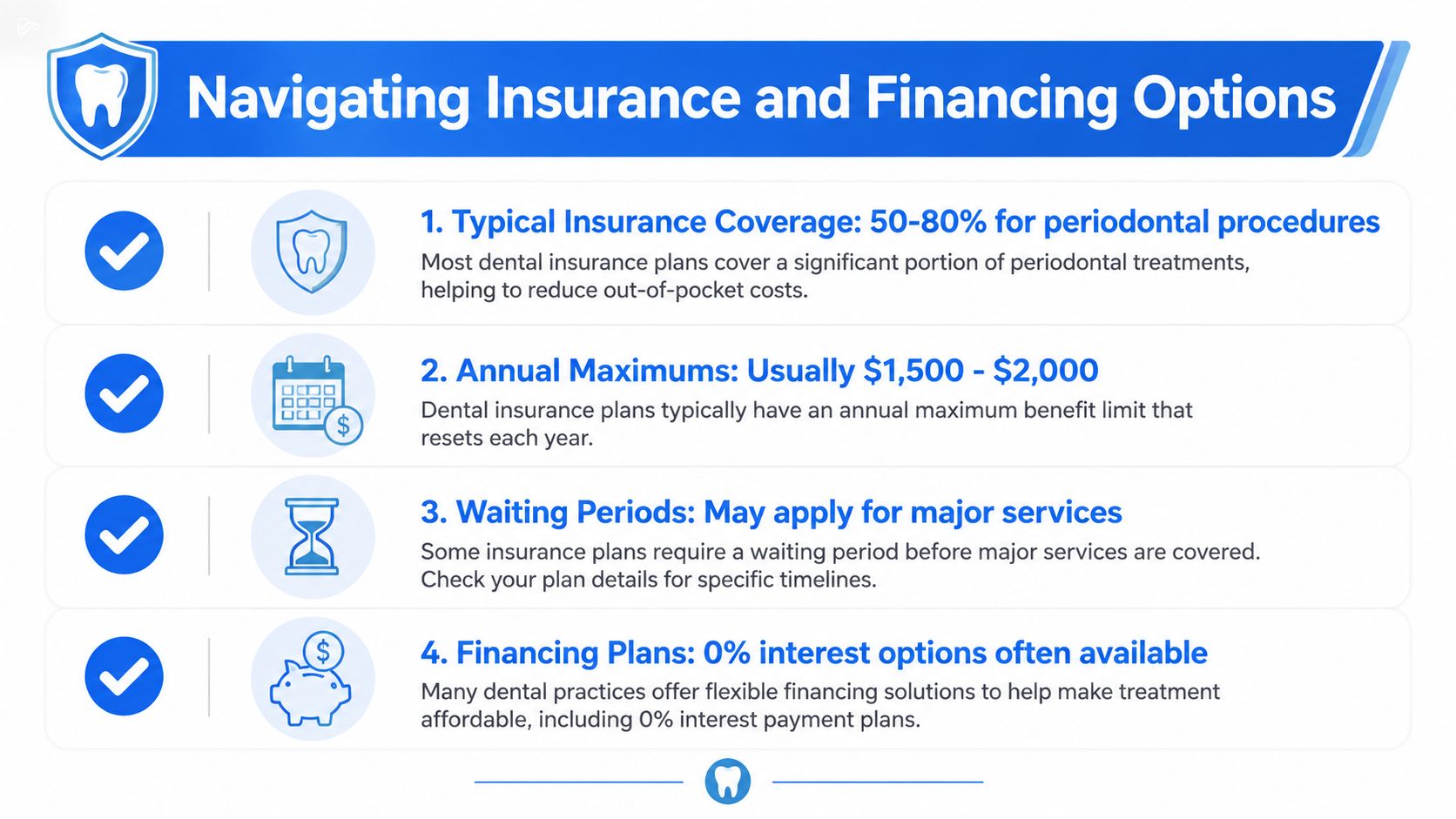
Insurance can soften the cost of gum care, but only if the patient understands how benefits work. Periodontal procedures are often covered better than many people expect, yet annual maximums and timing rules still affect the final out-of-pocket amount. That makes the billing conversation just as important as the clinical one.
What patients usually need to ask
The most useful questions are simple:
- What part of the periodontal treatment is covered? A CareCredit dental resource says many plans cover at least half of scaling and root planing CareCredit gum disease care guide.
- How much of the annual maximum is left? Even good insurance can run into cap limits.
- Is pre-authorization needed? That helps avoid surprises before treatment begins.
- Can care be split across calendar years? CareCredit notes that splitting treatment may help fit within annual maximums CareCredit gum disease care guide.
A broader insurance comparison can also help patients evaluate policy features before they commit to a plan. A useful overview is the 2026 dental insurance roundup, especially for people who are comparing periodontal coverage and benefit structure ahead of treatment.
How financing fits in
When insurance doesn't cover enough, financing can keep care moving. Payment plans and third-party financing are common ways to spread the cost of deeper treatment, especially when the diagnosis includes multiple quadrants or a staged plan. That matters because delaying care often makes the bill harder, not easier, to manage.
An office that supports billing questions can make a real difference here. Eric Wiitala DDS has an insurance and billing resource that can help patients understand coverage and payment logistics before treatment starts.
Financial planning should support treatment, not postpone it.
That approach is especially helpful for Scottsdale patients who want to avoid a painful surprise later. A clear estimate, a benefits check, and a payment plan can make necessary periodontal care feel much more manageable.
Scottsdale-Specific Pricing Scenarios
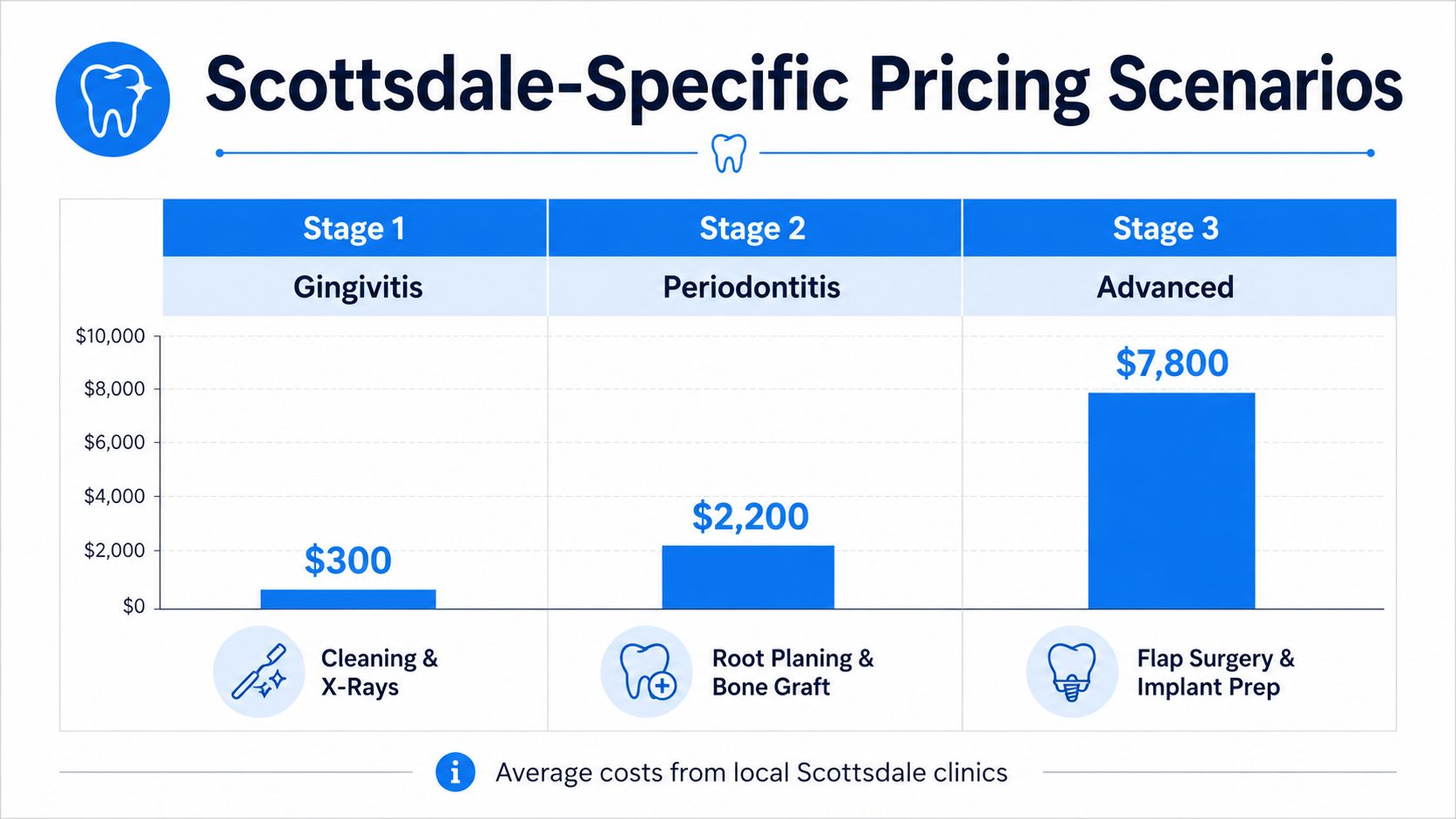
A Scottsdale patient can walk in expecting a simple cleaning quote and leave with a plan that includes evaluation, imaging, periodontal therapy, and follow-up maintenance. That difference matters. Gum disease treatment cost is usually shaped by the full episode of care, not just the first procedure line on the estimate. Local pricing also makes more sense when it is compared with the broader national picture, because the same diagnosis can lead to very different total bills depending on how early the patient acts.
What a local treatment path can look like
A patient with early gum inflammation may need a periodontal exam, imaging, and a cleaning-based treatment plan. That first stage often stays relatively contained because the goal is to stop infection before it spreads, as noted in the Humana gum disease treatment cost guide. Once the disease moves beyond gingivitis, the bill usually grows because the visit shifts from prevention to active periodontal care.
Moderate disease often brings quadrant-based deep cleaning, and that is where the total can rise quickly. Severe cases create a different kind of cost entirely. Surgery, grafting, or implant planning adds procedures meant to preserve or rebuild support, not just remove bacteria. A patient who waits usually sees a larger total because the care plan has to address more tissue loss and more steps.
How to judge whether a quote is reasonable
A reasonable quote should answer three questions.
- How many quadrants are involved?
- Which procedures are active treatment, and which are maintenance?
- Will any tooth replacement be needed later?
If those details are missing, the estimate is incomplete. A fair breakdown should show how the office arrived at the number, especially when the treatment is staged across visits. Scottsdale patients comparing plans should ask for separate line items for the exam, the deep cleaning, any surgery, and follow-up care.
A good estimate tells the patient what is being treated now, and what may still be needed later.
That matters because the first number rarely reflects the full episode-of-care cost. A clean breakdown reduces surprises, and it helps patients make decisions based on facts instead of guessing what the final bill will look like.
The Hidden Cost of Delayed Treatment
Waiting feels cheaper at first. In periodontal care, that assumption usually breaks once the disease spreads and the treatment plan has to do more than remove bacteria. What could have been a deep cleaning can become surgery, repeated maintenance, tissue repair, or replacement of a tooth that can no longer stay supported.
A UK pricing guide shows the pattern clearly, with early intervention at £85, early periodontitis at £400 to £1,040, and very delayed care at £4,000+ urgent care dental gum disease treatment prices. That spread is useful because it reflects the cost of delay, not just the first visit. A moderate case can still stay manageable, but once the gums are affected, care usually takes more visits, more chair time, and a larger total bill.
The full episode-of-care cost is where patients feel the difference. Scaling and root planing may be only one part of the plan, then follow-up maintenance, re-evaluation, and sometimes surgery or grafting come into play. If support around a tooth is lost, replacement work can follow, and that adds a new expense on top of the periodontal treatment itself. A patient who waits often ends up paying for both the disease and the damage it left behind.
That same pattern shows up in restorative dentistry. A tooth lost to gum disease may need an implant, and the treatment cost rises because the plan now includes rebuilding function, not just controlling infection Humana gum disease treatment cost guide. Patients sometimes assume delay gives them time to decide, but in practice it usually turns one problem into several.
For a plain-language comparison of how dental infection can escalate into more invasive treatment, what dentists do for a root canal gives a helpful clinical parallel. The point carries over to gum disease, because once infection and tissue loss advance, treatment becomes more involved and more expensive to finish.
Cost lesson: early care usually buys simpler treatment, fewer stages, and fewer restorative surprises.
That is why a periodontal evaluation is worth doing sooner rather than later. In Scottsdale, timely care can protect both the gums and the budget, and it often keeps the total cost lower than waiting for a larger repair plan.
Your Next Steps Toward Healthy Gums in Scottsdale
The smartest next step is a periodontal evaluation, especially if gums bleed, feel tender, or have started to recede. A clear diagnosis tells the patient whether the problem is limited to preventive care or whether deep cleaning, surgery, or tooth replacement should be discussed. It also gives the office a chance to outline costs before treatment starts.
Patients should ask direct questions at the first visit. What areas are affected, how many quadrants need care, and what can be done first to reduce inflammation? That conversation should also include insurance, financing, and whether care can be staged in a way that fits the patient's budget without delaying needed treatment.
Eric Wiitala DDS in Scottsdale provides periodontal evaluation and therapy as part of a broader dental care approach that also includes restorative, cosmetic, and implant services. For patients comparing options, that kind of integrated care can help connect gum treatment with the rest of the mouth, especially if tooth loss, crowns, or implants are part of the bigger picture.
The right plan is the one that treats the disease early, explains the cost clearly, and gives the patient a path forward without pressure. Scottsdale patients who want that kind of care should book before the problem becomes more expensive.
Eric Wiitala DDS offers periodontal evaluation and therapy in Scottsdale, along with support for insurance and billing questions, so patients can understand both the clinical plan and the financial side before treatment begins. If gum disease has made chewing, brushing, or smiling uncomfortable, visit Eric Wiitala DDS to schedule a consultation and get a clear, personalized estimate for next steps.