

A lot of Scottsdale patients start in the same place. They've scheduled a procedure, or they're still deciding, and one question keeps coming up: How long does it take to recover? They aren't only asking about pain. They want to know when they can eat normally, sleep comfortably, get back to work, and stop worrying that every twinge means something is wrong.
That question matters whether the visit involves a tooth extraction, a new crown, cosmetic dentistry, or dental implants near me searches that lead people to a more permanent solution. Recovery feels less stressful when the timeline is clear. Patients want honest expectations, not vague reassurance.
For patients considering care with Dr. Eric Wiitala in Scottsdale, this guide lays out what recovery usually looks like, what tends to feel normal, and when follow-up care matters. Dr. Wiitala has more than 20 years in practice, and that kind of experience shows up in the details that help patients feel prepared, calm, and informed. For readers who are also sorting out family support or coverage questions before treatment, Family Caregiving Kit insights on dental can be a useful planning resource.
Planning Your Dental Procedure in Scottsdale
People searching for a dentist in Scottsdale, AZ or an emergency dentist usually aren't looking for theory. They want to know what life will feel like after the appointment. Will there be swelling. Will work need to be canceled. Will dinner need to be soup for a while. Those are practical questions, and they deserve direct answers.
A patient planning a restorative visit often worries that recovery means being out of commission for a long time. In reality, recovery depends on the procedure. A filling and a dental implant are very different experiences, and confusion often starts when every dental treatment gets lumped together under the same word, “healing.”
Why clear expectations make recovery easier
The smoothest recoveries usually begin before treatment starts. When a patient understands what will happen the first evening, the first few days, and the next stage after that, normal healing feels less alarming. Mild soreness after a crown preparation feels different from the tenderness after a tooth extraction, and both feel different from the longer healing path that comes with implant treatment.
Practical rule: Recovery is easier to manage when patients separate short-term soreness from full tissue healing.
That's one reason planning matters so much in restorative and implant dentistry. Dental implants are also more predictable than many patients assume. Dental implants boast a success rate exceeding 95%, making them one of the most predictable procedures in modern dentistry when planning, placement, and post-treatment care are handled well, according to this dental implant success overview.
Choosing a local dental team patients can reach
When patients look for a dentist near me, convenience matters, but so does access to answers after the procedure. Recovery goes more smoothly when the office has already explained diet, cleaning, medication, activity, and what symptoms should prompt a call.
That local support matters for family dentistry, cosmetic dentistry, and restorative care alike. It also matters when a patient is trying to compare treatment paths, such as saving a tooth with restorative dentistry or replacing it with dental implants. A Scottsdale practice that handles exams, dental x-rays, crowns, implants, whitening, and follow-up care under one roof can make the process feel much more manageable.
Dental Recovery Timelines at a Glance
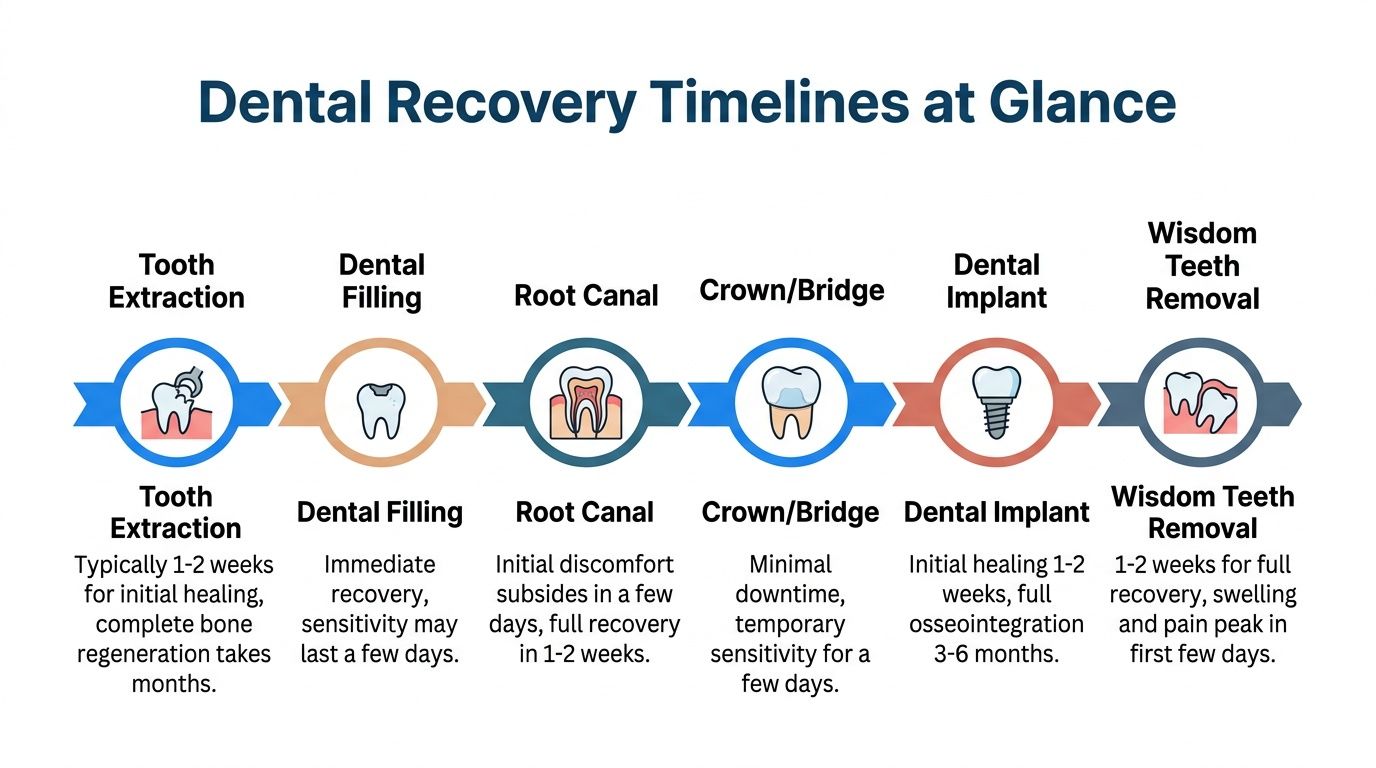
Some procedures involve almost no downtime. Others have a short initial recovery but a much longer internal healing phase. That difference is where many patients get tripped up when asking how long does it take to recover.
A simple way to read recovery time
A useful way to think about recovery is to break it into three layers:
- Initial healing means the period when soreness, swelling, or sensitivity is settling down enough for work, school, and regular routines.
- Return to normal diet means chewing feels more comfortable, though certain foods may still need caution.
- Full functional recovery means the tooth, tissue, or restoration has reached the point where treatment is considered complete.
For dental implants, the overall process is longer than many other procedures. The complete dental implant treatment process typically takes 3 to 6 months for most patients, which includes implant placement, a healing period of 3 to 4 months for osseointegration (bone fusion), and final crown placement, according to this implant treatment timeline.
Typical Dental Procedure Recovery Timelines
| Procedure | Initial Healing (Return to Work/School) | Return to Normal Diet | Full Functional Recovery |
|---|---|---|---|
| Tooth extraction | Often several days to about 1 to 2 weeks, depending on the tooth and the extraction | Usually progresses from soft foods to regular foods as the site becomes less tender | Soft tissue healing and bone healing continue beyond the first days |
| Dental filling | Often same day or next day | Usually quick, though temperature sensitivity can linger briefly | Bite and sensitivity usually settle after the tooth calms down |
| Root canal | Often within a few days | Usually returns as tenderness improves | The tooth may still need a final restoration depending on the case |
| Crown or bridge | Minimal downtime for many patients | Most patients resume normal eating carefully after numbness wears off | Final comfort may depend on bite adjustment and gum response |
| Dental implant | Many patients return to normal activities quickly after surgery | Soft diet early, then gradual return as instructed | Full healing depends on bone fusion before final restoration |
| Wisdom teeth removal | Often several days to about 1 to 2 weeks | Gradual return from soft foods to more regular foods | Jaw comfort and extraction site healing keep improving after the first week |
A patient may feel fine before the area is fully healed. That's common, especially with implant care and tooth extraction.
These are broad guideposts, not guarantees. Medical history, the location of the tooth, gum health, bite pressure, and whether another treatment is paired with the procedure all affect recovery. That's why a personalized plan matters during new patient exams and treatment planning in Scottsdale.
Recovering From Restorative Dentistry
Restorative dentistry covers some of the treatments patients get most often. Tooth-colored fillings, crowns, and tooth extraction visits are common, but the recovery pattern isn't the same for each one. The key is knowing which symptoms are routine and which deserve a call.
After a tooth extraction
The first day after an extraction is mainly about protecting the blood clot. That clot helps the socket begin healing. If it's disturbed too early, the site can become much more uncomfortable.
Patients usually notice the biggest changes in the first few days. Tenderness starts to settle, and eating becomes easier with softer foods. The gum tissue generally closes sooner than the bone underneath. According to Cleveland Clinic guidance on tooth extraction healing, soft tissue typically closes in 1 to 2 weeks, while the jawbone requires several weeks to heal completely, with significant bone filling occurring by 10 weeks and near-completion by 4 months.
What that usually means in real life
- First 24 hours Some bleeding or oozing can happen. Rest, follow the eating instructions, and avoid disturbing the site.
- By 72 hours Many patients feel more comfortable, though the area can still be sore and chewing may still be limited.
- By one week The site often looks calmer, but the deeper healing is still underway.
Protecting the early blood clot often matters more than “feeling tough” and returning to normal too quickly.
After fillings and crowns
A tooth-colored filling usually has the shortest recovery of the three. Many people go back to normal activities right away. What they may notice instead is brief temperature sensitivity or a feeling that the bite is slightly “high.” If chewing feels off after the numbness is gone, a bite adjustment may be needed.
Crowns involve a different kind of recovery. The tooth and surrounding gum can feel irritated for a short time, especially after the tooth has been shaped and a temporary crown has been placed. Once the final crown is seated, the bite should feel balanced and stable. If a patient continues to hit one spot first when chewing, it's worth calling the office.
For patients comparing repair options, dental crowns in Scottsdale can help restore a tooth that's cracked, heavily filled, or structurally weakened.
A practical way to judge progress
- Filling discomfort should trend down, not up.
- Crown sensitivity often improves as the tooth settles and the gum calms.
- Extraction soreness changes more slowly because soft tissue and bone heal on different timelines.
Mercury-free restorative materials can also make treatment feel more straightforward for patients who want a more modern, tooth-colored approach to repair.
The Dental Implant Recovery Journey
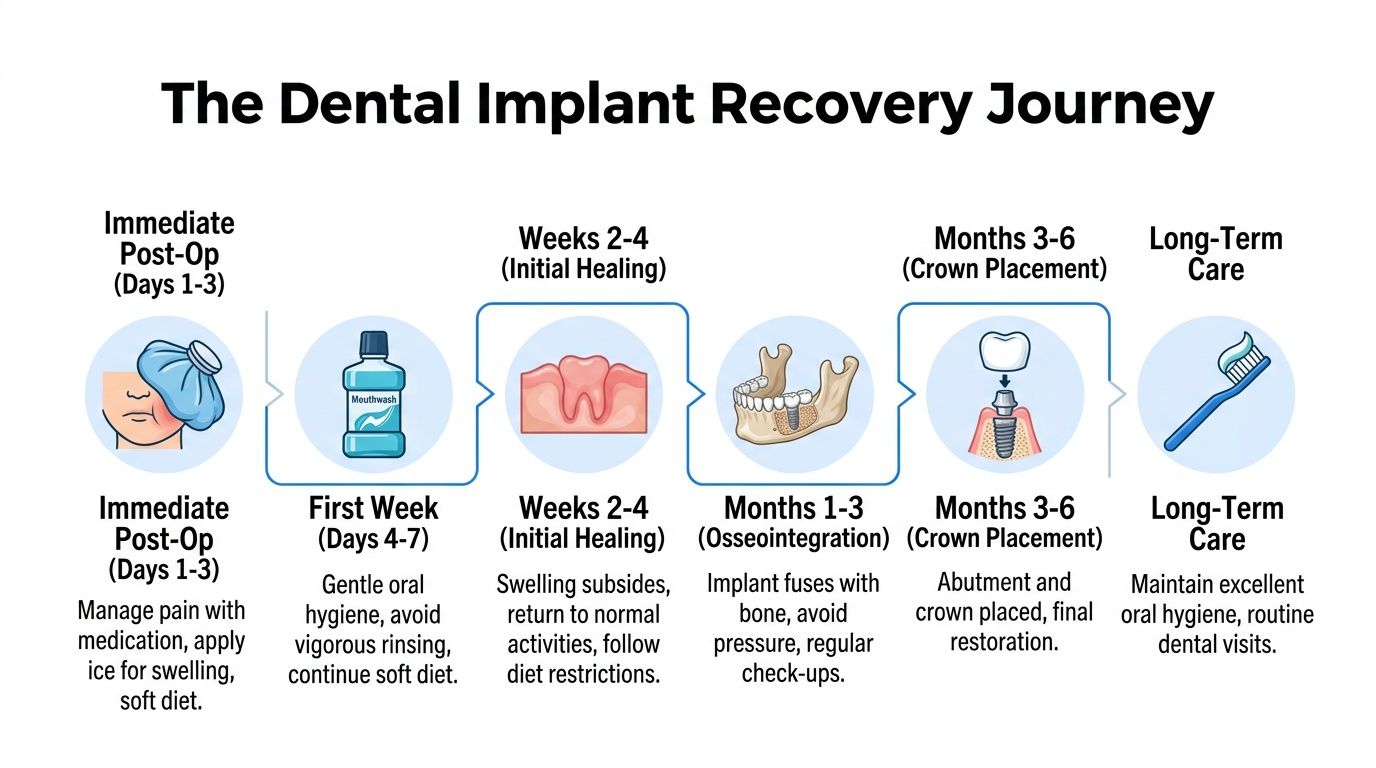
Dental implants deserve their own timeline because the healing happens in stages. Many patients find this confusing. They may feel noticeably better within days, but that doesn't mean the implant is ready for full chewing forces yet.
What happens in the first two weeks
The early phase is the part most patients think of as “recovery.” The gum tissue is healing. Swelling and tenderness are being managed. Food choices are softer. Daily routines are adjusted for comfort and cleanliness.
The average healing timeline for a dental implant includes initial gum recovery in 1 to 2 weeks, but osseointegration requires 3 to 5 months for the implant to fully fuse with the jawbone before a permanent tooth can be placed, according to this dental implant healing guide.
A visual overview can help patients picture that sequence more clearly.
During this stage, patients are usually focused on everyday questions:
- Can normal activities resume Often, yes, fairly quickly, with common-sense limits.
- Can regular brushing continue Yes, but carefully around the surgical area.
- When does eating feel easier Usually as the gum soreness fades and the site becomes less tender.
Why the longer healing phase matters
The part that isn't visible is osseointegration. That's the bond forming between the implant and the jawbone. This internal healing is what gives implants their stability.
That's why “feeling normal again” and “being fully healed” are not the same thing. A patient may no longer feel sore, but the implant still needs protected time before the final restoration is placed. This matters whether the plan is for a single missing tooth, a bridge supported by implants, or a full-arch option.
The implant doesn't succeed because the first week feels easy. It succeeds because the bone gets the time it needs to attach securely.
For patients exploring options for replacing missing teeth, dental implants in Scottsdale are one treatment path among restorative solutions that can improve chewing, support adjacent teeth, and restore smile function.
What can extend the process
Not every implant case follows the same calendar. Some patients heal faster in the lower jaw than the upper jaw. Others need more time because bone quality, gum condition, or additional procedures affect the sequence.
A few examples can make this clearer:
Simple single-tooth implant
The patient often moves through the surgical recovery phase smoothly, then waits through the quiet bone-healing period before the permanent crown is placed.Implant with bone grafting
The overall process may take longer because the site needs added healing support before or during implant treatment.Full-arch restoration
The plan may involve more appointments, more instructions about chewing, and more follow-up visits to confirm that the healing is stable.
That longer timeline can be reassuring when it's explained well. It means the process is paced around biology, not rushed around convenience.
What to Expect After Cosmetic Dentistry
Cosmetic dentistry recovery is usually less about healing from surgery and more about adjusting to something new. Patients looking for a cosmetic dentist near me often worry that veneers or whitening will mean a long interruption to daily life. In most cases, the downtime is much lighter than they expect.
Veneers and bonding
Porcelain veneers and dental bonding can change shape, color, and symmetry without the kind of recovery associated with an extraction or implant. What patients may notice instead is a short adjustment period. The teeth can feel different against the lips. The gums may be mildly irritated at first. The bite may feel unfamiliar for a little while.
That doesn't mean something is wrong. It usually means the mouth is adapting to the new contours. If a bonded area or veneer edge feels rough or the bite feels uneven, a quick follow-up can often resolve the issue.
A few common aftercare habits help cosmetic work settle in well:
- Choose gentler foods at first if the teeth or gums feel tender after placement.
- Brush and floss normally unless the office gives a short-term modification.
- Pay attention to bite changes because tiny adjustments can make a big difference in comfort.
Professional teeth whitening
Whitening has one of the easiest recoveries in dentistry, but temporary sensitivity can catch patients off guard. Teeth may react more to cold drinks or air in the first stretch after treatment. That reaction is usually brief and manageable.
Patients also do better when they plan the first day or two wisely. Very hot or very cold foods can feel sharper on newly whitened teeth. Strongly staining foods and drinks are best approached carefully right after treatment if the goal is to preserve the bright result.
Cosmetic treatment usually has a short adjustment period, not a long healing period.
For many Scottsdale patients, that's encouraging. Cosmetic dentistry can improve a smile's appearance without the longer timeline tied to surgical procedures.
Tips for a Smooth and Speedy Recovery
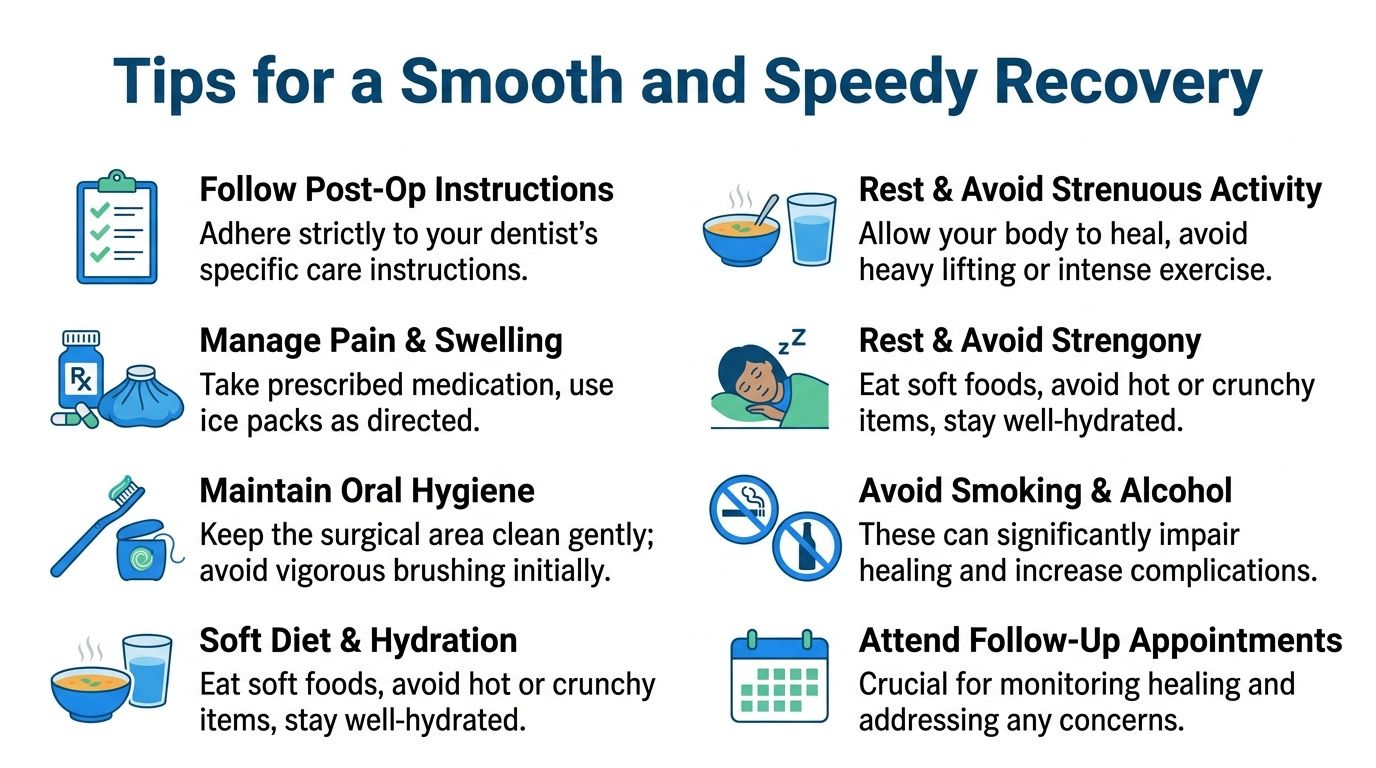
Healing doesn't come from luck. Small choices in the first few days often make the biggest difference. Patients usually feel more in control when they know exactly what helps and what tends to slow recovery down.
Daily habits that help healing
After implant surgery, it is common to feel “themselves” again within a few days to a week, but the deep bone healing that makes implants so reliable takes 3 to 6 months, according to this implant recovery overview. That early improvement can tempt patients to do too much too soon.
These habits support a steadier recovery:
- Follow the written instructions because timing matters with eating, cleaning, and activity.
- Use cold therapy as directed during the early phase when swelling is most active.
- Stick with soft foods until chewing feels safe for the specific procedure.
- Keep the mouth clean gently so plaque doesn't build up around a healing site.
- Rest more than usual on the day of treatment and avoid heavy exertion early on.
- Skip smoking and alcohol if the office advises avoiding them during healing.
Some patients also like broader post-surgical guidance that overlaps with dental recovery, especially around rest and daily routines. Carevo Home Health Care tips offer general recovery ideas that can complement dental instructions.
When to call your Scottsdale dentist
Most recovery discomfort gets a little better each day. The office should hear from the patient if the pattern is moving the other direction.
Reasons to call include:
- Bleeding that doesn't seem to settle
- Pain that becomes more intense instead of less
- Swelling that feels excessive or keeps worsening
- A bite that still feels clearly off
- Signs the area may not be healing normally, such as a bad taste, concerning drainage, or unusual redness
Patients searching for an emergency dentist are often trying to decide whether something is urgent or just uncomfortable. When there's uncertainty, it's safer to check. A short call can prevent a small problem from turning into a larger one.
Your Partner in Health Dr Wiitala in Scottsdale
Recovery is easier when patients know what to expect and know who to contact. That's especially true after restorative dentistry, cosmetic treatment, dental implants, or a tooth extraction. A calm explanation before treatment often shapes the entire experience afterward.
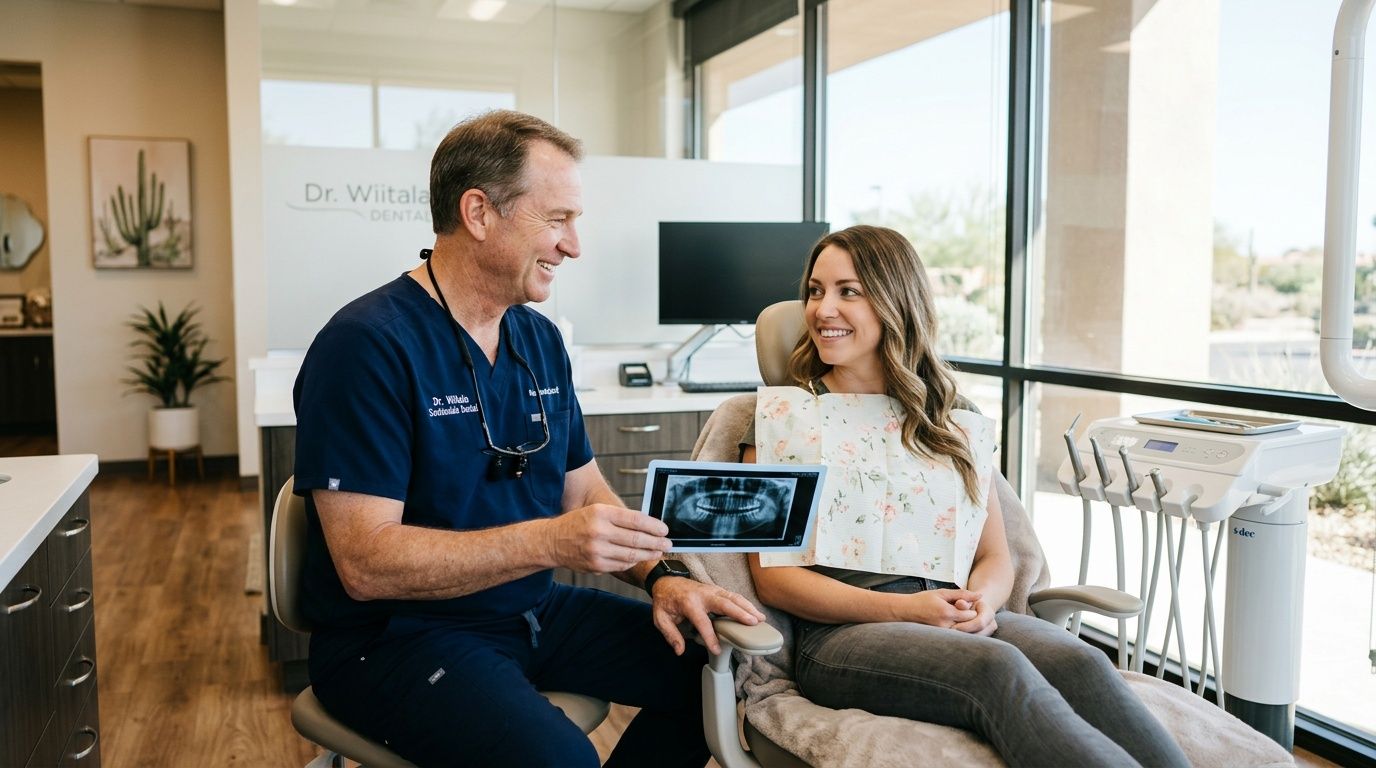
Dr. Wiitala's Scottsdale practice focuses on that kind of clarity. Patients receive guidance adapted to the actual procedure, their oral health, and the way they heal. That may involve planning around restorative care, cosmetic dentistry, dental x-rays, new patient exams, sleep-related concerns, or long-term smile maintenance. Eric Wiitala DDS is one local option for patients who want preventive, restorative, cosmetic, and implant care in one Scottsdale office.
The office is located at 9755 North 90th Street, Suite B250, Scottsdale, AZ 85258. For urgent concerns or post-treatment questions, patients can call the Scottsdale dental office at 480-657-6981. Some patients also like to support healing with attention to meals and hydration, and maximize results with recovery nutrition offers general ideas that can help them think through that part of the process.
The right timeline is the one that matches the treatment and the person. What matters most is having a dental team that explains the difference between quick comfort and complete healing, then stays available through both.
If a patient is searching for a dentist near me or a dentist in Scottsdale, AZ and wants clear answers about recovery before moving forward, Eric Wiitala DDS offers consultations for restorative, cosmetic, and implant dentistry. Scheduling a visit is a simple next step for anyone who wants a personalized treatment plan, a realistic recovery timeline, and support from the first appointment through healing.