

For healthy adults, the standard dental cleaning interval is every six months, but individual risk factors can shift that schedule to every three to four months or stretch it to every twelve to twenty-four months. The right answer to “how often should you get a dental cleaning” depends on gum health, medical history, restorations, home care, and how quickly plaque and tartar return.
Many Scottsdale patients arrive expecting the six-month rule to settle the question. It's a useful starting point, but it isn't a biological deadline that applies equally to every mouth. Evidence reviews have found insufficient evidence to identify one optimal routine-cleaning interval for every healthy adult, and a review of routine-care populations found little or no meaningful difference in several oral-health outcomes between six-monthly, twelve-monthly, and even no scheduled scale-and-polish visits over two to three years (CDA-AMC evidence review, systematic review).
That doesn't make professional hygiene unnecessary. It means the schedule should match the patient. A person with stable gums and excellent home care may need less frequent preventive visits, while someone with periodontal disease, implants, braces, diabetes, or active smoking may need closer monitoring. A Scottsdale dentist can use the examination, gum measurements, buildup pattern, and medical history to set a practical recall plan.
Table of Contents
- Why the Six-Month Rule Is Only a Starting Point
- What Happens During a Routine Dental Cleaning
- How Your Health Changes the Recommended Interval
- What to Expect at Your First Visit in Scottsdale
- Insurance and Scheduling for Preventive Visits
- Finding Your Right Cleaning Schedule
Why the Six-Month Rule Is Only a Starting Point
The twice-yearly recommendation became popular because it's simple, memorable, and appropriate for many low-risk adults. It gives a dental team regular opportunities to remove hardened buildup, examine the teeth and gums, and identify changes before they become painful. But “every six months” should be treated as a default preventive benchmark, not a universal prescription.
A Canadian evidence review found insufficient evidence to determine the optimal frequency of routine professional dental cleaning. In a trial involving healthy patients, comparisons among six-, twelve-, and twenty-four-month intervals found no meaningful differences in gingival bleeding, plaque, or calculus outcomes. The same review concluded that the available evidence couldn't establish a clinically superior or cost-effective interval for every healthy adult (Healthline summary of the evidence).
Why risk matters more than the slogan
A patient with no gum bleeding, no history of periodontitis, and little tartar buildup may remain stable between visits. Another patient may develop inflammation or heavy calculus much sooner, even with consistent brushing and flossing. The calendar alone can't show that difference.
Dental recall guidance supports individualized timing. NICE describes adult check-up intervals ranging from a minimum of three months to a maximum of twenty-four months for patients who repeatedly demonstrate good oral-health maintenance (NICE recall guidance). NHS guidance similarly says the interval can range from three months to two years, depending on current oral health and future risk, with adults in good oral health potentially attending once every twelve to twenty-four months (NHS dental check-ups).
Practical rule: The best interval is the one that keeps plaque, tartar, bleeding, and disease activity controlled between appointments.
For someone searching for a dentist near me or a dentist in Scottsdale, AZ, the useful question isn't whether the office recommends six months. The better question is how the team decides whether six months is enough, whether three to four months is safer, or whether a longer interval is reasonable after stable findings.
What Happens During a Routine Dental Cleaning
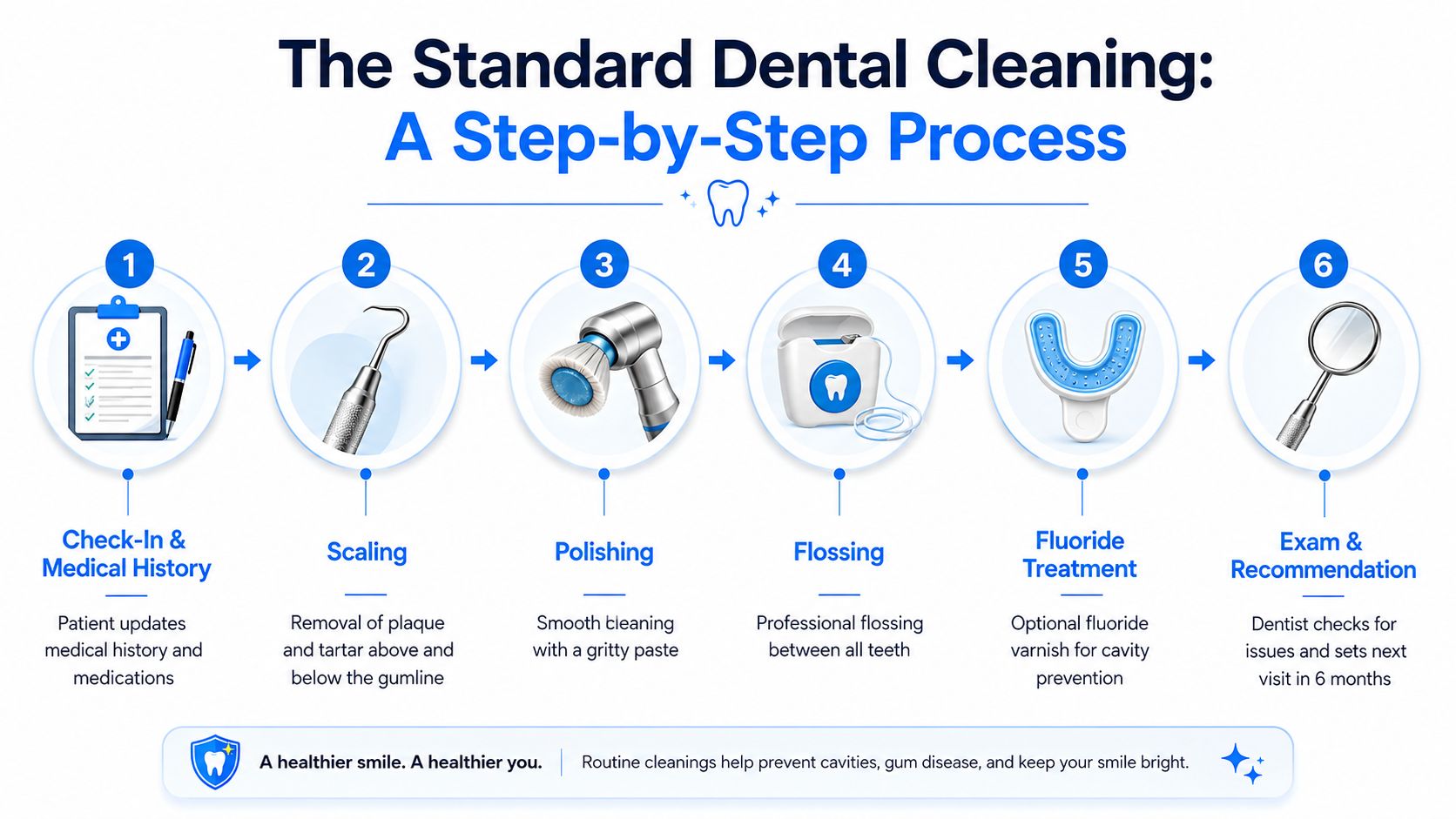
A routine professional cleaning generally combines an updated health review, removal of plaque and tartar, polishing, and an examination. The twice-yearly schedule became a common benchmark because it offers a practical rhythm for preventive care, even though evidence hasn't established six months as a universal biological threshold.
The visit usually begins with a review of medical conditions, medications, allergies, and recent dental concerns. The hygienist then evaluates visible plaque and tartar and may assess the gums for bleeding or areas that need closer attention.
The main cleaning steps
- Scaling: Special instruments remove hardened tartar above and below the gumline where a toothbrush can't reach.
- Polishing: A rotating brush and cleaning paste smooth surface deposits and leave the teeth feeling cleaner.
- Flossing: The hygienist cleans between the teeth and checks for areas where food or plaque tends to collect.
- Fluoride care: Fluoride may be offered when cavity prevention is a concern.
- Examination: The dentist reviews the mouth, teeth, gums, existing restorations, and any findings that need follow-up.
Cleaning isn't the same as whitening. A professional hygiene visit removes plaque, tartar, and some surface staining, while teeth whitening is a cosmetic service designed specifically to lighten tooth color. A routine cleaning also isn't the same as periodontal therapy. If the gum pockets and inflammation indicate active disease, the office may recommend a deeper cleaning rather than a standard preventive appointment.
For a patient who wants a plain-language overview of the visit, this guide to what to expect at a cleaning offers helpful background. A short visual walkthrough can also make the process feel more familiar before an appointment.
The final recommendation should connect the cleaning to the patient's actual findings. Some people leave with a six-month recall, while others need periodontal maintenance, restorative dentistry, a new-patient exam, dental X-rays, or a separate consultation for services such as a tooth extraction, cosmetic dentistry, or dental implants near me.
How Your Health Changes the Recommended Interval
A patient's health history can move the schedule in either direction. Gum disease usually pulls visits closer together, while consistently healthy findings may allow more time between routine appointments. Conditions such as smoking, diabetes, orthodontic appliances, and implants don't automatically create one fixed schedule, but they deserve specific discussion during the examination.
Periodontal maintenance has the clearest interval guidance. Patients with previous periodontitis often need visits at least four times per year, and maintenance is commonly planned at three-month intervals. Guidance also recognizes that stable early disease may allow four- to six-month intervals, while more fragile patients may need visits every two months or less (American Dental Hygienists' Association review). British periodontal guidance places stable-patient recall individually, typically within a range of three to nine months, based on findings such as probing depth and bleeding (British Society of Periodontology guidance.pdf).
| Risk Factor | Recommended Interval | Why It Changes |
|---|---|---|
| History of periodontitis | Commonly every 3 months | Subgingival bacteria can rebound, and recurring inflammation can threaten the tissues supporting the teeth |
| Active smoking | Often shorter than the low-risk schedule | Smoking can complicate gum health and make careful monitoring more important |
| Diabetes | Individualized, often closer monitoring | Medical history and gum response may increase the need for preventive review |
| Dental implants | Based on implant and gum findings | Implant surfaces and surrounding tissues need careful home care and professional assessment |
| Braces or clear aligners | Often more frequent during active treatment | Appliances can create additional areas where plaque remains |
| Stable low-risk mouth | Six months may be appropriate, with longer intervals possible after assessment | Consistently healthy findings may support individualized recall timing |
Patients with gum concerns can review the practice's information about periodontal gum disease before scheduling. A patient experiencing jaw, facial, or bite-related discomfort may also benefit from general information about navigating orofacial pain causes, although pain doesn't replace the need for a dental examination.
What changes the recommendation in real life
A smoker with bleeding gums and recurring tartar shouldn't assume that a routine six-month visit is sufficient. A patient with an implant and healthy surrounding tissue may need a different plan from someone with active inflammation around an implant. A person with diabetes should bring that history to the appointment so the dentist can consider it alongside gum measurements and home-care results.
Orthodontic patients also need individualized guidance. Brackets and aligners can make plaque control more demanding, but the appropriate interval depends on the patient's cleaning ability, gum response, and treatment stage. The recommendation should be reassessed when those conditions change.
What to Expect at Your First Visit in Scottsdale
Your first Scottsdale dental appointment should not end with an automatic six-month recall. It should establish a baseline, then connect your next cleaning to what the dentist finds in your gums, teeth, medical history, and daily hygiene.
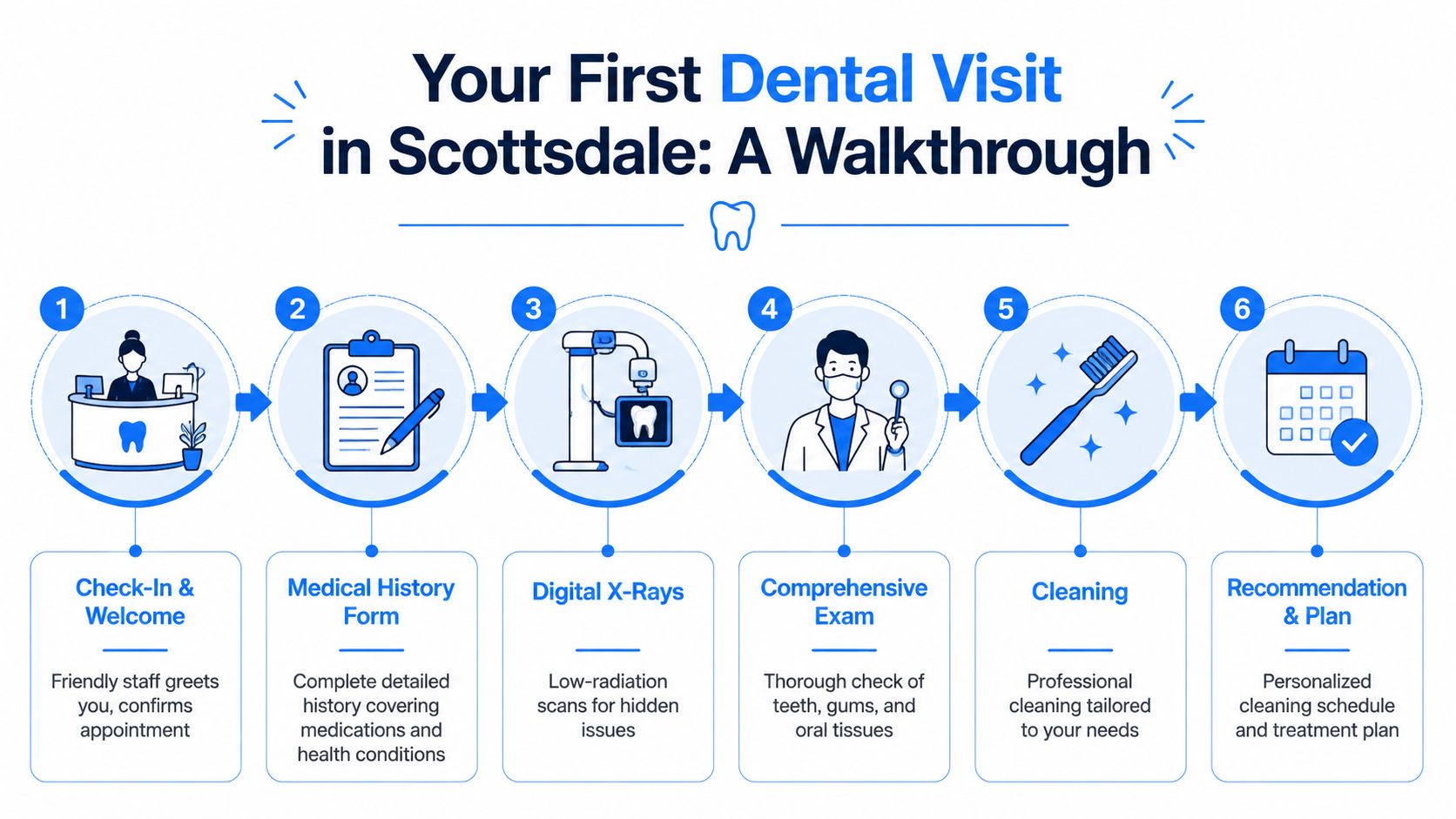
At check-in, confirm your contact information and complete the medical history form. List current medications, diabetes, smoking habits, allergies, previous gum treatment, and any concerns you want addressed. Arriving ten minutes early gives you time to finish paperwork without rushing the clinical assessment.
The hygienist will review the reason for your visit before examining your mouth. Gum measurements may be recorded by probing and charting pocket depths. Dental X-rays are taken when due or clinically appropriate. Bitewing images can show areas between teeth, while a full-mouth series may be considered when the dentist needs a broader view.
From assessment to a personal plan
If a routine cleaning is appropriate, the hygienist removes plaque and tartar above the gumline and polishes the teeth. The dentist then reviews the findings. The examination may include an oral cancer screening, checks of existing fillings and crowns, and discussion of sensitivity, bleeding, loose teeth, or cosmetic concerns.
If gum pockets measure four millimeters or deeper, the office may recommend scaling and root planing after considering the complete periodontal findings. This deeper cleaning differs from standard prophylaxis because it treats diseased areas below the gumline.
You can review this first-time visit information to see how an initial appointment is organized. Appointment communication may include reminders by text or email, and a fonea recepcionista dental may help an office manage those messages. The dentist still sets the clinical schedule.
The visit should end with a recommendation tied to your findings. Stable gums may support a six-month return, while inflammation, repeated tartar, or other concerns may call for a shorter interval, such as three or four months. If your oral health changes, the recall plan should change with it.
Insurance and Scheduling for Preventive Visits
Preventive care involves both clinical timing and benefit rules. Many dental plans cover two prophylaxis cleanings per calendar year at 100 percent when an in-network provider performs them, with an exam and dental X-rays often included. Coverage varies by plan, so patients should confirm the details before booking rather than assuming that every cleaning category follows the same rules.
The phrase “every twelve months” can cause confusion. Some plans measure benefits by calendar year, while others use a rolling twelve-month period from the previous visit. Periodontal maintenance may also fall under a different benefit category from routine prophylaxis, with separate limits. A patient who needs cleanings every three to four months should ask whether the plan covers periodontal maintenance, how the plan defines the benefit period, and whether the provider is in network.
| Visit Type | Common Frequency Limit | Typical Coverage |
|---|---|---|
| Routine prophylaxis cleaning | Two per calendar year is common | Often covered at 100 percent in network |
| Periodontal maintenance | Separate limits may apply | Coverage depends on the plan and periodontal category |
| Dental exam | Often connected to preventive benefits | Frequently included, subject to plan rules |
| Dental X-rays | Timing and type vary by plan | May be included when due or clinically indicated |
Scheduling before the appointment ends
Booking the next visit before leaving the office can make the recommended interval easier to follow. Patients can request a preferred morning or afternoon slot, coordinate family-block appointments, or connect the visit with a birthday or another recurring date.
Uninsured patients can ask whether a Scottsdale office offers an in-house membership plan. Some offices structure these plans to include two cleanings, exams, and X-rays for a flat annual fee, but the exact services, exclusions, and payment terms must be confirmed directly with the practice.
Insurance questions should be handled before treatment begins. Patients can ask for a pre-visit estimate, confirm whether a standard cleaning or periodontal maintenance is being recommended, and verify whether additional services, such as fillings, crowns, implants, or a tooth extraction, are billed separately. Clear scheduling and billing conversations help prevent surprises while keeping preventive care on track.
Finding Your Right Cleaning Schedule
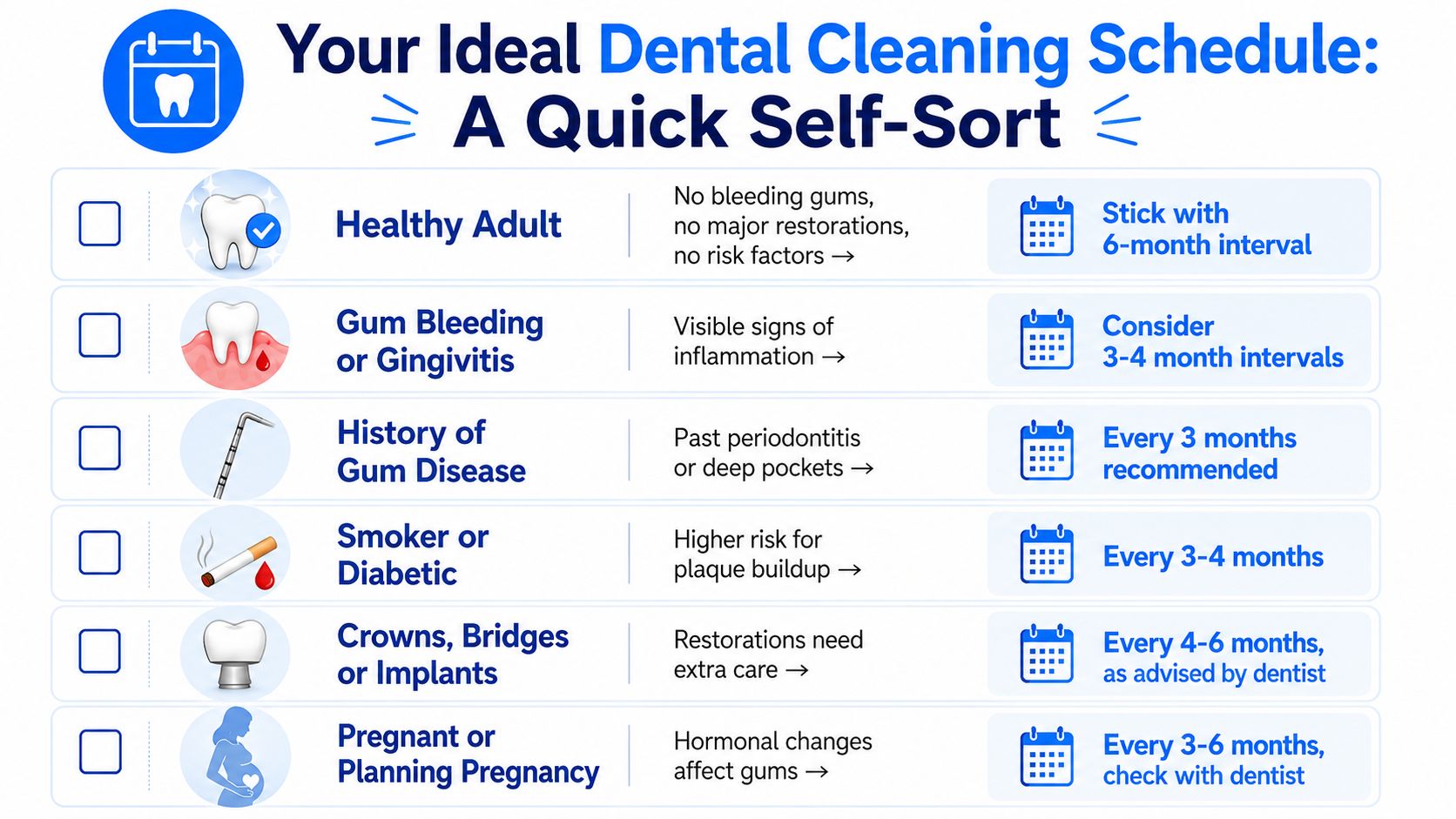
The quickest self-sort starts with current symptoms and past diagnoses, not with a calendar. A healthy adult with no gum bleeding, no major restorations, and no significant risk factors may fit the standard six-month interval. That schedule remains a reasonable starting point for many low-risk patients.
Patients should ask about a shorter interval when they have current or past gum disease, active smoking, diabetes, dental implants, braces, clear aligners, or a pattern of rapid tartar buildup. Periodontal disease commonly shifts maintenance toward every three months, while other risk factors may lead to a three- to four-month plan after the examination.
A longer interval is possible for patients with excellent home care, no history of cavities, and stable periodontal readings. NHS guidance says low-risk adults with healthy teeth and gums may be offered check-ups every one to two years, and NICE supports individualized adult recall extending up to twenty-four months for patients who repeatedly demonstrate good maintenance (NHS easy-read guidance, NHS dental services guidance).
The practical next step
Before visiting a dentist in Scottsdale, AZ, patients should prepare:
- Medication list: Include prescriptions, supplements, and any medication changes.
- Health history: Note diabetes, smoking, pregnancy, dry mouth, or prior periodontal treatment.
- Dental concerns: Mention bleeding, sensitivity, loose teeth, bad breath, jaw pain, or cosmetic goals.
- Scheduling question: Ask the hygienist what interval the day's gum measurements support.
The team at Eric Wiitala DDS provides preventive hygiene visits, new-patient examinations, periodontal evaluation and therapy, restorative care, cosmetic dentistry, clear aligners, dental implants, and TMJ-related assessment. Patients can schedule the next cleaning before leaving so the recommended cadence becomes a standing commitment instead of a good intention.
Patients in Scottsdale can visit Eric Wiitala DDS for a cleaning and exam customized to gum health, medical history, restorations, and personal risk factors. The practice can also discuss periodontal care, cosmetic dentistry, restorative treatment, dental implants, and emergency dental services when a routine visit reveals a larger concern.