
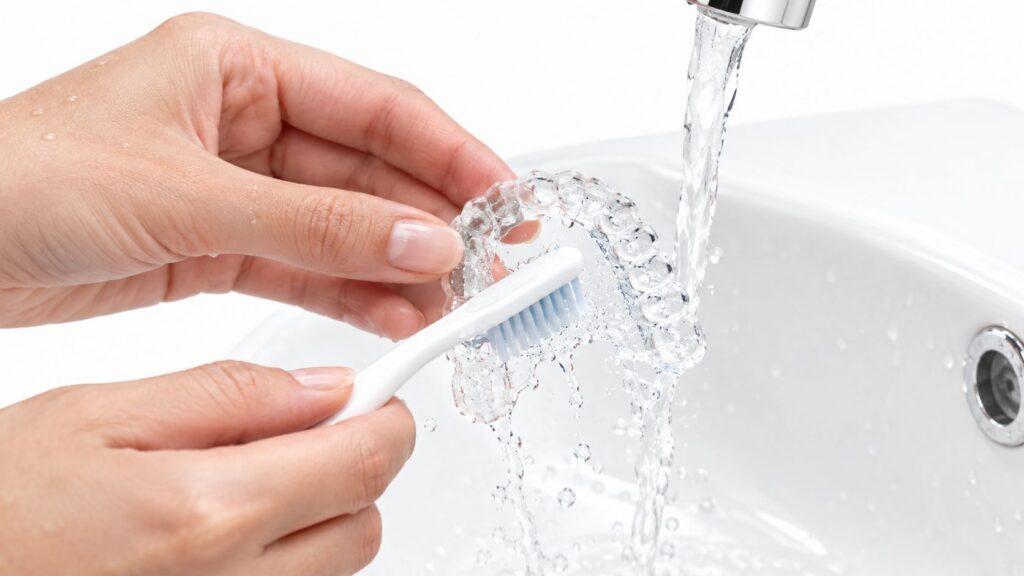
A lot of Scottsdale aligner patients notice the same pattern. The trays looked nearly invisible on day one, but after a few mornings of coffee, errands, work, and putting them back in a little too quickly, they start to look dull, smell off, or feel less fresh than expected.
That usually doesn't mean anything is wrong with the treatment itself. It means the cleaning routine needs to protect two things at the same time. Biofilm removal and aligner clarity. That balance is where many people get tripped up when learning how to clean clear aligners at home.
Table of Contents
- Why Clean Aligners Matter for Your Smile and Health in Scottsdale
- Daily Cleaning Routine That Keeps Aligners Clear and Fresh
- Safe Cleaners Versus Methods That Damage Clear Aligners
- Deep Cleaning Soaks and When to Use Them
- Travel Stain Prevention and Everyday Habits for Clear Aligners
- Troubleshooting Odor Clouding and Knowing When to Call Your Scottsdale Dentist
Why Clean Aligners Matter for Your Smile and Health in Scottsdale
You take your aligners out for lunch, place them in the case, brush quickly, and put them back in before heading to your next stop. Later that day, the trays still look mostly clear, but they feel a little slick and smell less fresh. That change often surprises people because a tray can look clean long before it is clean.
Clear aligners cover the teeth for most of the day, so saliva cannot wash across the tooth surfaces and plastic the way it normally does. Saliva works like the mouth's rinse cycle. With less access, film can collect more easily on the aligner and against the teeth. That is why aligner cleaning is really a two-part job. You need to remove biofilm, and you need to do it in a way that keeps the plastic clear.
Many patients focus on only one side of that balance. Some rinse with water and assume the tray is clean because it still looks transparent. Others scrub hard with toothpaste, which may make the tray feel cleaner at first but can leave fine scratches that scatter light and make the plastic look cloudy. The goal is not harsh scrubbing. The goal is lifting away the film without roughening the aligner surface.
What patients usually notice first
The earliest signs are usually easy to recognize at home.
- Cloudiness: trays lose that barely-there look
- Odor: a stale smell returns soon after rinsing
- Surface film: the plastic feels slippery, tacky, or coated
- Gum irritation: plaque and residue sitting against the tray edges can make tissues feel more sensitive
Those signs matter for more than appearance. A dirty aligner acts like a lid over whatever is left on the teeth and tray. If plaque, food residue, or dried saliva stays in place, the aligner can press it back against the teeth for hours at a time. That does not mean every cloudy tray leads to a dental problem. It does mean the daily cleaning routine has more influence on comfort, freshness, and oral health than many people expect.
Research on aligner cleaning methods also points to an important practical lesson. Cleaner choice can affect both how well buildup is removed and how the material looks over time. For patients, the takeaway is simple. The best results usually come from combined mechanical and chemical cleaning, rather than relying on only brushing or only soaking.
Why this matters beyond orthodontic treatment
Aligners are part of treatment, but they also become part of everyday home care. Clean trays help support brushing and flossing by reducing the amount of residue that gets sealed back over the teeth. They also help the aligners stay discreet, which is a big reason many adults and teens choose them in the first place.
Patients considering clear aligner orthodontic treatment in Scottsdale often want trays that stay comfortable, clear, and easy to wear throughout treatment. Good cleaning habits help protect the smile, the gums, and the aligner material at the same time.
Daily Cleaning Routine That Keeps Aligners Clear and Fresh
You take your aligners out at breakfast, set them on a napkin, and come back later to find them looking dull and feeling a little filmy. That film is the part many patients miss. Clear aligners stay clear when two goals happen at the same time. Buildup has to come off, and the plastic surface has to stay smooth enough to keep its transparency.
A good daily routine does both.
Start with the rinse-first habit
Rinse aligners as soon as they come out. Cool or lukewarm water works best because heat can change the shape of the plastic. That quick rinse keeps saliva from drying into a stubborn layer, much like rinsing a glass before residue hardens on the sides.
Practical rule: Every time aligners come out, rinse them right away.
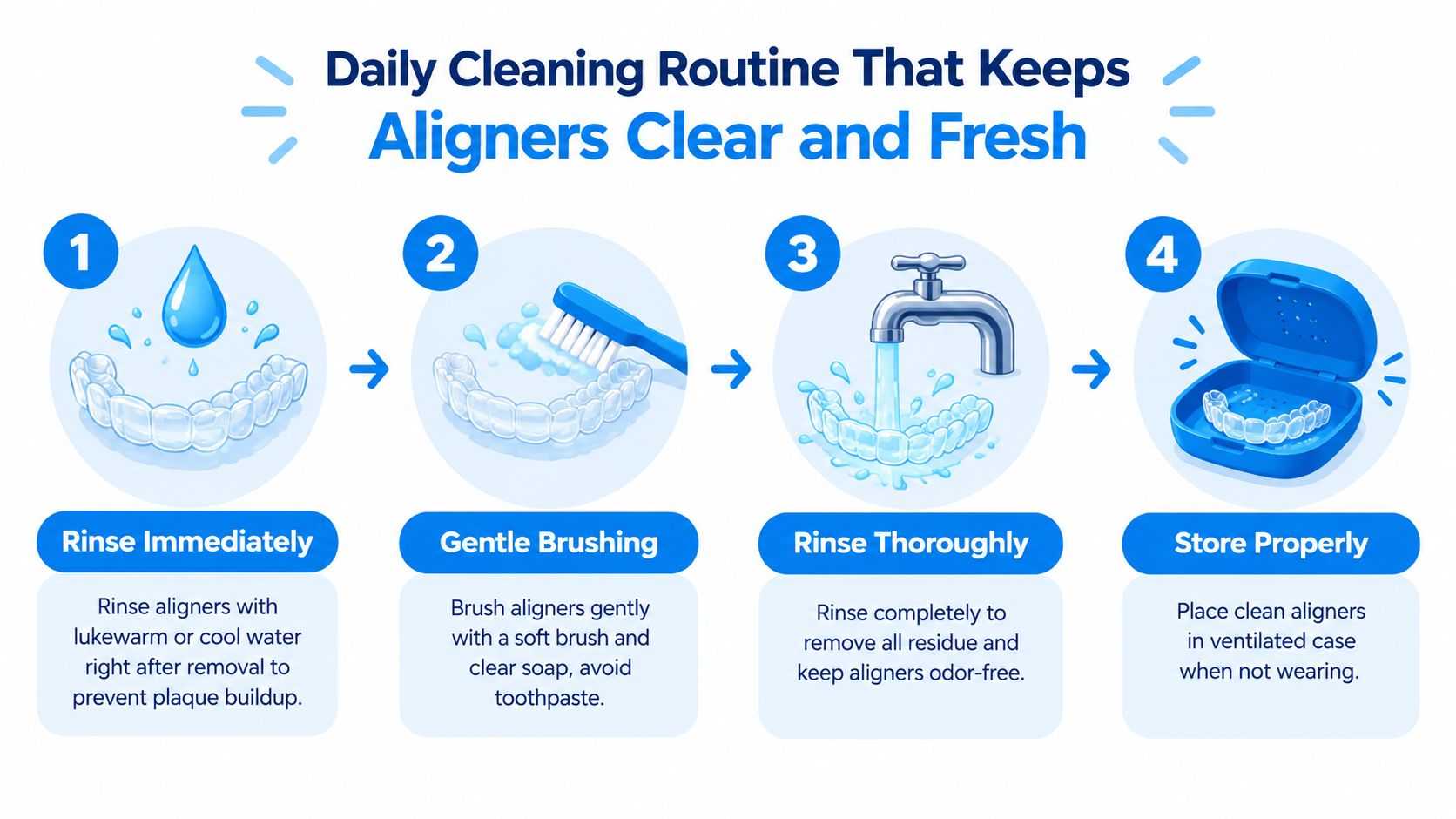
After rinsing, brush the trays gently with a separate soft-bristled toothbrush and a small amount of clear, mild soap. Then rinse them thoroughly before putting them back in. A separate brush matters because aligners are plastic, not enamel. They need a lighter touch.
Why rinsing by itself falls short
Water removes loose debris, but it does not reliably remove the sticky biofilm that clings to the tray surface. Biofilm works like the thin coating that builds up on a reusable water bottle. A quick swish helps, but it does not fully lift what is attached.
A prospective crossover study comparing aligner-cleaning methods found that water alone left more bacterial residue than brushing methods, according to the PubMed record for the study. The useful takeaway for patients is simple. Gentle brushing adds the mechanical action that a rinse cannot provide.
That does not make every brushing method a good one. The tray still needs a cleaner that will not scratch or cloud the surface.
A short demonstration can help patients visualize the flow:
A realistic morning and evening pattern
For most Scottsdale patients, the easiest routine is the one that matches daily habits instead of interrupting them. Morning and evening usually work best because those are the times people are already at the sink brushing their teeth.
A practical pattern looks like this:
- Morning removal: Rinse the trays right away with cool or lukewarm water.
- Gentle brush: Use a dedicated soft brush with a small amount of clear, mild soap.
- Thorough rinse: Remove all soap before the trays go back in.
- Evening repeat: Clean them again before overnight wear so residue does not sit against the plastic for hours.
The key is balance. Scrubbing harder does not produce a better result. It can wear down the clear surface that helps aligners stay discreet. Gentle mechanical cleaning, paired with a safe cleanser, gives better day-to-day results than rinsing alone or soaking alone.
Safe Cleaners Versus Methods That Damage Clear Aligners
A tray can come out of the sink looking freshly cleaned and still be headed in the wrong direction. That happens when the cleaner removes some film but roughens the plastic at the same time. Once the surface is scratched, it scatters light instead of staying glass-clear, and that cloudy surface can hold onto new buildup more easily.
That is why aligner cleaning is a balance between two jobs. You want to lift off the soft biofilm that forms from saliva and daily wear, and you want to preserve the smooth, clear finish that keeps the trays discreet and comfortable.
Why toothpaste causes so much confusion
Toothpaste makes sense for teeth because enamel is hard and built to handle mild abrasion. Clear aligners are different. Their plastic surface is more like a clear phone screen than a tooth. Clean it with something gritty, and tiny scratches can build up even if the tray looks fine at first glance.
Patient guidance commonly warns that toothpaste, especially whitening or colored formulas, can scratch trays and leave them cloudy. That matters for appearance, but it also affects cleaning. A smooth tray sheds residue more easily than a scratched one.
Research points in the same direction. A practical review of aligner-cleaning methods noted that toothbrush-and-toothpaste cleaning can reduce light transmittance in PET-G aligners, while chemical cleaning methods tend to preserve transparency better, based on the systematic review PDF on cleaning tradeoffs and aligner clarity.
One simple way to remember it helps. A tray can be free of visible debris and still lose clarity if the cleaning method is too abrasive.
Aligner Cleaners Compared for Safety and Clarity
| Cleaning Agent | Effect on Aligner Material |
|---|---|
| Clear mild soap with a soft brush | Usually a safe daily option when used gently and rinsed thoroughly |
| Aligner-safe cleaning crystals or tablets | Often useful for cleaning while helping preserve clarity when used as directed |
| Water only | Gentle on the material, but does little to remove attached film |
| Abrasive toothpaste | Can scratch the surface and make trays look cloudy |
| Whitening or colored toothpaste | Can raise abrasion risk and may leave the trays looking dull or discolored |
| Hot water | Can warp the plastic and affect fit |
| Harsh household chemicals | Can damage the material and should not be used |
How patients in Scottsdale can choose with less guesswork
A good rule is simple. Use gentle mechanical cleaning to loosen the film, and use a safe chemical cleaner when extra help is needed. Either method alone has limits. Brushing without the right cleanser can scratch. Soaking without brushing may leave behind the thin layer that clings to the tray surface.
Combined cleaning usually works better because each method covers what the other misses. The brush handles the physical film. The soak helps reach corners, attachment cutouts, and areas that stay slippery after a quick rinse.
For Scottsdale patients, that usually means avoiding anything harsh, gritty, heavily colored, or hot. If a tray starts looking cloudy soon after a cleaning change, the product may be the problem rather than the aligner itself.
For patients already in treatment, Eric Wiitala DDS provides clear aligner care as part of broader cosmetic and family dental services in Scottsdale, which can help when a patient is not sure whether the issue is buildup, material wear, or tray fit.
Deep Cleaning Soaks and When to Use Them
Daily brushing handles the routine film that builds up from saliva and wear. A soak helps when trays start to smell stale, feel slippery even after brushing, or show buildup that doesn't lift off easily. The key point is that soaking should support brushing, not replace it.
What a deep-clean soak should do
A soak gives the cleaning solution time to work on areas a brush may miss. Patient instructions commonly suggest short soaks of about 15 to 30 minutes in approved cleaning solutions, followed by rinsing before wear, while one peer-reviewed protocol described immersion in water for 20 minutes, according to the review on removable appliance cleaning protocols.
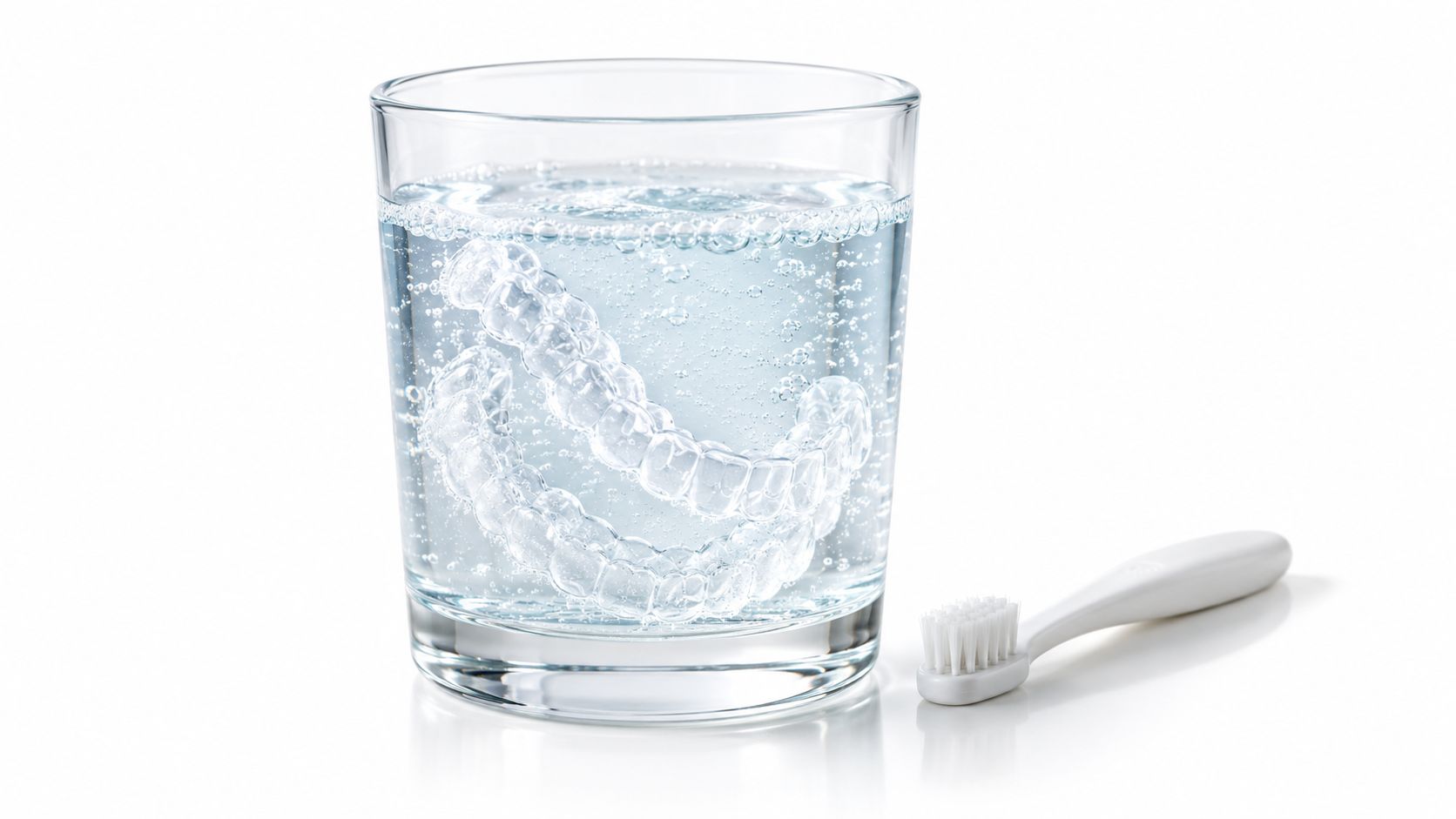
That time range matters because many patients overdo soaking when trays look dull. Longer isn't always better. The safer approach is to use an approved product, follow the label, and rinse thoroughly before reinsertion.
Why combined methods make more sense
A systematic review of aligner disinfection protocols concluded that multi-step methods combining mechanical cleaning and chemical soaking appear most effective overall, because no single agent consistently outperformed all others across studies. The same review noted that cleaning performance varies by product, soak time, and agitation, and described trial designs comparing brushing, chlorhexidine soaking, effervescent tablet soaking, and an ultrasonic cleaner plus tablet. It also noted that diluted neutral detergent or vinegar solutions can provide strong microbial control without significantly affecting color, although some agents were still associated with color change, based on the review of cleaning and disinfection protocols for clear aligners.
That finding helps explain why one patient swears by a soak while another still notices film. Method matters. So does the product. So does the amount of time the tray sits in the solution.
A once or twice weekly routine
For many patients, a simple rhythm works well:
- Choose an aligner-safe soak: use a product intended for removable dental appliances
- Keep the soak short: stay within the product's recommended time, often in the short-soak range
- Brush before or after soaking: this helps remove loosened surface film
- Rinse well: no cleaning solution should stay on the tray when it goes back in the mouth
- Watch the tray afterward: if it looks more cloudy, not less, the cleanser may not be the right fit
If a soak improves odor but the trays keep looking dull, the issue may be abrasion from the daily routine rather than a lack of soaking.
An ultrasonic cleaner may be useful in some home-care plans, especially when paired with an approved cleaning tablet, but patients should confirm that the approach is appropriate for their specific aligner material and wear schedule.
Travel Stain Prevention and Everyday Habits for Clear Aligners
Most aligner problems don't start during the cleaning routine. They start between cleanings. A rushed coffee run, lunch out in Scottsdale, a weekend drive, or a dinner where the tray ends up wrapped in a napkin can undo a careful home routine pretty quickly.
The habits that keep trays clear
The easiest stain prevention rule is also the one patients break most often. Aligners should come out before eating or drinking anything except water. That limits exposure to pigments, heat, and residue that can cling to the plastic and get trapped against teeth.
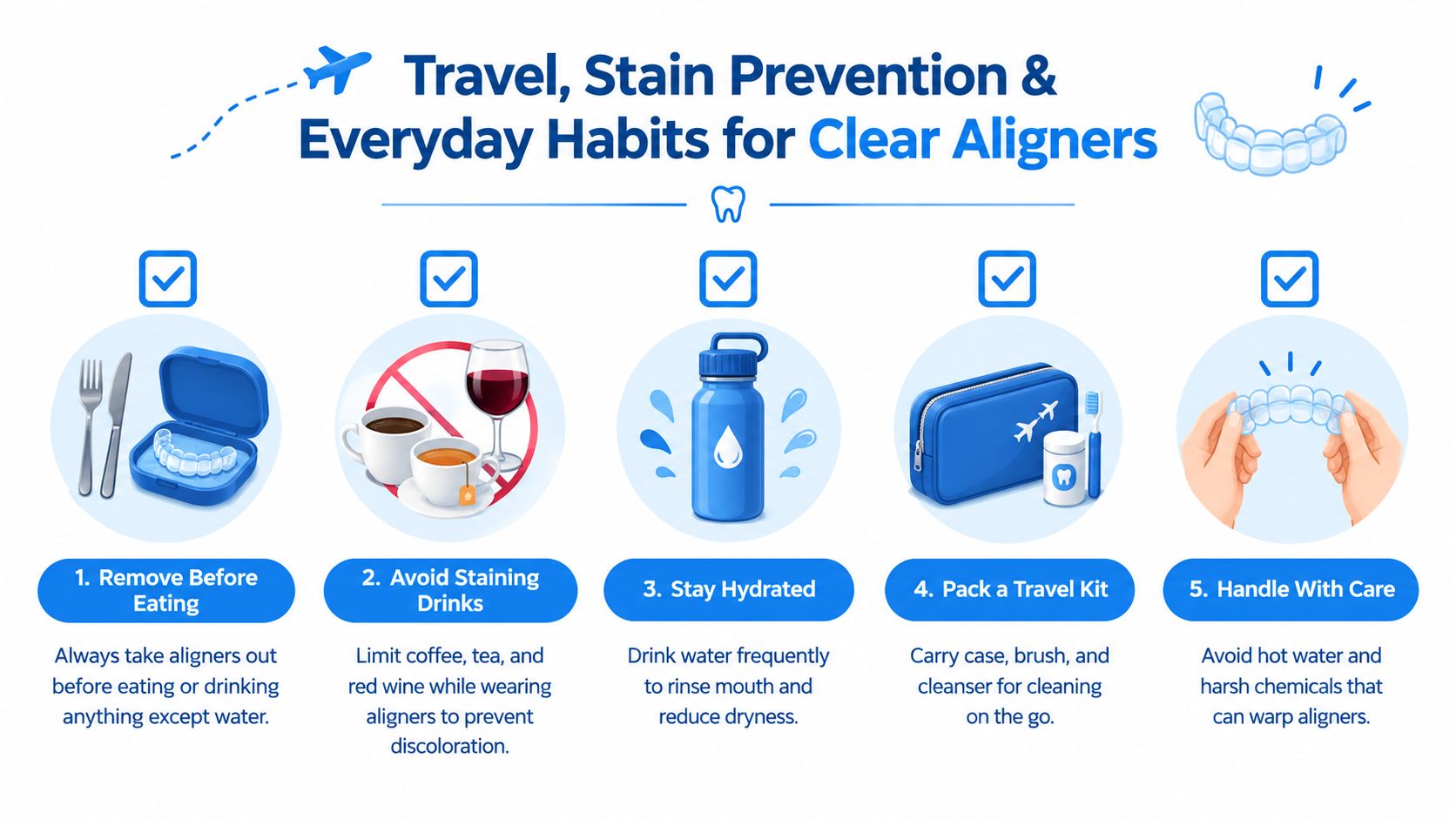
Storage matters too. A ventilated case protects the tray better than a pocket, console, countertop, or tissue. Cases also reduce the chance of accidental damage when patients remove aligners during meals or meetings.
A simple prevention system for busy days
Patients tend to do better when they stop relying on memory and start relying on setup. A small travel kit can remove a lot of friction from aligner care.
- Case first: keep a ventilated aligner case in a purse, backpack, briefcase, or car bag
- Soft brush packed: a separate soft-bristled brush keeps daily cleaning practical away from home
- Mild cleanser ready: a small travel-size clear soap helps avoid the temptation to use toothpaste
- Water as the safe default: if brushing isn't possible right away, water is still the only drink that should stay in with aligners
Why hydration and routine dental care still matter
Dry mouth can make trays feel less fresh because saliva isn't rinsing the mouth as effectively. Staying hydrated supports comfort and may help reduce that “coated” feeling many aligner wearers notice late in the day.
Scottsdale patients who want their smile to look polished throughout treatment often pair strong aligner habits with regular hygiene visits and cosmetic maintenance such as whitening after treatment is complete. Those habits also support retainer care later, because retainers can develop the same clouding and odor issues if cleaning gets inconsistent.
Consistent habits protect the tray before deep cleaning has to fix the problem.
Troubleshooting Odor Clouding and Knowing When to Call Your Scottsdale Dentist
When trays still smell unpleasant or look cloudy after regular care, the problem usually falls into one of three buckets. The cleaning method isn't removing enough residue. The routine is scratching the plastic. Or the tray itself has changed shape or surface quality enough that home care can't fully correct it.
When odor keeps coming back
Persistent odor often points to a gap between rinsing and true cleaning. Research on aligner cleaning found that water-only cleaning produced the highest surface bacterial signal, while the lowest bacterial concentration occurred when brushing was combined with a cleaning tablet, as discussed in the clinical overview of cleaning methods and material effects. That same discussion also noted that brushing with toothpaste can reduce light transmittance in PET-G aligners, while chemical methods preserve transparency better.
So a patient can run into a frustrating cycle. Water-only care leaves the tray smelling stale. Aggressive toothpaste brushing may improve the smell but leave the tray looking permanently dull.
Signs that home care may not be enough
Some issues deserve a professional look instead of more trial and error at home.
- Persistent bad taste or odor: especially when daily cleaning has been consistent
- Cloudiness that doesn't improve: this may reflect surface scratching rather than removable film
- Warping or tightness changes: the tray no longer seats the same way
- Cracks or rough edges: these can irritate the gums and affect wear
- Gum tenderness around the tray margins: especially if it keeps returning
- Visible discoloration that remains after careful cleaning: this may need evaluation
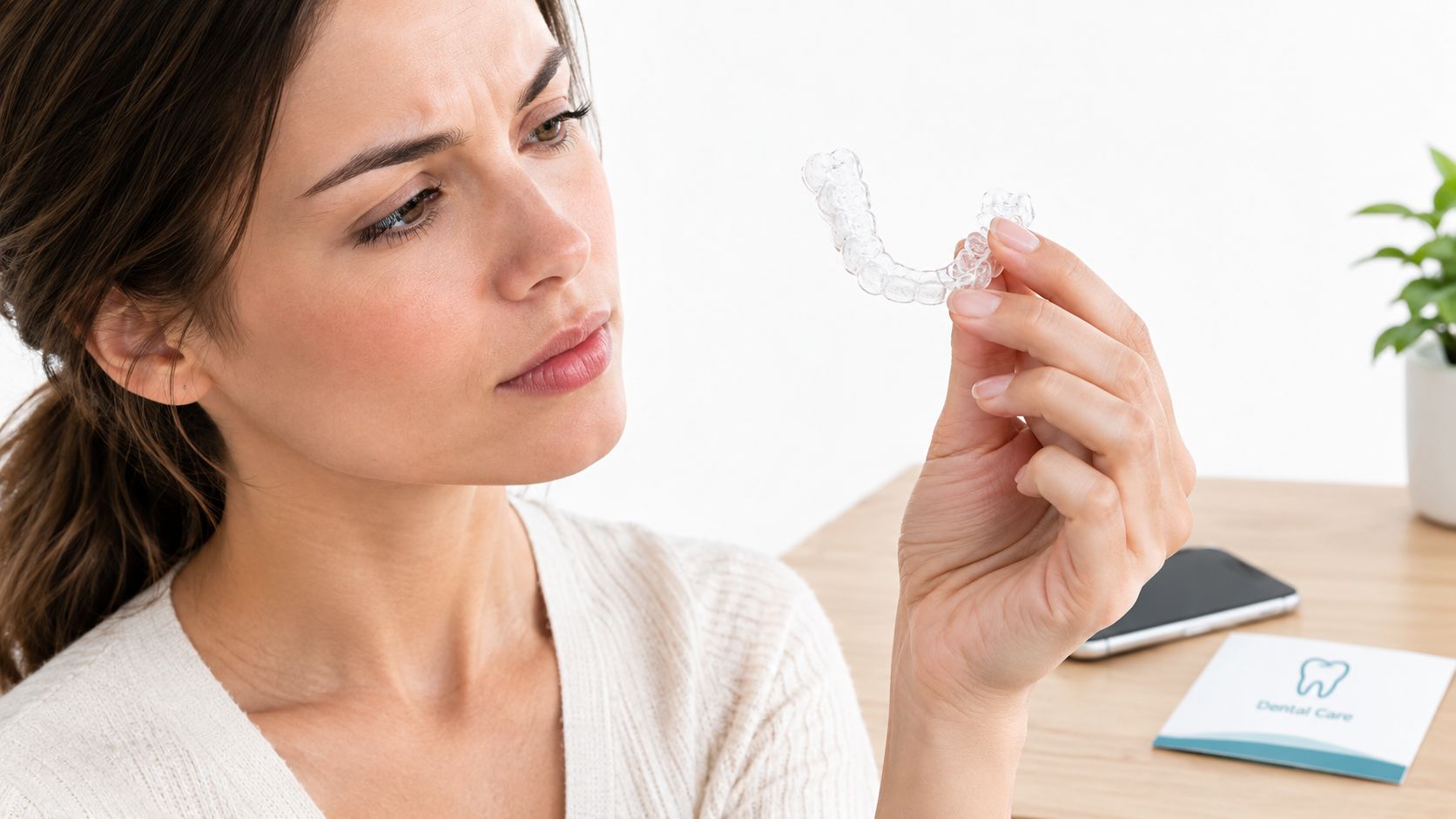
When a Scottsdale dental visit makes sense
A dental visit can help determine whether the issue is hygiene, material wear, fit, or something happening on the teeth underneath the tray. That matters because aligners sit over the enamel and gums for long stretches, so symptoms can involve more than the tray itself.
Patients who are due for professional teeth cleaning in Scottsdale may also benefit from having plaque retention, gum health, and aligner habits reviewed at the same time. New patient exams, preventive visits, and aligner checks can all help clarify whether a tray is due for better maintenance or whether something needs to be adjusted professionally.
A tray that looks off, smells off, or doesn't fit the same shouldn't be ignored. Early attention is usually easier than waiting until irritation or treatment delays show up.
Eric Wiitala DDS offers preventive dental care, cosmetic dentistry, restorative treatment, and clear aligner support at the North 90th Street office in Scottsdale, including help when trays feel cloudy, uncomfortable, or harder to keep clean. Patients who want practical guidance on aligner care, new patient exams, cleaning and exams, or smile-focused treatment can schedule a visit with Eric Wiitala DDS to get personalized recommendations for healthier teeth and clearer trays.