
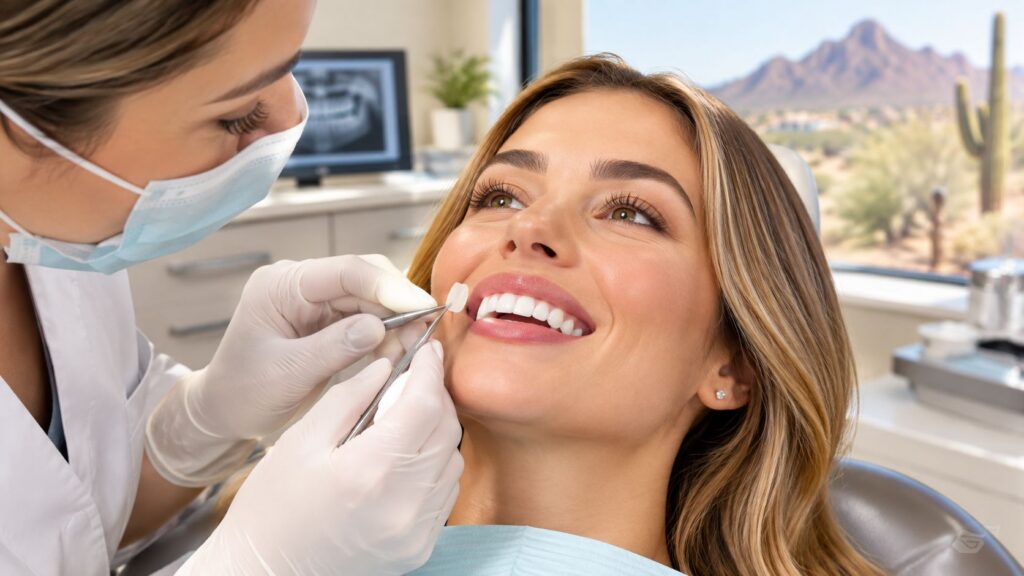
A Scottsdale resident may notice a small chip when getting ready for dinner, see stains in a family photo, or feel a gap has become the first thing others notice. The concern often isn't only appearance. Many patients also wonder whether improving a smile means permanently removing healthy tooth structure.
Minimally invasive cosmetic dentistry offers a more conservative way to address selected cosmetic concerns. Instead of treating every smile with extensive preparation, the dentist evaluates the enamel, bite, tooth position, color, and overall oral health before choosing the least destructive option that can meet the patient's goals. At Eric Wiitala DDS in Scottsdale, Dr. Eric Wiitala provides cosmetic, restorative, preventive, and general dental care, including bonding, veneers, whitening, and clear aligner treatment.
For patients searching for a cosmetic dentist near me, dentist in Scottsdale, AZ, or a trusted dentist near me, the right starting point is a careful consultation rather than a one-size-fits-all procedure. A consultation can clarify whether a concern is best addressed with whitening, bonding, enamel reshaping, aligner-first treatment, or an ultra-thin veneer.
Introduction and Patient Concerns
A Scottsdale professional may smile naturally at home but cover the mouth during a work conversation. A parent may avoid close-up photographs because of uneven color, while another resident may dislike a worn edge or a small space between front teeth. These concerns can feel minor to someone else and still affect confidence every day.
The hesitation about cosmetic dentistry is understandable. Patients often associate veneers with aggressive filing, sensitivity, and a treatment plan that commits them to extensive restoration. Minimally invasive care takes a different starting position. The dentist first asks what can be improved while retaining as much healthy enamel as possible.
Common concerns that bring patients to a consultation
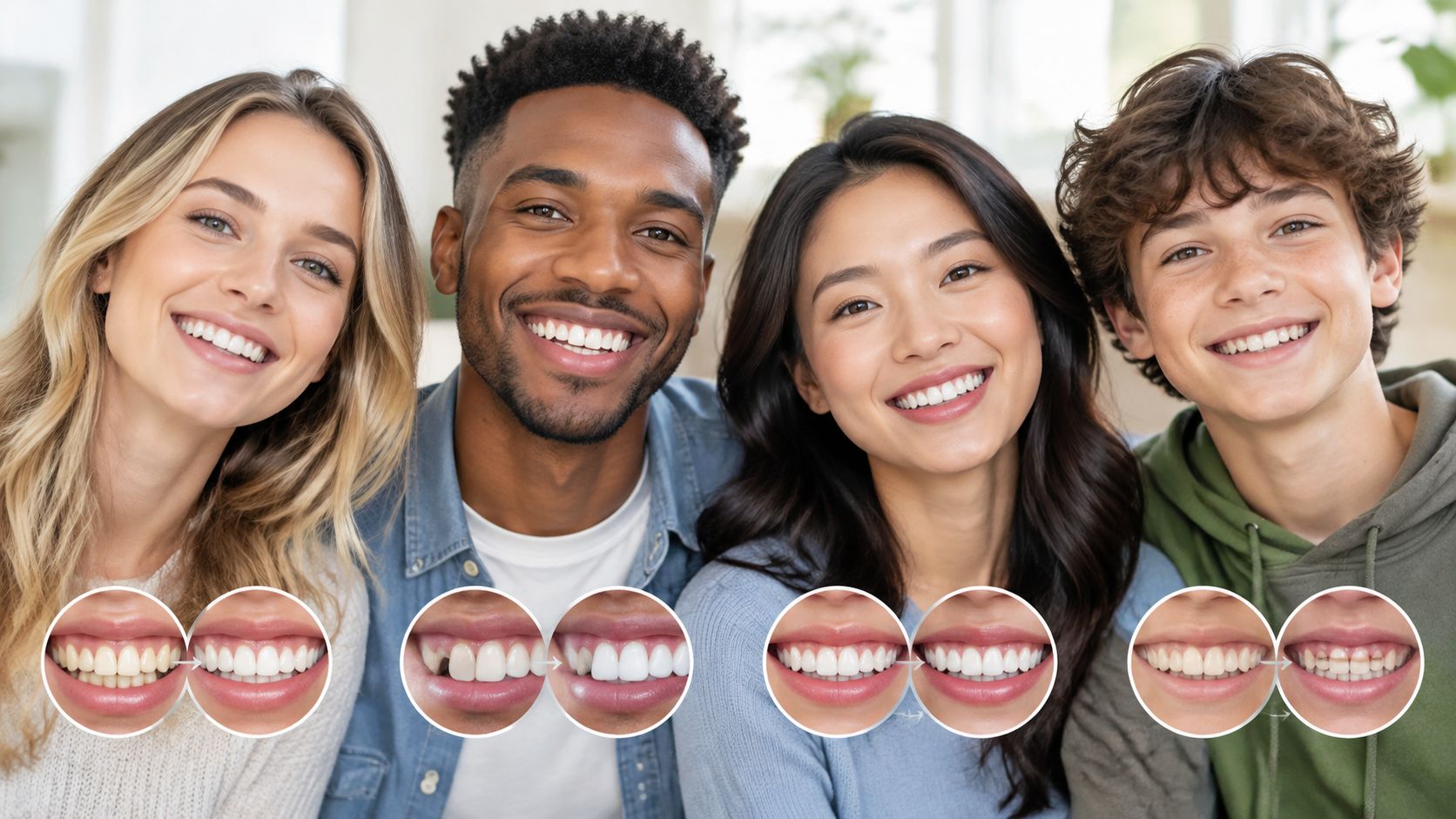
- Surface stains: Whitening may help when discoloration is primarily on or within the natural tooth surface, although deeper or uneven color may require another approach.
- Small chips: Composite bonding can add material to a limited defect without reshaping the entire tooth.
- Uneven edges: Selective enamel reshaping or additive bonding may refine contours when only a small adjustment is needed.
- Mild spacing: Bonding or orthodontic clear aligners may be considered, depending on the size of the space and the bite.
- Fluorosis or superficial enamel defects: Microabrasion or resin infiltration may be discussed when the discoloration is shallow and localized.
- Worn teeth: A broader evaluation may be necessary because tooth wear can involve the bite, grinding, jaw muscles, or underlying structural damage.
Dr. Eric Wiitala's Scottsdale practice approaches cosmetic treatment within a broader dental plan. Cleaning and exams, dental x-rays, gum evaluation, bite assessment, and restorative dentistry can reveal issues that should be addressed before elective smile enhancement. That matters because a beautiful result still needs a stable foundation.
Patient-centered principle: The most conservative treatment isn't automatically the right treatment. The appropriate choice preserves healthy structure while addressing the actual cause and extent of the concern.
Patients don't need to decide between a dramatic makeover and doing nothing. A focused consultation can identify a measured path, whether that means a small repair, whitening, tooth-colored restoration, aligner-first care, or a carefully planned veneer.
Understanding Minimally Invasive Cosmetic Dentistry
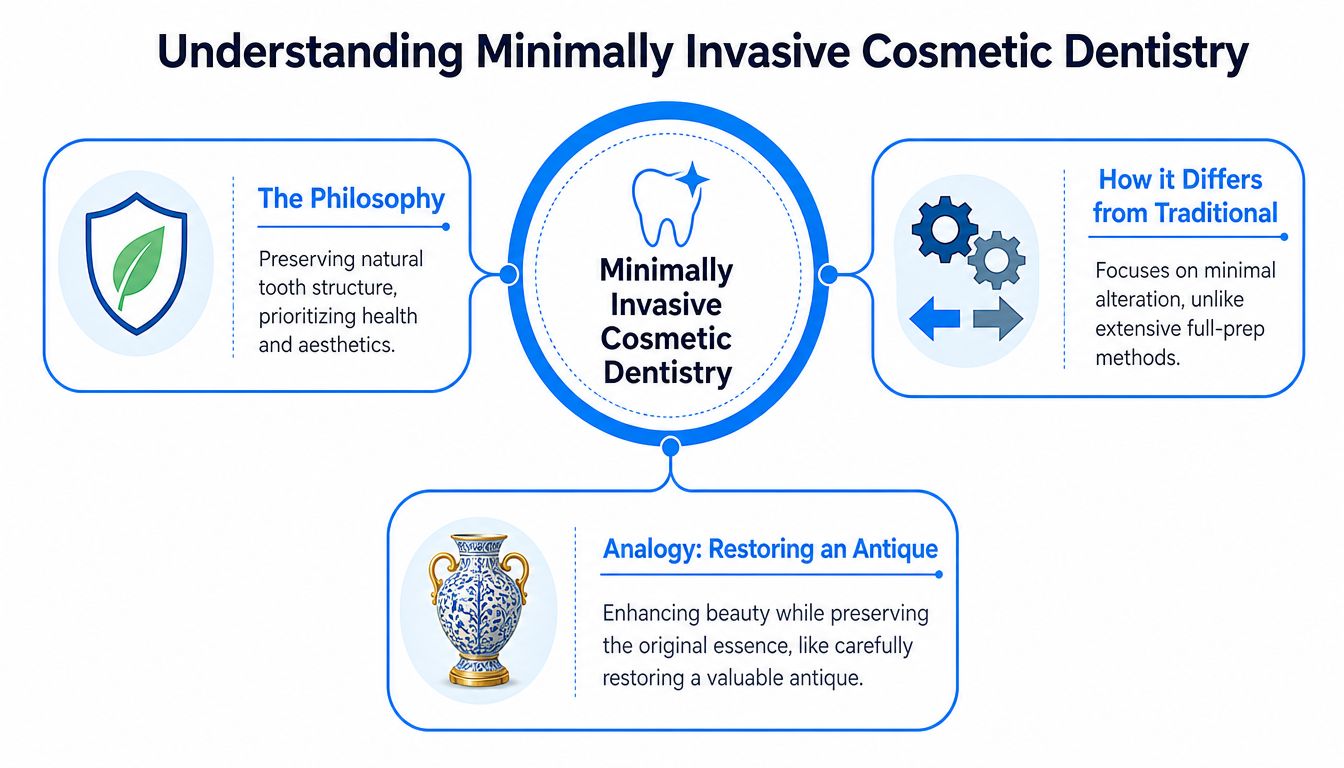
Minimally invasive cosmetic dentistry is a preservation-focused philosophy. The dentist aims to improve shape, color, symmetry, or proportion while removing as little sound tooth structure as the case allows. The approach differs from a conventional full-preparation restoration, where more tooth material may be reduced to create space for the restoration.
A useful analogy is restoring an antique piece of furniture. A careful restorer cleans, repairs, and enhances the original material instead of sanding away the character of the entire piece. In the same way, enamel-preserving dentistry treats natural tooth structure as something valuable, not as an obstacle to be removed.
Why enamel matters
Bonding to sound enamel is generally more reliable than bonding to dentin. Clinical evidence also supports selective phosphoric-acid etching before a mild universal adhesive to improve enamel bond strength, while careful isolation helps protect the bonding field. A PubMed-indexed clinical discussion of enamel bonding protocols explains why enamel retention and moisture control are central to conservative adhesive treatment.
The modern esthetic dentistry era developed alongside tooth-colored restorative materials and the wider use of bleaching, veneers, and implants, as described in the American Dental Association's dental history resource. Adhesion and improved restorative materials helped dentistry move toward preserving natural structure while still improving appearance.
One long-term analysis included 2,562 porcelain veneer restoration occasions in 1,177 patients and found that 53% survived 10 years without re-intervention, a finding summarized in the same ADA historical resource. That result doesn't mean every patient receives the same outcome. It shows why case selection, bonding conditions, material choice, bite forces, and maintenance all matter.
Dr. Wiitala can use additive techniques when the tooth's shape and position make them appropriate. If a tooth needs substantial structural support, a crown or another restorative option may be more suitable than forcing a minimally invasive solution beyond its limits.
Clinical Indications for Each Technique
The best technique depends on the specific cosmetic problem. A patient with generalized yellowing needs a different plan from someone with one chipped incisor or mild fluorosis. The evaluation should consider enamel thickness, existing fillings, gum levels, bite forces, tooth position, and the patient's expectations for color and longevity.
No-prep and ultra-thin veneers
No-prep or minimal-prep veneers may suit patients whose teeth already have a favorable shape and position, with enough room to add a thin ceramic layer without creating an overcontoured result. They may help with selected issues involving color, small shape differences, or minor irregularities, but they aren't suitable for every smile.
Preparation can be extremely limited in selected cases. Reported measurements may be as little as 0.1 mm at the cervical third, 0.2 to 0.5 mm in the middle third, and 0.7 to 1.0 mm in the incisal third, according to this peer-reviewed review of minimally invasive veneer preparation. The exact amount depends on anatomy and the design required.
Composite bonding
Bonding is often considered for a small chip, a limited space, or a contour irregularity. Tooth-colored composite resin can be added directly to the tooth, shaped, polished, and adjusted without preparing the entire visible surface. Patients considering this option can review dental bonding treatment information before a consultation.
Bonding may preserve substantial structure, but it can be more vulnerable to staining, wear, or chipping than ceramic in demanding situations. The dentist may recommend a bite evaluation when the patient clenches or grinds.
Microabrasion and resin infiltration
Mild fluorosis or superficial enamel discoloration may respond to surface-focused treatment. Microabrasion removes or smooths a limited superficial layer, while resin infiltration can modify the appearance of certain enamel defects without using a full veneer. These options may preserve more structure than a restoration, although their ability to mask deep or strongly contrasting color is limited.
Whitening and aligner-first treatment
In-office whitening is a logical first consideration when the main concern is overall tooth shade and the teeth are otherwise healthy. Existing restorations won't whiten in the same way as natural enamel, so shade planning should account for fillings, crowns, or veneers.
Clear aligner treatment may be more conservative than restoring teeth that are primarily misaligned. Moving teeth into better positions can sometimes reduce the need for enamel alteration or additive material. The right sequence may involve alignment first, followed by whitening or small refinements.
Comparing Treatment Options
Patients usually compare three things: how much natural structure remains, how well the method addresses the visible concern, and what maintenance may be required later. No option wins every category. Whitening preserves tooth structure but can't change shape, while veneers can alter color and form but require detailed planning and ongoing care.
| Treatment | Tooth Structure Preserved | Estimated Longevity | Ideal Indications |
|---|---|---|---|
| Whitening | Natural structure remains intact | Depends on shade relapse and maintenance | Generalized natural-tooth discoloration |
| Composite bonding | Usually preserves substantial structure | Requires monitoring and possible repair | Small chips, limited spaces, contour changes |
| Microabrasion or resin infiltration | Focuses on superficial enamel or selected defects | Depends on defect type and maintenance | Mild fluorosis and superficial enamel changes |
| Clear aligner-first treatment | Avoids unnecessary restorative reduction | Depends on retention and oral care | Mild crowding, spacing, or tooth-position concerns |
| Ultra-thin porcelain veneers | Designed to preserve enamel when anatomy allows | Feldspathic porcelain veneers bonded to enamel have an estimated 95.7% five-year survival and may approach 95.6% at 10 years, as reported in a veneer survival meta-analysis | Selected concerns involving color, shape, and symmetry |
How to interpret longevity evidence
Survival figures describe groups of restorations under particular clinical conditions. They don't promise that a specific veneer will last for a particular patient, especially when the patient has untreated decay, gum disease, heavy grinding, inadequate space, or unrealistic expectations.
A prospective study of 186 veneers in 35 patients reported a mean observation period of 9 years and a 100% survival rate for no-prep or minimally invasive veneers versus 9.67% for conventional veneers in that study, as described in this peer-reviewed veneer comparison. Because the sample was specific and the result differs sharply from broader evidence, it should inform discussion rather than serve as a universal guarantee.
Patients weighing cosmetic treatment alongside broader oral-health procedures may also benefit from a separate regenerative dentistry treatment comparison when discussing tissue healing topics with a dental professional. For veneer planning specifically, patients can learn more about natural-looking veneers and ask how material, enamel retention, and bite protection affect the proposed design.
What to Expect During Treatment at Dr Wiitala DDS
A visit to Dr Wiitala's office at 9755 North 90th Street, Suite B250, Scottsdale, AZ 85258 begins with understanding the patient's concern. The appointment may include an oral examination, photographs, dental x-rays when indicated, shade assessment, and a review of existing dental work, gum health, tooth wear, and bite function.
The planning visit
The first goal is diagnosis, not immediate preparation. If a patient wants a brighter smile but has active decay or gum inflammation, those concerns may need attention before cosmetic treatment. If mild crowding is the main issue, clear aligners may offer a more conservative route than reshaping or restoring several teeth.
Digital smile design can help organize the plan and communicate changes in proportion, symmetry, and shade. A preview doesn't replace clinical judgment, but it can help patients discuss whether the proposed result looks natural and whether the treatment matches their expectations.
Adhesive and restorative care
If bonding or veneers are appropriate, enamel conditioning and adhesive protocols become important. The field should remain clean and dry, and rubber dam isolation may be used to improve moisture control during bonding. The dentist selects the restorative material and preparation design according to the tooth's anatomy, the intended change, and the patient's bite.
Patients should expect questions about clenching, grinding, sports, diet, and previous sensitivity. Those details can influence whether a guard, staged treatment, aligner-first plan, or restorative alternative belongs in the discussion.
Follow-up
Post-treatment review checks comfort, bite, contours, shade integration, and the patient's ability to clean around the restoration. The office also provides routine preventive, restorative, implant, and family dental services, allowing cosmetic care to remain connected to long-term oral health.
Maintenance and Longevity Recommendations
A conservative restoration still needs daily protection. The material may be durable, but the tooth beneath it remains part of a living mouth exposed to plaque, acids, chewing forces, and habits such as nail biting or opening packages with the teeth.
A practical care routine
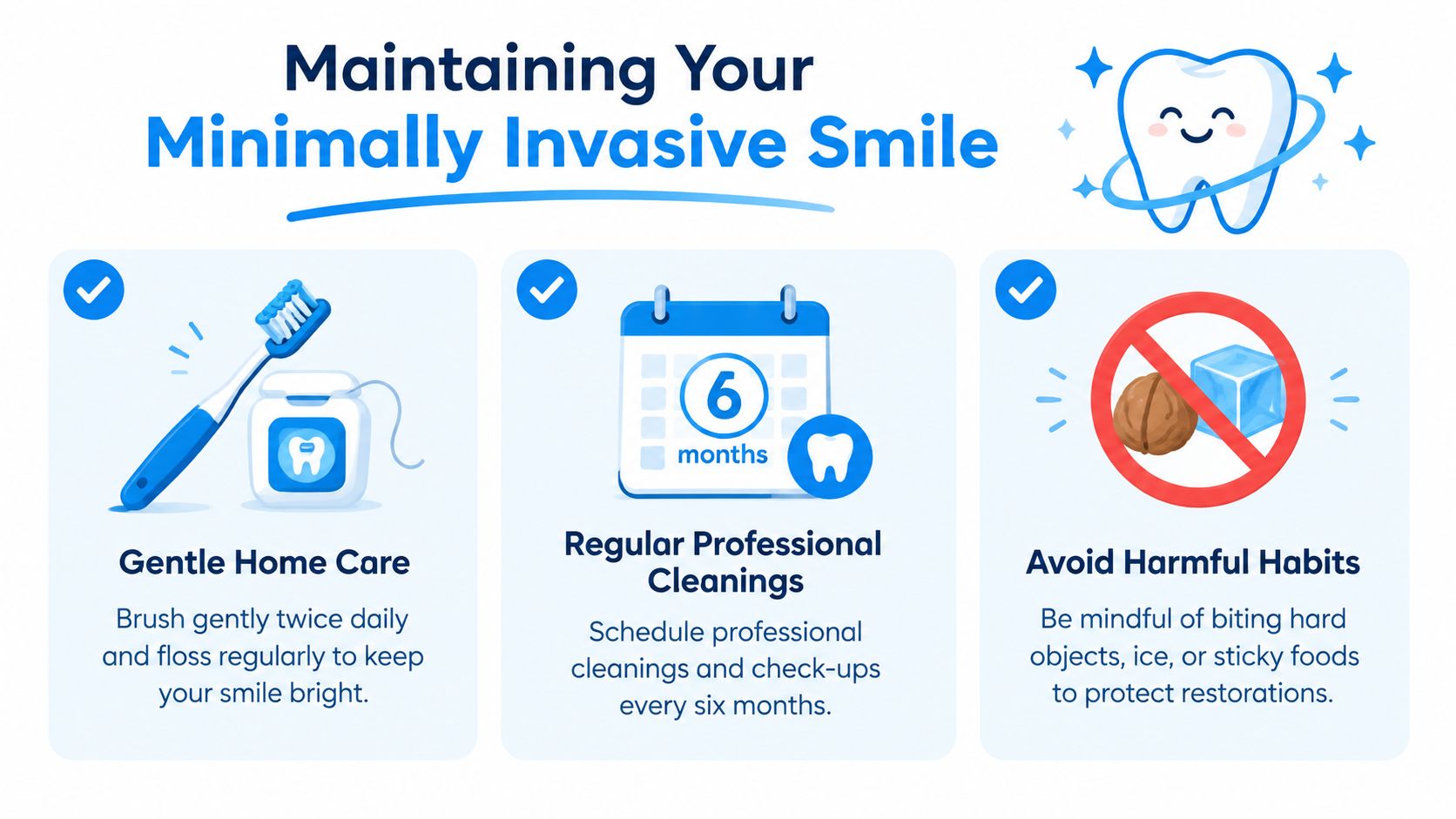
- Gentle home care: Brush gently twice daily with a soft brush and clean between the teeth regularly. Excessive force can irritate the gums and contribute to wear at the gumline.
- Professional cleanings: Schedule professional cleanings and check-ups every six months so the dental team can monitor the restoration, enamel, gums, and bite.
- Protective habits: Avoid chewing ice, hard objects, or sticky foods that can place unnecessary stress on bonding or ceramic.
- Nighttime protection: Patients who grind or clench may need a custom occlusal guard to reduce bite-related stress.
- Shade maintenance: Touch-up whitening should be planned with the dentist, particularly when restorations are present because restorative materials don't respond to whitening like natural teeth.
Long-term evidence supports durability when conservative porcelain treatment is properly planned and maintained. Systematic reviews report porcelain veneer survival around 91% to 95% at 10 years, as summarized in this review of long-term porcelain veneer outcomes. Those figures describe reported groups, not a guarantee for an individual patient.
A quick consultation is appropriate if a restoration feels loose, a new edge feels sharp, the bite changes, sensitivity persists, or a chip appears. Early review may allow a repair or adjustment instead of waiting for a small issue to become more complicated.
Conclusion and Next Steps
Minimally invasive cosmetic dentistry can give Scottsdale patients a thoughtful alternative to extensive tooth reduction. The strongest plan matches the method to the problem. Whitening may suit generalized natural-tooth discoloration, bonding may address a small chip, microabrasion or resin infiltration may help selected superficial enamel defects, aligners may improve position, and ultra-thin veneers may provide a broader change in carefully selected cases.
The key question isn't only whether a treatment looks attractive on the day it is placed. Patients should ask how much enamel will remain, whether the bite has been evaluated, how the restoration can be repaired, and what maintenance may be needed over time. Conservative dentistry works best when the dentist considers biology, function, appearance, and future options together.
Dr. Eric Wiitala provides cosmetic and general dentistry in Scottsdale, along with preventive exams, professional hygiene, tooth-colored fillings, crowns, bridges, dental implants, All-on-Four solutions, clear aligners, gum therapy, bite guards, sleep-related oral appliance therapy, and TMJ care. Patients looking for dental implants near me, a tooth extraction, an emergency dentist, or a cosmetic consultation can contact the office to determine which service fits the immediate need.
New patients can ask about first-visit procedures, insurance and billing support, and financing options when arranging care. A consultation can also clarify whether cosmetic treatment should begin with cleaning and exams, dental x-rays, whitening, restorative care, or a more focused smile evaluation.
Eric Wiitala DDS offers enamel-conscious cosmetic dentistry in Scottsdale, including bonding, whitening, veneers, and clear aligner planning addressing each patient's specific concern. Patients ready to explore a conservative smile improvement can visit Eric Wiitala DDS to request a consultation or new patient appointment.