
If a patient is brushing twice a day, keeping up with cleanings, and still hearing about new cavities or bleeding gums, the frustration is real. A lot of people in Scottsdale assume the problem must be their toothbrush or their technique, when the daily pattern of snacks, drinks, and skipped meals is often doing the heavier lifting.
That's why nutrition and oral health belong in the same conversation. Dr. Eric Wiitala's Scottsdale practice takes that broader view, looking at teeth, gums, bite health, sleep, and the foods that keep showing up between visits. For readers searching for a dentist near me or a dentist in Scottsdale, AZ, that kind of preventive approach can make the next exam feel a lot less surprising.
Table of Contents
- Why What You Eat Shows Up at Your Next Dental Visit
- How Nutrition and Oral Health Are Connected Inside the Mouth
- The Sugar Threshold That Matters for Your Teeth
- Best Foods for Teeth and Foods to Limit
- Special Situations Where Nutrition Matters Even More
- How Preventive Dentistry in Scottsdale Supports Your Nutrition Goals
- A Tooth-Friendly Day of Meals and Snacks
- Schedule Your Preventive Visit in Scottsdale
Why What You Eat Shows Up at Your Next Dental Visit
A patient can be meticulous with brushing and still sit in the chair surprised by a new cavity or gums that bleed easily. That's because the mouth doesn't wait for the next appointment to react, it responds every day to what gets eaten, sipped, and repeated as a habit.
A steady snack pattern, frequent sweet drinks, and low-nutrient meals can gradually change the environment in the mouth. That's the part many people miss. The grocery cart can shape what the dentist sees months later, whether the issue is decay, irritated gums, or enamel that looks more worn than expected.
Dr. Wiitala's Scottsdale practice takes that whole-picture view seriously. The focus isn't only on fixing a problem after it's already caused pain, it's also on helping patients understand how diet, sleep, and bite health fit together. For a practical outside resource on daily habits that support the mouth, Better toothcare habits is a useful place to compare routine choices with the science.
Practical rule: if a food or drink is consumed many times a day, it matters more than whether it seems “small.”
That simple idea helps explain why nutrition and oral health are so closely linked. Brushing is important, but brushing can't fully cancel out a day built around frequent sugar exposure or a diet that leaves the gums short on the nutrients they use to repair and protect themselves.
How Nutrition and Oral Health Are Connected Inside the Mouth
Sugar feeds the cavity process
Free sugars feed the bacteria that live in plaque. Those bacteria turn sugar into acid, and acid softens enamel the way vinegar softens a hard-boiled egg. Once enamel weakens, the tooth becomes easier to damage, and that damage can keep moving if the pattern does not change.
The American Dental Association summarizes evidence showing that populations eating more than 10% of total energy from free sugars had a consistently higher incidence of caries than those eating less than 10% (ADA nutrition and oral health). The World Health Organization goes further and recommends keeping free sugars under 10% of total energy intake, ideally under 5%, to reduce caries risk across the life course.
A simple way to picture it is this, every sugar exposure gives plaque bacteria another round of acid production. That is why the pattern across the day matters as much as the total amount.
Gum tissue needs nutrients too
Cavities are only part of the picture. Gums need building materials, too. A peer-reviewed review reports that deficiencies in vitamin C, folate, and zinc increase susceptibility to periodontal disease by weakening the gingival fissure barrier and increasing tissue permeability (review on micronutrients and periodontal disease). In plain language, the tissue that helps seal and protect the gums becomes less resilient when key nutrients are missing.
That matters because oral health is not only about hardness. It is also about healing, collagen support, tissue integrity, and immune response. Diets low in fruits, vegetables, and mineral-rich foods can leave the mouth more vulnerable to inflammation, slower recovery, and bleeding that seems to linger.
A meal that keeps sugar exposures low and includes nutrient-dense foods gives the gums a better chance to repair. The same daily pattern also fits with holistic dentistry, where the goal is to support the mouth as a whole instead of treating each symptom in isolation.
The same meal pattern that helps bacteria stay active can also leave gum tissue underbuilt and under-repaired.
That is why the standard American mix of frequent sugary drinks and processed snacks, paired with too few vegetables, fruits, and whole foods, shows up in both decay and gum problems. The result is not just more cavities, it is a mouth that has a harder time staying calm, strong, and stable. If you want to find sugar-free meal ideas, a simple place to start is find sugar-free meal ideas.
The Sugar Threshold That Matters for Your Teeth
The amount matters, and so does the frequency
People often ask for one simple number, but the mouth responds to both how much sugar is eaten and how often it arrives. The World Health Organization's target is clear, free sugars should stay under 10% of total energy intake, and ideally under 5%. The ADA's summary of the evidence points the same direction, higher caries rates consistently show up in populations above 10% free sugar intake (ADA nutrition and oral health).
The NIH/NCBI review adds a population benchmark that helps make the advice feel more concrete. It reports that when free sugar intake stays under 15 to 20 kg per person per year, caries levels remain low, and it identifies four or fewer sugar intakes per day as the upper limit associated with lower risk (NIH/NCBI review). That gives patients a second lens, not just sugar amount, but sugar exposures spread through the day.
A Scottsdale-friendly way to think about it
A soda with lunch, a sweet coffee in the afternoon, a granola bar on the drive home, and dessert after dinner can strain teeth more than one dessert eaten with a meal. Each exposure gives acid-producing bacteria another chance to work against enamel, like repeated rain on a roof that never fully dries.
Useful target: fewer sugar exposures during the day, not just smaller servings.
That does not mean every sweet food is off-limits forever. It does mean the mouth does better when sugar is treated like part of a meal, not a background habit. For readers trying to simplify planning, find sugar-free meal ideas can help with practical meal structure while keeping the sugar load lower.
When the sugar pattern changes, the mouth gets more time to recover. That is often the difference between a patient who feels like cavities keep “coming back” and one who finally sees a more stable check-up pattern.
Best Foods for Teeth and Foods to Limit
A quick comparison readers can save
| Category | Tooth-Friendly Choices | Foods to Limit |
|---|---|---|
| Daily drinks | Fluoridated water | Sugary drinks, sports drinks, energy drinks |
| Produce | Crunchy vegetables, leafy greens, fresh fruits | Sticky dried sweets, frequent snack foods |
| Protein and fats | Nuts, fatty fish, lean protein | Highly processed snack foods |
| Dairy and alternatives | Dairy or fortified alternatives for calcium support | Sweetened flavored dairy drinks |
| Between-meal habits | Sugar-free xylitol gum | Grazing on sweets or starches |
| Child guidance | Water and nutrient-dense snacks | Sugar-sweetened beverages for children under 2, which should be avoided in early childhood |
What supports teeth, gums, and saliva
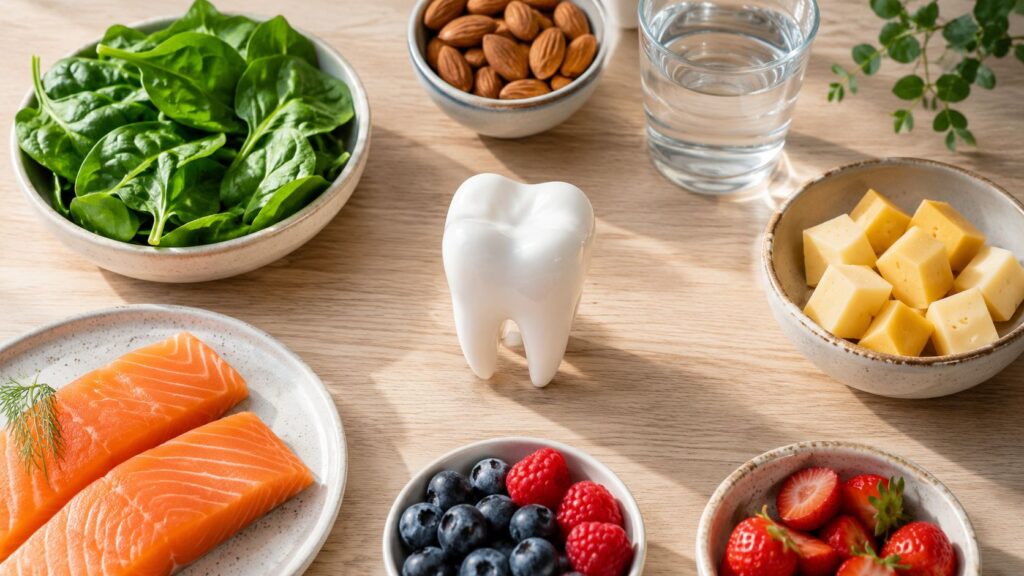
A tooth-friendly plate does more than keep sugar lower. It also gives the mouth materials it uses to repair, protect, and clean itself. Calcium and vitamin D support the mineral side of oral health, while vitamin C and zinc help gum tissue stay resilient and heal after irritation. Fresh vegetables, fruits, and wholegrain starches fit that pattern well because they are less likely to keep acid production going between meals.
Crunchy produce helps in a simple way, it asks the jaw to work a little and it encourages saliva. Saliva is the mouth's rinse cycle, washing away food bits and helping neutralize acids before they sit on enamel. Water supports that process too, and fluoridated water is still the easiest drink for everyday tooth care.
For readers who want a more food-first planning idea, the same principles also fit meal guidance used in pregnancy and blood sugar support, including resources such as best snacks for gestational diabetes. The point is not a special diet label. The point is choosing snacks that steady the mouth instead of feeding bacteria again and again.
What tends to make teeth work harder
Sticky candy, repeated sipping on sweet drinks, and constant snacking give bacteria more time to make acid. Refined white carbs can create a similar problem when they are eaten often and without enough fiber, protein, or minerals alongside them. A cracker here or a cookie there is easier for teeth to handle than the same foods used as an all-day grazing pattern.
A food does not have to be “bad” to be a poor fit for teeth. Timing and frequency can change the effect completely. That is why a sweet item eaten with a meal usually causes less trouble than the same item stretched across the afternoon.
Sugar-free xylitol gum can help between meals when brushing is not possible, especially after lunch or on the drive home. For patients whose gums are already inflamed, Dr. Wiitala's periodontal gum disease care connects nutrition with treatment, because sore gums and poor food habits often feed into each other. For families, the practical message is straightforward, build meals around nutrient density, then keep sweet drinks and snacks from becoming the day's main event.
Special Situations Where Nutrition Matters Even More
Children, implants, TMJ, and dry mouth each need a different plan
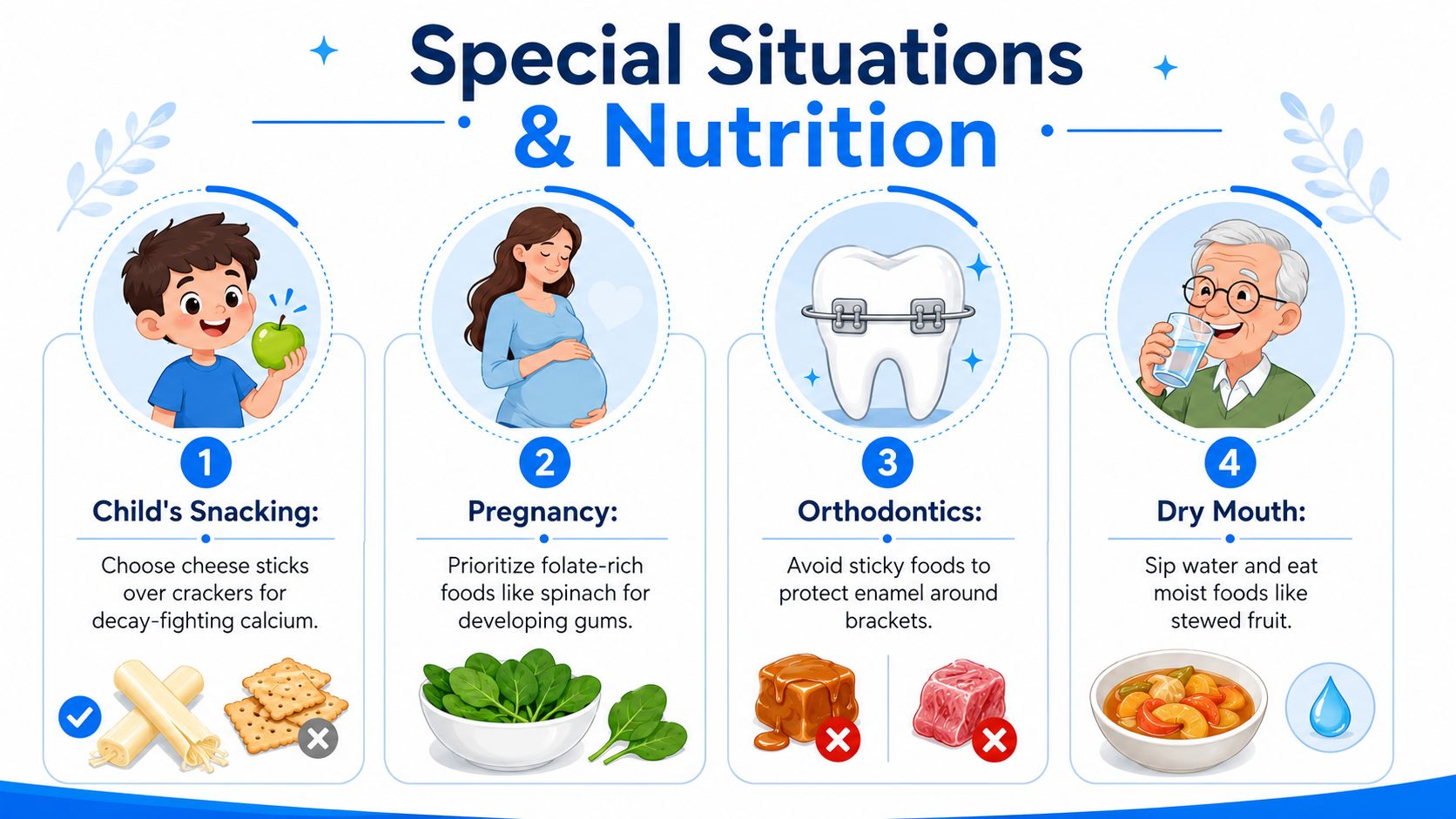
A child with early cavities often is not eating too much sugar in one sitting. The usual problem is repeated snacking. Cheese sticks, yogurt, crunchy vegetables, and water give the mouth time to reset between meals, while crackers or sweet drinks keep feeding bacteria again and again.
An adult healing after dental implants near me searches often needs to pay attention to protein, vitamin C, zinc, and overall diet quality. Those nutrients support tissue repair, which matters when the mouth is recovering from surgery or adjusting to a new restoration. For patients with ongoing gum concerns, Dr. Wiitala's periodontal gum disease care can fit into the same health conversation, because inflamed gums and poor nutrition often travel together.
A TMJ or bruxism patient usually needs more direction than “eat soft foods.” Hydration matters, because a dry, tense mouth can make clenching feel worse, and meals need enough protein and minerals to support recovery without overworking the jaw. That is one reason occlusal guards and bite-aware care fit naturally with nutrition counseling in Scottsdale.
An older adult on multiple medications may be dealing with dry mouth, which makes each sugar exposure more risky because there is less saliva to buffer acids. In that situation, moist foods, water, and non-sticky snacks become especially important.
For readers looking for a practical food reference in a special circumstance, best snacks for gestational diabetes is a helpful example of how to choose snacks that are steadier on blood sugar and generally easier on the mouth, too.
The same principle, adjusted for the patient
- Child with cavities: reduce grazing, swap sweet drinks for water, and use cheese or vegetables as default snacks.
- Implant patient: choose softer meals that still provide protein and micronutrients, not just refined carbs.
- TMJ or bruxism patient: keep chewing manageable, stay hydrated, and do not let stress meals turn into constant snacking.
- Dry mouth patient: favor moist foods, sip water often, and avoid sticky sweets that cling to teeth.
How Preventive Dentistry in Scottsdale Supports Your Nutrition Goals
Nutrition helps set the stage at home, but preventive dentistry keeps small problems from becoming painful ones. Routine check-ups and professional hygiene visits can catch early demineralization, while periodontal evaluation and therapy address the gum side of the equation before inflammation becomes harder to manage.
Dr. Wiitala's Scottsdale office also uses services that match the way the mouth wears down over time. Occlusal guards help protect teeth and restorations from nighttime grinding, and oral appliance therapy for sleep apnea and snoring supports healthier sleep, which can make daily routines easier to keep. The practice also offers mercury-free, tooth-colored materials, which fits patients who want care that feels more aligned with a whole-body approach.
Preventive dentistry doesn't replace good food choices, it multiplies them.
That's especially true when a patient is dealing with several concerns at once, like enamel wear, gum inflammation, bite strain, or missing teeth. A thorough visit can connect the dots between daily nutrition, tissue health, and the treatment plan instead of treating each issue in isolation.
For patients comparing a cosmetic dentist near me search with a more restorative need like tooth extraction or dental implants near me, this broader style of care matters. A plan that accounts for diet, sleep, grinding, and gum health is usually easier to maintain because it addresses the habits that keep driving the problem.
A Tooth-Friendly Day of Meals and Snacks
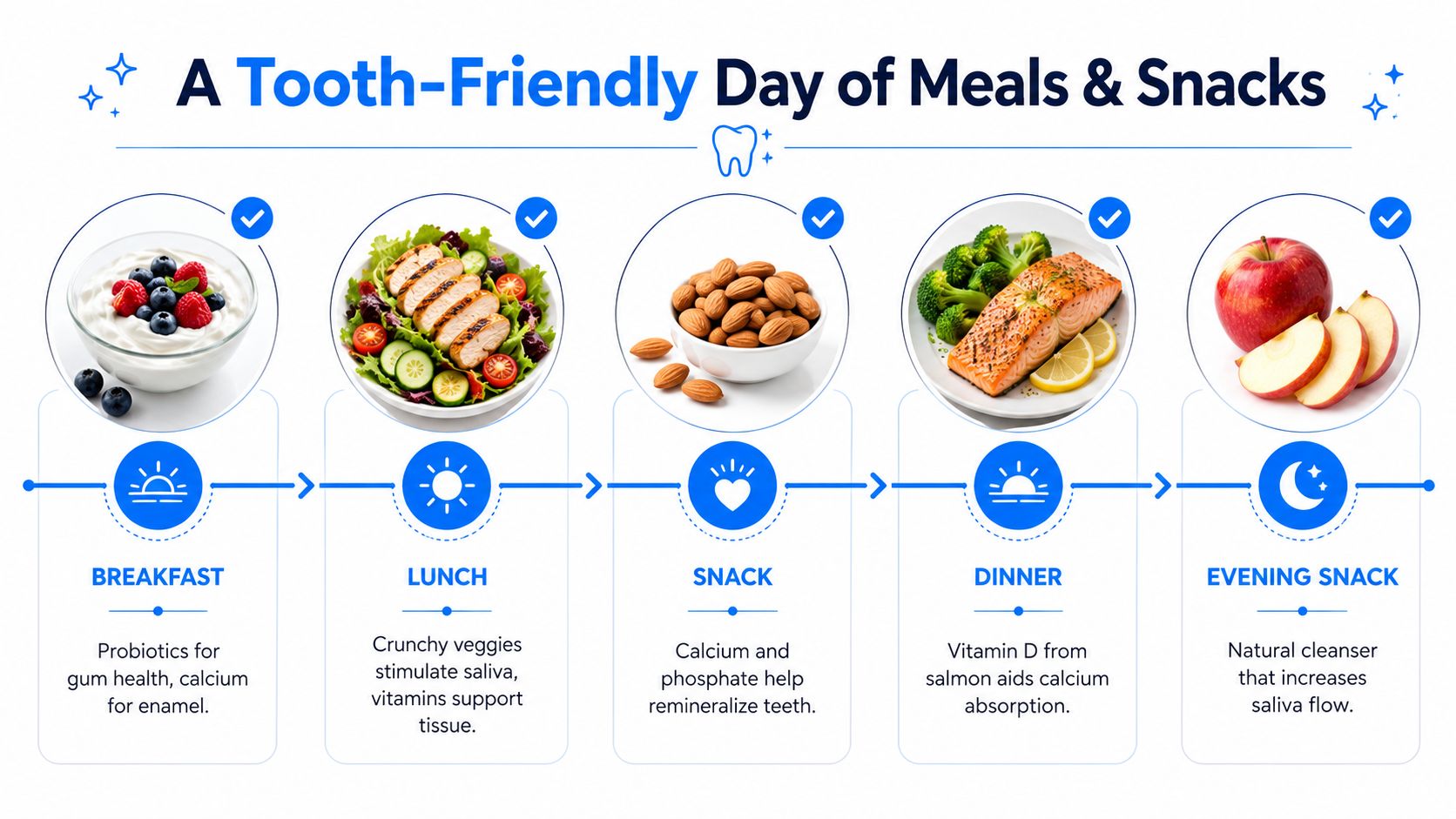
A mouth-friendly day does not need to be complicated. It works best when meals are steady, filling, and not built around repeated sugar exposure.
A simple sample day
Breakfast: plain Greek yogurt with berries and almonds.
Mid-morning snack: cheese with crunchy vegetables.
Lunch: a leafy green salad with lean protein.
Afternoon: fluoridated water, and sugar-free xylitol gum if brushing is not possible.
Dinner: calcium-rich food alongside vegetables and a protein source.
Evening snack, if needed: something crisp and low in added sugar instead of a sticky sweet.
A day like this gives the mouth fewer chances to sit in an acidic environment. It also brings in foods that support the tissues around the teeth, especially the gums, which need nutrients to stay firm and recover well.
Three habits keep that plan on track:
- Choose fluoridated water often. Harvard's Nutrition Source calls fluoridated water the best drink for teeth (Harvard Nutrition Source oral health).
- Save sweets for mealtimes. That lowers the number of acid-producing exposures across the day.
- Use sugar-free xylitol gum when brushing is not possible. It gives the mouth a brief reset between meals.
The goal is not perfection. It is reducing the number of times teeth get hit with sugar and giving gums more of the nutrients they need to stay firm and heal well. That approach works for busy parents, working adults, and anyone trying to keep dental visits calmer and more predictable.
Schedule Your Preventive Visit in Scottsdale
Nutrition and oral health work together every day, not just at the dentist's chair. Brushing and flossing matter, but they can't fully offset a diet that keeps feeding bacteria or a pattern that leaves gum tissue under-supported.
A first visit with Dr. Eric Wiitala includes a new-patient exam, periodontal evaluation, bite and TMJ screening, and x-rays when indicated, followed by a plan that can include dietary guidance, preventive care, and restorative options when needed. The office is at 9755 North 90th Street, Suite B250, Scottsdale, AZ 85258, and the team can be reached at (480) 657-6981. Hours are Monday through Thursday, with Friday by appointment.
If the goal is to find a dentist in Scottsdale, AZ who looks at the full picture, Dr. Wiitala's office is set up for that kind of care. Patients from Scottsdale and nearby communities can call to schedule a preventive visit, ask about gum health, or get help with tooth pain, implants, whitening, or a custom plan that fits their routine.
Eric Wiitala DDS helps Scottsdale patients connect daily habits with long-term oral health through preventive exams, gum care, restorative dentistry, implants, cosmetic services, and sleep and TMJ support. If the mouth has been telling a different story than the toothbrush, a visit with Eric Wiitala DDS is a practical next step for getting clear answers and a plan that fits real life.