
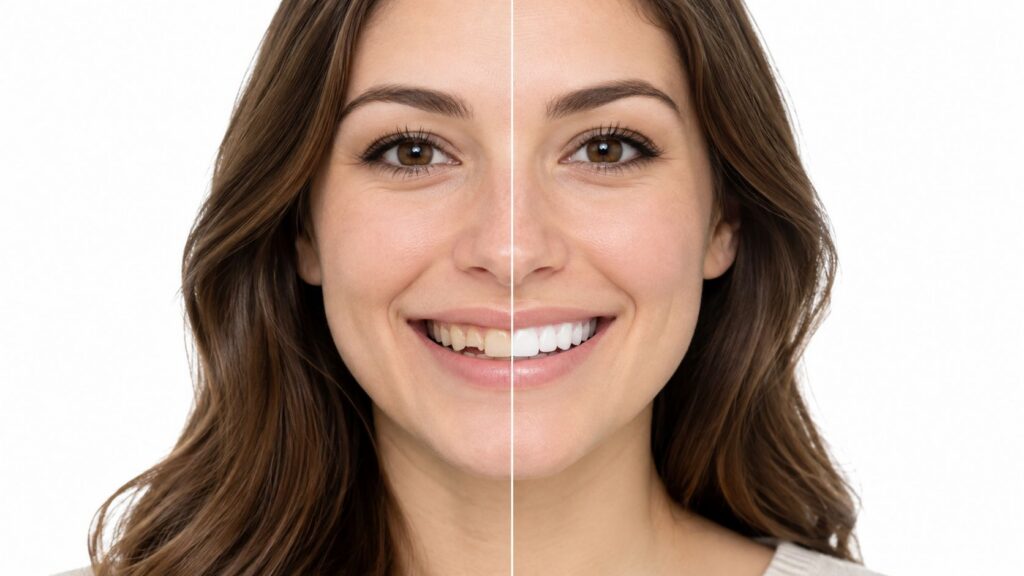
A smile can affect far more than a photo. Stained teeth may make someone cover their mouth, worn edges can change the way the teeth meet, and missing teeth may make chewing uncomfortable. For Scottsdale adults searching for a dentist near me, a cosmetic dentist near me, or a dentist in Scottsdale AZ, the right answer may be much more conservative than a full set of veneers.
Eric Wiitala DDS provides cosmetic, restorative, family, and general dentistry in Scottsdale, including teeth whitening, bonding, porcelain veneers, clear aligners, gum care, crowns, bridges, dental implants, All-on-Four solutions, and TMJ-focused treatment. A smile makeover can combine these services, but it should begin with the health of the teeth, gums, bite, and jaw.
Table of Contents
- Your Best Smile Starts Here in Scottsdale
- What a Smile Makeover Really Means
- Exploring Every Smile Makeover Option Available
- How Treatments Combine for a Complete Transformation
- Timelines Costs and What to Expect After Treatment
- What to Expect at Your Scottsdale Smile Consultation
- Take the Next Step Toward a Confident Healthy Smile
Your Best Smile Starts Here in Scottsdale
A typical smile conversation may begin with someone who avoids showing teeth in family photos. Perhaps the front teeth are darker than they used to be, one edge chipped years ago, or a small gap has become more noticeable. Another patient may want a brighter smile but also has worn teeth, jaw tension, or an old crown that no longer blends with the surrounding teeth.
Those concerns don't all call for the same treatment. Whitening may be enough for surface staining. Dental bonding can repair a small chip while preserving tooth structure. Clear aligners may improve spacing, while a crown, bridge, or implant restoration may be more appropriate when a tooth is structurally compromised or missing.
Professional teeth whitening remains the most widely adopted cosmetic smile makeover option in the United States. Nineteen percent of U.S. adults report undergoing professional whitening, a rate exceeding veneers and orthodontic cosmetic treatment, while the global whitening market was estimated at $8.93 billion in 2025 and is projected to reach $14.31 billion by 2034, according to cosmetic dentistry statistics on professional whitening. The same source reports that roughly 37 million Americans whitened their teeth in 2020, illustrating how whitening has become a mainstream aesthetic service.
Care for appearance and comfort
A complete plan also considers chewing, speech, facial support, gum proportions, tooth wear, and jaw comfort. Someone who grinds at night may need bite protection before or alongside cosmetic work. Someone with gum inflammation may need periodontal care before changing tooth shape or color.
Patients searching for an emergency dentist should address pain, swelling, trauma, or a damaged tooth before beginning elective smile enhancement. Eric Wiitala DDS offers a local setting for evaluating those concerns and developing a plan around comfort, health, budget, and timing.
The most useful consultation doesn't just ask which treatment looks attractive. It asks which option solves the actual problem while preserving healthy tooth structure. The guide below helps Scottsdale patients understand those choices and identify the questions to bring to a consultation.
What a Smile Makeover Really Means
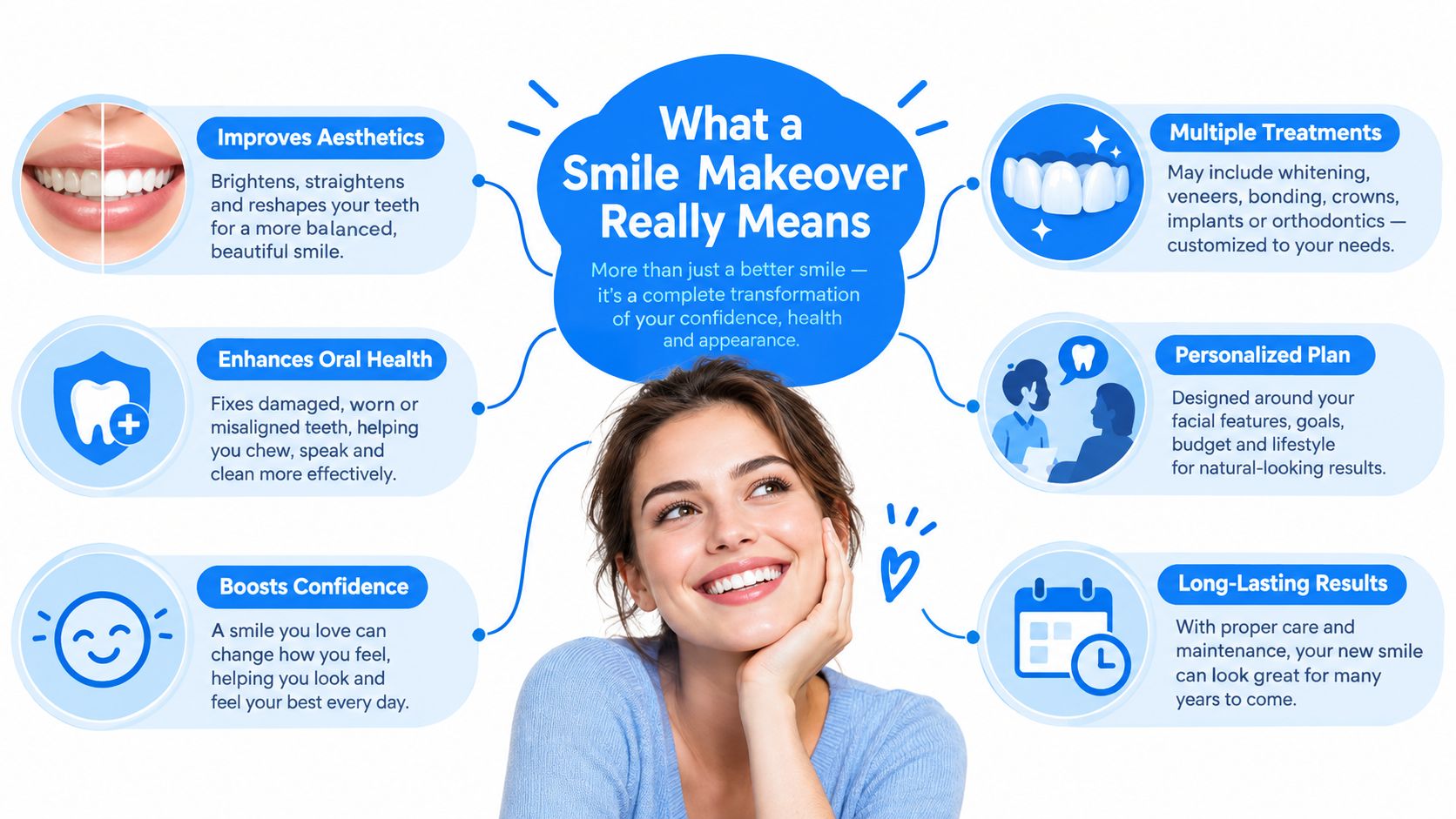
A smile makeover is a personalized sequence of dental treatments, not a single procedure or a standard package. A helpful analogy is tailoring a suit. The dentist adjusts the fit to the person wearing it, rather than choosing a fixed size and asking the person to adapt.
The same principle applies to teeth. A smile design should account for:
- Facial proportions: Tooth width, length, and shape should complement the surrounding face.
- Lip dynamics: The amount of tooth and gum displayed changes while speaking, smiling, and laughing.
- Gum architecture: Uneven gum levels or excess visible gum can affect the balance of the smile.
- Tooth color and surface: Staining, translucency, cracks, and restorations influence which treatments can blend naturally.
- Bite function: The teeth must meet comfortably during chewing and movement.
- Jaw and TMJ health: Clenching, grinding, clicking, tenderness, or restricted movement can affect treatment planning.
Why the bite comes before the final look
A visually attractive result still needs a stable foundation. If a patient already clenches, grinds, or experiences jaw discomfort, adding length or changing contact points without evaluating the bite may create avoidable stress. A consultation should therefore include an assessment of tooth wear, muscle tenderness, jaw movement, and the way the teeth contact one another.
That doesn't mean every patient needs extensive treatment. In many cases, selective reshaping, bonding, gum contouring, or conservative alignment can address the concern without preparing every visible tooth. The best smile makeover options are often the ones that correct the specific defect and leave unaffected enamel alone.
Digital photographs, dental models, and bite records can help the dentist evaluate the relationship between the smile and the face. Digital planning can support communication, but recent trend coverage notes that manually crafted smile designs were still preferred overall in reported 2025 to 2026 research, while acceptance of artificial intelligence designs varied by case. Recent coverage of whole-face smile design trends supports a balanced approach, using technology as an aid rather than a substitute for clinical judgment.
A practical smile makeover plan answers three questions: What needs correction? What must remain healthy and protected? Which treatment creates the desired change with the least unnecessary intervention?
Exploring Every Smile Makeover Option Available
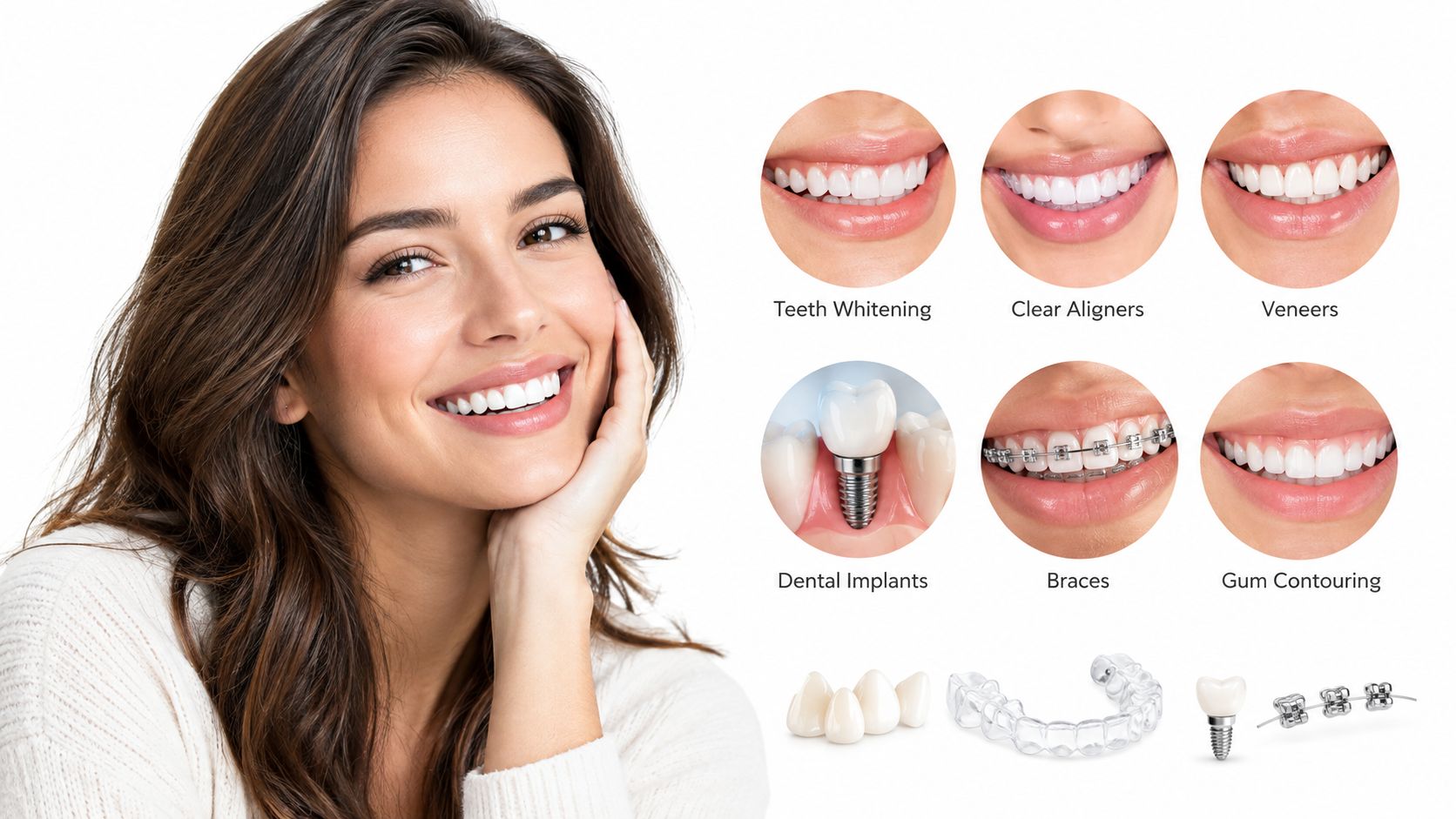
Different treatments solve different problems. A patient with stain does not need the same approach as a patient with a missing molar, and a small chip doesn't automatically justify a veneer.
Professional teeth whitening
In-office bleaching is often a first-line choice for natural teeth affected by generalized discoloration. Research indicates that hydrogen peroxide concentrations around 25% to 35% can achieve outcomes comparable to 35% to 40% formulations while reducing sensitivity, and higher concentrations are associated with more frequent and intense sensitivity, as reported in a clinical review of bleaching concentrations and sensitivity.
Whitening suits patients who want a brighter smile without changing tooth shape. It won't change the color of existing crowns, bridges, fillings, or veneers, and it may not correct deep internal discoloration.
Dental bonding
Bonding uses tooth-colored material to repair a small chip, close a limited gap, or reshape an uneven edge. It can be a sensible choice when the tooth is healthy and the change is modest. The trade-off is that bonding may require maintenance if the patient bites hard objects, grinds, or repeatedly exposes the material to staining foods and drinks.
Porcelain veneers
Veneers cover the visible front surface of selected teeth to change color, form, length, or minor alignment. Contemporary evidence describes minimal enamel-preserving preparation of roughly 0.3 to 0.5 millimeters, with depth-orientation grooves, when preparation is indicated. Remaining in enamel matters because bonding to enamel is more predictable than bonding to dentin, as discussed in a systematic review of contemporary dental veneers.
Patients considering veneers can review natural-looking porcelain veneer treatment before asking whether selective veneers or a minimal-prep approach is appropriate. Veneers aren't a universal solution for untreated decay, active gum disease, or uncontrolled grinding.
Crowns and bridges
A crown restores a tooth that has lost substantial strength or structure. A bridge replaces a missing tooth by using neighboring teeth for support. These are restorative dentistry options that can also improve the visible smile, especially when a damaged or missing tooth affects both appearance and chewing.
Dental implants and All-on-Four
An implant replaces the root portion of a missing tooth and supports a crown, bridge, or full-arch restoration. Implant prevalence in the United States rose from 0.7% in 1999 to 2000 to 5.7% in 2015 to 2016, and the global dental implant market was estimated at about $6.8 billion in 2024, with projections toward $9.8 billion by 2033 at a 4.16% CAGR, according to peer-reviewed implant prevalence and market data.
Patients searching for dental implants near me may need a single implant, several implants supporting a bridge, or an All-on-Four solution for an edentulous or nearly edentulous arch. The correct choice depends on bone, gum health, overall medical factors, cleaning ability, and the desired restoration.
Clear aligners, including SureSmile
Clear aligners gradually guide teeth toward improved alignment and spacing. They may be useful before cosmetic bonding or veneers because moving teeth can reduce the amount of reshaping needed. They aren't suitable for every bite or every level of movement, so the dentist must evaluate tooth roots, gum support, and bite relationships.
Gum contouring and jaw protection
Gum contouring can refine uneven gum levels or excess visible gum when the teeth themselves are appropriately shaped. It may be paired with bonding or veneers, but only after gum health has been evaluated.
Custom occlusal guards help protect teeth from bruxism and reduce harmful contact during sleep. Therapeutic Botox may be considered for selected TMJ-related muscle symptoms. Neither option replaces a complete assessment of the bite and jaw.
How Treatments Combine for a Complete Transformation
The most natural result often comes from sequencing rather than maximizing treatment. A patient with mild discoloration and two chipped edges may benefit from whitening followed by bonding. Whitening first allows the dentist to match the bonding material to the final tooth shade.
Another patient may need alignment before cosmetic changes. Clear aligners can improve spacing or tooth position, after which selective bonding or veneers may refine shape. This approach may preserve more enamel than preparing multiple teeth to compensate for crowding.
Missing teeth require a different sequence. The dentist may first stabilize gum health and plan implant placement, then use crowns or a bridge to restore the visible and functional portions. For a patient without stable teeth across an arch, an All-on-Four plan may provide a coordinated full-arch path rather than treating each tooth in isolation.
Choosing the Right Combination for Your Goals
| Primary Goal | Common Combination | Best When | Key Consideration |
|---|---|---|---|
| Brighter natural teeth | Professional whitening, followed by selective bonding | The main concern is generalized staining with limited chips or gaps | Existing restorations won't whiten with natural teeth |
| Minor shape changes | Bonding, selective reshaping, and possible gum contouring | Healthy teeth need small corrections | Material and edges need protection from heavy biting |
| Broader color and form correction | Whitening where appropriate, plus selected porcelain veneers | Several visible teeth have persistent discoloration or shape concerns | Enamel preservation and bite contacts must guide preparation |
| Crooked or spaced teeth | Clear aligners, followed by cosmetic refinement | Alignment contributes more to the concern than tooth color | Retention and bite stability remain part of the plan |
| One missing tooth | Implant with a crown | The patient needs a fixed replacement and suitable supporting conditions | Implant planning includes bone, gums, hygiene, and restoration design |
| Several missing teeth | Implants with a bridge or other restorative solution | Chewing and facial support need restoration across a span | The final design must remain cleanable and stable |
| Complete or near-complete tooth loss | All-on-Four full-arch treatment | Conventional tooth support is no longer reliable across an arch | Planning must include function, maintenance, and long-term support |
Selective treatment can be more appropriate than a full veneer package when only a few teeth differ from the desired smile. Gum contouring may correct the frame around the teeth, while reshaping can soften an irregular edge. Bite protection may be essential when wear or grinding threatens the result.
Planning principle: A complete transformation doesn't require every available procedure. It requires the right procedures in the right order.
Timelines Costs and What to Expect After Treatment
Treatment time depends on the condition being addressed, the number of teeth involved, gum health, laboratory needs, healing, and the stability of the bite. Whitening may be completed through an in-office visit or a supervised home protocol. Bonding and selective reshaping are often more direct, while veneers, crowns, bridges, and implant restorations require planning and fabrication.
Clear aligner treatment follows a staged movement process and includes retention afterward. Implant care has a surgical and restorative sequence, so patients should ask how each phase affects work, travel, meals, and temporary teeth. A detailed overview of the dental implant timeline can help patients prepare for that type of treatment.
Longevity and maintenance
Whitening is temporary. A review reports that restaining may occur within a month for patients who regularly consume staining foods or drinks, while whitened teeth may last up to a year when those exposures are avoided, as explained in research on tooth whitening longevity and maintenance. Maintenance may include professional touch-ups, careful brushing, and reducing frequent exposure to staining substances.
Porcelain veneers have documented long-term survival in clinical research. One retrospective study reported 94.4% survival at five years and 93.5% at ten years, while a randomized clinical trial reported 96% survival at ten years and 91% at twenty years, according to long-term clinical evidence on porcelain veneers. These figures describe study outcomes, not a guarantee for an individual patient.
Cost and recovery questions
A responsible consultation should explain the financial range without presenting a one-size-fits-all price. Costs vary according to the number of teeth, materials, laboratory work, preparatory care, surgery, temporary restorations, and maintenance. Insurance may contribute to treatment that restores health or function, but purely aesthetic services may have different coverage.
Patients should ask about sensitivity, temporary appearance, eating restrictions, cleaning instructions, repair possibilities, and what happens if the bite changes. A patient who grinds may need a custom guard to protect cosmetic or restorative work.
Maintenance matters as much as the initial treatment. Daily hygiene, routine examinations, gum health, bite protection, and timely repairs all influence how comfortably a smile makeover performs over time.
What to Expect at Your Scottsdale Smile Consultation
A first visit should feel like an evaluation, not a sales presentation. At Eric Wiitala DDS, a new patient appointment can include a review of dental and medical history, cleaning and exams when appropriate, dental X-rays, gum evaluation, and an assessment of existing restorations.
The visit in practical steps
The dentist examines tooth structure, gum support, wear patterns, bite contacts, and signs of clenching or grinding. A TMJ assessment may include questions about jaw tenderness, clicking, headaches, restricted opening, and discomfort while chewing. These details help determine whether cosmetic treatment should wait for periodontal or bite-related care.
Photos and digital planning can help patients compare possible changes in tooth color, shape, spacing, gum display, and overall balance. The treatment presentation should explain alternatives, expected maintenance, comfort considerations, timing, and financial arrangements in plain language.
The practice uses mercury-free, tooth-colored restorative materials and takes a holistic, nutrition-aware approach to dental care. Insurance and financing support can help patients understand available payment pathways. Office hours are Monday through Thursday, with Friday visits available by appointment, at 9755 North 90th Street, Suite B250, Scottsdale, AZ 85258.
Patients who want a smoother administrative experience may also benefit from understanding the role of a dental receptionist in appointment coordination and patient communication. For urgent needs, the office can also help determine whether a problem requires emergency dental services, tooth extraction, restorative care, or a routine visit.
Take the Next Step Toward a Confident Healthy Smile
A smile makeover should support more than appearance. The right plan can restore chewing function, protect remaining tooth structure, improve facial support after tooth loss, address discomfort linked to damaged teeth, and help patients feel less guarded when they speak or smile.
The best choice may be whitening, bonding, gum contouring, aligners, selective veneers, crowns, bridges, or dental implants. It may also be a phased combination that begins with cleaning, gum therapy, bite protection, or treatment for pain. A Scottsdale dentist should help patients understand why each step belongs in the plan and which alternatives could meet the same goal more conservatively.
For adults searching for a dentist near me, a cosmetic dentist near me, or dental implants near me, Eric Wiitala DDS offers cosmetic, restorative, implant, family, TMJ, and preventive dental services in Scottsdale. The office can tailor recommendations to oral health, comfort, timeline, and budget, while also supporting patients who need an emergency dentist or tooth extraction evaluation.
A consultation at 9755 North 90th Street, Suite B250, Scottsdale, AZ 85258, or a call to (480) 657-6981, gives patients a practical starting point without committing to a specific procedure.
Eric Wiitala DDS offers personalized smile makeover planning in Scottsdale, from teeth whitening and bonding to veneers, clear aligners, crowns, bridges, dental implants, and bite protection. Schedule a consultation by visiting Eric Wiitala DDS to discuss a healthy, comfortable plan for a more confident smile.