
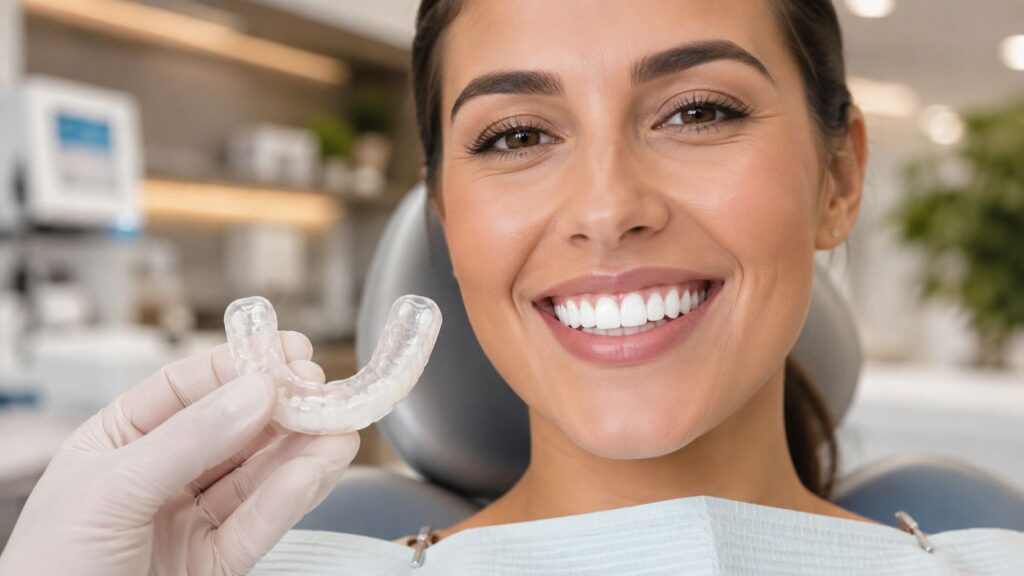
You notice it in a photograph, under bright office lighting, or when a morning coffee leaves your smile looking duller than it once did. Discoloration can make otherwise healthy teeth seem older, but staining is common and usually treatable. It isn't automatically a sign of poor brushing or neglected dental care.
For adults searching for a cosmetic dentist near me or a dentist in Scottsdale, AZ, the right teeth whitening treatment depends on more than the shade someone wants to reach. The stain source, enamel condition, sensitivity history, restorations, schedule, and maintenance habits all affect the safest and most useful option. Dr. Eric Wiitala's Scottsdale practice uses a consultation-based approach to help patients choose between supervised in-office whitening, custom take-home trays, and alternative cosmetic treatments when whitening alone won't create an even result.
Why Your Smile May Have Lost Its Brightness
A patient may notice a darker smile after years of coffee, tea, red wine, intensely colored foods, or tobacco exposure. These substances can leave surface deposits that gradually become more noticeable. Teeth also change naturally with age as enamel becomes less translucent and the underlying dentin influences the visible color.
Some discoloration starts below the enamel rather than on its surface. Trauma, aging, and certain medications can contribute to deeper changes, and those stains may respond differently from everyday beverage staining. A cleaning and exam can remove plaque and some surface deposits, but professional whitening is designed to change the color of the tooth itself.
Practical rule: A darker smile doesn't tell a dentist which treatment will work. The stain's location and the condition of the teeth matter first.
Teeth whitening became a modern consumer dental product in 1989, when the first commercial home tooth-bleaching product was marketed, according to the American Dental Association's dental history. Earlier dental descriptions included bleaching nonvital teeth with chloride of lime in the mid-1800s and “power bleaching” with 35% hydrogen peroxide in the early 1900s. Modern systems are more controlled, but the basic clinical idea has developed over a long period rather than appearing as a recent beauty trend.
Surface stains and deeper discoloration
Surface staining often responds well to peroxide whitening after a professional cleaning. Deeper discoloration can be more resistant, and a dentist may need to discuss a different strength, a longer supervised approach, or cosmetic alternatives such as bonding or veneers.
Restorations require special attention. Crowns, veneers, fillings, and bridges don't change color in the same way natural enamel does, so whitening may make a restoration look different from the surrounding teeth. A consultation at Eric Wiitala DDS can identify that issue before treatment begins.
Professional teeth whitening is a cosmetic service, not a substitute for treating decay, gum disease, worn enamel, or a painful tooth. Patients who also need a tooth-colored filling, crown, periodontal evaluation, or emergency dentist assessment should address those concerns before whitening. That sequence protects comfort and helps produce a more balanced smile.
How Professional Teeth Whitening Actually Works
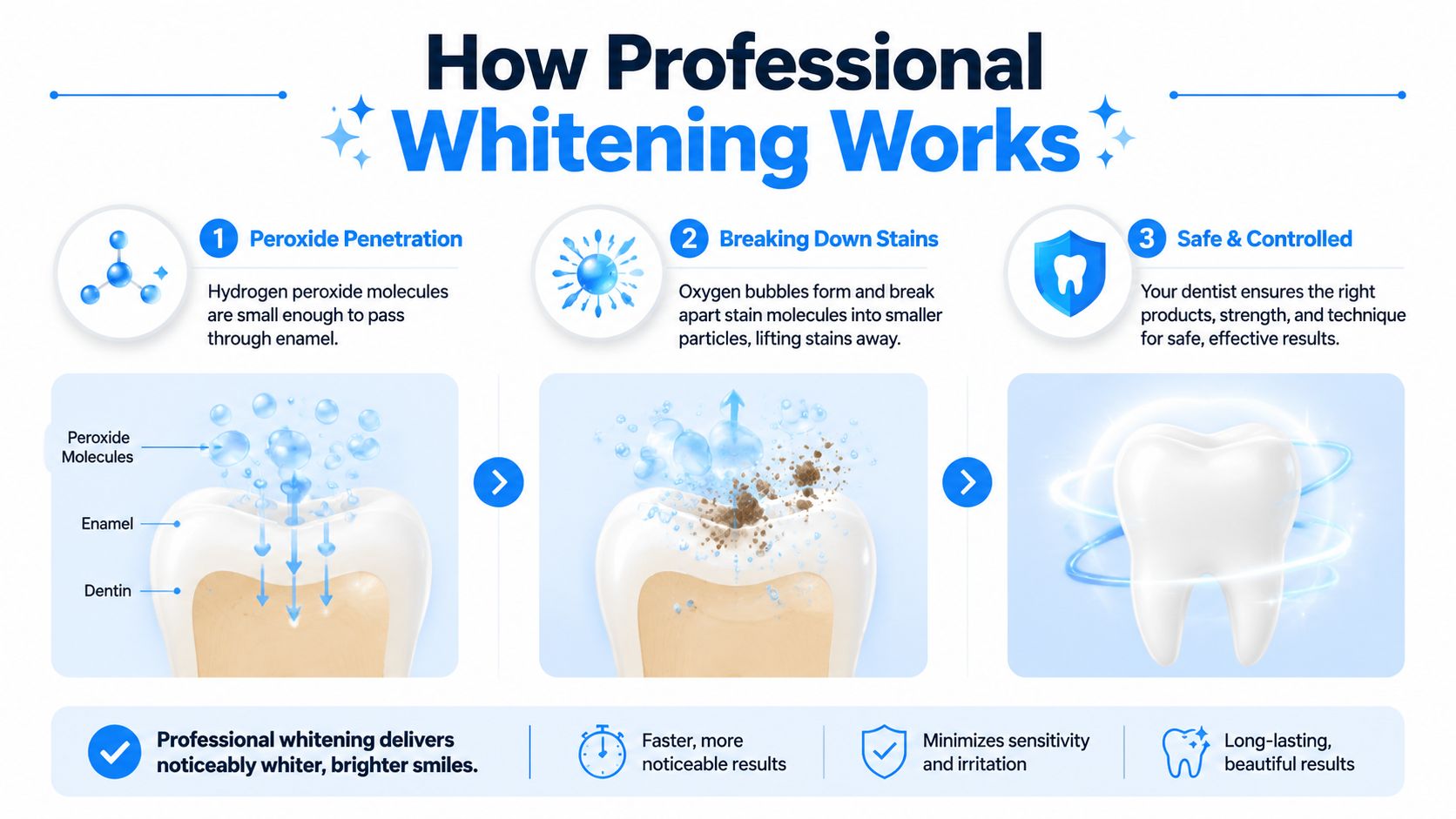
Professional whitening relies on peroxide chemistry. A whitening gel contains either hydrogen peroxide or carbamide peroxide, which breaks down and releases active peroxide compounds. These molecules move through enamel and dentin toward stain compounds, where they chemically break apart the molecules responsible for darker color.
A simple comparison is oxygen bubbles lifting dirt from fabric. The gel isn't scrubbing enamel like an abrasive polish. Instead, peroxide changes the stain compounds so they reflect light differently and appear lighter.
The concentration changes the trade-off
Hydrogen peroxide acts more directly, while carbamide peroxide breaks down more gradually. In-office bleaching commonly uses concentrated hydrogen peroxide solutions around 35 wt% for about 20–30 minutes, although treatment protocols vary. Evidence indicates that approximately 25–35% peroxide can produce whitening comparable to higher concentrations while reducing sensitivity, as reported in this clinical review of peroxide concentration and sensitivity.
Higher concentration isn't automatically better. It can increase sensitivity without clearly producing a greater color change. Lower-concentration systems can work well when patients accept a slower process, particularly when a dentist adjusts application time and checks the response.
Why supervision affects safety
A dentist first checks for cavities, cracks, gum inflammation, exposed roots, and enamel wear. The examination also identifies restorations that won't whiten and helps determine whether discoloration is likely to respond to bleaching.
European regulatory guidance considers products containing up to 0.1% hydrogen peroxide safe, while products above 0.1% up to 6.0% are considered safe only after consultation with and approval from a dentist, as summarized in the peer-reviewed safety review. This doesn't mean every patient needs the same concentration. It means product strength and supervision should match the patient's oral health.
Patients can ask whether the proposed gel is hydrogen peroxide or carbamide peroxide, how long it will remain on the teeth, what protection will cover the gums, and how sensitivity will be managed. Those questions lead to a safer, more predictable cosmetic dentistry decision.
In-Office Versus At-Home Whitening Options
A patient with an upcoming event may value speed, while someone prone to sensitivity may prefer gradual control. The practical decision depends on stain type, tooth condition, tolerance for daily applications, and whether restorations show in the smile. In-office whitening offers professional monitoring and a faster visible change. Custom take-home trays use a lower concentration on a dentist-directed schedule, giving patients more control over timing and intensity.
Both approaches can work when a qualified cosmetic dentist selects the formulation and reviews the teeth first. Over-the-counter products may help with mild surface staining, but poor fit, limited contact, inconsistent application, and no dental examination can lead to uneven results or discomfort.
Professional Whitening Options Comparison
| Feature | In-Office Treatment | Custom Take-Home Trays |
|---|---|---|
| Treatment time | A concentrated treatment is commonly delivered during a single clinical visit. In-office bleaching often uses hydrogen peroxide around 35 wt% for 20–30 minutes, according to this review of home bleaching evidence. | Gradual use over a dentist-directed schedule. The patient applies the gel at home according to prescribed instructions. |
| Shade improvements | The visible change is typically faster, but the final result depends on the starting shade, stain type, and natural tooth color. | Whitening develops more gradually, and lower concentrations can still improve shade in vital teeth. |
| Cost range | The fee varies by examination findings, materials, and the treatment plan. A specific quote requires a consultation. | The fee varies according to tray fabrication, gel, follow-up, and whether the trays are also used for future maintenance. |
| Convenience | Useful for patients who want professional monitoring and a faster change without managing daily applications at home. | Useful for patients who prefer a gradual process and want flexibility around work, family, or travel. |
| Sensitivity control | The dentist controls gel placement, concentration, isolation, and treatment time during the appointment. | The patient can follow a lower-intensity schedule, while the dentist can adjust instructions if sensitivity develops. |
The same clinical evidence review identifies 10% ± 1% carbamide peroxide for at-home whitening with custom trays as the carbamide peroxide concentration receiving ADA acceptance. It also notes that lower concentrations can improve shade, although the process may take longer.
Surface stains from foods or drinks may respond to either approach. Deeper discoloration, uneven color, or staining that does not respond as expected may require a different evaluation. Crowns and veneers in the visible smile zone do not whiten, so replacing or modifying those restorations may be more appropriate than repeating bleaching.
Choose in-office care when a faster change and direct supervision matter most. Choose custom trays when gradual treatment, scheduling flexibility, or closer control of sensitivity is the priority. The right option matches the mouth and the patient's routine, not the most dramatic advertisement.
Understanding and Managing Tooth Sensitivity
Sensitivity is the most common concern associated with whitening, and it deserves a direct answer. Peroxide can move through enamel and dentin toward the pulp, where it may trigger an inflammatory response. Patients may feel brief sharp sensations from cold air, water, or sweet foods.
Evidence reviews report sensitivity in 15% to 78% of patients receiving external tooth bleaching, while other clinical summaries describe it as generally mild and temporary when products are used properly, according to this review of bleaching safety and adverse effects. A randomized trial involving 10% carbamide peroxide reported sensitivity in 60% to 65% of treated patients, with a mean duration of 5.0 ± 3.8 days, as reported in the Canadian Dental Association trial summary.
Who needs a more cautious plan
Patients with enamel wear, gum recession, exposed root surfaces, cracks, decay, or large restorations may be more likely to experience discomfort. Existing sensitivity doesn't always rule out whitening, but it does make a pre-treatment examination more important.
The dose matters. In one European assessment, 6% hydrogen peroxide strips caused sensitivity in 44% of users, while 9.5% strips caused sensitivity in 59%, demonstrating the relationship between concentration and side effects in this clinical review. Professional guidance can reduce unnecessary exposure by selecting a lower concentration or shortening contact time.
Steps that improve comfort
A dentist may recommend sensitivity toothpaste before treatment, a gentler gel, shorter applications, or pauses between applications. Custom trays can also limit gel movement onto the gums when they fit correctly. During in-office whitening, gum barriers and controlled placement help protect soft tissue.
Patients shouldn't push through sharp or escalating pain. Removing a take-home tray and contacting the dental office allows the clinician to determine whether the schedule, concentration, or diagnosis needs to change.
Comfort matters: Temporary sensitivity is common, but persistent pain deserves an examination rather than another whitening application.
An evidence-based clinical review reports that sensitivity from vital tooth whitening with 10% or 40% hydrogen peroxide is usually mild and generally doesn't last more than a day, as described in this clinical review of whitening sensitivity. Individual responses still vary. A cautious plan gives patients a way to pursue a brighter smile without ignoring the condition of their enamel or gums.
What to Expect During Your Whitening Appointment
A whitening visit at Dr. Wiitala's Scottsdale practice begins with a conversation, not a gel application. The dentist reviews the patient's goals, examines the teeth and gums, checks existing restorations, and looks for decay or other problems that should be treated first.
The clinical process
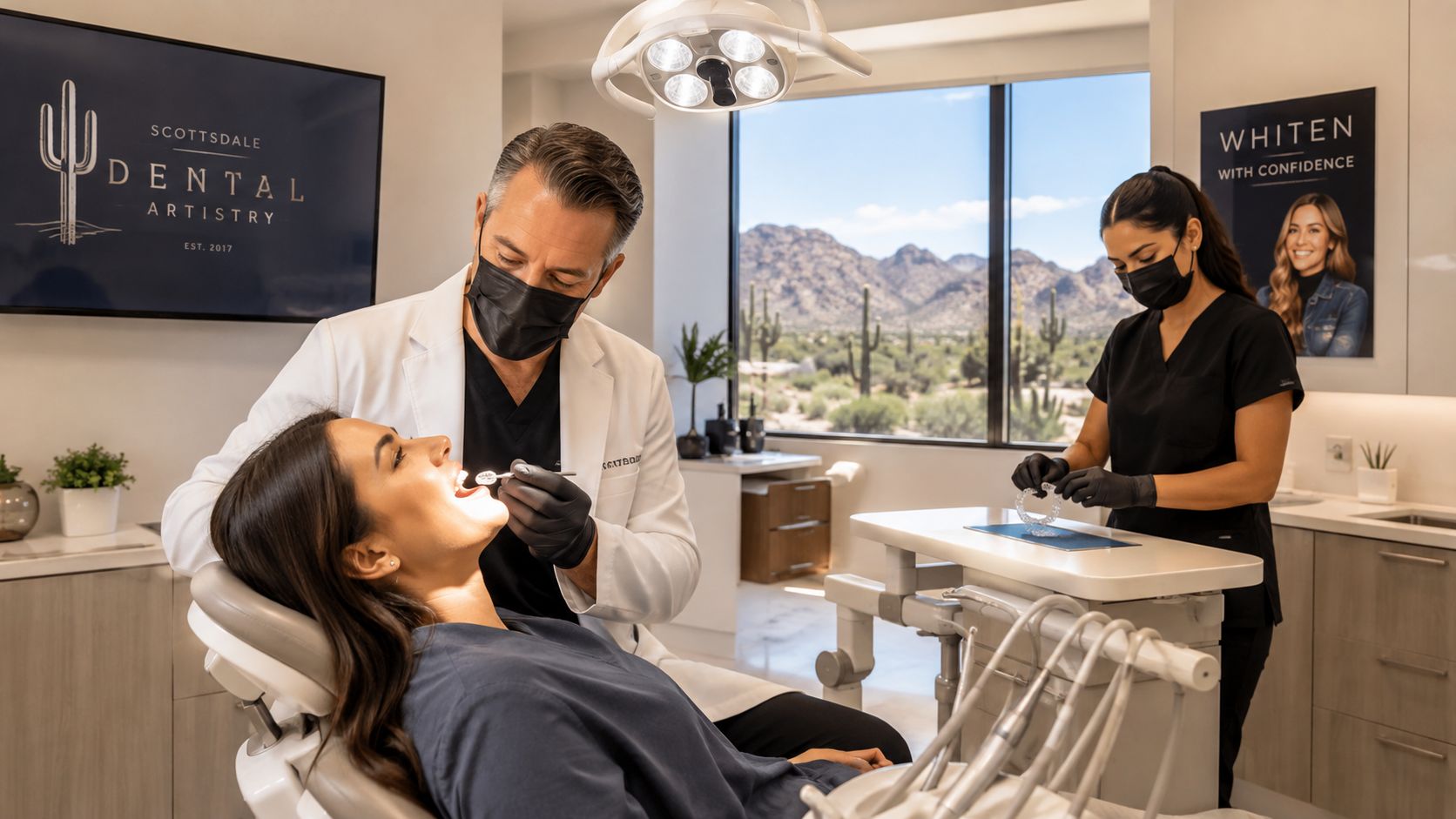
After the examination, the dental team prepares the teeth and soft tissues. Protective barriers shield the gums, and the whitening gel is placed on the selected teeth. If the chosen system uses light activation, the dental team follows that system's protocol. Multiple application cycles may be used, with the gel refreshed or removed between cycles as directed.
Patients generally notice pressure from the cheek retractor, a cool or warming sensation, and occasional brief sensitivity rather than sharp procedural pain. The exact appointment length depends on the treatment plan and the patient's response, so the practice provides individualized expectations rather than promising the same experience for everyone.
The video below offers a visual introduction to the professional whitening process and the type of preparation patients may see during care.
After the final cycle, the gel and protective materials are removed, and the patient receives aftercare guidance. Teeth may feel sensitive temporarily. The practice may recommend avoiding strongly staining foods and beverages for a short period, rinsing with water after meals, and continuing gentle brushing and flossing.
Questions patients often ask
Eating afterward depends on the treatment protocol and the dentist's instructions. Patients should ask when coffee, tea, wine, or dark sauces can be resumed and whether a desensitizing product is appropriate. Results may be visible quickly, but the shade can settle as the teeth rehydrate and the patient follows the maintenance plan.
Patients searching for a dentist near me in Scottsdale often want reassurance that whitening won't feel unpredictable. The examination, protective measures, and ability to adjust treatment give professional care an advantage over unsupervised trial and error.
Realistic Results and Long-Term Maintenance
Whitening can make natural teeth look noticeably brighter, but no responsible dentist can guarantee one identical shade for every patient. Results depend on the original color, whether stains are on the surface or deeper in the tooth, enamel characteristics, medication-related discoloration, and the presence of restorations.
Crowns, veneers, fillings, and bridges don't bleach like natural enamel. If a visible restoration no longer matches after the natural teeth are whitened, the dentist may discuss replacement or another cosmetic approach. Patients considering veneers or bonding can review the differences in veneers versus bonding for teeth before choosing a treatment that addresses color, shape, spacing, or minor damage.
Habits determine how well brightness holds
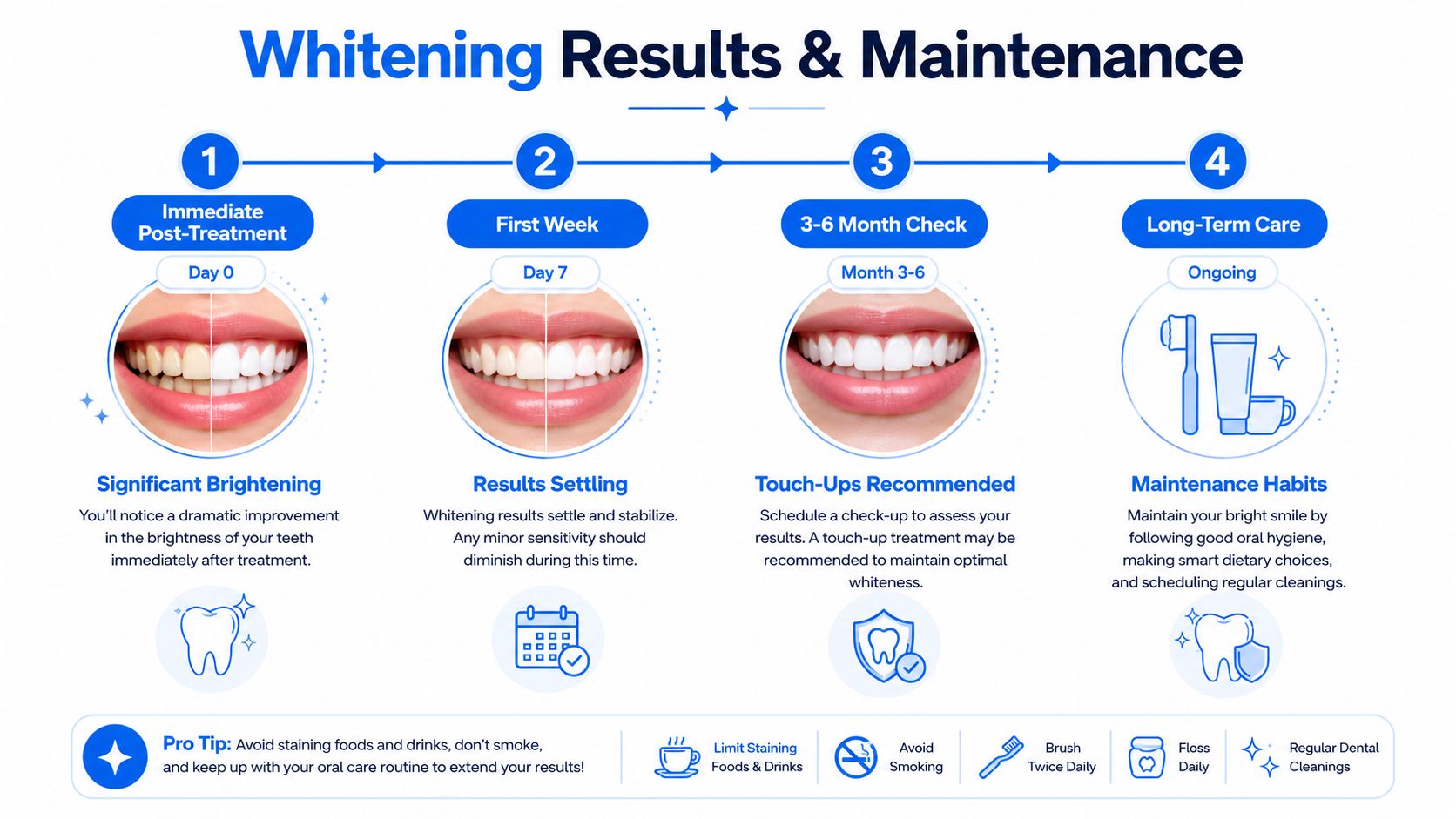
Coffee, tea, red wine, tobacco, and richly pigmented foods can gradually reintroduce surface staining. Daily brushing, flossing, regular professional hygiene, and water rinsing after staining drinks help limit that buildup. A straw may reduce contact between a drink and the front teeth, although it won't eliminate staining risk.
Custom trays can support maintenance when the dentist recommends periodic touch-ups. Patients shouldn't repeat whitening just because the teeth look slightly different one morning. A review helps determine whether the issue is new staining, a restoration mismatch, enamel wear, or a problem that whitening won't correct.
The strongest long-term plan is realistic. Whitening is an investment in appearance that works best alongside preventive dental care, not instead of it. Regular cleaning and exams also give the dentist an opportunity to monitor gum health, enamel wear, fillings, crowns, and any new sensitivity.
Scheduling Your Scottsdale Whitening Consultation
Patients ready to explore a teeth whitening treatment can contact Dr. Eric Wiitala's office at 9755 North 90th Street, Suite B250, Scottsdale, AZ 85258, or call (480) 657-6981. The consultation gives the dental team time to review the patient's goals, examine the teeth, discuss sensitivity risk, and recommend in-office whitening, custom take-home trays, or another cosmetic solution.
Patients should bring a list of current medications and mention any sensitivity, gum recession, recent dental work, or visible crowns and veneers. The office can also explain insurance and billing questions, financing options, and appointment availability. Cosmetic whitening may not be covered like medically necessary dental treatment, so patients should request treatment and payment details before scheduling.
Whitening isn't the only route to a more even smile. Dr. Wiitala provides cosmetic services that include veneers and bonding, along with preventive, restorative, implant, and family dental care. Patients interested in planning several cosmetic changes can learn how digital smile design supports treatment planning during a consultation.
Eric Wiitala DDS offers personalized teeth whitening treatment in Scottsdale, with options selected around stain type, enamel condition, sensitivity risk, and the patient's goals. Visit Eric Wiitala DDS or call the office to schedule a consultation for a brighter, healthy-looking smile.