

Therapeutic Botox is a targeted, muscle-focused option for TMJ-related jaw pain and bruxism, not a cure-all, and it works best when conservative dental care remains first-line. A 2024 review found statistically significant pain reduction versus placebo at 1 month, with a mean difference of -1.92 on a 0 to 10 scale, and at 6 months, with a mean difference of -2.08. Read the full systematic review and meta-analysis.
A sore jaw after sleeping, morning headaches, tender temples, or the realization that teeth are being clenched throughout the day can make ordinary activities feel difficult. Chewing, speaking, concentrating, and resting may all become uncomfortable. For Scottsdale patients searching for a dentist near me because jaw pain keeps returning, the first step is identifying what is driving the symptoms.
At Eric Wiitala DDS, Dr. Eric Wiitala evaluates TMJ pain, bruxism, bite-related strain, and related dental concerns before discussing treatment. Botox may be appropriate when overactive jaw muscles play a meaningful role, but a careful diagnosis matters more than choosing a procedure quickly.
Table of Contents
- Understanding TMJ Pain and Why Botox Is Considered
- How Therapeutic Botox Works for Jaw Muscle Pain
- What the Evidence Shows About TMJ Botox Results
- What to Expect During TMJ Botox Treatment in Scottsdale
- Botox vs Conservative TMJ Treatments and Dental Guards
- Safety, Side Effects, and Who Should Avoid Botox for TMJ
- Taking the Next Step with a Scottsdale TMJ Dentist
Understanding TMJ Pain and Why Botox Is Considered
The temporomandibular joints connect the lower jaw to the skull. Problems involving these joints, the surrounding muscles, or both are commonly grouped under temporomandibular disorders. Patients may notice jaw soreness, clicking, restricted movement, facial fatigue, headaches, or discomfort near the ears. Teeth grinding and clenching can intensify muscle workload, particularly during sleep or periods of stress.
Not every TMJ problem has the same source. Myogenous TMD is driven mainly by muscles such as the masseter and temporalis. Articular TMD involves the joint itself and may relate to inflammation, disc movement, arthritis, or structural changes. Botox is discussed primarily for the first category because it reduces excessive muscle activity. It doesn't reposition the joint, repair damaged cartilage, or correct an underlying bite relationship.
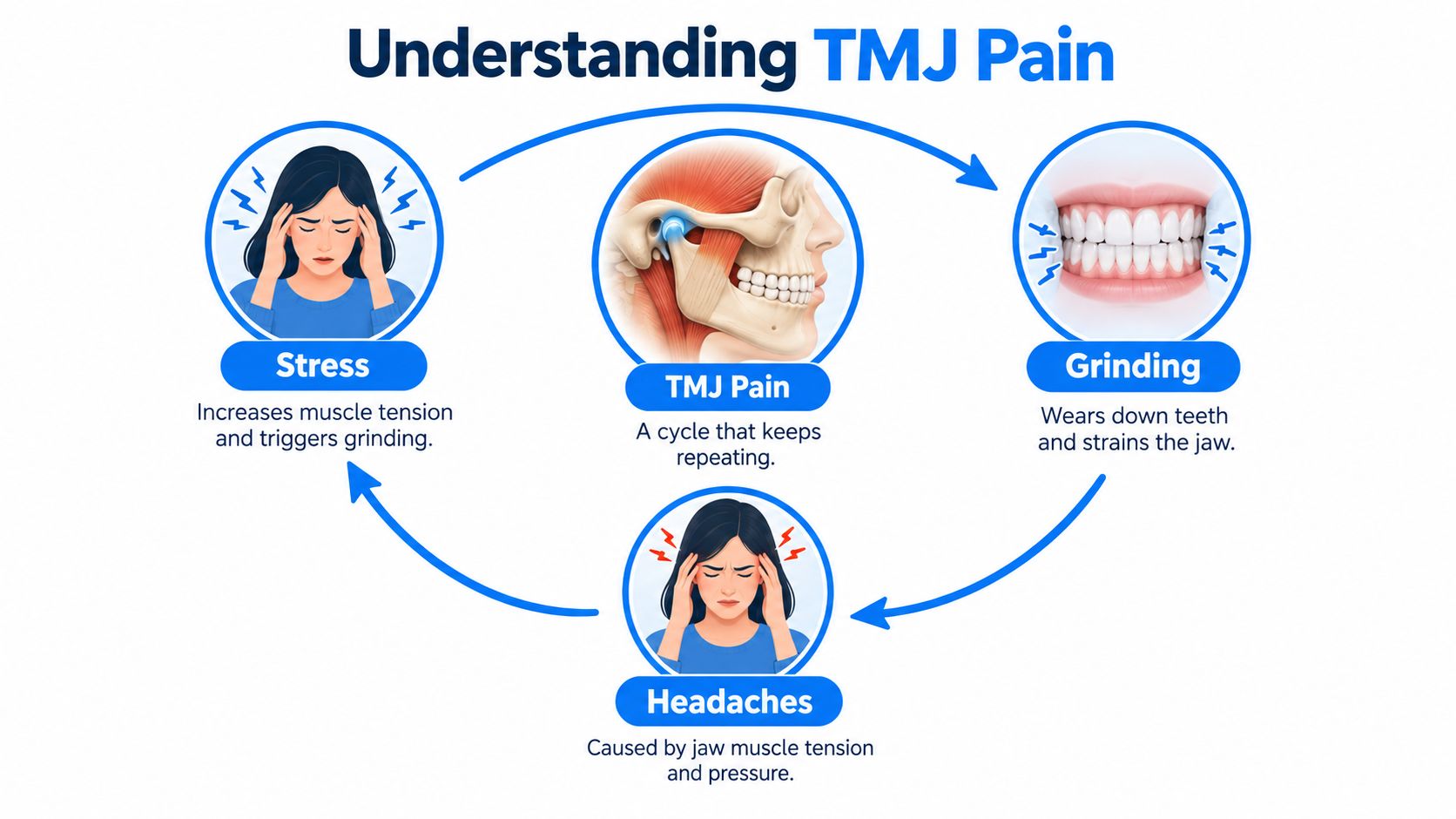
Symptoms that may point toward muscle involvement
A muscle-focused assessment becomes particularly useful when symptoms include:
- Morning jaw fatigue: Soreness or tightness appears after sleep, especially when clenching or grinding is suspected.
- Tender chewing muscles: The masseter near the cheeks or the temporalis near the temples feels painful when pressed.
- Tension headaches: Head pain appears alongside facial tightness or jaw fatigue.
- Persistent clenching: The jaw remains braced during work, driving, exercise, or stressful moments.
- Tooth wear or sensitivity: Repeated force may contribute to dental wear, although tooth damage alone doesn't prove that Botox is appropriate.
Patients shouldn't assume that every clicking jaw or headache calls for injections. A dentist needs to examine jaw movement, muscle tenderness, tooth wear, bite contacts, dental history, and other symptoms. Dr. Eric Wiitala's Scottsdale practice provides TMJ disorder assessment and treatment as part of a broader approach to jaw comfort and oral health.
Practical rule: Botox makes the most sense when the examination shows that overactive muscles are a substantial part of the problem.
How Therapeutic Botox Works for Jaw Muscle Pain
Therapeutic Botox temporarily reduces the nerve signals that tell an overactive muscle to contract. A useful way to picture the process is to think of a muscle that has been working overtime. Botox doesn't rebuild the joint or erase the reason a patient clenches, but it can calm the muscle enough to reduce the force and fatigue associated with repeated contraction.
Dental professionals commonly consider muscles such as the masseter and temporalis when evaluating bruxism or muscle-driven jaw pain. The masseter helps close the jaw and is often easy to identify along the cheek. The temporalis spreads across the side of the head and can contribute to temple tenderness and headache symptoms. Treatment may focus on one muscle group or several, depending on the examination.
What the injections can and cannot change
Botox may help reduce excessive muscular activity, clenching force, and pain linked to muscle overuse. It isn't designed to correct a displaced joint disc, restore damaged joint surfaces, realign the bite, or guarantee that grinding stops completely. Patients may still need a custom guard, physical therapy, habit modification, restorative dental care, or another form of TMJ management.
The distinction matters because a patient can have both muscle tension and joint pathology. Relaxing the muscles may improve one part of the experience while leaving a structural issue unchanged. A trained dental professional should therefore discuss the working diagnosis, the muscles being considered, and the limits of symptom-focused treatment.
People who are also researching headache-related injections may benefit from a separate explanation of who qualifies for migraine Botox. Migraine treatment follows its own diagnostic criteria and isn't interchangeable with Botox used for jaw-muscle symptoms.
At a Scottsdale dental consultation, the discussion should remain specific. The provider should explain why the proposed muscles appear involved, what conservative care has already been attempted, and how progress will be assessed without promising a complete cure.
What the Evidence Shows About TMJ Botox Results
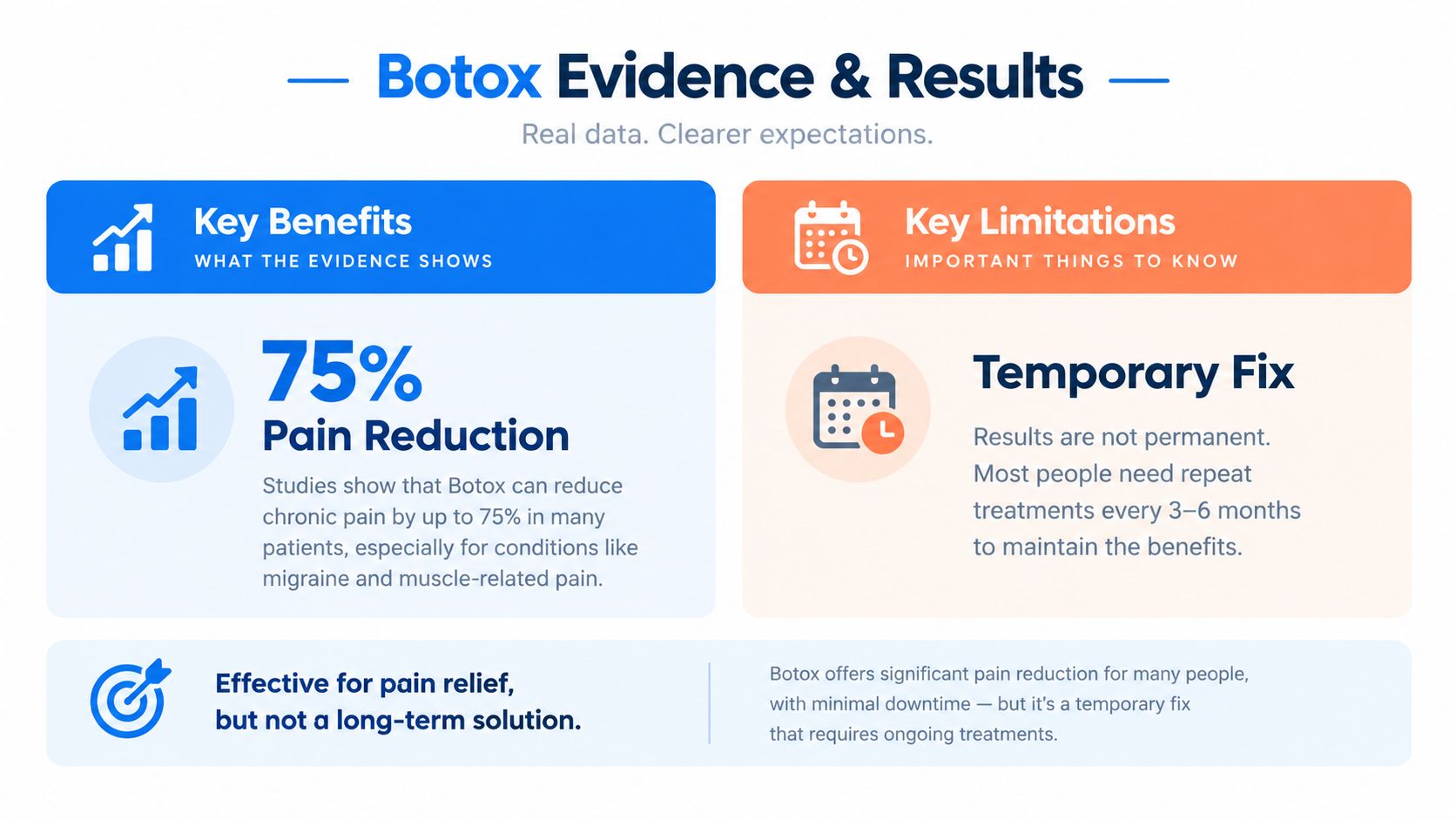
The evidence supports a careful, phenotype-specific view. As noted earlier, the 2024 review reported significant pain reduction at 1 month and 6 months. It also found improvements in masseter muscle activity and occlusal force, with a suggested bilateral range of 60 to 100 units for muscular TMD pain. That range describes findings across studies, not a dose to copy for every patient.
A broader 2023 meta-analysis found stronger evidence for masseter hypertrophy, equivocal evidence for myogenous TMD, and very limited evidence for articular TMJ disorders. See the literature review on botulinum toxin and TMD. The distinction matters in practice. Botox may be more relevant when jaw-muscle overactivity is prominent than when pain comes mainly from joint changes.
Why results don't look the same for every patient
Reviews published in 2024 reached different conclusions across outcomes. One review of 20 randomized trials found that BTX-A relieved myofascial pain better than placebo but did not improve maximum mouth opening. A separate meta-analysis found no superior outcomes for pain reduction, adverse events, maximum occlusal force, or bruxism events. Read the review of effects in patients with TMD.
A 2026 systematic review concluded that current evidence does not support routine BoNT-A as a first-line treatment for myogenous TMD. A separate 2024 umbrella review reported pain reduction versus placebo, but no superiority over standard treatments, and raised concerns about possible adverse muscle and bony effects. Read the systematic review on first-line treatment.
Dosing should be individualized
Injection protocols vary considerably. One clinical review described 10 to 50 units per injection site, with a total of up to 200 units in the masticatory system. Another report described 25 to 50 units in the masseter, 5 to 25 units in the temporalis, and 5 to 25 units in the pterygoid. Review clinical dosing protocols.
These figures are clinical ranges, not prescriptions. A 2024 meta-analysis recommended a low dose for patients who had not achieved complete relief with conservative treatment because higher doses were associated with reduced muscle activity and decreased muscle thickness. Read the dose and adverse-effect analysis.
For Scottsdale patients, the practical conclusion is simple: treatment should match the suspected pain source, prior care, and response over time. There is no standard number of units or guaranteed result.
What to Expect During TMJ Botox Treatment in Scottsdale
A consultation should begin with the problem, not the injection. Dr. Eric Wiitala's Scottsdale office can review when pain occurs, whether grinding is suspected, which activities worsen symptoms, and what treatments have already been tried. Medical history, medications, dental wear, jaw movement, muscle tenderness, and joint findings all help determine whether the symptoms appear muscle-driven.
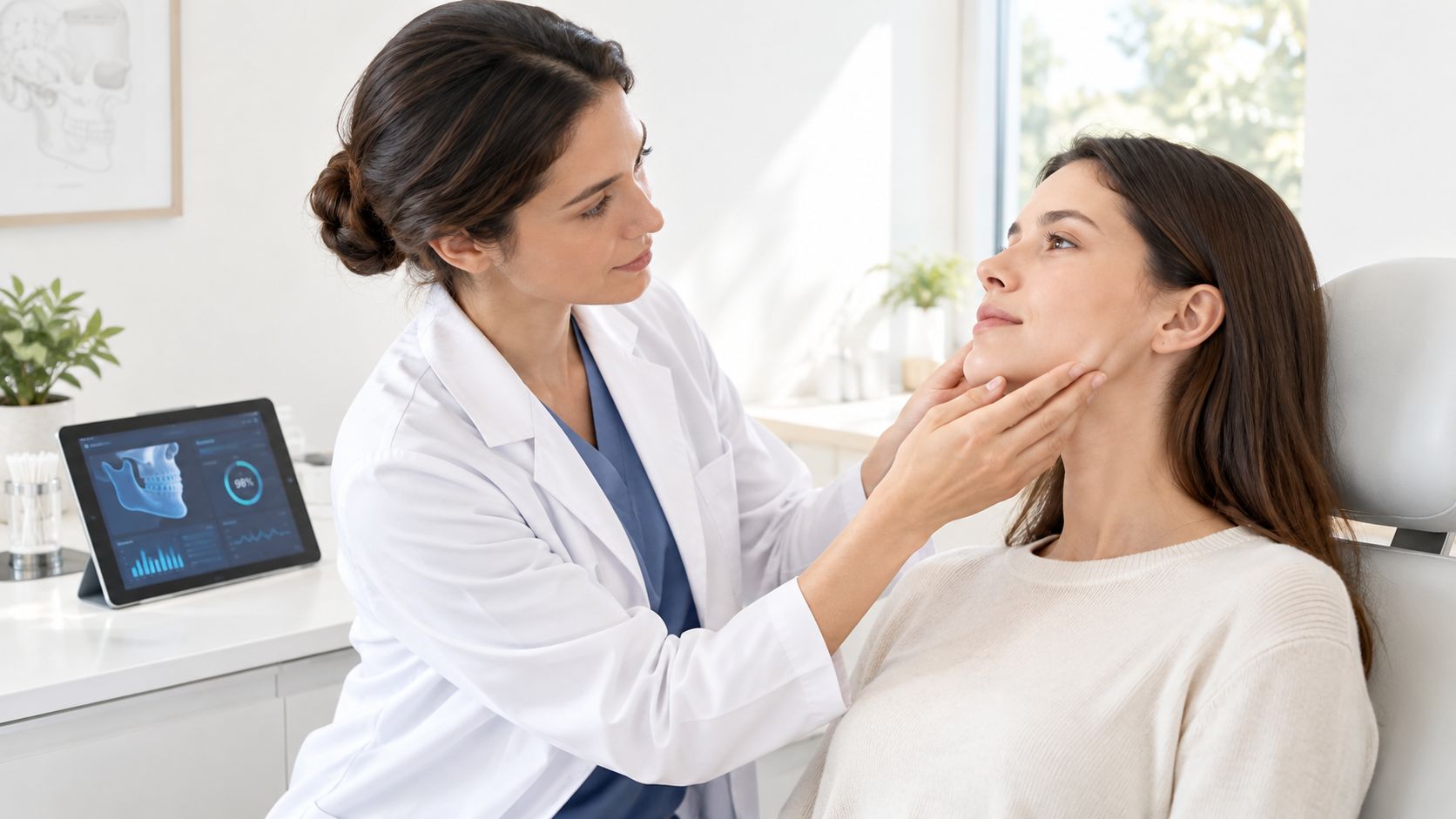
A focused evaluation comes first
The provider should explain:
- What may be causing the pain: Muscle overactivity, joint symptoms, tooth damage, bite concerns, or a combination.
- Which treatment options fit: Conservative care, a custom appliance, physical therapy, habit changes, Botox, or additional evaluation.
- What the treatment can realistically accomplish: Symptom control and reduced muscle activity rather than structural repair.
- How progress will be reviewed: Changes in soreness, headaches, chewing comfort, jaw function, and tooth-protection needs.
Dr. Eric Wiitala has reported training in Botox therapies and TMJ management, and the practice treats therapeutic Botox as one component of broader dental care. That context matters because precise facial anatomy knowledge and conservative planning help reduce the risk of treating the wrong source of pain.
The injection appointment itself involves locating the selected muscles and placing medication at planned points. Patients should receive clear aftercare instructions and know which temporary sensations warrant a call to the office. Recovery is generally manageable, but each patient should follow the individualized guidance provided after treatment.
A short educational overview can help patients visualize the evaluation and treatment conversation before scheduling:
A consultation can also identify other dental needs that affect comfort. Depending on the examination, care may include cleaning and exams, dental X-rays, restorative dentistry, tooth extraction, cosmetic dentistry, or dental implants. Those services aren't substitutes for TMJ assessment, but untreated dental pain, damaged teeth, or missing teeth can complicate chewing and the overall treatment plan.
Botox vs Conservative TMJ Treatments and Dental Guards
Conservative treatment usually deserves the first opportunity because it can address several contributors without weakening jaw muscles. A custom occlusal guard protects teeth from direct grinding forces and may help patients become more aware of clenching. It doesn't necessarily stop the muscles from activating, so it may protect the teeth without eliminating the underlying behavior.
Physical therapy can address jaw mobility, posture, muscle coordination, and movement habits. Habit modification may involve noticing daytime clenching, keeping the teeth apart when not chewing, adjusting chewing patterns, and working on stress-related behaviors. These measures require participation, but they can improve the factors that keep symptoms active.
Where Botox may fit
Botox may be considered when a careful evaluation points to substantial muscle overactivity and symptoms remain troublesome despite appropriate conservative care. It can reduce the muscular component of pain, while a guard continues to protect the teeth and physical therapy addresses movement or tension patterns. Combining treatments isn't automatic. The plan should match the diagnosis and the patient's response.
| Option | Main purpose | Important trade-off |
|---|---|---|
| Custom dental guard | Protects teeth and supports bite protection during grinding | Doesn't necessarily stop muscle activity |
| Physical therapy | Supports mobility, coordination, posture, and muscle balance | Requires consistent participation |
| Habit modification | Reduces daytime clenching and aggravating behaviors | Progress depends on awareness and repetition |
| Therapeutic Botox | Temporarily reduces excessive activity in selected jaw muscles | Doesn't repair joint structure or correct the bite |
Patients can learn more about custom TMJ treatment mouth guards when tooth protection or bruxism management is part of the discussion. The choice between a guard, therapy, Botox, or a combination shouldn't be made from symptoms alone.
A patient searching for cosmetic dentistry, teeth whitening, a cosmetic dentist near me, or dental implants near me may still need a separate TMJ evaluation before elective treatment. Jaw comfort, chewing function, and bite stability should remain part of the clinical conversation, particularly when restorative or cosmetic work is being considered.
Safety, Side Effects, and Who Should Avoid Botox for TMJ
Botox is not safe just because the injections are localized. The treatment requires appropriate patient selection, knowledge of facial anatomy, and conservative dosing. A provider should first determine whether muscle overactivity contributes to symptoms and whether another condition needs attention.
Possible temporary effects include injection-site soreness, tenderness, bruising, changes in chewing strength, or unintended weakness in a nearby muscle. Patients may notice that firm foods feel different while the treated muscles adapt. Poorly planned treatment can also create an uneven muscle response or an altered bite sensation, which is why precise planning matters.
Questions that deserve direct answers
Patients should ask:
- What diagnosis is being treated? Muscle-driven pain and joint disease aren't interchangeable.
- Which muscles will receive injections? The answer should connect directly to examination findings.
- What alternatives should be tried first? A custom guard, physical therapy, and habit modification may be more appropriate.
- What side effects are relevant to this patient? Existing chewing weakness, swallowing concerns, neuromuscular conditions, pregnancy-related considerations, allergies, medications, and prior reactions should be discussed with the treating clinician.
- How will the plan be reassessed? Repeated treatment shouldn't continue automatically without reviewing benefits and risks.
A realistic expectation: Reduced pain doesn't prove that the joint has healed, and a quieter muscle doesn't eliminate every reason a patient may clench.
Patients with primarily structural joint symptoms, unexplained facial pain, significant functional changes, or symptoms outside a typical muscle pattern may need additional evaluation before Botox is considered. The safest approach is an in-person assessment with a qualified dental professional who can explain why the treatment fits, why it may not fit, and what should happen if symptoms persist.
Taking the Next Step with a Scottsdale TMJ Dentist
TMJ treatment Botox can be reasonable for selected Scottsdale patients with muscle-driven jaw pain or excessive jaw-muscle activity. The evidence supports potential pain relief, but it also shows why Botox shouldn't replace conservative care or be presented as a routine fix for every clicking jaw, headache, or bite concern.
Dr. Eric Wiitala's more than 20 years in practice and reported training in Botox therapies, sleep-related care, and TMJ management support a consultation focused on diagnosis and education. The evaluation can also account for bruxism, tooth wear, custom guards, restorative needs, and related dental concerns.
Patients shouldn't wait for severe pain before seeking guidance. Whether the search began with “dentist in Scottsdale, AZ,” “emergency dentist,” tooth extraction questions, or a specific concern about jaw tension, the right next step is a clinical examination that separates urgent dental problems from muscle-related TMJ symptoms.
Eric Wiitala DDS offers TMJ pain assessment, custom occlusal guards, and therapeutic Botox for TMJ-related muscle symptoms when clinically indicated. Visit Eric Wiitala DDS to request a Scottsdale consultation and discuss a personalized plan for reducing jaw discomfort while protecting long-term oral health.