
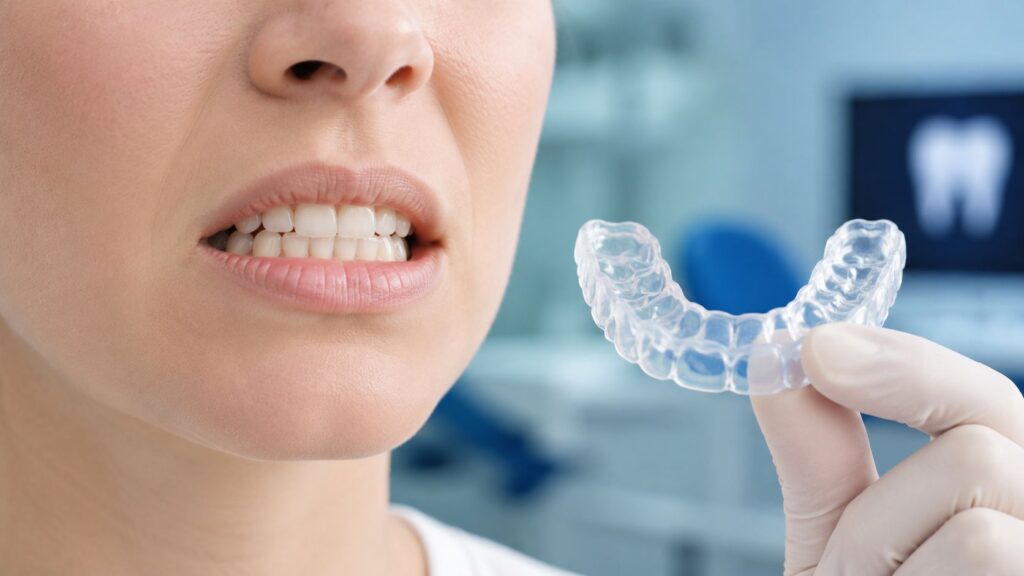
You wake in Scottsdale with a tight jaw, sore chewing muscles, or a dull headache near the temples. Your partner may mention grinding sounds during the night, while a store-bought mouthguard seems to offer little relief. The important question isn't only how to protect the teeth. It's what causes jaw clenching in the first place.
Jaw clenching, clinically grouped under bruxism, can involve daytime habits, sleep-related arousals, stress, breathing problems, inherited susceptibility, or medication effects. Dr. Eric Wiitala's Scottsdale dental practice evaluates those contributing factors instead of treating every patient with the same generic night guard. For someone searching for a dentist near me, that distinction matters because the right treatment depends on the pattern behind the clenching.
Table of Contents
- Waking Up With a Sore Jaw in Scottsdale
- Understanding Awake and Sleep Bruxism
- Stress, Lifestyle, and Hereditary Risk Factors
- The Hidden Role of Sleep Disorders and Medications
- How Our Scottsdale Dental Practice Diagnoses Clenching
- Treatment Options Matched to Each Cause
- Protecting Your Smile With Coordinated Local Care
Waking Up With a Sore Jaw in Scottsdale
A Scottsdale resident might notice the problem while brushing in the morning. The jaw feels tired, the teeth seem sensitive, and opening wide for breakfast takes more effort than usual. Sometimes the first clue is a headache after sleep, a partner's report of nighttime grinding, or a chipped filling that wasn't bothering the patient the day before.
These symptoms can feel confusing because clenching often happens without conscious awareness. During the day, a person may press the teeth together while concentrating at a computer, driving, or handling frustration. At night, the jaw can tighten during sleep without any deliberate decision.
Over-the-counter mouthguards may create a physical barrier between the teeth, but they don't necessarily identify why the muscles are activating. A poorly fitting appliance may also feel bulky, interfere with comfort, or fail to address associated TMJ symptoms and disrupted sleep. Tooth protection can be valuable, but protection alone isn't the same as diagnosis.
Why the cause changes the plan
Bruxism is multifactorial, meaning several influences may operate at the same time rather than one single cause explaining every case (Mayo Clinic describes bruxism as involving multiple possible contributors). A patient who clenches while awake may need awareness training and stress-focused support. A patient who clenches during sleep may need evaluation for sleep fragmentation, snoring, or medication changes.
At Dr. Wiitala's Scottsdale office, an assessment can consider tooth wear, jaw-muscle tenderness, TMJ movement, bite relationships, sleep symptoms, and relevant health history. That broader review helps distinguish a habit from a sleep-related event and helps determine whether a custom appliance, TMJ care, restorative treatment, or sleep-focused referral is appropriate.
Practical rule: A night guard can protect teeth, but it can't replace an evaluation of the muscles, joints, sleep pattern, and medication history.
People searching for a dentist in Scottsdale, AZ don't have to wait for severe damage before asking for help. Early evaluation can clarify the source of morning soreness and reduce the risk of allowing an uncomfortable pattern to continue unnoticed.
Understanding Awake and Sleep Bruxism
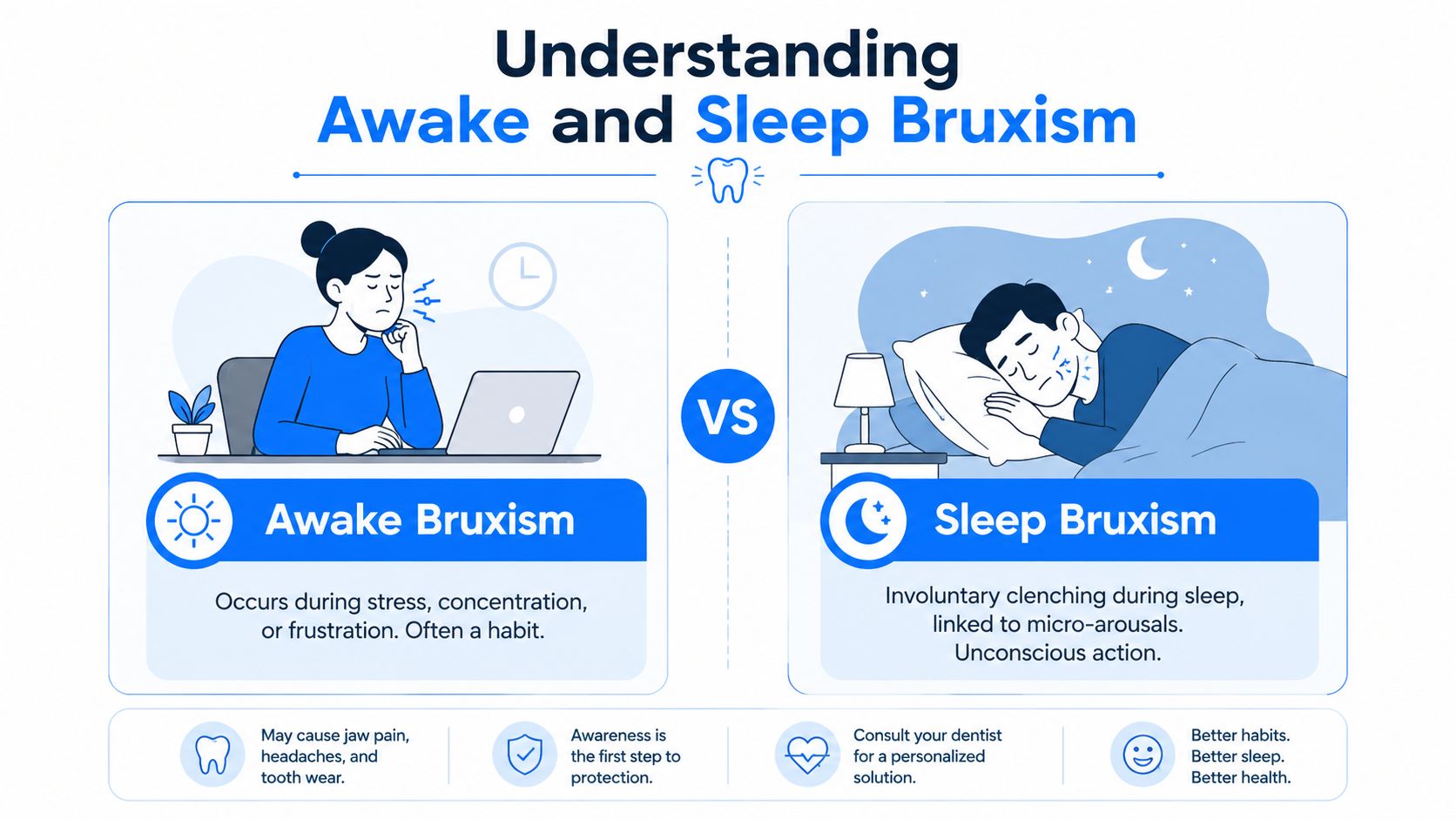
A patient may wake with a tired jaw, yet the clenching began hours earlier during sleep. Another may notice teeth touching while driving or concentrating. These are different clinical patterns, and separating them helps determine what to assess and treat.
Awake bruxism involves clenching or bracing the jaw while conscious. Stress, anxiety, frustration, anger, concentration, and heightened alertness can increase muscle activity, but the behavior may continue after the original trigger has passed. The teeth may stay together during work, exercise, driving, or focused tasks. A useful resting position is relaxed lips, a loose jaw, and teeth apart. Awareness training can interrupt the habit before muscle fatigue and pain develop.
Sleep bruxism occurs during sleep and is linked to brief arousals in the nervous system rather than a deliberate decision. These micro-arousals can activate jaw muscles, sometimes alongside changes in breathing, sleep quality, neurotransmitter activity, or medication effects. Telling a sleeping patient to stop clenching cannot control the event. A partner may hear grinding, but silent episodes can still contribute to flattened wear areas, cracked dental work, jaw tenderness, or morning headaches. The Mayo Clinic overview describes bruxism symptoms and contributing factors, while the StatPearls discussion of awake bruxism reviews the conscious daytime pattern.
Reported prevalence varies with the definition and assessment method. Awake bruxism is reported in about 20% of adults, while adult sleep-bruxism estimates range roughly from 1% to 15%. A recent review describes sleep bruxism at 8% to 16% in adults (British Dental Journal clinical overview). These figures describe groups, not a diagnosis for one patient.
A simple way to identify the pattern
Patients can record clues without trying to diagnose themselves:
- Morning symptoms: Jaw soreness or headaches after sleep suggest nighttime activity.
- Daytime awareness: Clenching during work, concentration, or difficult conversations suggests an awake component.
- Outside observation: A partner's report supports sleep-related grinding, although silence does not exclude it.
- Dental findings: Wear, cracks, and damaged restorations show repeated loading, not its complete cause.
This grinding teeth sleep guide provides additional background on nighttime grinding and sleep-related symptoms. At a Scottsdale dental practice, the distinction guides the next evaluation, including muscle and joint findings, tooth wear, sleep symptoms, and medication history. A custom guard can protect enamel, while lasting control depends on addressing the trigger.
Stress, Lifestyle, and Hereditary Risk Factors
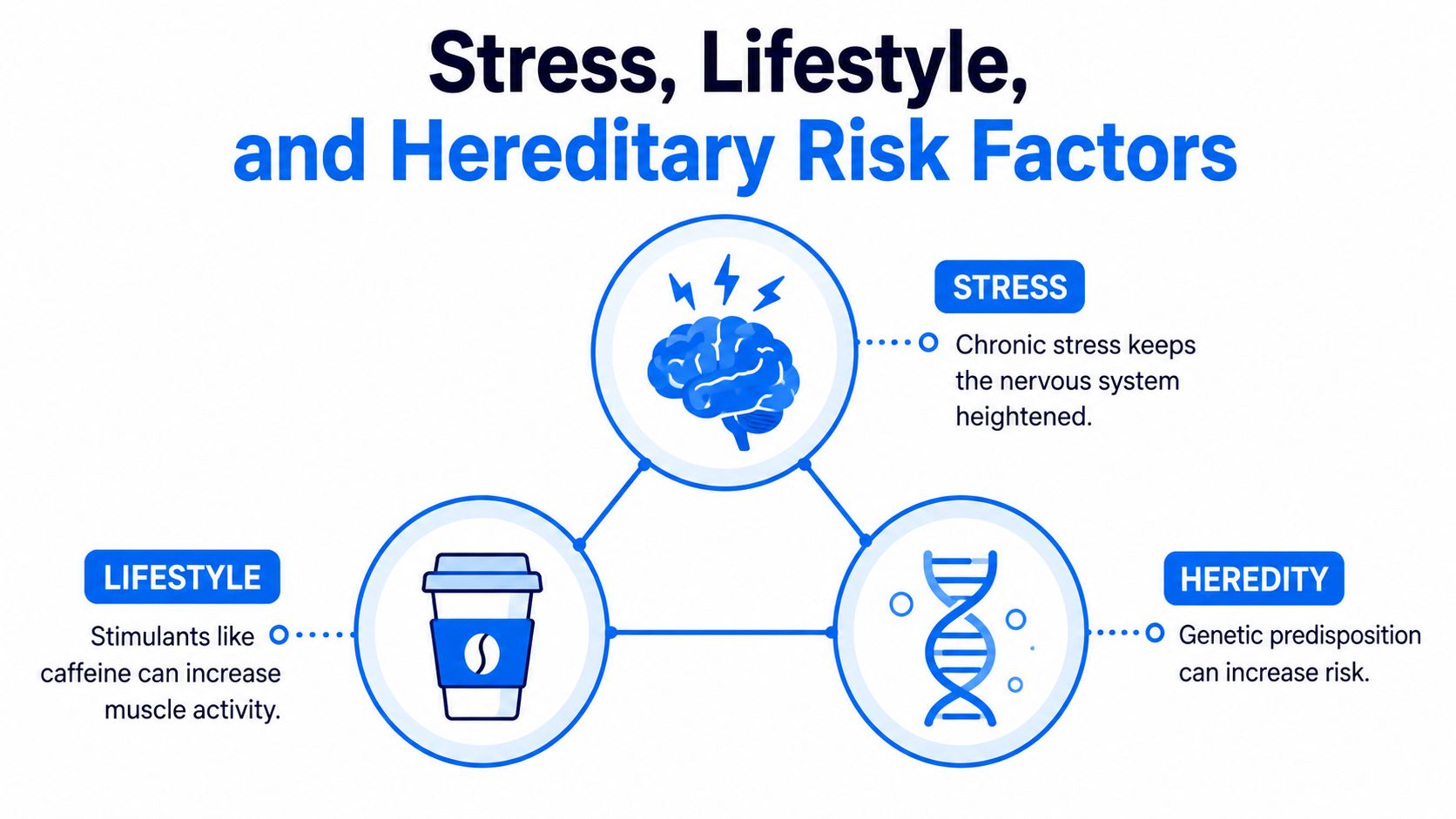
A patient may notice jaw tension during a demanding workday, a difficult conversation, or prolonged concentration before recognizing any emotional stress. Awake clenching reflects sustained nervous-system alertness. Anxiety, frustration, anger, and repetitive focus can increase muscle activity, while the teeth remain pressed together without conscious intent.
A systematic review found that stressed individuals had significantly higher odds of bruxism, with an odds ratio of 2.07 and a 95% confidence interval from 1.51 to 2.83 (systematic review in PMC). The finding supports questions about workload, anxiety, sleep quality, and the situations that bring the teeth together. It does not establish stress as the sole cause or suggest that stress reduction can reverse established tooth damage.
Exposures that deserve an honest review
Smoking, alcohol use, and heavy caffeine intake can add to nervous-system activation. Adults who smoke, drink alcohol, or consume more than six cups of coffee daily are described as twice as likely to grind their teeth as people without those exposures. These associations do not prove causation for one patient, but they identify habits worth reviewing before treatment decisions are made.
Before a Scottsdale dental visit, consider these patterns:
- Caffeine timing: Does clenching become more noticeable after heavy caffeine intake or later in the day?
- Alcohol and nicotine: Do nighttime symptoms follow increased alcohol use or smoking?
- Emotional load: Does the jaw tighten during work, conflict, concentration, or worry?
- Family history: Has a parent, sibling, or child experienced grinding or jaw tension?
Family history can clarify why similar habits produce different symptoms. StatPearls notes that 20% to 50% of patients report at least one family member with bruxism, supporting a meaningful hereditary component (StatPearls bruxism reference). Inherited susceptibility may influence muscle response and arousal patterns, but it does not make clenching untreatable.
Treatment should match the likely driver. A dental practice can identify tooth wear, muscle tenderness, cracked restorations, and bite-related loading, then provide an occlusal appliance when protection is needed. Awareness reminders, changes to caffeine or alcohol timing, and support for stress management may reduce triggers. Persistent pain or progressive wear requires examination rather than self-blame. Patients can also review how stress affects mental health to better understand the relationship between emotional strain and physical symptoms.
A short educational video can help patients recognize everyday situations that promote jaw tension.
The Hidden Role of Sleep Disorders and Medications
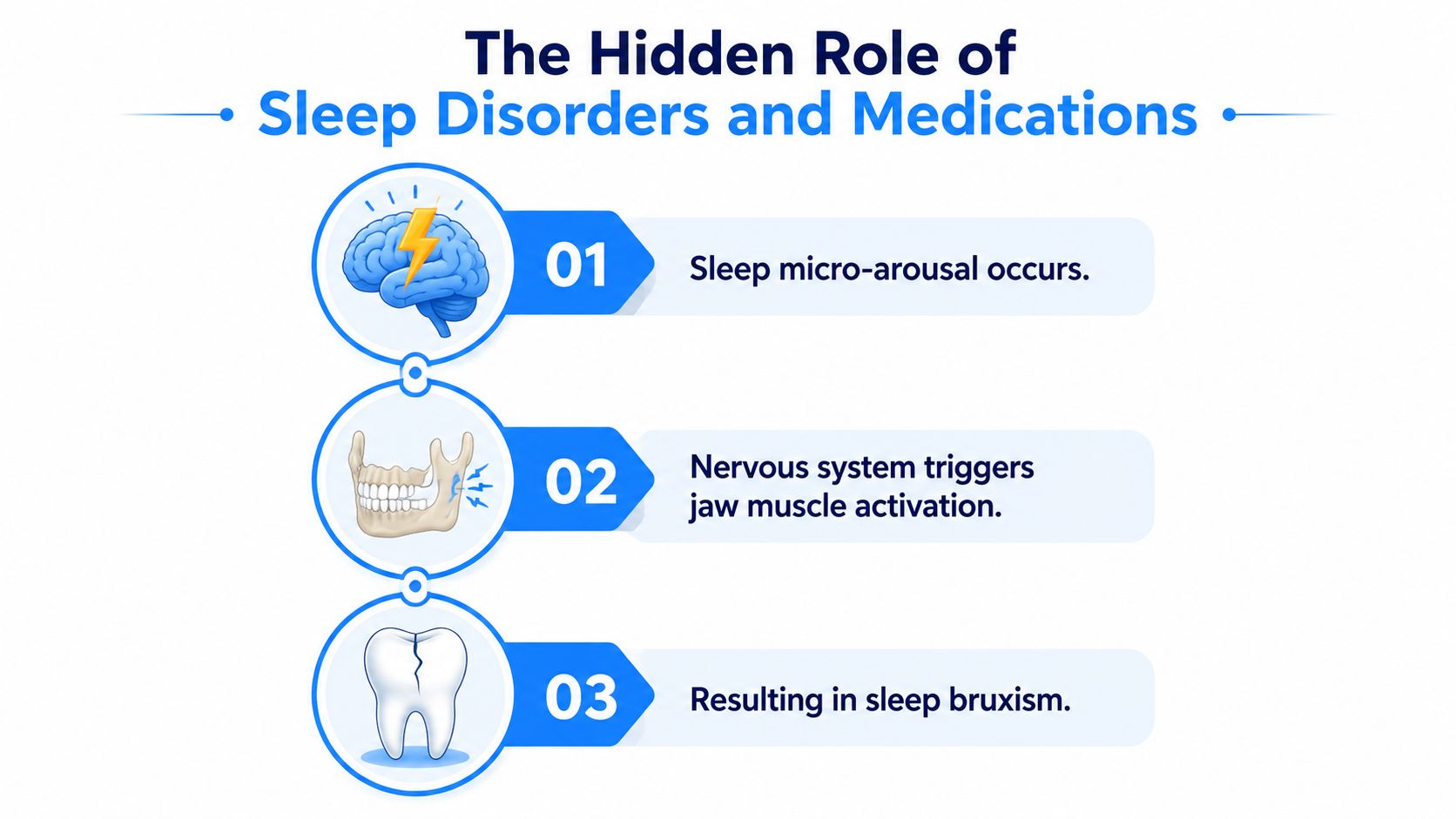
Jaw clenching during sleep often begins with a brief arousal, not with the bite itself. That arousal activates central and sympathetic nervous-system pathways, followed by masseter activity and jaw movement. Rhythmic chewing-muscle episodes commonly occur near these arousals, so tooth contact may be the visible endpoint of a process that started in the brain (sleep-bruxism neurophysiology research).
Sleep-related jaw-muscle tone depends on brainstem circuits and neurotransmitters such as serotonin, dopamine, GABA, and noradrenaline. A night guard can protect teeth, but it may not remove the upstream trigger. The useful clinical questions are whether sleep is fragmented, breathing is interrupted, or a recent medication change has increased nervous-system activation. A review of these factors describes central nervous-system activation, obstructive sleep apnea, smoking, alcohol, caffeine, medications, and illicit drugs as possible contributors (British Dental Journal review).
Breathing and arousal deserve attention
Snoring, witnessed breathing pauses, restless sleep, morning headaches, and daytime fatigue can point to disordered breathing. Sleep apnea and anxiety are recognized risk factors, and sleep-related bruxism is reported alongside obstructive sleep apnea in both adults and children (StatPearls bruxism reference). The connection is clinically relevant because repeated breathing disturbances can produce micro-arousals, raising muscle activity before a patient ever notices clenching.
Bring these symptoms to the dental visit. The practice can discuss snoring and sleep apnea treatment and determine whether airway evaluation or medical follow-up belongs alongside dental protection. Consistent sleep routines may also reduce overall arousal burden. General guidance on better sleep for wellness can support those habits, though it does not replace assessment of persistent snoring or fatigue.
Medication changes can be the missing clue
Medication-related clenching deserves a direct timeline. Reviews associate bruxism with second-generation antidepressants, antipsychotics, and bupropion. Stimulants, nicotine, alcohol, and related substances may also contribute (systematic review of stress, medications, and bruxism). Symptoms can develop within two to three weeks after starting a serotonergic medication or changing its dose (review of medication-induced bruxism).
Do not stop or alter a prescribed medication without speaking with the prescribing clinician. Record the medication name, dose changes, and the date jaw symptoms began. That information helps the dentist and prescriber decide whether the pattern is sleep-related, stress-related, spontaneous, or medication-associated. Dental treatment may then focus on tooth protection and muscle relief while the medical team reviews the suspected trigger.
How Our Scottsdale Dental Practice Diagnoses Clenching
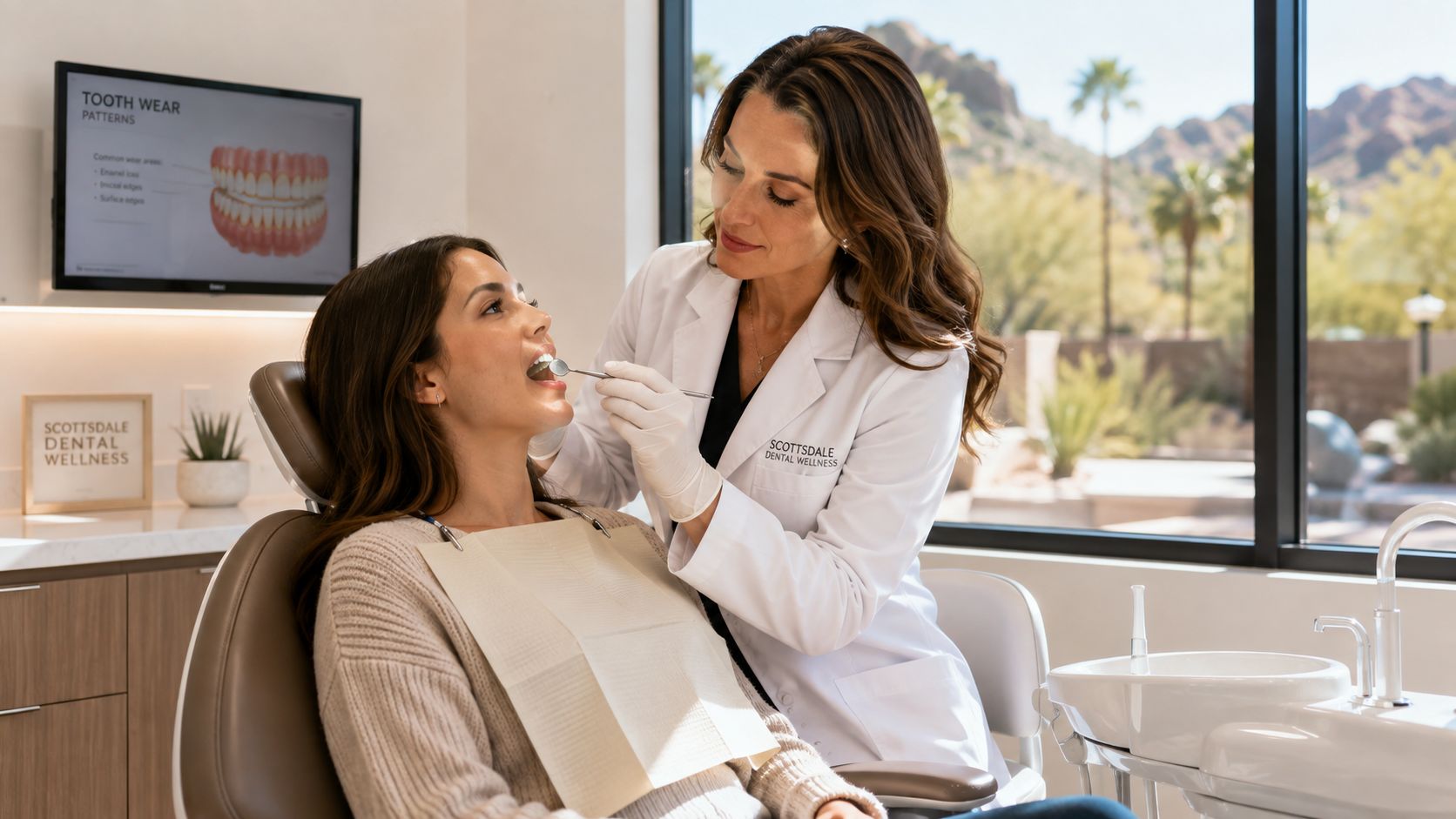
A careful evaluation starts with the mouth but doesn't end there. At Dr. Wiitala's Scottsdale office, the dental team can examine tooth surfaces for wear, cracks, sensitivity, and stressed restorations. The clinician also checks the masseter and other jaw muscles for tenderness, evaluates how the jaw opens and closes, and looks for TMJ discomfort, clicking, or restricted movement.
What the first visit may include
The appointment typically focuses on four questions:
- What has changed in the teeth? Wear patterns and damaged fillings can show where repeated force has occurred.
- What does the jaw feel like? Muscle tenderness and joint symptoms help distinguish tooth loading from broader TMJ involvement.
- When does clenching happen? Daytime triggers, morning soreness, partner observations, and sleep quality help identify the timing.
- What could be driving it? The history may include snoring, fatigue, anxiety, caffeine, alcohol, nicotine, and medication starts or dose changes.
Digital dental imaging may be recommended when the examination suggests hidden decay, cracks, compromised restorations, bone concerns, or another source of pain. Imaging doesn't diagnose every cause of clenching, but it helps the dentist understand the condition of the teeth before selecting protective or restorative care.
Connecting dental findings with sleep and health history
When nighttime clenching is suspected, questions about snoring, breathing pauses, daytime fatigue, insomnia, and fragmented sleep can identify a reason to investigate sleep-disordered breathing. A dental office can't assume every patient with bruxism has sleep apnea, but ignoring breathing symptoms can leave an important contributor unaddressed.
Medication and stress history also matter. The evaluation should feel like a conversation, not an interrogation. Patients can bring a current medication list and note when symptoms started, while the dental team can explain which findings support a custom appliance, TMJ treatment, restorative correction, or sleep-related care.
Treatment Options Matched to Each Cause
Treatment works best when it matches the mechanism. A custom occlusal guard can reduce direct tooth-to-tooth contact and protect dental work, but it won't remove stress, treat a medication reaction, or correct a sleep-breathing disorder. Therapeutic Botox may reduce excessive jaw-muscle activity and related symptoms when clinically appropriate, while it also doesn't replace evaluation of the underlying trigger.
Bite correction may be considered when damaged, uneven, or missing teeth contribute to an unstable chewing pattern. Restorative dentistry, bonding, crowns, bridges, or clear aligners can address selected structural concerns, but irreversible bite changes should follow a careful diagnosis rather than an assumption that every case is caused by occlusion.
| Primary Cause | Recommended Treatment | How It Helps |
|---|---|---|
| Repeated tooth loading during sleep or waking hours | Custom occlusal guard | Creates a fitted protective barrier and can help limit damage from contact |
| Jaw-muscle pain or excessive muscle activity | Therapeutic Botox when indicated | May reduce muscle-related symptoms as part of TMJ management |
| Damaged, missing, or uneven teeth | Restorative dentistry or selected clear-aligner treatment | Restores function or improves selected bite relationships |
| Snoring or suspected sleep-related breathing problems | Oral appliance therapy and appropriate sleep evaluation | Supports airway-focused management when the patient is a suitable candidate |
| Stress-linked awake clenching | Awareness training, habit changes, and stress support | Helps the patient notice and reduce daytime tooth contact |
| Medication-associated symptoms | Medication review with the prescribing clinician | Identifies a possible trigger without stopping medication unsafely |
The practice's custom teeth-grinding night guard treatment is one option when tooth protection is part of the plan. A guard is often useful, but a generic appliance may not fit the patient's bite, comfort needs, or dental restorations as well as a professionally designed appliance.
What tends to move the needle
The most useful plan may combine several modest interventions. A patient with morning soreness and snoring may need airway screening plus tooth protection. Someone who clenches while working may benefit more from daytime reminders, relaxation practice, and review of stimulant or medication factors than from wearing an appliance all day.
Tooth extraction isn't a routine treatment for bruxism. It may be appropriate only when a separate tooth is unsalvageable or causing an urgent problem. Likewise, dental implants near me and cosmetic dentist near me are high-intent searches for patients with missing or damaged teeth, but implants, veneers, and whitening should be recommended for their appropriate dental indications, not as automatic solutions for jaw clenching.
Protecting Your Smile With Coordinated Local Care
Untreated clenching can cause progressive tooth wear, cracked or weakened dental work, jaw-muscle soreness, TMJ pain, headaches, sensitivity, and disrupted sleep. Persistent force also makes it important to identify whether the patient needs tooth protection, bite restoration, TMJ care, sleep-related treatment, or coordination with a medical prescriber.
Coordinated local care keeps those questions connected. A Scottsdale dentist can evaluate the teeth, jaw, bite, restorations, and sleep-related symptoms together, then select the appropriate service, such as preventive exams, dental x-rays, restorative dentistry, clear aligners, dental implants, custom occlusal guards, TMJ assessment, therapeutic Botox, or oral appliance therapy. Related needs can also be addressed, from a new patient exam and cleaning to cosmetic dentistry or an emergency dentist visit when pain or damage appears suddenly.
Dr. Eric Wiitala's office is located at 9755 North 90th Street, Suite B250, Scottsdale, AZ 85258, and the office phone number is (480) 657-6981. A consultation can help distinguish awake bruxism, sleep bruxism, a medication side effect, a breathing-related issue, or several factors acting together.
The diagnosis guides the treatment. Eric Wiitala DDS provides Scottsdale patients with evaluation and care for bruxism, TMJ symptoms, sleep-related breathing concerns, and dental damage associated with clenching. Schedule a consultation through Eric Wiitala DDS to discuss symptoms, examine the teeth and jaw, and develop a plan suited to the cause.