

TMJ flare-ups are usually multifactorial, caused by several small contributors such as stress, jaw strain, clenching, and joint inflammation rather than one single trigger. About 4% of adults aged 18–44 who are free of TMD develop a first painful TMD each year, with incidence ranging from 2.5% at ages 18–25 to 4.5% at ages 35–44.
A stiff jaw after waking, a headache near the temples, pain while chewing, or a new click can make an ordinary day in Scottsdale feel unexpectedly difficult. Patients often search for “what causes TMJ flare ups” because symptoms seem to appear after a normal meal, a yawn, a stressful night, or even a routine conversation.
The most useful answer isn't always a single diagnosis. A flare-up often occurs when several manageable factors stack together until the jaw muscles or joint cross a personal pain threshold. Understanding that pattern can help patients reduce aggravating habits and know when to seek professional care from a Scottsdale dentist.
Table of Contents
- Understanding TMJ Flare-Ups in Scottsdale
- The Biological Triggers Behind TMJ Pain
- Behavioral and Mechanical Strain Factors
- How Stress and Muscles Contribute to Flare-Ups
- Practical Strategies to Manage TMJ Flare-Ups
- Professional TMJ Care in Scottsdale, AZ
Understanding TMJ Flare-Ups in Scottsdale
A patient may wake with a sore jaw after sleeping poorly, spend the morning clenching through work, chew a firm lunch, and notice sharper pain by afternoon. No single event appears dramatic, yet the combination can overload the muscles and temporomandibular joints. A clinical review reports that patients commonly associate worsening pain with stress, clenching, and eating, while relaxation and heat may bring relief. It also identifies nighttime parafunction, gum chewing, daytime clenching, poor sleep, poor posture, and depression as factors that can perpetuate symptoms. The clinical review of temporomandibular disorders explains why a flare can feel sudden even when the contributing strain has accumulated gradually.

Why symptoms can seem unpredictable
TMJ disorders include problems involving the jaw muscles, the joint itself, or both. Some patients mainly feel aching in the cheeks and temples. Others notice joint tenderness, restricted opening, clicking, headaches, ear-area discomfort, or pain that becomes noticeable during chewing.
The key point is that flare-ups are threshold events. Stress might increase clenching, poor sleep may reduce the body's tolerance for discomfort, and repetitive chewing may add mechanical load. Each factor can be modest on its own, but the combined effect may make already sensitive tissue painful.
Higher-quality guidance also cautions against assuming that every episode comes from bite alignment or one obvious habit. NIH and NIDCR guidance on TMD disorders notes that symptoms can begin without an obvious reason and may involve genes, psychological and life stressors, pain perception, and injury. A 2025 review discussed in that guidance also warns that the common belief that occlusion is the primary driver is weak and inconsistent.
Clinical perspective: Finding several contributing factors is often more helpful than searching for one culprit.
For Scottsdale patients, a symptom diary can reveal useful patterns. Recording sleep quality, stressful periods, chewing demands, morning soreness, and jaw habits gives a dentist more practical information than describing one isolated painful day. That information supports an evaluation focused on reducing the total load on the jaw, not automatically pursuing an irreversible change.
The Biological Triggers Behind TMJ Pain
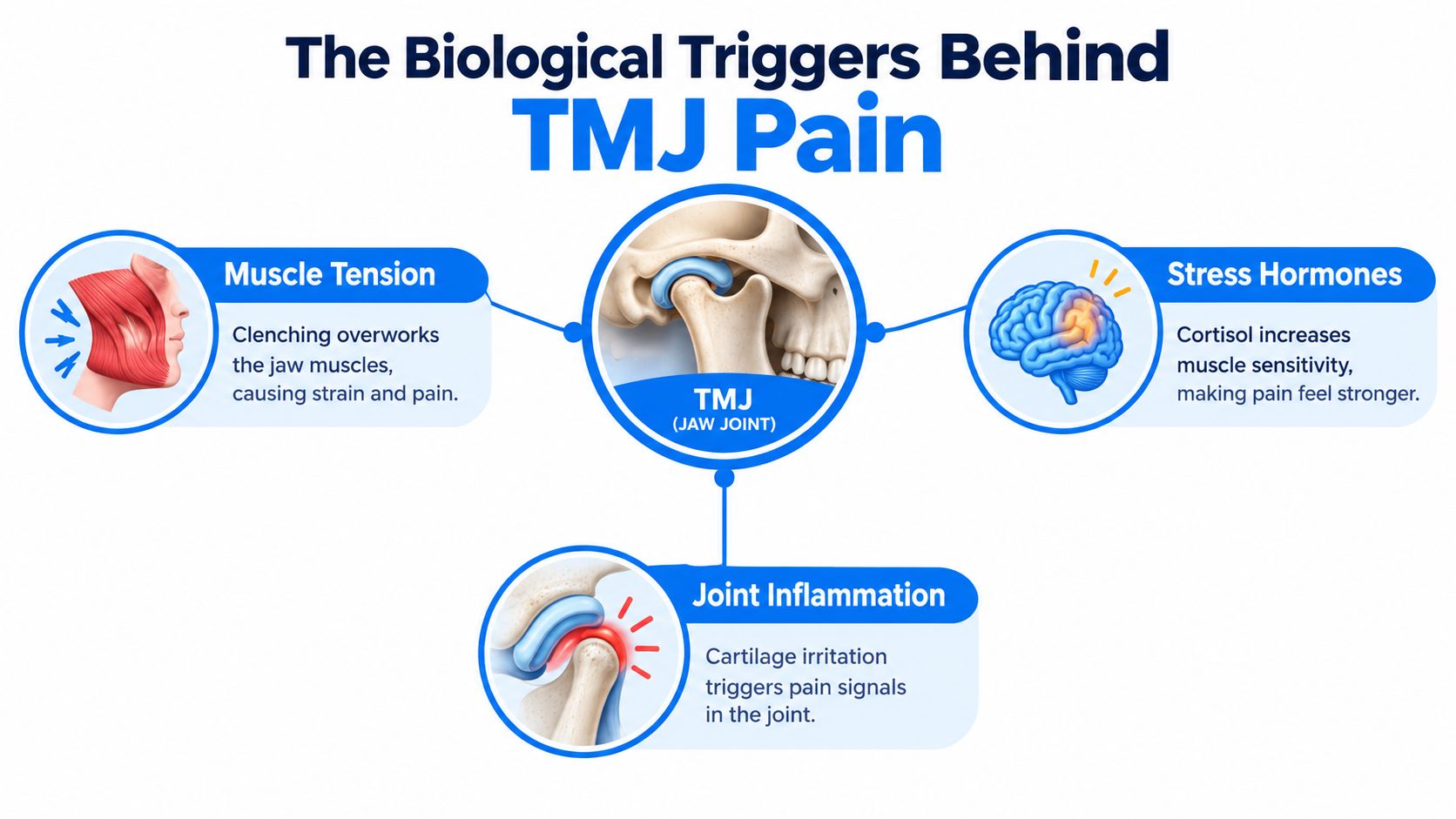
TMJ pain can begin in the muscles, inside the joint, or in both areas at the same time. Stress-related muscle activity is one pathway. Psychological stress can increase unconscious clenching and grinding, which raises tension in the muscles used for chewing. When those tissues remain active for long periods, they may become painful and push sensitized structures beyond their tolerance.
Stress, muscle tension, and pain sensitivity
Stress doesn't create imaginary pain. It can change muscle behavior and make the jaw work harder than necessary, particularly when clenching happens outside meals. Longitudinal and experimental evidence supports a causal role for muscle tension in TMJD pain, while studies report a moderate association between clenching and TMJ pain and a strong association between clenching and myalgia. These findings are summarized in research on stress, clenching, and temporomandibular pain.
The brain and body also influence each other. Patients who want a plain-language explanation of how emotional strain can show up as physical symptoms may find this brain-body link explained helpful. That perspective complements dental evaluation, but it doesn't replace an examination when jaw pain, limited movement, or tooth damage is present.
When inflammation involves the joint
Not every flare is muscle-driven. Synovitis, or inflammation of the joint lining, can produce an intra-articular flare-up. Inflammatory mediators in the synovial fluid may contribute to pain inside the joint, especially when joint inflammation coexists with myofascial muscle pain. An explanation of TMJ flare-up mechanisms describes how bruxism, overuse, and stress-driven clenching can increase symptoms through both muscle loading and joint irritation.
This distinction matters because the same home remedy may not address every pain source. Heat and relaxation may be useful for tense muscles, while persistent joint tenderness, locking, or reduced opening may require a more complete assessment. A dentist should determine whether symptoms appear primarily muscular, joint-based, dental, or mixed before recommending a long-term appliance or procedure.
Behavioral and Mechanical Strain Factors
A TMJ flare-up often starts before the pain feels dramatic. Small habits stack up until the jaw crosses its tolerance level. Bruxism, parafunctional habits, and occlusal abnormalities are recognized contributors to TMD, and one review found odds ratios of up to 4.8 for parafunctional habits and bruxism. The review of mechanical and behavioral TMD factors helps explain why repetitive loading can matter even when a patient does not notice obvious clenching.
Everyday habits that add load
Common contributors include:
- Daytime clenching: Holding the teeth together during concentration keeps the chewing muscles active without a functional reason.
- Nighttime grinding: Repeated tooth contact during sleep may leave the jaw tired or painful on waking.
- Gum chewing: Continuous chewing gives the muscles little chance to rest.
- Hard or chewy foods: Foods requiring sustained force can aggravate an active flare.
- Wide opening: Yawning, prolonged dental treatment, or an unusually large bite can strain sensitive joint structures.
Patients who want to understand unconscious clenching can read this practical explanation of what causes jaw clenching. The point is not to fear normal jaw movement. It is to spot unnecessary repetition and reduce it while symptoms settle.
Injury and repetitive microtrauma
Mechanical strain can build gradually or arrive in one event. The evidence identifies bruxism, parafunctional habits, macrotrauma, and microtrauma as possible etiologic factors. Incident jaw injury associated with yawning, prolonged mouth opening, dental treatment, oral intubation, sports injury, or motor vehicle accidents was strongly associated with later TMD incidence, with a hazard ratio of 3.94 and a 95% confidence interval of 2.82–5.50 in the cited evidence.
That is why a new jaw injury deserves attention even if pain shows up later. The practical trade-off is straightforward. Avoiding every wide yawn or normal meal is not realistic, but continuing gum chewing or forcing the jaw through pain can keep tissues irritated. During an active flare, cut back on avoidable load. If symptoms linger after facial trauma, dental treatment, or a sports impact, the jaw should be examined rather than managed by repeated self-treatment.
How Stress and Muscles Contribute to Flare-Ups
Jaw muscles can behave like an engine left partially engaged. Stress may keep them working in the background, while sleep disruption, extended screen time, or demanding concentration adds more effort. The patient may not notice the clenching until the muscles ache, the temples hurt, or the jaw feels restricted.

The threshold model in daily life
Stress is best understood as one part of a chain, not a dismissal of physical symptoms. Psychological pressure can increase muscle activity, muscle activity can increase tenderness, and tender muscles can make ordinary chewing feel excessive. If joint inflammation or recent overuse is already present, a smaller amount of clenching may be enough to produce a noticeable flare.
A patient might therefore feel fine during a calm week and develop pain during a demanding one, even without a new injury. The jaw hasn't necessarily failed suddenly. Several small inputs have accumulated until the muscles or joint reach a threshold.
A flare-up isn't proof that one ordinary bite caused permanent damage. It often signals that the total load temporarily exceeded the jaw's tolerance.
This model also explains why eliminating stress entirely isn't a realistic treatment plan. Useful care focuses on interrupting the cycle wherever possible, through jaw rest, improved sleep habits, awareness of tooth contact, and treatment for persistent muscle or joint symptoms.
A short educational video can help patients recognize how stress and clenching interact:
What helps and what doesn't
Relaxation techniques can reduce background muscle activity, but they won't correct every source of jaw pain. A night guard may protect teeth and alter loading for an appropriate patient, yet an appliance should be selected and adjusted after an examination. Patients considering an appliance can review these dental night guard tips, then discuss suitability with a dental professional.
Repeatedly testing a painful jaw, stretching aggressively, or forcing it to click may provide a momentary sensation without addressing the cause. Gentle awareness and measured rest are usually safer than trying to “work through” escalating pain.
Practical Strategies to Manage TMJ Flare-Ups
During an active flare, the immediate objective is to lower the jaw's workload while watching for symptoms that need professional attention. Home measures can be useful for mild, familiar episodes, but they shouldn't replace evaluation of ongoing pain, locking, trauma, swelling, or major difficulty opening the mouth.
Start with lower mechanical demand
-
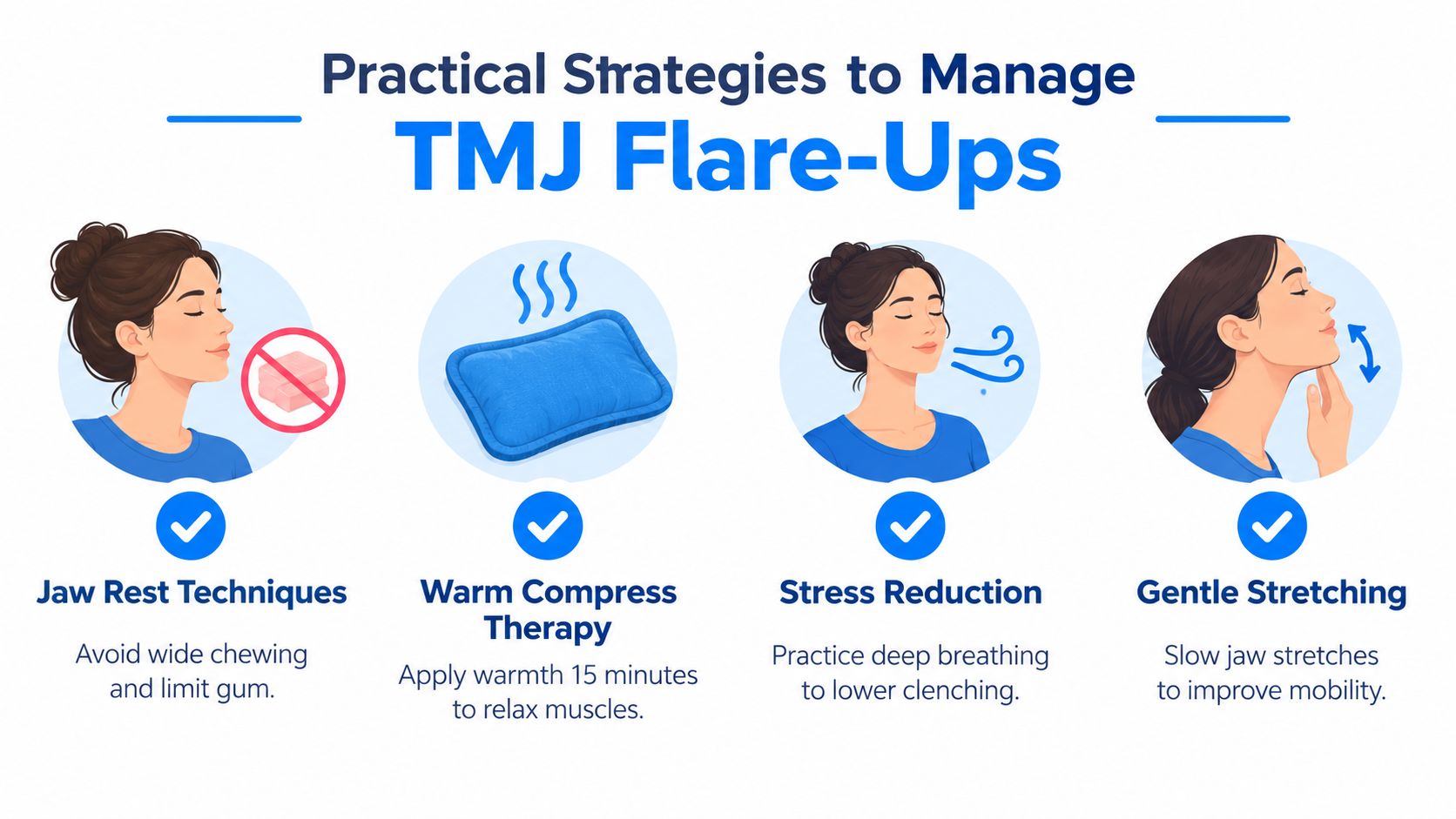
Choose softer foods temporarily. Soft foods reduce the force and duration of chewing while painful tissues calm. Avoid gum, hard foods, chewy foods, and meals that require prolonged chewing during the most sensitive period. NHS patient guidance for resting the jaw recommends this approach to reduce mechanical load.
-
Keep the teeth apart at rest. Teeth should generally remain separated except during eating. The lips may rest together, but the upper and lower teeth don't need to touch. This simple position reduces unnecessary muscle activity and helps patients notice daytime clenching.
-
Use comfortable warmth. A warm compress may relax tense jaw muscles and can be especially soothing when soreness is muscular. Warmth isn't a universal answer for joint inflammation, so worsening pain or deep joint tenderness deserves assessment rather than repeated heat alone.
-
Practice slow breathing. Longer, comfortable exhales can help reduce overall tension and make clenching easier to notice. The exercise should feel calming, not strenuous. A patient who becomes dizzy or distressed should stop and return to normal breathing.
Protect recovery without overcorrecting
Sleep support matters because nighttime grinding and poor sleep can leave the jaw more vulnerable the next day. A neutral sleeping position, adequate rest, and attention to morning soreness can help reveal whether nighttime activity contributes to symptoms.
Gentle movement may preserve comfort, but forceful stretching, wide opening, and repeated clicking are poor substitutes for diagnosis. The TMJ pain relief exercises page offers a starting point for discussing conservative movement with a dental professional.
Patients should seek prompt care after a blow to the face, sudden inability to open or close the mouth, significant swelling, severe tooth pain, or symptoms that continue despite reducing strain. A local emergency dentist may need to determine whether the problem involves the joint, muscles, teeth, or an unrelated dental emergency.
Professional TMJ Care in Scottsdale, AZ
A TMJ flare-up is rarely random. In practice, I look for the small triggers that have stacked up, a tighter bite, more clenching, a poor night of sleep, recent dental strain, or an old injury that has started to show itself again. A careful assessment looks beyond the painful spot and considers tooth contact, jaw motion, tenderness, dental wear, sleep concerns, and what may be keeping the flare going. That approach respects how TMD usually behaves and avoids forcing every patient into the same plan.
The Scottsdale practice provides TMJ pain assessment and management, including custom occlusal guards and appliances when bruxism or bite protection calls for them. Therapeutic Botox may also be considered for selected TMJ-related muscle symptoms. Restorative dentistry can address damaged teeth, worn surfaces, or missing teeth that affect comfort and function.
Care that fits the wider dental picture
TMJ care often overlaps with general dental health. A new patient exam, cleaning and exams, dental X-rays when indicated, and periodontal evaluation can uncover problems that add discomfort or complicate treatment. Patients may also discuss tooth-colored fillings, crowns, bridges, tooth extraction when a tooth cannot be saved, or dental implants when missing teeth require replacement.
The same office provides cosmetic dentistry services such as bonding, veneers, and teeth whitening for patients whose goals include a healthier-looking smile. Whether the immediate concern is a painful jaw, a damaged tooth, or a cosmetic goal, an examination clarifies what needs attention first and what can wait.
Patients seeking broader education may also review these TMJ pain treatment options, then bring questions to a dental consultation. Dr. Eric Wiitala has practiced for more than 20 years, graduated from Indiana University School of Dentistry in 1999, and is recognized on the practice site as one of the Valley's Top Dentists by PHOENIX magazine. Eric Wiitala DDS offers a full-service dental setting in Scottsdale, with treatment planning based on the patient's symptoms, oral health, and goals.
Patients experiencing recurring jaw pain, morning soreness, clenching, or difficulty chewing can schedule a TMJ consultation with Eric Wiitala DDS. The Scottsdale team can evaluate contributing factors, discuss custom guards or therapeutic options when appropriate, and coordinate related restorative, preventive, cosmetic, or emergency dental care.