
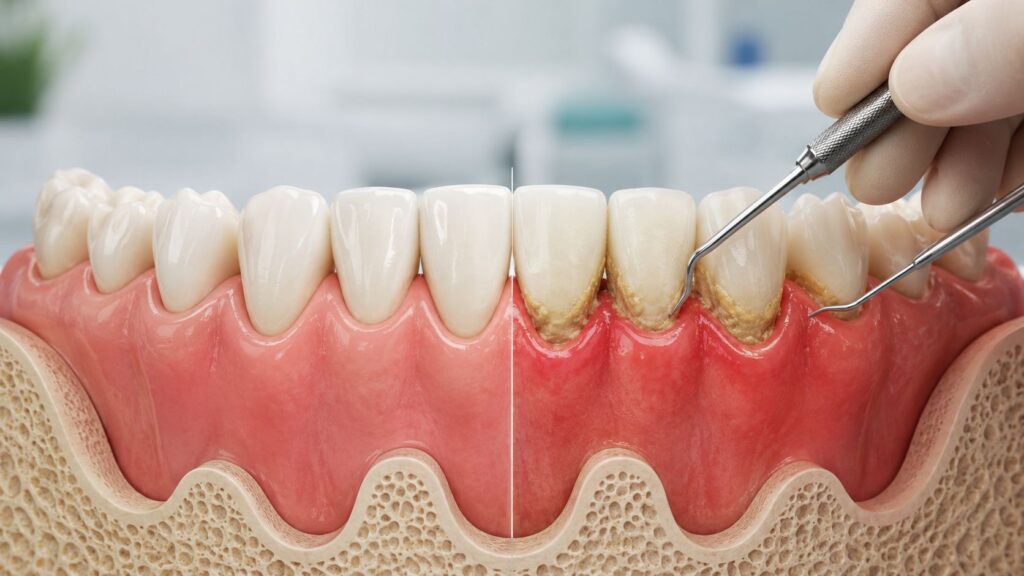
Bleeding when brushing. A tooth that feels slightly loose. Breath that still seems off after cleaning your tongue and rinsing. Those are the moments many people in Scottsdale start wondering whether something deeper is going on with their gums, and they're often right to ask. What is periodontal disease treatment? It's not just a single deep cleaning, it's a staged plan that starts with a careful diagnosis, then moves through non-surgical care, possible surgery, and long-term maintenance to help keep teeth stable.
Gum disease is also far more common than many patients realize. The CDC reports that about 4 in 10 U.S. adults age 30 and older had some level of periodontitis in 2009 to 2014, and about 60% of adults age 65 and older were affected in the same period, while the WHO estimates that severe periodontal diseases affect more than 1 billion cases worldwide (CDC summary of periodontal disease data). That scale is one reason periodontal care is a core part of general dentistry, not a niche service.
For patients looking for a dentist near me or a dentist in Scottsdale, AZ, the right answer usually starts with understanding what's happening under the gums. Some people only need a thorough cleaning and better home care. Others need deeper debridement, medication support, surgery, or a maintenance plan that keeps inflammation from coming back.
Understanding What Periodontal Disease Treatment Really Means
The first clue is often small. A patient notices pink in the sink after brushing, or a tooth feels a little different when biting. Sometimes the more frustrating sign is bad breath that doesn't go away, even with better brushing. That's usually when the important question begins, and the answer is more involved than “just get a cleaning.”
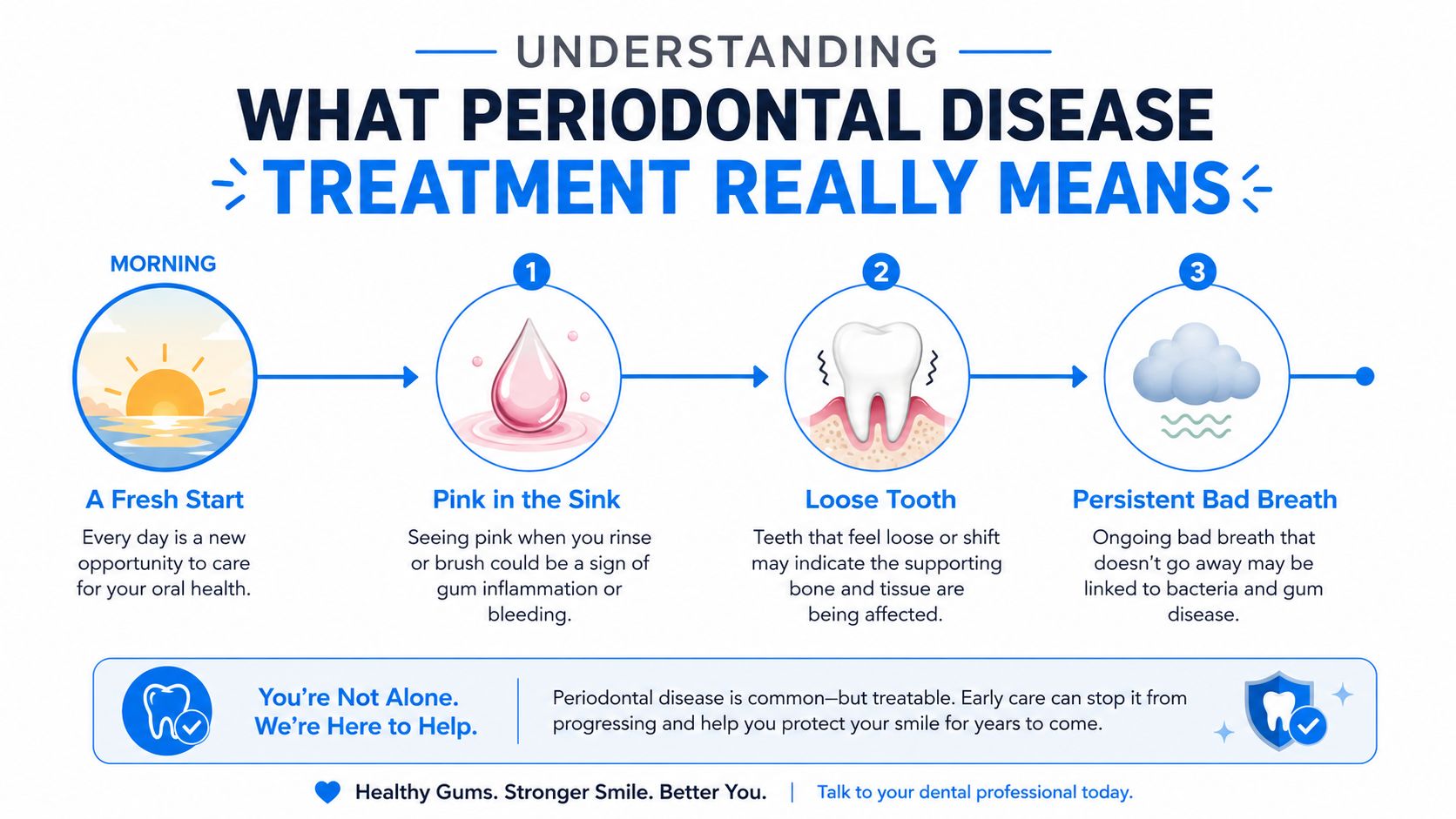
Periodontal disease treatment means controlling infection and inflammation around the teeth so the gums can tighten back up as much as possible and the bone support can be protected. That usually starts with diagnosis, then a procedure to remove bacteria and hardened deposits below the gumline, followed by re-evaluation and maintenance. The key point is that treatment is a process, not a one-time event.
Practical rule: if gums bleed regularly, the mouth is already sending a signal that deserves attention, not a wait-and-see approach.
For patients who want to understand how real people feel about the process, see what patients say about 4squares Dentistry offers a helpful look at how patients describe communication, comfort, and follow-through during care. That kind of feedback matters because periodontal treatment works best when the office explains each step clearly and the patient knows what happens next.
Dr. Eric Wiitala's Scottsdale practice approaches gum care the same way many concerned patients hope a general dentist would. The visit starts with education, then moves into a plan based on what the tissues, pockets, and x-rays show. That matters because no two mouths are responding at the same pace, and the treatment has to match the disease pattern in front of the dentist.
The Stages of Gum Disease and Why They Matter
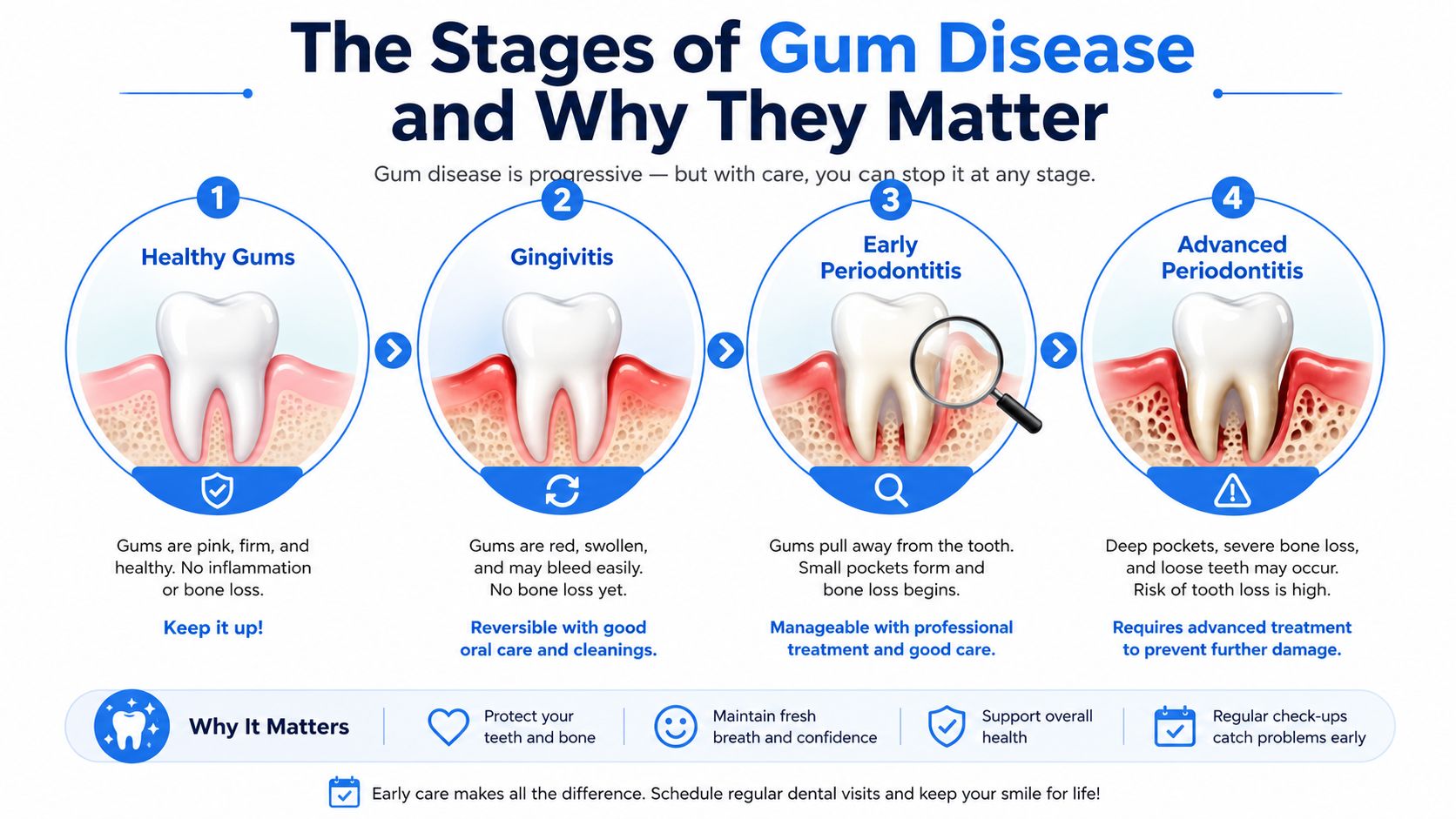
Healthy gums fit snugly around the teeth. They don't bleed easily, and they don't create deep spaces where bacteria can hide. Once plaque starts irritating the tissue, the gums can become inflamed, and that's where the difference between gingivitis and periodontitis starts to matter.
Gingivitis is the reversible stage
Gingivitis means the gums are irritated, often red or puffy, and they may bleed with brushing or flossing. At this stage, the damage is still reversible with cleaning and better home care, which is why early evaluation matters so much. Cleveland Clinic notes that prevention and maintenance include brushing two to three times a day, flossing daily, and keeping up with regular exams and cleanings (Cleveland Clinic on gum periodontal disease).
Periodontitis changes the support system
When inflammation moves deeper, the issue becomes more than surface irritation. The space between the tooth and gum, called a pocket, can deepen, and the supporting bone can start to break down. The National Library of Medicine notes that current guidance uses probing depth at re-evaluation as a practical benchmark, with sites at 5 mm or less generally managed nonoperatively and sites at 6 mm or more more likely to benefit from surgery (NCBI Bookshelf on periodontal disease treatment).
That pocket measurement is why clinicians don't guess. They probe each site, compare findings, and decide whether a tooth needs more than a routine cleaning. It's a structured way to move from early disease to more advanced care without over-treating shallow areas or under-treating deep ones.
Non-Surgical Treatment Options and What to Expect
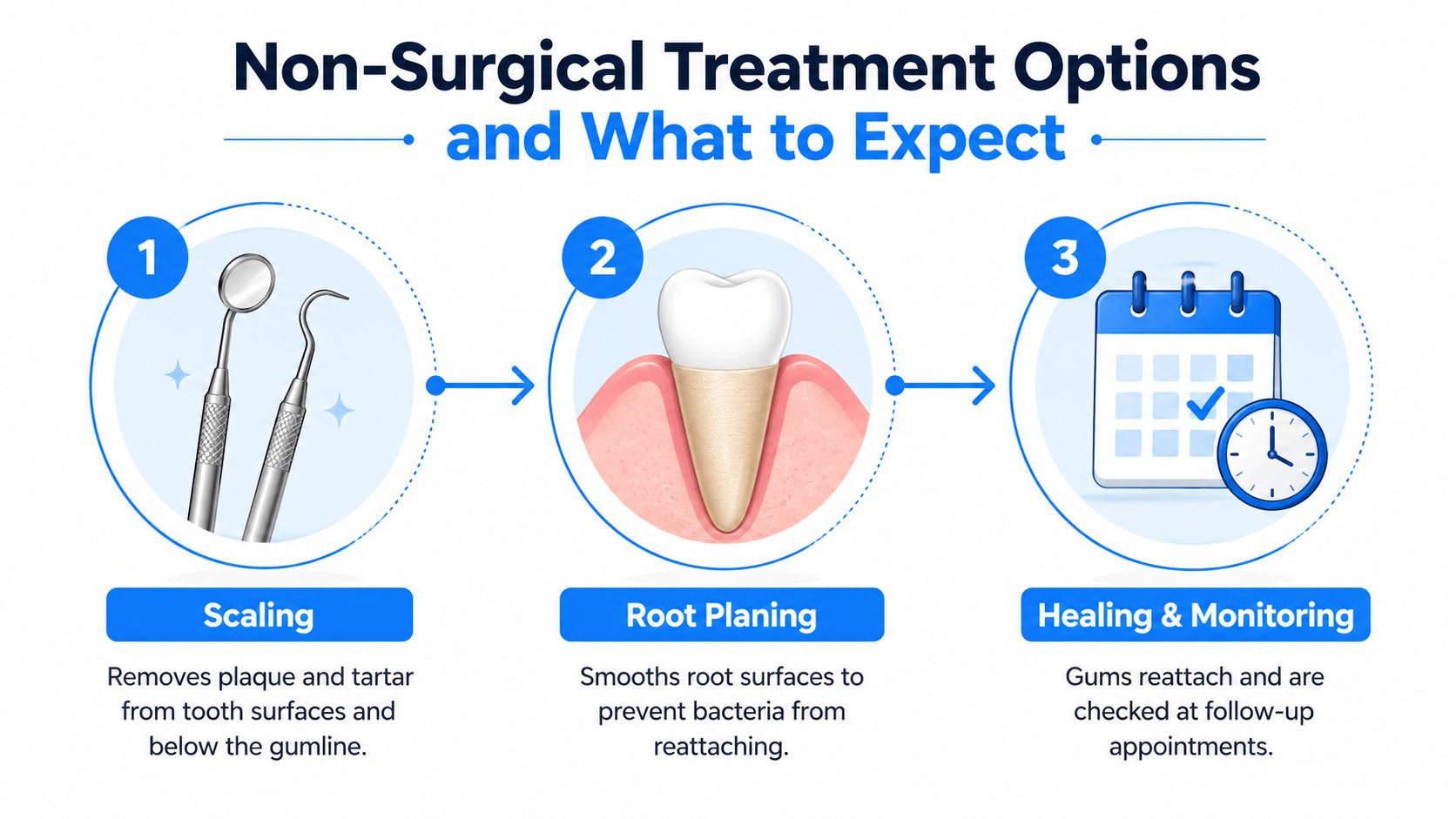
For many patients, treatment starts with scaling and root planing. Mayo Clinic's detailed guide on periodontitis diagnosis and treatment describes it as a deep cleaning that removes plaque, tartar, and bacteria from below the gumline and smooths root surfaces so the gums can reattach more effectively. In plain language, the clinician is cleaning where a regular cleaning cannot reach.
How the appointment usually feels
The mouth is often treated in sections so the area stays comfortable and manageable. Numbness is common, and the cleaning itself can feel more like pressure than pain. Afterward, gums may be tender for a short time, especially if the inflammation was significant before treatment.
The ADA's guidance says scaling and root planing without adjuncts is the treatment of choice for periodontitis, and for moderate-to-severe cases it also recommends sub-antimicrobial dose doxycycline 20 mg twice daily for 3 to 9 months after scaling and root planing (ADA periodontitis guidance). That matters because gum disease is not only about bacteria, it also involves a dysregulated inflammatory response.
Persistent bleeding, residual pockets, or a slow response after the first phase should prompt re-evaluation rather than another routine cleaning.
The re-check is where the plan becomes specific. A site that settles to 5 mm or less is usually kept non-surgical, while deeper sites are more likely to need another step. The clinician also looks for factors that keep inflammation going, such as plaque-retentive restorations, tobacco use, and other local issues. In Scottsdale, patient education and risk-factor coaching become part of treatment itself, because daily habits can help determine whether the gums calm down or keep flaring.
The practice may also discuss at-home periodontal support, including options like PerioProtect trays or antimicrobial measures when clinically appropriate, especially when the goal is to keep bacteria down between visits. That does not replace debridement, but it can support the maintenance plan when used correctly. For patients who need gum recession correction or tissue support, Dr. Wiitala's gum grafting procedures may be part of the larger conversation once the active infection is under control.
An overview of the process is easier to picture with a simple flow.
Why local guidance matters
For patients who are also asking about dental implants near me, cosmetic dentist near me, or even emergency dentist care, gum stability affects all of it. Healthy gums support restorations, improve comfort, and make future treatment choices more predictable. The better the inflammation is controlled now, the more options usually remain open later.
Surgical and Regenerative Procedures That Restore Support
Surgery is not a sign that treatment failed. It means the gums and bone need direct access so the dentist or specialist can reach areas that non-surgical therapy couldn't fully clean or stabilize. That shift matters most when pockets stay deep or when the anatomy itself makes self-care and mechanical cleaning less effective.
Flap surgery and pocket reduction
Pocket reduction surgery, also called flap or osseous surgery, lets the clinician lift the gum tissue, clean the root surfaces more completely, and reshape areas that trap bacteria. In the reviewed evidence, scaling and root planing combined with flap surgery eliminates 10 to 15% more pockets deeper than 4 mm than mechanical therapy alone (NCBI evidence review on periodontitis treatment). That doesn't mean every patient needs surgery, but it does show why it becomes valuable in selected cases.
Regenerative options in selected defects
When bone loss creates a shape that can support regeneration, the treatment discussion can include guided tissue regeneration or enamel matrix derivative. In selected bone defects, those approaches can produce an attachment-level gain of more than 4 mm twice as often as flap surgery alone (NCBI evidence review on periodontitis treatment). Bone grafting may also be used to support healing, depending on the defect and the overall treatment plan.
Dr. Wiitala coordinates with specialists when that level of care is needed, and that coordination is important because regenerative work depends on the defect pattern, healing conditions, and the patient's ability to maintain the area afterward. A surgical recommendation should always come with a clear explanation of what problem it's solving, what results are realistic, and how maintenance will protect the outcome.
A helpful internal resource on tissue support is the practice's gum grafting procedures page, especially for patients whose concern includes recession as well as pocketing. Different tissues need different solutions, and advanced care is often about choosing the right one rather than doing more for the sake of doing more.
Why Whole-Body Health Changes How Gum Disease Is Treated
A patient can sit in the chair with bleeding gums, visible tartar, and deep pockets, yet the reason healing is slow may start elsewhere. Gum disease does not stay neatly inside the mouth. The inflammation, the bacterial load, and the body's healing response interact with the rest of health, so periodontal care often includes questions that feel broader than dentistry at first. Diabetes control, tobacco exposure, sleep, and daily nutrition can all affect how well tissues respond.
The evaluation should be more than a probing chart
A thorough periodontal visit in Scottsdale may include discussion of home care, diet, smoking, and overall health, because each of those factors can shift the odds of stable healing. That does not mean every patient needs a long medical lecture. It means the dentist should know what might interfere with reattachment, pocket reduction, and comfort after treatment.
Periodontitis is treated as a mix of infection and host response, which is why medication support sometimes belongs in the plan instead of cleaning alone (ADA periodontitis guidance). In practice, that changes the conversation from “clean the teeth and hope for the best” to a stepwise plan that accounts for how the gums and the rest of the body are working together.
For readers who want a broader wellness perspective, how probiotics support immunity can be a useful starting point for understanding how everyday habits connect to immune balance. Gum care is never reduced to one supplement, but it does help when the patient and dentist think in terms of resilience, inflammation, and consistency.
A cleaner mouth heals better when the body has fewer obstacles to healing.
That point matters in real treatment planning. A patient may also need restorative dentistry, implants, or cosmetic work later, and stable gum health becomes the base that makes those treatments more predictable and more comfortable. At Eric Wiitala DDS, that is part of the education-first approach, the goal is to explain what is happening in the tissue, what can slow it down, and what supports healing once treatment starts.
Maintenance, Recovery, and Long-Term Stability
Once scaling and root planing, medication support, or surgery are finished, the work is not over. The gums still need watching so pockets do not reopen and inflammation does not start up again. Supportive periodontal therapy is part of treatment, because it protects the progress already made.
What maintenance is trying to protect
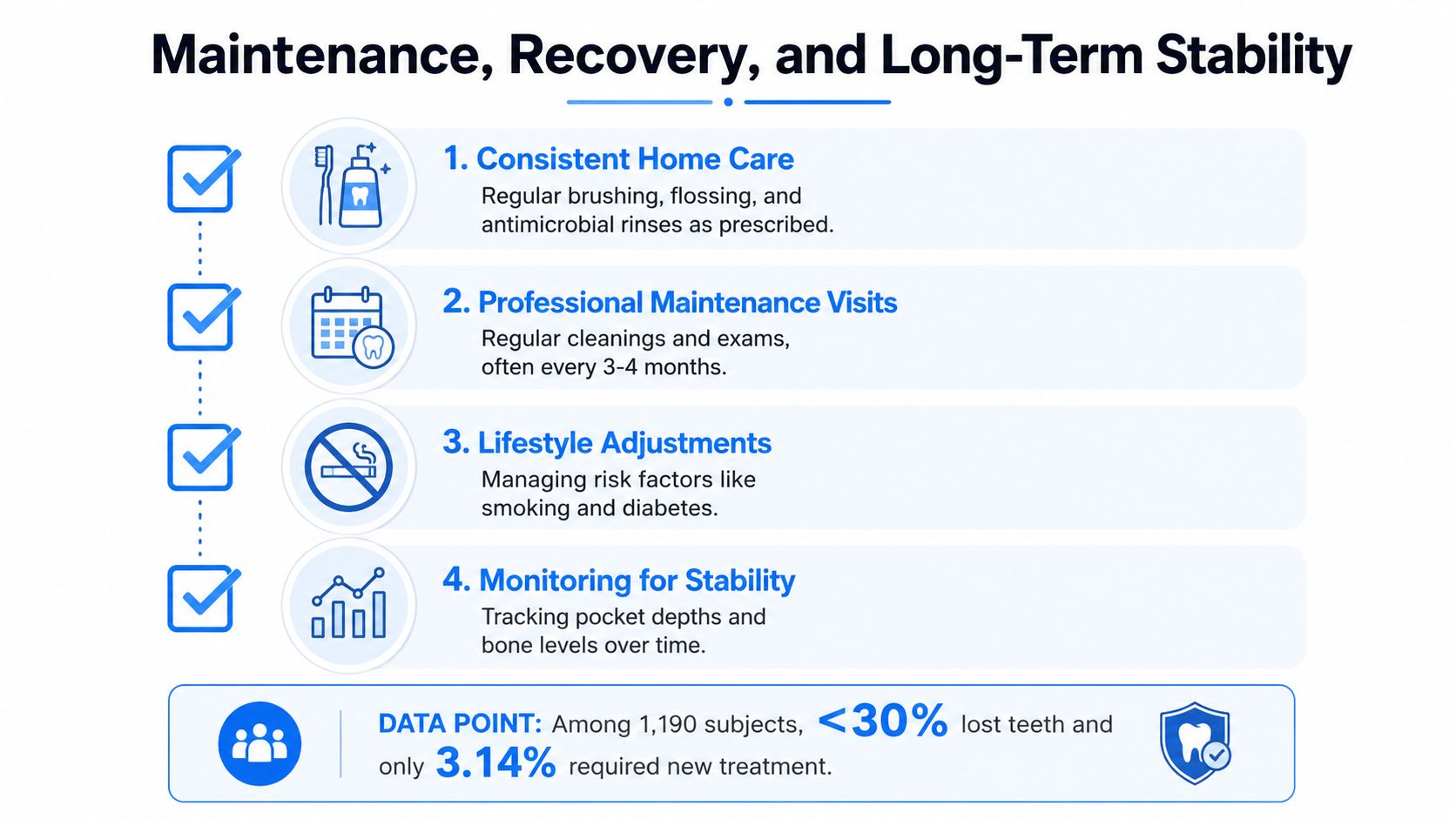
Maintenance is about keeping the gains from active treatment in place. A recent hospital service evaluation found that 48.23% of patients met the endpoints of therapy at specialist periodontal care entry, and by the end of active periodontal therapy the share of teeth classified as stable or at treatment endpoints improved substantially, including 66.25% across all teeth and 90.97% meeting endpoints of therapy across all teeth (PubMed study on periodontal therapy outcomes). In a systematic review of supportive periodontal care, among 1,190 subjects followed for 5 years, less than a third lost teeth and only 3.14% of all teeth were lost. Those findings point to the same practical lesson. The maintenance phase helps protect what treatment has already improved.
What follow-up usually looks like
In a Scottsdale general practice, follow-up usually starts with re-evaluation, updated periodontal probing, and hygiene visits that stay close to the healing timeline. The first visits after treatment are often more frequent than a standard cleaning, because inflamed tissues need closer checking while they settle. Home care coaching matters here too, since brushing technique, interdental cleaning, and control of risk factors decide whether the tissues stay calm between visits.
The process is easiest to follow as a short checklist.
- Consistent home care: brushing, flossing, and any antimicrobial rinse exactly as prescribed.
- Professional maintenance visits: regular cleanings and exams, often on a tighter recall than routine preventive care.
- Lifestyle adjustments: smoking cessation and better management of systemic risks.
- Monitoring for stability: repeated pocket measurements and x-rays when needed to watch bone support over time.
If patients want help understanding how follow-up visits, coverage, and payment coordination fit together, the office's insurance and billing information can be a useful place to start. Dr. Wiitala's office keeps that work practical and local, with hours built for ongoing care through the work week so patients can stay on track without turning each visit into a major disruption.
Costs, Insurance, and When to Schedule in Scottsdale
Periodontal care usually costs more than a standard cleaning because it takes more chair time, more clinical judgment, and sometimes more than one phase of care. A routine prophylaxis, scaling and root planing by quadrant, and surgical treatment are not the same service, so the plan and the bill are shaped by what the gums need. That's why a consultation matters before anyone assumes the next step.
What affects the price
The biggest variables are how much disease is present, how many areas need treatment, whether the case is non-surgical or surgical, and whether medication or maintenance support is part of the plan. For some patients, the answer is a focused deep cleaning with careful follow-up. For others, deeper pockets and bone loss mean a longer sequence of care.
For practical details on billing support and payment coordination, the office's insurance and billing information is a useful place to start. That conversation matters because patients often need help understanding how coverage, sequencing, and financing fit together before they can move ahead comfortably.
When to call now
Persistent bleeding, loose teeth, receding gums, and chronic bad breath are all reasons to schedule a periodontal evaluation. A family history of tooth loss tied to gum disease is another sign to get checked sooner rather than later. If a patient is also searching for tooth extraction or emergency dentist care, gum disease may already be affecting tooth stability and should be evaluated without delay.
Dr. Eric Wiitala DDS is located at 9755 North 90th Street, Suite B250, Scottsdale, AZ 85258, and the office can be reached at (480) 657-6981. New patients who want a periodontal evaluation as part of whole-person dental care can use that first visit to get clear answers, a step-by-step plan, and a realistic path forward.
If bleeding gums, loose teeth, or persistent bad breath have started to worry you, Eric Wiitala DDS can evaluate the gums, explain what's happening, and map out treatment without rushing the conversation. Visit Eric Wiitala DDS to request an appointment and get a periodontal care plan built around comfort, clarity, and long-term stability.