
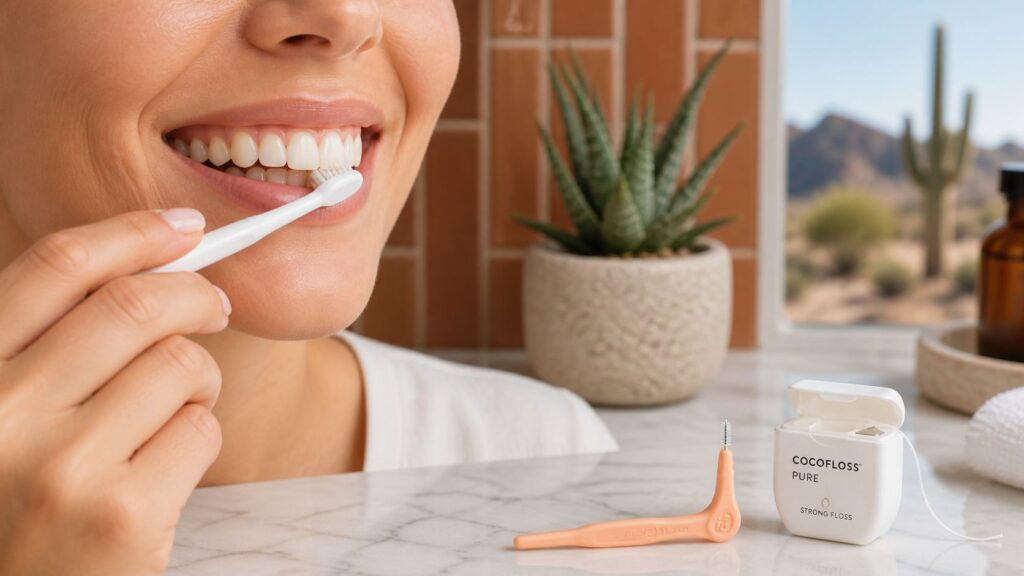
A morning rush in Scottsdale can make gum care feel optional. Someone brushes quickly before work, notices a little pink foam, and decides the bleeding probably comes from brushing too hard. Another person has persistent bad breath or mild gum tenderness but keeps postponing a dental visit because nothing hurts. Those small signs deserve attention, not panic. Learning how to maintain healthy gums means combining gentle daily cleaning, thoughtful lifestyle choices, and professional prevention at a trusted dentist in Scottsdale, AZ.
Understanding the Importance of Healthy Gums
Gums do more than frame a smile. They form protective tissue around the teeth and help support the structures that keep teeth stable. When plaque remains along the gumline, the body responds with inflammation. Over time, untreated inflammation can move from the surface tissues into the deeper support around the teeth.
The concern is widespread, but it's also manageable. The CDC reports on gum disease that nearly 42% of U.S. adults age 30 and older had periodontitis during 2009–2014, while about 8% had severe periodontitis. Among adults age 65 and older, about 60% were affected. These figures don't mean every person with bleeding gums will develop advanced disease. They do show why prevention deserves a place in an everyday routine.
Consider the rushed morning brush. It may freshen breath, but a brief pass often leaves plaque between teeth and near the gumline. The CDC explains that gingivitis is preventable and reversible with good oral hygiene, including brushing twice daily and cleaning between teeth daily, as described in its gum disease facts and statistics.
Practical rule: Healthy gums respond best to small actions repeated consistently, not occasional aggressive cleaning.
The earlier a person addresses inflammation, the more opportunity a dental team has to protect natural teeth with preventive care. A new patient exam, professional cleaning and exams, and appropriate dental x-rays can help identify concerns before they become painful or require complex treatment. For Scottsdale families, routine care creates a foundation for a healthy smile, whether the next search is for a dentist near me, an emergency dentist, or long-term preventive support.
What Gum Disease Looks Like and Who Is at Risk
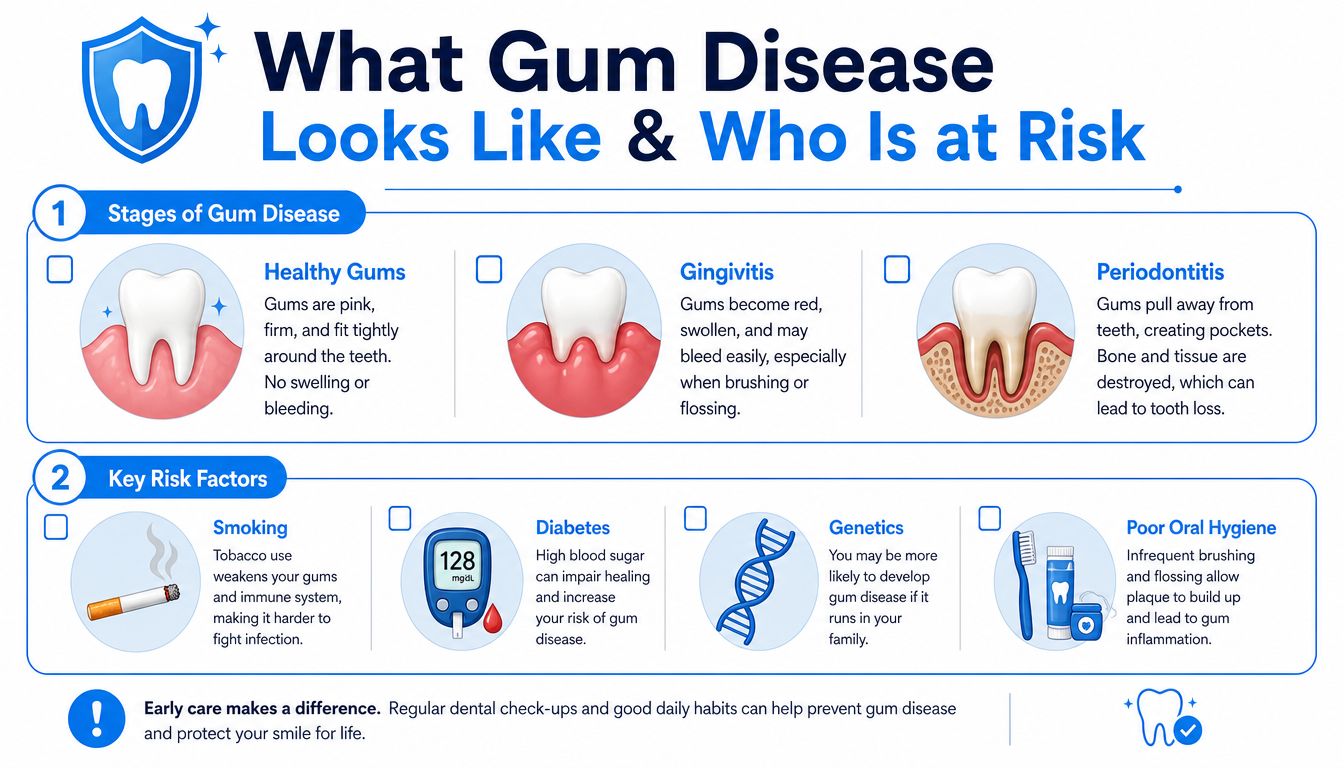
Gum disease usually begins with plaque-related inflammation at the gumline. In the early stage, called gingivitis, gums may look red or swollen and bleed during brushing or interdental cleaning. With consistent care and professional guidance, this stage can often be reversed.
Periodontitis is different. It involves inflammation and damage to the tissues supporting the teeth, and advanced disease can include recession, bone loss, and loose teeth. The NIDCR adult periodontal disease data report that 42.2% of U.S. adults age 30 or older had total periodontitis, including 34.4% with nonsevere disease and 7.8% with severe disease.
Risk isn't identical for everyone
Smoking and diabetes can raise periodontal risk. CDC materials identify periodontitis as more common among smokers and people with diabetes. A CDC-linked review reported prevalence of 58.0% among adults with diabetes compared with 37.6% among adults without diabetes, as summarized in the NIDCR periodontal disease information. These figures support personalized prevention rather than assuming one routine works equally well for every patient.
Diet may also influence the inflammatory environment around the gums. Eating patterns, medication-related dry mouth, inherited susceptibility, and difficulty cleaning around crowded teeth or dental work can all affect how quickly inflammation develops.
A simple self-check
A mirror check can help identify reasons to schedule a dental evaluation:
- Bleeding: Blood during brushing or cleaning between teeth shouldn't be ignored.
- Color and swelling: Red, puffy, or tender areas may indicate inflammation.
- Gum position: Recession can expose more of a tooth or its root.
- Breath and taste: Ongoing bad breath or a persistent unpleasant taste needs attention.
- Tooth stability: Looseness, shifting, or changes in the bite require prompt care.
Patients can learn more about symptoms, diagnosis, and treatment through the practice's information on periodontal gum disease. Early evaluation doesn't guarantee that every concern will disappear immediately, but it gives the dental team a clearer opportunity to control the cause before the condition progresses.
Building a Daily Gum Care Routine That Actually Works
A reliable home routine has two parts, cleaning the tooth surfaces and cleaning the spaces a toothbrush can't reach. The morning and evening routine should be deliberate rather than forceful.
Brushing with the gumline in mind
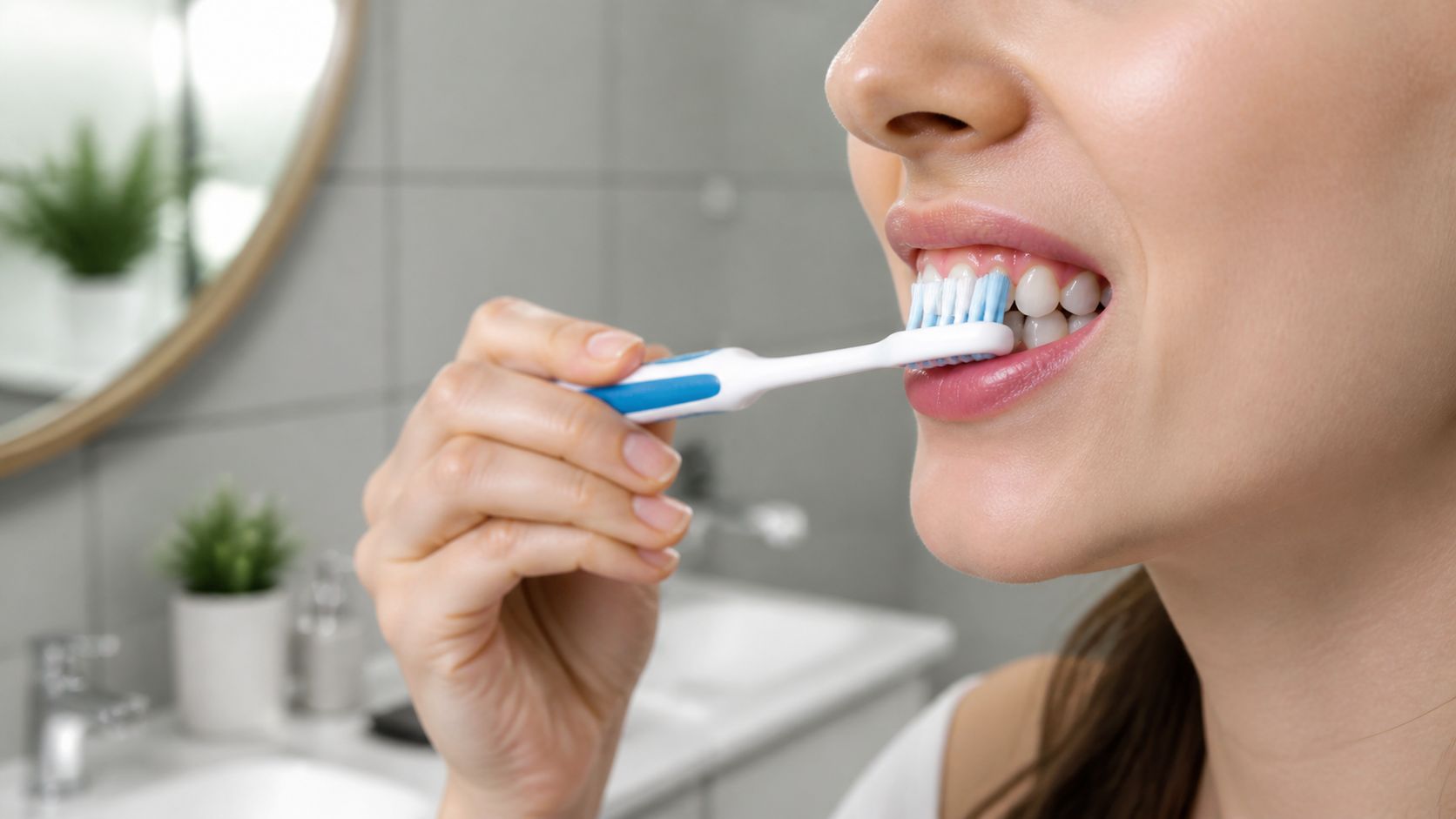
Use a soft-bristled manual or powered toothbrush and fluoride toothpaste. Hold the bristles at a slight angle toward the gum margin, then use gentle, short movements that clean where the tooth meets the gum. Scrubbing harder doesn't remove plaque more effectively, and excessive pressure can irritate tissue or contribute to recession.
A complete session should last about two minutes. Divide the mouth into manageable areas so the outer, inner, and chewing surfaces receive attention. The Cochrane evidence on toothbrushes and interdental cleaning reports that a manual brushing session removes only about 42% of plaque, while powered brushes average about 46%. Powered brushes also showed a small, statistically significant advantage, with plaque scores improving by 11% to 21% and gingivitis scores by 6% to 11% in the reviewed evidence.
Cleaning between teeth every day
Floss or use another suitable interdental method once daily. Curve the floss around each tooth in a C shape and guide it gently below the gum edge. Snapping floss downward can cut or bruise the tissue, while avoiding the area leaves plaque behind.
The same Cochrane review found that adding floss to toothbrushing reduced gingivitis compared with brushing alone. The reported standardized mean differences were -0.36 at one month, -0.41 at three months, and -0.72 at six months across 12 trials, although the certainty was low and trial bias was common.
A person exploring aloe juice for gum health should treat any rinse or supplement as an addition, not a replacement for brushing, interdental cleaning, and dental examinations.
A practical evening sequence is simple: clean between the teeth, brush gently with fluoride toothpaste, and follow any product instructions provided by the dental team. Mouthwash may support a routine in selected situations, but it can't physically remove established plaque in the way brushing and interdental cleaning can.
Choosing the Right Interdental Cleaning Tools
The best interdental tool is the one that fits the space and gets used consistently. Tight contacts between teeth may suit floss, while wider spaces, gum recession, bridges, or certain orthodontic areas may be easier to clean with an interdental brush. A water flosser can be useful for people who struggle with string floss or need help flushing around dental work, although a dental professional should guide technique when inflammation or periodontal pockets are present.
Reviews suggest that interdental brushes can outperform floss in sites where the brush passes comfortably without trauma. The key phrase is without trauma. Forcing a brush into a tight space can injure the gum and make daily cleaning unpleasant.
| Tool | Best For | Effectiveness |
|---|---|---|
| Floss | Tight tooth contacts | Cleans narrow spaces when guided gently below the gum edge |
| Interdental brush | Open embrasures, recession, bridges, and accessible wider spaces | Can outperform floss where it fits without forcing |
| Water flosser | Patients who find string floss difficult or need help around dental work | Supports removal of loose debris and can improve daily consistency |
Professional mechanical cleaning also matters because hardened deposits can't be removed reliably at home. One long-term study reported mean plaque and gingival indices falling to 0.4 and 0.3 after an initial professional cleaning and ongoing monthly mechanical care, as described in the PubMed study on professional tooth cleaning.
Light bleeding is a reason to improve technique and arrange an evaluation, not a reason to abandon interdental cleaning.
A dental hygienist can check brush size, demonstrate floss handling, and identify areas that need a different approach. The largest interdental brush that slides into a space comfortably is often more useful than a smaller brush that leaves the sides untouched, but comfort and tissue safety come first.
Lifestyle Factors and Warning Signs to Watch
A toothbrush can't compensate for every factor that affects gum inflammation. Food patterns, blood sugar management, tobacco exposure, saliva flow, and medication effects all shape the mouth's environment. This is why gum maintenance should be personalized rather than reduced to a single instruction.
A 2025 King's College London study reported that people whose diets were closer to a Mediterranean pattern had better gum health. Frequent red-meat intake was associated with more severe gum disease and higher inflammatory markers, according to the reported diet and gum-health findings. The practical interpretation isn't that one food automatically causes gum disease. Instead, a whole-diet pattern may support inflammation control more effectively than relying on short-lived add-ons alone.

Systemic health changes the maintenance plan
Diabetes deserves particular attention. The CDC-linked evidence cited earlier found periodontitis prevalence of 58.0% in adults with diabetes versus 37.6% in those without, so patients managing diabetes should tell the dental team and coordinate care with their medical providers. Dry mouth from medications can also make plaque and irritation more difficult to control, which may call for product changes, hydration strategies, and closer professional monitoring.
People interested in broader daily habits to fight inflammation can use that information as general lifestyle context, while keeping individualized medical and dental advice at the center of care.
Warning signs deserve a response
A person should arrange a dental evaluation for:
- Bleeding or swelling: Repeated bleeding, tenderness, or puffiness suggests ongoing irritation.
- Recession: Gums that appear to pull away from teeth may expose sensitive root surfaces.
- Persistent odor: Bad breath or an unpleasant taste that doesn't resolve with cleaning can signal a gum concern.
- Loose teeth: Movement, shifting, or bite changes require prompt professional attention.
A weekly mirror check can help patients notice changes in color, contour, bleeding, breath, and tooth stability. Pain isn't required for gum disease to be present, so waiting for severe discomfort can delay useful treatment.
Professional Gum Care at Dr. Eric Wiitala's Scottsdale Practice
Home care removes daily plaque, but professional prevention identifies deposits, tissue changes, recession, and deeper concerns that aren't easy to assess in a bathroom mirror. At Dr. Eric Wiitala's Scottsdale office, a periodontal evaluation can include a review of medical history, gum measurements, visual examination, and dental x-rays when appropriate.
Professional hygiene supports the routine rather than replacing it. The dental team can remove deposits, review brushing and interdental technique, discuss dry mouth or diabetes, and recommend a maintenance schedule based on the patient's findings. Someone with stable gum health may need a different recall plan from someone with previous periodontal disease, smoking exposure, diabetes, or medication-related dryness.
Dr. Eric Wiitala DDS reports more than 20 years in practice, graduation from Indiana University School of Dentistry in 1999, and recognition as one of the Valley's Top Dentists by PHOENIX magazine. The office takes a holistic approach that includes nutritional health and provides preventive, restorative, cosmetic, implant, sleep-related, and TMJ care.
Patients may also need treatment for recession or exposed roots. Information about gum grafting procedures can help patients understand one option that may be considered after an evaluation. Other services, including tooth-colored fillings, crowns, bridges, dental implants, teeth whitening, clear aligners, and cosmetic dentistry, can be coordinated around a patient's broader oral-health needs.
A new patient exam gives Scottsdale adults a starting point. It can clarify whether bleeding reflects reversible gingivitis, a need for more thorough professional cleaning, recession, or a condition requiring periodontal therapy.
Taking the Next Step Toward Healthier Gums
Maintaining healthy gums doesn't require a complicated morning checklist. Brushing twice daily with fluoride toothpaste, cleaning between teeth each day, and using gentle pressure create the daily foundation. A balanced eating pattern, attention to diabetes or dry mouth, and prompt response to warning signs add important protection.
Patients shouldn't feel embarrassed about bleeding, missed flossing, or a long gap between visits. Dental teams see these concerns every day, and an evaluation is an opportunity to create a practical plan rather than deliver criticism. The plan may involve routine cleaning and exams, a review of home-care tools, periodontal therapy, or treatment for recession.
Scottsdale patients also benefit from having one office available for preventive and restorative needs. A consultation can address gum concerns while also evaluating damaged teeth, missing teeth, smile aesthetics, bite protection, sleep-related breathing concerns, or TMJ symptoms. Patients searching for a dentist near me, dental implants near me, cosmetic dentist near me, tooth extraction, or an emergency dentist can begin with a direct conversation about the immediate concern and the appropriate next step.
Dr. Eric Wiitala's practice is located at 9755 North 90th Street, Suite B250, Scottsdale, AZ 85258, and the office phone number is (480) 657-6981. Office hours are Monday through Thursday, with Friday appointments available by arrangement. A scheduled new patient exam can turn uncertainty into a personalized gum-maintenance routine.
Eric Wiitala DDS offers periodontal evaluations, professional hygiene, preventive exams, and treatment planning for patients working to maintain healthy gums in Scottsdale. Visit Eric Wiitala DDS to request a consultation and take the next practical step toward protecting a comfortable, confident smile.