
A bite of crusty bread during dinner leaves an unfamiliar sharp edge against the tongue. A small piece of tooth is missing, and the immediate concern isn't appearance. It's whether the tooth needs attention tonight, whether it can be saved, and where to find a broken tooth dentist in Scottsdale.
Eric Wiitala DDS provides dental care in Scottsdale, Arizona, for patients facing those decisions. Symptoms matter more than the size of the missing piece. A painless surface chip and a painful crack can look similar, but they need different responses.
Table of Contents
- How Urgent Is a Broken Tooth Tonight
- First Aid Steps Before You See the Dentist
- What Decides Whether a Broken Tooth Can Be Saved
- Repair Options From Bonding to Implants
- What to Expect at Eric Wiitala DDS in Scottsdale
- Prevent Repeat Breaks From Grinding and Biting Stress
- Broken Tooth FAQs and Aftercare
- Book Your Scottsdale Visit Before the Crack Spreads
How Urgent Is a Broken Tooth Tonight
The urgency depends on symptoms, not just on how large the break looks. A smooth chip without pain can usually wait for a routine appointment within a few days, provided no swelling, looseness, or recent significant injury is present.
Broken tooth symptoms and how fast to act
| Symptom | What It Usually Means | How Fast to Act |
|---|---|---|
| Small chip, no pain, smooth edge | Enamel or minor surface break | Routine visit within a few days |
| Sharp edge cutting tongue or cheek | Tooth needs smoothing or a temporary covering | Same day or next day |
| Pain when biting or pressing on the tooth | Possible crack reaching deeper layers | Same day |
| Cold or hot sensitivity that lingers | Exposed dentin or possible pulp involvement | Same day |
| Tooth loose or knocked out, or bleeding that will not stop | Dental trauma | Emergency, as soon as possible |
| Gum or facial swelling with fever | Possible abscess spreading from the tooth | Dental emergency now; emergency medical care if breathing or swallowing is affected |
A small, comfortable chip may involve only enamel, the hard outer covering. It still needs examination, because appearance alone can't reveal decay or an underlying crack.
A sharp edge deserves quicker attention even without toothache. Repeated rubbing can injure the cheek or tongue, and professional smoothing is safer than trying to file the tooth at home.
Symptoms that shouldn't wait
Pain during biting can occur when cracked sections move under pressure. Lingering temperature sensitivity can suggest irritation of the pulp, the tissue containing nerves and blood vessels inside the tooth, although testing is needed to identify the cause.
The American Dental Association's emergency-treatment guidance includes fractured or loose teeth, fever or swelling, persistent pain, pressure or temperature pain, and pain that disrupts sleep among emergency presentations. A loose or knocked-out tooth needs immediate dental attention; uncontrolled bleeding also warrants emergency evaluation.
When calling an emergency dentist in Scottsdale, the patient should describe how the injury happened, whether the tooth moves, and whether swelling, bleeding, or sensitivity is present. Those details help the office prioritize care.
The overriding rule: Difficulty breathing or swallowing, or fast-spreading facial swelling, requires emergency medical care now, not just a dental appointment.
First Aid Steps Before You See the Dentist
A broken tooth can happen during dinner or after an accidental knock. While arranging care, a few simple steps can protect the area and make it more comfortable. They cannot seal a deep crack or show how far it extends.
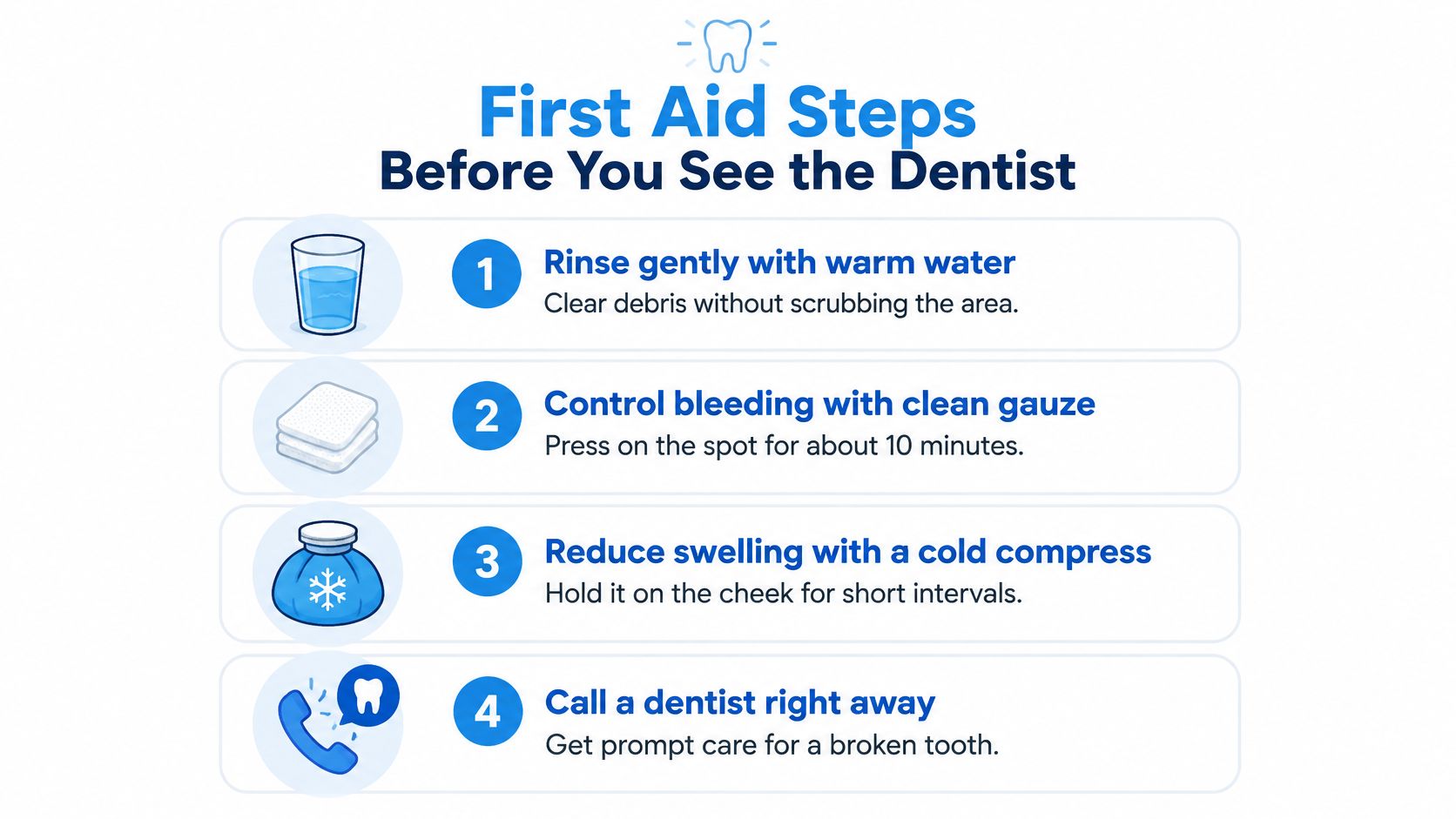
Rinse gently with warm water. This clears loose food and debris. Avoid scrubbing, probing the break, or using sharp objects, which can irritate the area.
Apply clean gauze to bleeding tissue. Hold it in place with steady pressure. Lifting it repeatedly can disturb clotting. Seek emergency evaluation for persistent heavy bleeding or gauze that keeps soaking through.
Save any tooth fragment. Place it in a clean container with milk or saliva to keep it moist until the appointment. A dentist can assess whether it may be reattached.
Use a cold compress outside the cheek. Apply a wrapped cold pack in short intervals to ease swelling and throbbing. Keep ice away from the skin and the damaged tooth.
Choose pain medicine cautiously. Take over-the-counter medicine as labeled, and avoid combining products that contain the same ingredient. Aspirin placed against the gum can burn tissue. People with medical conditions or who take other medicines can ask a pharmacist or clinician which option is suitable.
Protect the tooth during meals. Choose soft, lukewarm foods and chew on the opposite side. Hard, sticky, very hot, or very cold foods may irritate the tooth or dislodge weakened material.
Does a broken tooth need antibiotics?
Most fractures are treated with dental work, not leftover antibiotics. The ADA's antibiotic-stewardship guidance recommends dental treatment rather than antibiotics for most pulp-related pain and localized swelling in otherwise healthy adults. Symptoms such as fever or malaise can affect that decision, so a clinician should assess them.
At the initial visit, the dentist may smooth a sharp edge, protect exposed tissue, or place a temporary restoration. Over-the-counter medicine controls pain until the dentist can smooth the edge or place a temporary filling.
What Decides Whether a Broken Tooth Can Be Saved
The word broken doesn't determine the outcome. The location and depth of the crack, the condition of the pulp, gum support, and the ability to protect the remaining tooth matter more.
A published review of cracked-tooth treatment reports approximately 96%–100% tooth survival through as much as five years for selected cracked teeth receiving appropriate treatment. Those results aren't a guarantee for every fracture, but they show why assessment should come before assuming extraction is necessary.
The criteria behind the recommendation
A dentist weighs several findings together:
- Crack depth and direction: A fractured chewing point has a different outlook from a split extending into the root.
- Pulp condition: Normal, irritated, infected, or dead tissue changes the treatment required.
- Gum measurements: An isolated deep pocket beside the tooth can suggest a crack extending below the gum.
- Remaining healthy structure: A restoration needs enough sound tooth to support and seal it.
- Bite forces: Grinding or heavy loading can threaten a repair unless those forces are addressed.
For example, a molar with a broken cusp, healthy supporting tissues, and adequate remaining structure may be restored with protective coverage. A tooth split down the middle, particularly through the floor of the nerve chamber, may not be restorable.
The assessment can include symptom history, magnified inspection, bite testing, temperature or other pulp testing, gum measurements, and dental X-rays. The American Association of Endodontists' cracked-tooth guidance describes these complementary tests and selective use of additional imaging when findings remain unclear.
A crack doesn't automatically mean a root canal, and pain doesn't automatically mean extraction.
Protective restorations that cover vulnerable chewing points generally offer better long-term protection than leaving those points exposed. Continued chewing on an unprotected crack can extend it, potentially changing a repairable tooth into one that requires removal.
Repair Options From Bonding to Implants
The appropriate repair follows the diagnosis, not the appearance of the missing piece. Treatment must restore a usable shape while protecting the structure that remains.
Repair options for a broken tooth
| Treatment | Best For | Typical Visit Pathway | Key Trade-Off |
|---|---|---|---|
| Tooth-colored bonding | Small chips and minor reshaping | Often completed during the repair appointment | Conservative, but can chip and need touch-ups |
| Tooth-colored filling | Moderate defect with enough healthy structure | Often completed during the repair appointment | Useful for limited damage, less protection for heavily loaded cusps |
| Crown | Large fracture or weakened cusp | Preparation followed by placement when needed | Covers vulnerable chewing points |
| Root canal plus crown | Pulp involvement requiring treatment | Pulp treatment followed by definitive restoration | Preserves a restorable tooth but requires follow-through |
| Bridge | Missing tooth with suitable neighboring teeth | Preparation, fabrication, and placement | Relies on the health of supporting teeth |
| Dental implant | Tooth cannot be saved | Surgical and restorative appointments separated by healing | Replaces the root but requires suitable bone and carries surgical risks |
Matching the restoration to the damage
Bonding uses tooth-colored material to rebuild a limited chip or refine an edge. It preserves healthy structure, although biting hard objects can damage the repair.
A filling replaces a larger missing area when sufficient sound tooth remains. It isn't always enough when a chewing point is thin, undermined, or cracked.
A dental crown in Scottsdale covers the prepared tooth and protects vulnerable surfaces. Crown planning considers the amount of remaining tooth, the bite, and whether the fracture can be sealed.
Root-canal treatment removes damaged or infected pulp when the diagnosis warrants it. A crack reaching the nerve chamber requires careful evaluation, but the presence of a crack alone doesn't establish the need for this treatment.
Replacement when preservation isn't possible
A bridge uses neighboring teeth to support a replacement tooth. Those supporting teeth need suitable strength and gum support.
A dental implant replaces the missing root and supports a restoration after healing. Patients considering dental implants near me should understand that bone integration takes time and that replacement isn't necessarily completed at the extraction appointment.
The FDA's dental-implant patient guidance identifies risks including surrounding-tissue injury, sinus perforation, and jawbone fracture; infection, nerve effects, or implant failure also require discussion. Consultation should review bone support, medical history, smoking, hygiene, healing, and possible additional procedures.
Eric Wiitala DDS offers bonding, tooth-colored fillings, crowns, bridges, and dental implants in Scottsdale. The useful question is which option fits the tooth's condition, not which option sounds most advanced.
What to Expect at Eric Wiitala DDS in Scottsdale
A tooth that hurts when you bite may need a different evaluation from one that has chipped without pain. At Eric Wiitala DDS, the visit starts by clarifying what happened and checking the tooth. The first appointment may focus on diagnosis and short-term protection; the final restoration may require a later visit.
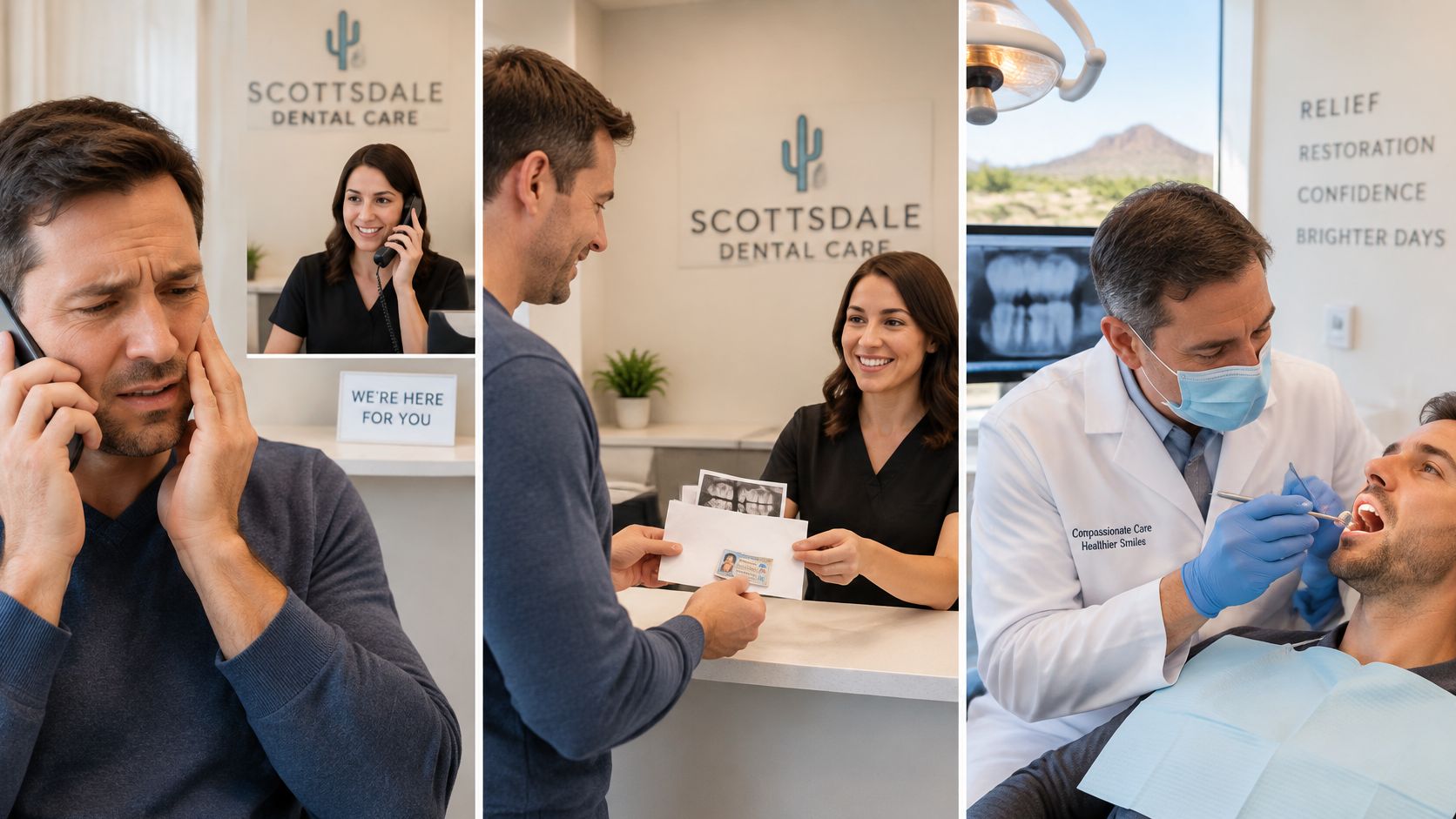
This image illustrates the progression from symptoms to evaluation and care.
From the first call to the treatment plan
Describe the problem when you call. Contact the office at (480) 657-6981 or use the contact form. Say which tooth is affected, whether it hurts, and whether the break followed an injury. Those details help the team understand the situation.
Bring useful health information. Have your photo identification, insurance card, medication list, allergies, and relevant medical conditions ready. This information helps the team plan care safely and discuss billing.
Explain what triggers the pain. Note whether discomfort comes with biting, hot or cold foods, or no clear trigger. The dentist can use this history alongside the examination.
Have the tooth and bite examined. The dentist checks the damaged area, nearby tissues, and how the teeth meet. X-rays may be taken when needed to assess areas that aren't visible during the exam. The team can also discuss local anesthesia before treatment.
Clarify what can be saved. The dentist explains whether the tooth appears restorable or whether its outlook is uncertain. Additional testing or a specialist assessment may be needed before deciding.
Identify the next treatment step. Ask whether the visit will include a temporary repair, a lasting restoration, or a referral, and why. Some repairs require follow-up visits to complete treatment.
Review costs before proceeding. The billing team can discuss insurance, financing, and estimated patient responsibility. In 2024, the CDC reported that 80% of adults with an unmet dental-care need said they couldn't afford care, a reminder that cost questions belong in the treatment conversation.
Before you leave, ask: What has been completed today, and what still needs treatment?
The practice video offers another way to become familiar with the office.
Prevent Repeat Breaks From Grinding and Biting Stress
Repeated fractures can result from forces a patient doesn't notice, especially nighttime clenching or grinding. A repaired tooth may need protection from the same loading that contributed to the original damage.
Possible warning signs include:
- Flattened edges: Teeth look shorter, smoother, or more worn than before.
- Morning jaw ache: Jaw muscles feel tired or tender after sleep.
- Headaches on waking: These can accompany clenching, although other causes are possible.
- New sensitivity: Worn or stressed teeth may become uncomfortable with temperature changes.
Protecting the repair
A custom night guard for teeth grinding separates the teeth and helps distribute contact forces. It doesn't necessarily stop grinding, but an appropriately fitted appliance can help protect teeth and restorations.
Athletic mouthguards serve a different purpose: cushioning impacts during contact sports. A sports guard shouldn't automatically be substituted for an appliance designed for nighttime wear.
Daily habits matter as well. Chewing ice, hard candy, or pen caps can overload a vulnerable tooth, and teeth shouldn't be used to tear packaging.
Regular cleaning and exams allow the dentist to check restoration edges, wear patterns, and decay. Dental X-rays, when clinically indicated, can help identify decay that isn't visible during inspection, including damage near an older filling.
If clenching occurs with jaw pain, locking, or clicking, a TMJ assessment can evaluate the jaw joints and muscles. Clicking alone doesn't establish a diagnosis, so the pattern of symptoms matters.
At the first visit, the patient can ask whether bite protection makes sense before the permanent repair is completed.
Broken Tooth FAQs and Aftercare
Timing and comfort
What should I bring if my tooth breaks on a weekend?
Bring any broken piece you can find, stored in a clean container, and note when the break happened and what symptoms you have noticed. If you have a recent dental X-ray or a list of medicines, those details may also help the dentist assess the tooth.
Will bonding or a filling cause discomfort afterward?
Temporary sensitivity to cold or pressure can occur as the tooth settles. Call the office if discomfort worsens or your bite feels high. Avoid repeatedly testing the repair by chewing.
How long does a temporary repair last?
A temporary repair protects the tooth until definitive treatment. Ask the treating team when to return and what restrictions apply to your specific repair.
Eating and follow-up
Can normal eating resume?
Follow the dentist's instructions. Until the repair is cleared for normal use, chew on the opposite side and avoid hard or sticky foods. Brush gently, floss carefully, and wait until numbness wears off before eating.
When should the office be called after treatment?
Contact the office about swelling, persistent bleeding, a loose restoration, or pain that wakes you. These changes can affect how the tooth heals and may need follow-up.
Does insurance cover emergency dental care?
Ask your insurer for your plan's annual maximum and whether emergency exams are covered separately from restorations. Those details can clarify how the exam and repair may be handled under your plan.
Book Your Scottsdale Visit Before the Crack Spreads
A crack can widen with repeated pressure, so arrange an assessment promptly. The dentist can examine the tooth and explain which repairs may fit its condition.
If you're searching for a dentist near me after breaking a tooth, describe what happened and what you're feeling when you contact Eric Wiitala DDS. The Scottsdale office provides cosmetic, family, and general dentistry, including crowns, bridges, and dental bonding.
Local care with a clear next step
Routine checkups give the dentist a chance to assess changes in a tooth's edge, an older restoration, or the way the teeth meet. Once the tooth is stable, cosmetic options such as whitening may address stains, but whitening does not repair structural damage.
For emergency warning signs, follow the guidance in the urgency table above. For other symptoms, the timing of an appointment depends on the tooth and the discomfort.
Dr. Wiitala has been recognized as one of the Valley's Top Dentists by PHOENIX magazine, as cited on the practice site.
To request an appointment, visit Eric Wiitala DDS or call (480) 657-6981.