
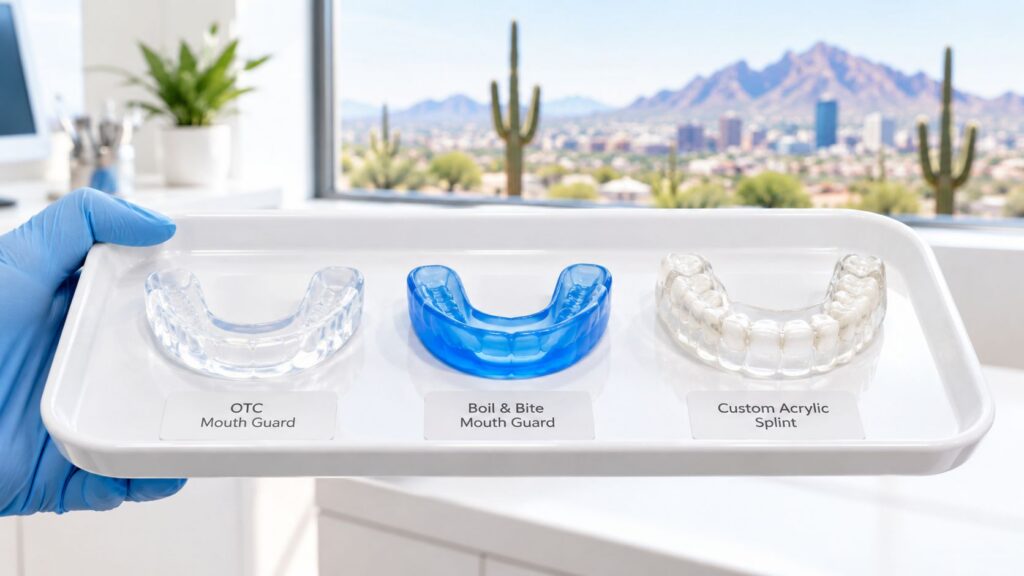
Bruxism mouth guard cost in the U.S. typically runs $20-$30 for OTC guards, $50-$200 for mail-order options, and $300-$800 or more for dentist-made custom appliances, and Scottsdale patients usually land in the custom range. The right choice depends less on the lowest sticker price than on fit, comfort, replacement needs, and how consistently the appliance is worn.
A patient who wakes with sore jaw muscles, temple headaches, or a partner's report of nighttime grinding usually wants a clear answer quickly. Is a guard necessary? What will it cost? Will dental insurance help? A Scottsdale dental evaluation can answer those questions while checking whether tooth wear, muscle strain, a cracked restoration, or a temporomandibular joint concern needs attention.
Table of Contents
- Waking Up With Sore Jaws and a Price Question
- What Bruxism Does to Your Teeth and Jaw
- The Three Main Mouth Guard Types and Their Cost Tiers
- How OTC, Boil-and-Bite, and Custom Guards Actually Compare
- What Happens During a Custom Guard Visit in Scottsdale
- Insurance, Financing, and Out-of-Pocket Considerations
- Choosing a Guard Based on Value Rather Than Sticker Price
- Scheduling a Bruxism Evaluation in Scottsdale
Waking Up With Sore Jaws and a Price Question
A typical consultation begins with a familiar story. The patient notices tenderness along the jaw, flattened front teeth, or a headache near the temples. A spouse or partner has heard grinding during sleep. The patient has searched for a dentist near me, seen prices ranging from a few dollars to several hundred, and arrives unsure whether a custom appliance is necessary.
The first questions are practical:
- Is protection necessary? A clinical exam helps determine whether the signs point to active bruxism and whether teeth, fillings, crowns, or jaw muscles are already affected.
- What does a guard cost? The market has three broad levels, stock guards, boil-and-bite appliances, and dentist-fabricated custom occlusal splints.
- Will insurance contribute? Coverage depends on the individual plan, documentation, coding, and benefit limits, so a dental office should verify rather than promise reimbursement.
Scottsdale patients often describe clenching during demanding work periods, poor sleep, or long days spent outdoors and staying active across the Phoenix metro area. Dry desert conditions don't directly cause bruxism, but dehydration, stress, disrupted sleep, and changes in routine can accompany the habits patients notice. Worn dentition is the clinical finding that matters most.
A useful explanation of jaw clenching and its triggers is available in this guide to what causes jaw clenching. Patients who want to understand appliance design can also review this overview of a digital dental lab 3D DDS appliance workflow.
The price ladder is straightforward, but the decision isn't. A stock guard may be a temporary experiment. A boil-and-bite appliance may offer a closer fit. A custom splint costs more because a dentist evaluates the bite, captures the teeth accurately, selects the material, and checks the finished appliance in the mouth.
Practical rule: A guard only protects teeth if the patient can tolerate it and wears it consistently.
What Bruxism Does to Your Teeth and Jaw
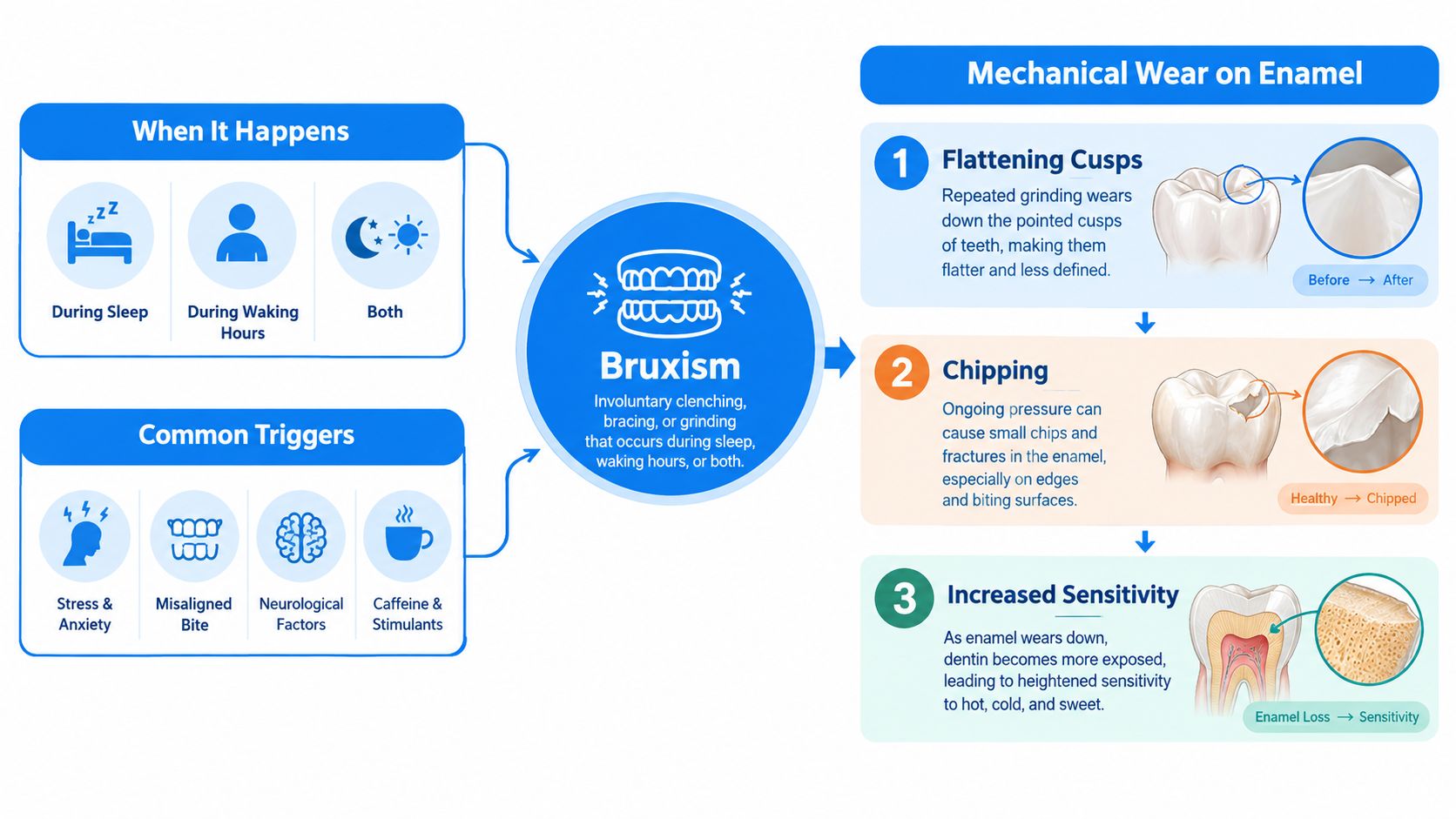
Bruxism means involuntary clenching, bracing, or grinding. It may occur during sleep, while a person is awake, or during both parts of the day. Some patients grind audibly, while others mainly hold the teeth together with sustained pressure, making the habit less obvious but still stressful for enamel and muscles.
The mechanical effects develop at contact points. Repeated force can flatten cusps on back teeth, chip the edges of front teeth, create small cracks, and shorten teeth that once had a more natural contour. Patients may also notice sensitivity when enamel becomes thinner or when cracks allow temperature changes to reach deeper tooth layers.
How the jaw responds
The jaw muscles also absorb the repeated workload. The masseter muscles may become visibly fuller or tender to touch. Morning stiffness, fatigue while chewing, facial soreness, and tension-type headaches can follow. Some patients report joint noises or difficulty opening comfortably, although those symptoms can have more than one cause and need an examination rather than a self-diagnosis.
A night guard doesn't remove the habit itself. Its purpose is to place a controlled material between the teeth, redistribute contact forces, reduce direct enamel-to-enamel wear, and create a more stable surface for the jaw muscles. The design must also respect the patient's bite and existing dental work.
Why the price question follows the diagnosis
Cost makes more sense after the potential damage is understood. An appliance may protect natural enamel, fillings, crowns, veneers, or implants from repeated contact, but it can't repair a tooth that has already fractured. Treatment may therefore include restorative dentistry, a crown, bonding, or a broader TMJ assessment alongside the guard.
Patients curious about muscle-focused treatment may encounter information about Dysport for jaw slimming. That type of discussion is separate from selecting a protective occlusal appliance, and any treatment for jaw symptoms should follow an appropriate dental evaluation.
The Three Main Mouth Guard Types and Their Cost Tiers
In a Scottsdale dental office, patients usually choose among three categories: a stock OTC guard, a self-molded boil-and-bite appliance, or a custom guard prescribed and adjusted by a dentist. The lowest price is not always the lowest annual cost. A guard that shifts, wears through, or stays in the drawer provides little value.
| Guard Type | Typical Cost | Price Driver |
|---|---|---|
| OTC stock guard | $20-$30 | Generic shape, consumer materials, no individualized fitting |
| Mail-order custom guard | $50-$200 | Impression or scan process, laboratory fabrication, delivery model |
| Dentist-made custom appliance | $300-$800 or more | Clinical exam, records, lab fabrication, fitting, and adjustments |
Basic store-bought guards commonly fall within the $20-$30 OTC range, while broader consumer listings place OTC options at about $3 to $40, depending on the type and retailer. They are easy to obtain, but the generic shape may feel bulky, shift during sleep, or wear through quickly with heavy grinding. That can make replacement more frequent than the initial price suggests.
Boil-and-bite appliances soften in warm water and are molded at home. Common market descriptions place them around $20-$60, while some online custom options extend into the $50-$200 range. The final fit depends on how accurately the teeth are captured. A better home impression may improve retention, but it does not replace a clinician checking the bite, especially around crowns, veneers, missing teeth, or crowding.
A dentist-made appliance commonly costs around $300-$500 on average, with some office fees reaching $1,000 or more based on the practice, materials, and insurance circumstances. In Scottsdale, that fee may cover the examination, photographs or scans, impression, laboratory work, delivery, and adjustment visits. Those services can extend usable life and reduce problems caused by poor fit.
Athletic mouthguards serve a different purpose. They protect against sports impact and are not automatically suitable for nightly clenching. A dentist may recommend one appliance for activity and a separate occlusal guard for bruxism.
How OTC, Boil-and-Bite, and Custom Guards Actually Compare
The central difference isn't just thickness. It's whether the appliance stays seated, contacts the opposing teeth in a controlled way, and remains comfortable enough for regular use.
An OTC guard has the loosest relationship with the individual bite. Its generic thermoplastic or EVA-style construction may cushion contact, but poor retention can lead to shifting, chewing on the appliance, or removing it during sleep. A bulky appliance can also interfere with comfortable breathing or saliva management, which makes continued wear less likely.
A boil-and-bite guard improves the initial contour because the patient molds it at home. The result can still be uneven, especially if the material cools before the teeth are captured properly or if the patient has crowns, veneers, missing teeth, crowding, or a complicated bite. Some designs use thicker thermoplastic material to compensate for limited precision, which may increase bulk.
What custom fabrication changes
A custom occlusal guard begins with a digital scan or elastomeric impression. The laboratory then processes the appliance to the selected design, which may include a hard acrylic shell, an EVA-laminate or dual-layer construction, or another material chosen for the patient's grinding pattern.
Hard acrylic generally supports precise contacts and resists deformation. A softer inner layer can improve initial comfort, while a firm outer layer adds structure. The best material isn't universal. A heavy clencher may damage a soft appliance quickly, while a lighter grinder may reject a rigid appliance that feels unnecessarily prominent.
| Tier | Fit & Retention | Material & Thickness | Average Lifespan | Comfort Profile | Typical Cost |
|---|---|---|---|---|---|
| OTC stock | Generic, may shift | Basic thermoplastic or EVA-style material | Variable and often shorter under heavy wear | Usually bulkier, limited bite control | $20-$30 |
| Boil-and-bite | Self-molded, fit depends on technique | Thermoplastic, often thicker | Variable, with faster wear in heavy grinders | Can feel acceptable initially but may loosen | Around $20-$60, with some mail-order options at $50-$200 |
| Dentist-made custom | Precisely captured and adjusted | Laboratory-processed hard acrylic, dual laminate, or hybrid | Depends on material, care, and grinding intensity | More controlled, with adjustment if needed | $300-$800 or more |
Translating comfort into value
A guard that prevents talking comfortably, disturbs sleep, or causes morning soreness may remain unused. That makes the purchase ineffective regardless of price. A less expensive guard that stays in place and is worn regularly may provide more practical protection than a premium appliance left in its case.
Annual value depends on wear patterns and replacement needs, not just the initial receipt. A dental office can inspect the appliance at hygiene visits or follow-up appointments and identify thinning, cracks, distortion, or bite changes before the device stops doing its job.
What Happens During a Custom Guard Visit in Scottsdale
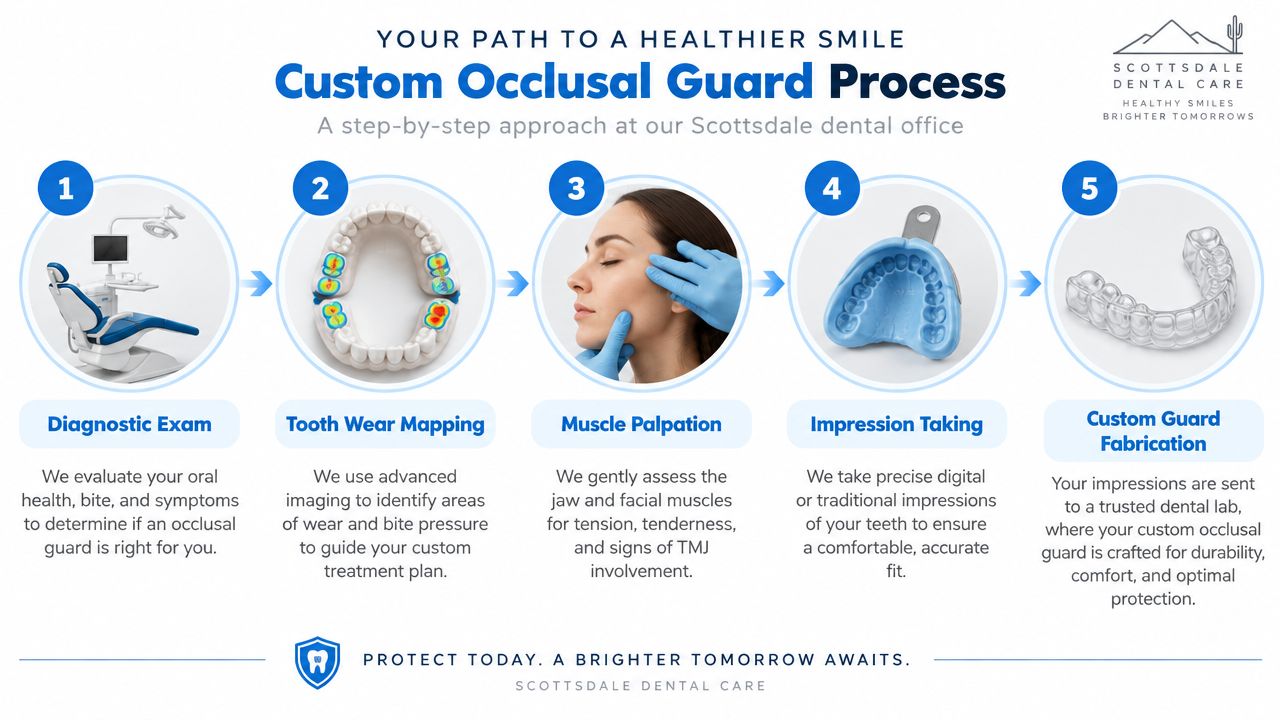
A custom guard appointment starts with diagnosis, not a product selection. The dentist examines the teeth for wear, chips, cracks, sensitivity, and stressed restorations. The evaluation may also include muscle palpation, joint sounds, photographs, bite records, and an assessment of whether the symptoms suggest a broader TMJ or sleep-related concern.
Capturing the bite accurately
The office may use an intraoral digital scan or an elastomeric impression. Either method must record the teeth and the relationship between the upper and lower arches accurately. A poorly captured bite can produce an appliance that rocks, creates unwanted pressure, or leaves the posterior teeth contacting differently than intended.
The laboratory phase follows. The dentist selects the appliance design based on the wear pattern, restorations, comfort needs, and bite. Options can include hard acrylic, a dual-laminate appliance, or a softer hybrid. The laboratory fabricates, contours, polishes, and checks the appliance against a model or digital bite record.
A custom guard is not finished when it arrives at the office. During delivery, the dentist checks retention, edges, thickness, occlusal contacts, and available space between the arches. Articulating paper helps identify high spots that need adjustment before the patient takes the appliance home.
The fitting process is one reason a dentist-made guard costs more than a shelf product. Patients pay for the clinical judgment that determines whether the device is tolerable and whether its contacts support the intended protection.
A detailed guide to teeth grinding and night guards provides additional context for patients considering an evaluation.
The embedded video below offers a visual introduction to the appliance concept.
Follow-up addresses pressure spots, retention concerns, and changes in the patient's bite. A heavy grinder may need more frequent inspection or replacement than someone with mild clenching. Patients should bring the appliance to routine dental visits so the team can assess both the guard and the teeth it protects.
Insurance, Financing, and Out-of-Pocket Considerations
Insurance should be checked before treatment rather than treated as a guaranteed discount. Dental offices may submit occlusal guard claims under CDT codes such as D9944, D9945, or D9946, but the applicable code and coverage depend on the appliance, diagnosis, plan rules, and documentation.
Some plans treat a bruxism appliance as a covered service only when the dentist records clinical necessity. Others place frequency limits, exclude the appliance, or apply a benefit category that differs from preventive cleaning and exams. Medical coverage may enter the discussion when symptoms overlap with a diagnosed sleep or TMJ condition, but dental and medical policies follow different rules.
Questions to ask before approval
A Scottsdale patient can request a pre-treatment estimate and ask:
- Which code will be submitted? The office can explain the proposed coding and whether a supporting diagnosis is documented.
- What does the plan allow? Coverage may depend on the plan's fee schedule, exclusions, deductible, annual maximum, and replacement frequency.
- What records are needed? Insurers may request photographs, clinical notes, radiographs, or evidence of wear and symptoms.
The final responsibility remains with the patient because an insurer's estimate isn't a payment guarantee. An itemized receipt can also help patients determine whether an HSA or FSA administrator will accept the expense. Eligibility depends on the plan and the medical purpose, so patients should confirm requirements with the account administrator and ask whether a letter of medical necessity is needed.
Out-of-pocket arrangements vary by practice. A dental office may discuss phased treatment, a healthcare financing provider, or an office credit option when available. The important question is what the quoted fee includes, whether delivery and adjustments are bundled, and what happens if the appliance needs modification.
Patients should request a written estimate that separates the exam, records, laboratory fabrication, delivery, and anticipated follow-up. That makes a custom guard quote easier to compare with an online or OTC purchase without pretending the services are identical.
Choosing a Guard Based on Value Rather Than Sticker Price
A guard's practical cost depends on how long it remains usable and whether you wear it consistently. A $25 OTC guard replaced twice a year costs $50 annually, while a $450 custom guard lasting three to five years costs roughly $90-$150 per year. These examples use the price ranges stated above and show why replacement frequency can change the annual value of a higher upfront fee.
| Guard Tier | Avg. Cost | Lifespan | Cost Per Year | Common Failure Mode |
|---|---|---|---|---|
| OTC | $25 example | Often replaced more frequently under wear | $50 annually in the example above | Poor retention, bulk, or rapid wear |
| Custom | $450 example | Three to five years in the example above | Roughly $90-$150 annually | Wear, cracking, or the need for adjustment |
Annual cost is only one part of the decision. A patient with occasional clenching and no visible damage may discuss a temporary OTC option with a dentist. A patient with severe attrition, crowns, veneers, TMJ symptoms, or documented sleep bruxism needs a more deliberate design choice because poor retention or rapid wear can reduce actual protection.
Matching construction to the patient
A Scottsdale dentist may recommend a hard-acrylic appliance for a heavy clencher who has worn through softer materials. A soft-laminate hybrid may suit someone who wants more cushioning but still needs an outer layer with structure. Dual-arch protection may be appropriate when the bite, restorations, or examination findings make a single-arch appliance less suitable.
Comfort determines whether the guard delivers value. Patients who cannot sleep with a bulky boil-and-bite appliance may stop wearing it. A well-retained custom appliance can fit more easily into a consistent bedtime routine, although it still requires cleaning, inspection, and replacement when its condition changes. An unused guard on the nightstand provides no protection, regardless of its purchase price.
The best value is the appliance that matches the diagnosis and gets worn regularly, not automatically the cheapest or most elaborate design.
Protection also has a preventive role. A damaged tooth may require bonding, a crown, or more extensive restorative dentistry. Patients considering a cosmetic dentist near me, dental implants near me, or a tooth extraction should mention grinding, since bruxism can influence how existing and planned restorations are designed and protected. In a Scottsdale dental office, the right comparison is the fee, expected wear pattern, fit, maintenance, and likelihood that the patient will use the guard every night.
Scheduling a Bruxism Evaluation in Scottsdale
A useful consultation begins with specific information. Patients should write down morning jaw soreness, temple headaches, tooth sensitivity, chewing fatigue, cracked teeth, or restorations that look worn. A short sleep history can include nighttime grinding reports, caffeine habits, perceived stress, snoring, and any home sleep study results.
Bring an insurance card and HSA or FSA details. Recent dental records, bitewing X-rays, photographs, and a medication list can also help, especially if the patient is transferring care from another office. The new-patient team can request records when authorization is provided.
The first visit may include a muscle and joint examination, bite analysis, intraoral photographs, and a discussion of whether a custom guard, behavioral changes, restorative treatment, or further TMJ evaluation is appropriate. If a tooth is acutely painful, fractured, or loose, the situation may instead call for an emergency dentist assessment before appliance planning.
Scottsdale dental offices may offer evening appointments for working patients, but availability varies. Patients should call directly to ask about new-patient exam pricing, consultation fees, insurance estimates, and the expected cost of a custom guard before booking.
Eric Wiitala DDS offers evaluations for bruxism, custom occlusal guards, TMJ care, restorative dentistry, and related sleep concerns in Scottsdale. Visit Eric Wiitala DDS to request an appointment and discuss which guard design fits the patient's symptoms, bite, and budget.