
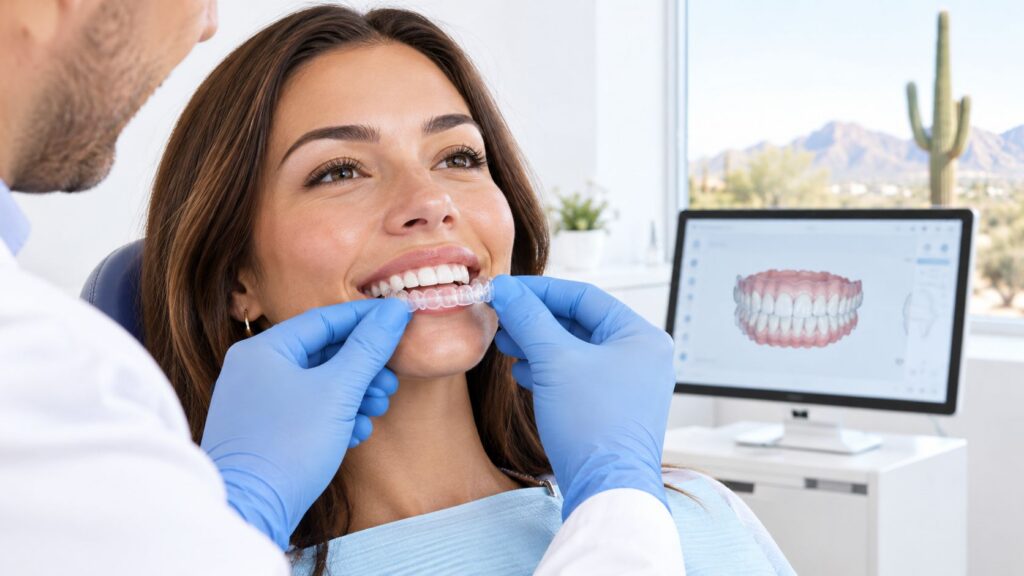
A tooth that has gradually shifted, a small gap that shows more in photographs, or a bite that no longer feels quite right can prompt a practical question: could clear aligners fit into adult life in Scottsdale? Dr. Eric Wiitala's Scottsdale practice offers SureSmile clear aligner treatment as part of a broader approach to general, cosmetic, and restorative dentistry. A consultation is a chance to find out whether trays suit the teeth and bite, or whether a different plan would be more appropriate.
Adults don't have to choose treatment based on appearance alone. The important first step is understanding what aligners can move predictably, what may need attachments or refinements, and what calls for another approach. A clear digital preview can help explain a plan, but it can't replace an examination.
Why More Scottsdale Adults Are Choosing Clear Aligners
An adult in Scottsdale might notice crowding while brushing, see a front tooth turning in family photos, or feel that the bite has changed over time. They may want to address it without fixed braces drawing attention at work or during social events. Removable trays can be appealing because they fit around daily routines, but their discreet appearance doesn't make them right for every case.
Orthodontic treatment is not limited to teenagers. A 2025 American Association of Orthodontists member survey estimated that about 1.91 million adults were in active orthodontic treatment in the United States, up from roughly 1.64 million in 2022, an increase of about 16.5% (AAO member survey on orthodontic patient numbers). The survey figures are estimates based on member data, not a count of every provider or aligner patient. They do, however, show that adults are a substantial part of orthodontic care.
A local dental home matters
Dr. Eric Wiitala's Scottsdale practice offers the SureSmile clear aligner system alongside general, cosmetic, and restorative dentistry. That broader scope can be useful when alignment concerns overlap with existing fillings, crowns, gum health, missing teeth, or bite symptoms. A thorough evaluation considers those factors rather than focusing only on how the front teeth might look after treatment.
The practice has served patients for more than two decades, according to its supplied practice information. Adults considering clear aligners can discuss their goals and receive an assessment that takes the whole mouth into account.
A useful starting point: Ask whether the proposed movement is clinically suitable, not just whether a digital preview looks appealing.
This guide takes a candid approach to candidacy. Some alignment problems respond well to trays, while more demanding movements may require refinements, additional orthodontic techniques, or another treatment path. The best next step is an in-person evaluation, not a promise based on appearance alone.
What Clear Aligners Actually Are and How They Move Teeth
Clear aligners are custom-made, removable plastic trays that fit over the teeth. Each tray is shaped to apply gentle pressure to selected teeth, much like a series of small, carefully planned nudges. As a patient moves through the sequence, those small changes accumulate toward the planned position.
Why wear time and supervision matter
The trays can only apply their planned pressure when they're being worn. Taking them out for meals and cleaning is part of the design, but leaving them out for long stretches can interfere with progress. Patients should follow the wear schedule prescribed by their dentist and attend follow-up visits so the team can check how the teeth are tracking.
Clear aligners are prescription medical devices, not cosmetic accessories. The FDA lists potential risks that include unintended tooth movement, an uneven bite, pain, soft-tissue injury, material irritation, and loosening or displacement of existing crowns, fillings, or implants (FDA guidance on clear dental aligners). An examination and periodic monitoring help the dentist assess whether treatment is suitable and respond if problems arise.
Before starting, patients should understand how to handle and clean their trays. Dr. Wiitala DDS provides guidance on cleaning clear aligners, which can help patients keep the appliances clean while following their prescribed routine.
Who Makes a Good Candidate for Clear Aligner Treatment
Clear aligners tend to be most predictable for adults with mild-to-moderate crowding or spacing and certain changes in how the front teeth tilt. They can be a reasonable option for some non-extraction cases where the bite relationship and tooth movements are within a manageable range. The label “clear aligners” alone doesn't determine suitability. The specific movements required do.
A systematic review found that aligners can achieve results comparable to braces for upper and lower incisor inclination in non-extraction Class I cases with mild-to-moderate crowding. It also found that many planned movements aren't reliably completed with a single initial series of trays, so refinements or additional techniques may be needed (systematic review of clear-aligner treatment outcomes).

When a different approach may be needed
Severe tooth rotations, large spaces, complex bite problems, and extraction-based treatment can be less predictable with aligners. That doesn't automatically mean trays are impossible, but it does mean the dentist must weigh the desired movement against the limits of the method. Some cases call for attachments, small tooth-colored shapes bonded to teeth to help trays grip and guide movement. Others may need interproximal reduction, elastics, refinement trays, or conventional braces.
Before approving a digital simulation, a careful evaluation considers:
- Gum and bone health: Periodontal status and radiographic bone support affect whether teeth can be moved safely.
- Existing dental work: Crowns, fillings, and implants may influence the plan and how trays fit.
- Bite and tooth roots: Occlusion and root position help determine which movements are sensible.
A projected animation is a treatment-plan hypothesis, not a guarantee. The dentist should explain what the plan is intended to do, what could limit it, and how progress will be monitored. If a tooth stops tracking with its tray, the sequence may need reassessment rather than continuing without review.
The SureSmile System Offered at Dr. Wiitala's Office
SureSmile treatment begins with gathering information about the teeth and bite, then using digital planning to design a custom sequence of trays. The dentist reviews the proposed movement and considers how it fits the patient's oral health and treatment goals. A digital impression helps map the teeth without relying on a one-size-fits-all tray.

What the dentist evaluates and plans
The records appointment may include an examination, photographs, digital scans, and dental X-rays when indicated. These records help the dentist evaluate tooth position, the bite, gum health, existing restorations, and supporting structures. The plan can then be discussed in terms of realistic movement and any limits that need to be considered.
Some teeth benefit from attachments, which are bonded to selected surfaces to give the tray additional grip. They're part of the treatment mechanics, not a sign that something has gone wrong. The dentist can explain where they're planned and how they may affect the appearance of the teeth while treatment is active.
The video below provides another look at the clear-aligner process.
At Dr. Wiitala's office, aligner planning sits within a practice that also provides cosmetic and restorative care, dental implants, and services related to TMJ concerns. That matters if a patient has crowns, missing teeth, jaw symptoms, or other needs that should be considered alongside tooth alignment. Treatment planning can account for the broader dental picture instead of treating the front teeth as a separate cosmetic project.
Clear Aligners Versus Traditional Braces and What Retainers Do After
Adults often compare aligners and braces by asking how each option fits everyday life. Aligners are removable and less noticeable, which can make eating and brushing simpler. Braces stay on the teeth, so patients don't have to remember to put them back in, but cleaning around brackets and wires takes care.

A practical comparison
| Consideration | Clear aligners | Traditional braces |
|---|---|---|
| Appearance | Clear trays are designed to be discreet. | Brackets and wires are more visible. |
| Eating | Trays are removed for meals. | Certain foods may need to be avoided to protect the appliances. |
| Cleaning | Patients can brush and floss without trays in place. | Brushing and flossing around brackets requires extra care. |
| Complexity | Suitable for selected cases, with predictability depending on the movements needed. | May be appropriate when more complex movements need a different treatment approach. |
| Daily responsibility | Patients need to follow the wear plan and keep track of their trays. | The appliances stay attached during treatment. |
Neither option is automatically better for everyone. A dentist should recommend an approach based on the bite, tooth movements, oral health, and the patient's ability to follow the plan. Adults interested in fixed treatment can review the practice's adult braces options as part of that conversation.
Retention is part of the plan
When active tooth movement ends, the teeth still need support in their new positions. The American Association of Orthodontists describes two broad types of retainers: removable retainers, such as Hawley or Essix styles, and fixed retainers, which are placed and removed by an orthodontic professional (AAO information on retainer types). The dentist can explain which option, or combination, fits the patient's needs and how to care for it.
What to Expect at the Scottsdale Office Visit
A first appointment gives the patient and dentist time to discuss concerns before deciding on treatment. Someone who's noticed crowding, for example, can describe when it became noticeable, whether the bite feels different, and what they hope to change. The dentist can also review dental history and ask about symptoms that may affect planning.
The visit may include an examination and records such as photographs, digital scans, or X-rays when appropriate. The dentist checks the teeth and gums, restorations, bite, and other factors that affect whether aligners are a sound choice. If the patient is a candidate, the proposed plan and its limitations can be discussed before treatment begins.
Follow-up during treatment
At review visits, the dental team checks whether the trays fit and the teeth are following the planned sequence. The dentist may discuss tray wear, attachments, hygiene, or whether the plan needs adjustment. Patients should raise concerns such as persistent pain, gum changes, a loose attachment, or a new bite interference rather than switching trays without guidance.
The Scottsdale office is located at 9755 North 90th Street, Suite B250, Scottsdale, AZ 85258. Its phone number is (480) 657-6981, and its listed office hours are Monday through Thursday, with Friday by appointment.
Before scheduling: Bring a list of current dental concerns and any questions about restorations, bite changes, or jaw discomfort. Those details can help shape a more useful consultation.
Treatment Timeline, Costs, Insurance, and Financing
Treatment length and cost depend on the individual plan, so a precise estimate requires an examination and a discussion of the proposed movements. A case involving limited crowding may follow a different course from one involving complex bite changes or substantial tooth rotations. Wearing trays as prescribed and attending reviews also matter, and some patients need refinements if teeth don't track as planned.
Rather than rely on a general estimate that may not fit their case, patients can ask the office to explain the expected treatment sequence and the factors that could change it. This is also the right time to discuss what's included in the plan, how follow-up visits are handled, and what happens if refinements are needed.
Questions to ask about payment
Insurance coverage varies by plan, and patients should confirm their benefits before making a financial decision. Dr. Wiitala's office provides insurance and billing support, and financing options are available through the practice. The team can explain the available payment arrangements during the consultation.
| Factor | Typical effect on timeline | Typical effect on cost |
|---|---|---|
| Case complexity | More involved movements may require a longer treatment plan. | The treatment plan and level of care affect the estimate. |
| Tray wear | Inconsistent wear can delay progress or affect tracking. | Delays or changes may affect the overall plan; ask what's included. |
| Refinements | Additional trays may be needed when teeth don't follow the original sequence. | Confirm whether refinement trays are included in the quoted fee. |
| Dental health needs | Addressing gum or tooth concerns may affect when aligner treatment can begin. | Any separate dental care should be discussed and itemized. |
| Insurance and financing | Coverage doesn't determine the biological pace of movement. | Benefits and payment options influence out-of-pocket planning. |
Patients can request a written estimate and ask the office to clarify insurance, billing, and financing details before starting. Clear information makes it easier to decide whether the treatment fits both their dental goals and household budget.
Common Questions and How to Schedule With a Scottsdale Clear Aligner Dentist
Can aligners correct a bite, or only straighten front teeth?
Aligners can address selected bite and alignment concerns, but their predictability depends on the movements required and the condition of the teeth and supporting tissues. A thorough exam helps distinguish a suitable tray case from one that may need attachments, refinements, elastics, braces, or another approach.
What if a tray is lost or skipped?
Contact the dental office for instructions rather than guessing whether to move to the next tray or return to an earlier one. The right response depends on the treatment stage and how well the teeth are tracking.
Can aligners work with crowns or implants?
Existing crowns and implants need to be considered during planning because restorations can affect tray fit and tooth movement. The dentist should examine them and review the bite before approving a plan.
What if jaw pain or TMJ symptoms are also present?
Jaw discomfort deserves its own evaluation. The office provides TMJ assessment and management, but aligners shouldn't be assumed to treat every jaw or joint problem. Patients should describe their symptoms during the consultation so the dentist can discuss appropriate next steps.
Adults searching for a clear aligner dentist in Scottsdale can schedule a consultation at Dr. Eric Wiitala's office on North 90th Street by calling (480) 657-6981 or requesting an appointment through the practice website. An in-person assessment can clarify whether SureSmile is appropriate, what the treatment would involve, and what other care may need attention first.
Eric Wiitala DDS offers SureSmile clear aligner treatment alongside general, cosmetic, and restorative dentistry in Scottsdale. To discuss candidacy and a plan based on a dental evaluation, visit Eric Wiitala DDS or call the office to schedule a consultation.