
A Scottsdale professional may start the day with a dry mouth, a dull morning headache, and the uneasy feeling that sleep never became restorative. After a diagnosis of mild obstructive sleep apnea, a CPAP mask may seem like the obvious answer, yet some patients struggle with the seal, tubing, noise, or the sensation of having something attached to the face. Within weeks, they may stop using it and continue living with disrupted sleep.
That experience isn't a personal failure. Mild sleep apnea treatment without CPAP can be appropriate for selected adults, but the right alternative depends on how the airway narrows, whether events occur mostly while sleeping on the back, the patient's dental and jaw health, and what follow-up testing shows. A dental sleep evaluation at Eric Wiitala DDS helps turn those details into a practical plan, whether that means a custom oral appliance, positional therapy, behavioral changes, or coordinated care with a sleep physician or ENT specialist.
Table of Contents
- When CPAP Isn't the Right Fit for Mild Sleep Apnea
- Understanding Mild Obstructive Sleep Apnea
- Oral Appliance Therapy vs CPAP
- What Happens at a Dental Sleep Evaluation
- Positional Therapy, Weight Loss, and Behavioral Changes
- When an ENT or Sleep Specialist Referral Makes Sense
- Benefits, Risks, and Long-Term Follow-Up
- Scheduling a Sleep Apnea Consultation in Scottsdale
When CPAP Isn't the Right Fit for Mild Sleep Apnea
A patient who abandons CPAP still needs effective treatment. The important question isn't whether a person dislikes the mask. It's whether another approach can control breathing interruptions and improve sleep after proper evaluation.
The joint American Academy of Sleep Medicine and American Academy of Dental Sleep Medicine guideline formally recommended oral appliance therapy for adults with obstructive sleep apnea who can't tolerate CPAP or prefer an alternative. It also stated that an oral appliance should be prescribed rather than no treatment when OSA is present, while acknowledging that CPAP generally reduces the apnea-hypopnea index more effectively. The clinical guideline supports oral appliances as an evidence-based pathway, especially for people seeking treatment for non-severe disease.
Practical rule: A treatment that a patient can use consistently deserves serious consideration, but it still requires objective follow-up.
Non-CPAP care isn't one universal replacement. It's a phenotyping decision. A person whose breathing events occur primarily on the back may need a different plan from someone whose lower jaw and tongue contribute to airway collapse in every sleep position. A patient with healthy teeth and a stable jaw may be a good candidate for a custom mandibular advancement device, while someone with significant dental instability or active jaw symptoms may need additional assessment first.
Four pathways deserve consideration
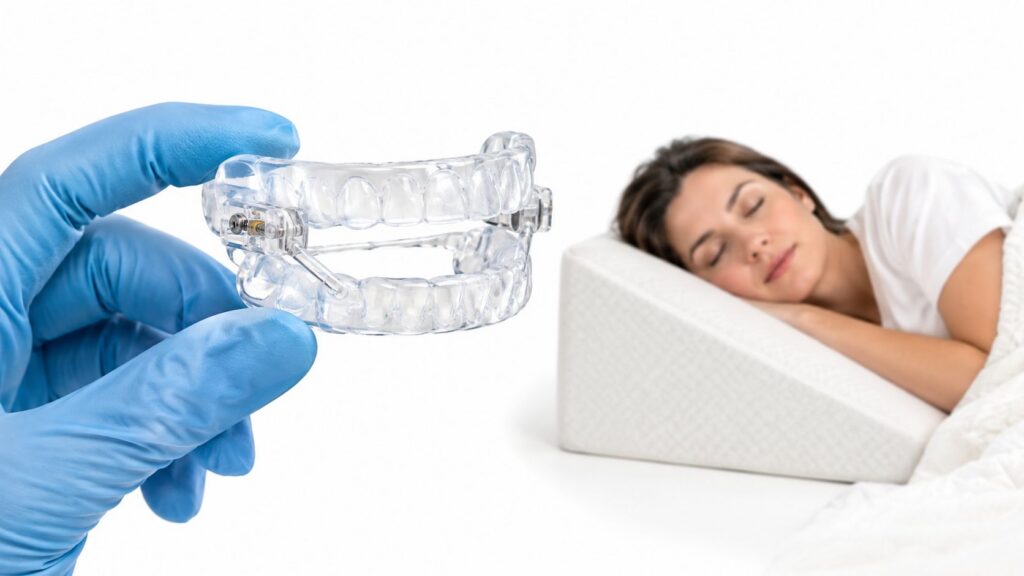
- Custom mandibular advancement devices hold the lower jaw forward during sleep and are the most established dental option for appropriate mild to moderate OSA.
- Positional therapy discourages back sleeping when the sleep study shows a position-dependent pattern.
- Weight management and behavior changes address contributors such as alcohol near bedtime, smoking, nasal congestion, and inconsistent sleep.
- ENT or sleep specialist referral becomes important when anatomy, oxygen changes, cardiovascular concerns, or persistent symptoms exceed what one treatment can reasonably address.
At Eric Wiitala DDS, the evaluation focuses on the sleep report, airway, bite, jaw movement, teeth, and treatment preferences. That process helps patients in Scottsdale move away from guesswork and toward a measurable plan.
Understanding Mild Obstructive Sleep Apnea
A patient may have an AHI in the mild range yet wake with headaches, unrefreshing sleep, or poor daytime alertness. Mild obstructive sleep apnea is generally defined as an apnea-hypopnea index, or AHI, from 5 to 15 events per hour. An AHI below 5 is considered normal in adults. This clinical review explains the adult AHI thresholds.
AHI provides a starting point, not the entire treatment decision. Evaluation also considers oxygen levels, symptoms, blood pressure, cardiovascular history, sleep position, airway anatomy, and whether the patient can use the recommended therapy consistently. Correct diagnosis comes before choosing a non-CPAP treatment, including a review of what causes sleep apnea in adults.
OSA Severity by AHI
| Severity | AHI, events/hour | Typical clinical approach |
|---|---|---|
| Normal | Below 5 | No OSA treatment based on AHI alone |
| Mild | 5 to 15 | Consider CPAP, a custom oral appliance, positional therapy, and contributing-factor changes |
| Moderate to severe | Above 15 | Sleep physician management, with CPAP or other therapies often requiring priority consideration |
Severity alone does not identify the best non-CPAP option. A sleep study may show that breathing interruptions occur mainly while the patient is supine. Positional OSA is present when the supine AHI is at least twice the nonsupine AHI and the nonsupine AHI remains below 15 events per hour. Long-term oral appliance and positional-therapy evidence is summarized in this meta-analysis.
Airway location adds another layer. Tongue-based or lower-jaw-related narrowing may respond to mandibular advancement. A retruded jaw can support carefully titrated forward positioning, while prominent nasal obstruction, enlarged tonsils, or suspected palate-level collapse may justify medical or ENT assessment.
Body composition can influence airway loading. A higher body mass index or larger neck circumference may make weight management useful within the broader plan. Loud snoring with limited oxygen disturbance calls for a different discussion than repeated obstructive events accompanied by substantial desaturation.
At Eric Wiitala DDS, the dental sleep evaluation reviews the sleep report alongside oral anatomy, jaw movement, bite stability, and TMJ findings. Those details help determine whether positional therapy, a custom oral appliance, behavioral changes, or referral fits the patient's actual pattern. A home sleep test or polysomnogram supplies the baseline, and follow-up testing confirms whether the selected treatment controls breathing during sleep.
Oral Appliance Therapy vs CPAP
CPAP and a custom mandibular advancement device solve airway obstruction differently. CPAP uses pressurized air to splint the airway open, while a mandibular advancement device moves the lower jaw forward so the tongue, soft palate, and hyoid complex move anteriorly. That mechanical change can enlarge the upper airway and reduce collapse.
CPAP generally produces a larger reduction in AHI and a greater improvement in minimum oxygen saturation than oral appliances. A 2025 umbrella review reported those physiological advantages for CPAP, while also describing oral appliances as viable alternatives that patients often prefer. The umbrella review discusses the physiological trade-offs.
A randomized controlled study reported objective effectiveness in 39 of 51 patients, or 76.5%, with oral-appliance therapy, compared with 43 of 52 patients, or 82.7%, with CPAP. The investigators found oral-appliance therapy was not inferior to CPAP for effective treatment overall, although it performed less well in severe disease and was best supported as primary therapy for non-severe apnea. The randomized trial is available through PubMed.

Where oral appliances fit
The American Academy of Sleep Medicine guidance supports oral appliances for adults with mild to moderate OSA who prefer them, can't tolerate CPAP, aren't appropriate CPAP candidates, or have unsuccessful CPAP attempts. The oral appliance guidance makes clear that this is a guideline-backed treatment, not an unregulated workaround.
A custom, adjustable device is different from a generic thermoplastic boil-and-bite guard. The dentist evaluates the bite, records the jaw position, and advances the mandible gradually. Bespoke mandibular advancement devices have reported mean AHI reductions of about 30% to 72%, and comparative reviews generally find adjustable custom appliances outperform fixed or prefabricated devices in efficacy and symptom control. This review examines mandibular advancement devices.
A clinical trial also found a mean AHI of 6.7 with oral-appliance therapy versus 16.7 with placebo, with 49% of patients reaching an AHI below 5 and a number needed to treat of 3. The trial data are reported in JAMA Internal Medicine.
Oral appliances work best when the device is custom-fitted, titrated gradually, and verified with follow-up sleep testing.
Patients can explore oral appliance therapy for sleep apnea at Eric Wiitala DDS as part of a broader evaluation. Combination care, such as an appliance with positional therapy or weight management, can also make sense when one strategy alone doesn't provide adequate control.
What Happens at a Dental Sleep Evaluation
A dental sleep evaluation should feel structured rather than mysterious. The appointment begins with a review of the patient's home sleep test or polysomnography report, including the AHI, oxygen findings, sleep position, and any comments about event patterns. Patients should bring the complete report, not only the summary diagnosis.
The clinical examination
The dentist examines the mouth, jaw, airway, and bite. This usually includes:
- Airway visualization, including the oral structures that may influence the available space behind the tongue.
- TMJ assessment, with attention to joint sounds, tenderness, range of motion, and muscle symptoms.
- Bite and tooth evaluation, because the appliance needs stable dental support.
- Maximum mandibular protrusion measurement, which helps determine how much forward movement is available.
- Intraoral photographs, used to document the starting condition and support device fabrication.
A digital scan or traditional impression records the teeth. A bite record captures the relationship between the upper and lower jaws at the prescribed starting position. Those records go to a dental laboratory to create the custom mandibular advancement device.

Fitting, titration, and verification
At the fitting visit, the dentist checks retention, comfort, speech, and sore spots. The starting protrusion is calibrated conservatively, and the patient learns insertion, removal, cleaning, and morning jaw exercises.
A titration follow-up about two weeks later allows the dentist to assess symptoms and advance the appliance when appropriate. A sleep study conducted 30 to 90 days after treatment begins verifies whether the therapeutic AHI and oxygenation have improved. Ongoing annual checks help identify wear, bite changes, tooth movement, or jaw symptoms before they become disruptive.
This process is more precise than ordering an appliance online and hoping it works. The device must be comfortable enough for regular use, but comfort alone doesn't prove that breathing events are controlled.
Positional Therapy, Weight Loss, and Behavioral Changes
A patient whose mild obstructive sleep apnea appears mainly while sleeping on the back may have more than one reasonable treatment path. The dental sleep evaluation at Eric Wiitala DDS helps identify whether the dominant pattern is positional, anatomical, or related to weight before selecting a non-CPAP plan.
A sleep study can show position-dependent OSA when breathing events are substantially more frequent while supine and remain limited when the patient sleeps on the side. Positional therapy can then be tested alone or used with a mandibular advancement device. The available evidence supports positional therapy for selected patients, while also showing why follow-up matters when treatment is used over time.
Positioning may involve a vibratory trainer, a wedge pillow, or another method that discourages back sleeping. It has a practical advantage: some patients find it easier to tolerate than a mask. Adherence can still fade, particularly if the device interrupts sleep or the patient naturally returns to a supine position. A custom oral appliance may offer broader coverage when events occur in more than one sleeping position.
Weight management can support airway treatment when body weight contributes to airway restriction. Dietary planning, regular activity, and medical guidance may help, but improvement is personal and does not confirm that sleep apnea is controlled. Patients considering medication after bariatric surgery may find this overview of weight loss drug after surgery useful to discuss with the appropriate medical team.
Evening habits also affect airway stability. Limit alcohol near bedtime, avoid sedative medications unless a physician has prescribed and reviewed them, stop smoking, treat nasal allergies, and keep a consistent sleep schedule. These changes may reduce aggravating factors, but they should support, not replace, objective treatment verification.
Non-CPAP Options Compared
| Option | Mechanism | Best Candidate | Limitations |
|---|---|---|---|
| Custom mandibular advancement device | Moves the lower jaw forward to support airway space | Mild to moderate OSA with suitable teeth and jaw function | Requires dental candidacy, titration, and follow-up testing |
| Positional therapy | Discourages back sleeping | Position-dependent OSA | May be difficult to maintain and won't address non-positional events |
| Weight management | Reduces a contributing physical load on the airway | Patients whose weight contributes to obstruction | Results take time and aren't predictable for every patient |
| Behavioral changes | Removes factors that can worsen sleep and airway stability | Patients with alcohol, smoking, nasal, or schedule contributors | Usually works best as support rather than a stand-alone solution |
At Eric Wiitala DDS, the evaluation determines which factors deserve priority. Options can be sequenced or combined, then adjusted after follow-up testing rather than chosen as a one-size-fits-all substitute for CPAP.
When an ENT or Sleep Specialist Referral Makes Sense
Oral appliance therapy is valuable, but it isn't universal. Referral or co-management deserves consideration when the sleep study, symptoms, or examination suggest that dental treatment alone may not address the full problem.
Signals that warrant broader evaluation include:
- Higher AHI: An AHI above 15 to 20 events per hour changes the treatment conversation and may require sleep physician oversight.
- Low oxygen: Significant desaturation below 88 percent calls for careful medical interpretation.
- Nasal obstruction: Persistent congestion, a deviated septum, or turbinate enlargement can interfere with airflow and treatment tolerance.
- Visible throat anatomy: Large tonsils or other structural findings may need an ENT examination.
- Unusual breathing patterns: Suspected central or complex sleep apnea doesn't follow the same pathway as straightforward obstructive disease.
- Persistent symptoms: Daytime sleepiness or fragmented sleep that continues despite compliant appliance use requires reassessment.
- Cardiovascular concerns: Refractory hypertension and other significant risks can make a broader sleep medicine plan important.
An ENT specialist may use drug-induced sleep endoscopy to observe how the airway narrows during a sleep-like state. That information can help determine whether procedures such as UPPP, septoplasty, turbinate reduction, or hypoglossal nerve stimulation belong in the discussion. The appropriate procedure depends on the obstruction pattern and the patient's medical evaluation.

Referral is not a failure of dental care. It's a sign that the patient's airway, oxygenation, or medical risk deserves more than one treatment lens.
A coordinated pathway between a Scottsdale dentist, ENT surgeon, and board-certified sleep physician gives each clinician a defined role. The sleep physician interprets the sleep disorder and medical risks. The ENT specialist assesses nasal and throat anatomy. The dentist evaluates the teeth, bite, jaw, TMJ, and feasibility of an oral appliance. Together, they can recommend combined therapy when a single approach doesn't provide enough control.
Benefits, Risks, and Long-Term Follow-Up
A quieter night and a smaller, travel-friendly device can make non-CPAP treatment easier to maintain. Patients may also notice fewer awakenings, better morning alertness, less snoring reported by a partner, and reduced daytime fatigue. Those changes matter, but symptoms alone cannot confirm that airway obstruction is controlled. Follow-up sleep testing remains part of responsible care.
Long-term mandibular advancement therapy has shown improvement in sleepiness and obstructive breathing over extended follow-up, as noted earlier. The practical question is whether the appliance is controlling events for this patient, based on symptoms, examination findings, and objective testing.
Candidacy and side effects
Oral appliance therapy often suits adults with mild to moderate obstructive sleep apnea, healthy teeth, and enough jaw mobility for advancement. Unstable teeth, extensive tooth loss, active TMJ symptoms, or major bite concerns may require restorative or TMJ care before treatment begins. At Eric Wiitala DDS, these findings are reviewed during the dental sleep evaluation rather than assuming the same device fits every patient.
Common effects include morning jaw soreness, tooth tenderness, increased salivation, bite changes, and occasional TMJ symptoms. Gradual advancement, morning exercises, and adjustment visits can improve tolerance. New pain or a bite change that does not resolve deserves prompt review.
| Benefit | Potential risk | Follow-up action |
|---|---|---|
| Lower AHI and fewer obstructive events | The device may not control every event | Complete objective sleep testing after titration |
| Quieter sleep | Snoring may persist if obstruction remains | Review symptoms and study results with the treating team |
| Better morning alertness | Symptom relief can create false reassurance | Continue clinical monitoring after improvement |
| Portable, discreet treatment | Appliance wear or breakage can alter fit | Schedule inspection and repair when needed |
| Support for patients who cannot tolerate CPAP | Jaw soreness, tooth tenderness, or bite changes | Request adjustment and complete prescribed morning exercises |
Long-term care at Eric Wiitala DDS includes appliance inspection, bite checks, TMJ review, sleep testing when indicated, and professional hygiene visits. Routine dental examinations help protect the teeth supporting the appliance. If decay, gum disease, tooth loss, or bite instability develops, restorative dentistry, periodontal treatment, crowns, bridges, or implants may be needed to preserve oral health and treatment stability.
Follow-up should remain phenotyping-based. A patient whose obstruction improves with advancement may continue with periodic monitoring, while persistent symptoms, changing dental conditions, or incomplete testing call for a revised plan and possible coordination with sleep medicine or other specialists.
Scheduling a Sleep Apnea Consultation in Scottsdale
A first visit should answer practical questions, not pressure a patient into a device. At Eric Wiitala DDS in Scottsdale, the appointment can begin with a review of the medical and sleep history, current symptoms, prior CPAP experience, medications, and available home sleep test or polysomnography results.
Patients can expect an examination of the airway, jaw movement, TMJ, bite, and teeth. Photographs, impressions, or digital scans may be recommended when a custom mandibular advancement device is a reasonable option. The conversation should also address positional therapy, behavioral support, weight-related contributors, and referral to a sleep physician or ENT specialist when the findings call for coordinated care.
Preparing for the visit
Bring the complete sleep study report, a list of medications, information about CPAP use or intolerance, and any history of jaw pain, tooth mobility, crowns, bridges, or dental implants. Patients who have not completed a sleep study can ask whether a home sleep test is appropriate for the symptoms and medical history.
The office provides new-patient first-visit protocols, insurance and billing support, and financing options. Insurance pre-verification can clarify available benefits before treatment begins, while flexible scheduling supports Scottsdale professionals and families managing work and home responsibilities. The practice maintains regular office hours Monday through Thursday, with Friday appointments available by arrangement.
A consultation doesn't obligate a patient to choose an oral appliance. It provides the information needed to decide whether a custom device, positional approach, behavior changes, continued PAP care, or specialist referral offers the safest fit.
Call (480) 657-6981 to ask about a sleep apnea consultation at the Scottsdale office located at 9755 North 90th Street, Suite B250, Scottsdale, AZ 85258. Patients may also use the practice's online request option to begin discussing snoring, mild OSA, TMJ concerns, or an unsuccessful CPAP experience.
Eric Wiitala DDS provides dental sleep evaluations and custom oral appliance therapy for appropriately selected patients seeking mild sleep apnea treatment without CPAP, with follow-up focused on comfort, jaw health, and measurable results. Visit Eric Wiitala DDS to request a Scottsdale consultation and learn whether oral appliance therapy or coordinated care is the right next step.