
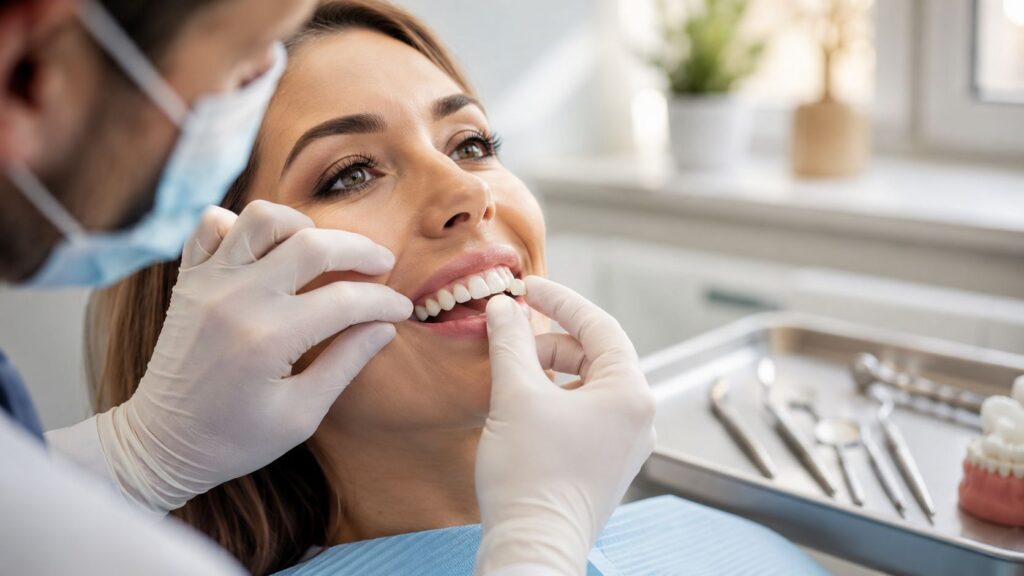
Restorative dentistry is the branch of dental care that repairs or replaces damaged and missing teeth so chewing feels comfortable again and oral health stays steady. In Scottsdale, that usually means a practical conversation about whether a tooth can be preserved, repaired, or replaced at Eric Wiitala DDS, then matching that choice to a clear treatment plan.
Table of Contents
- Understanding What Restorative Dentistry Really Means
- Why Damaged and Missing Teeth Affect More Than Your Smile
- How Restorative Dentistry Differs From Preventive and Cosmetic Care
- Common Restorative Treatments Offered in Scottsdale
- What to Expect During Your Visit and Treatment Timeline
- Results, Lifespan, and Maintenance of Restorative Work
- Costs, Insurance, Financing, and When to Call the Office
Understanding What Restorative Dentistry Really Means
A patient bites into something cold, feels a sharp twinge, and starts chewing on the other side without thinking about it. Another person notices a missing tooth in a photo and keeps their lips closed the next time. Those are the moments when what is restorative dentistry stops being an abstract phrase and becomes a practical question.
Repairing function first
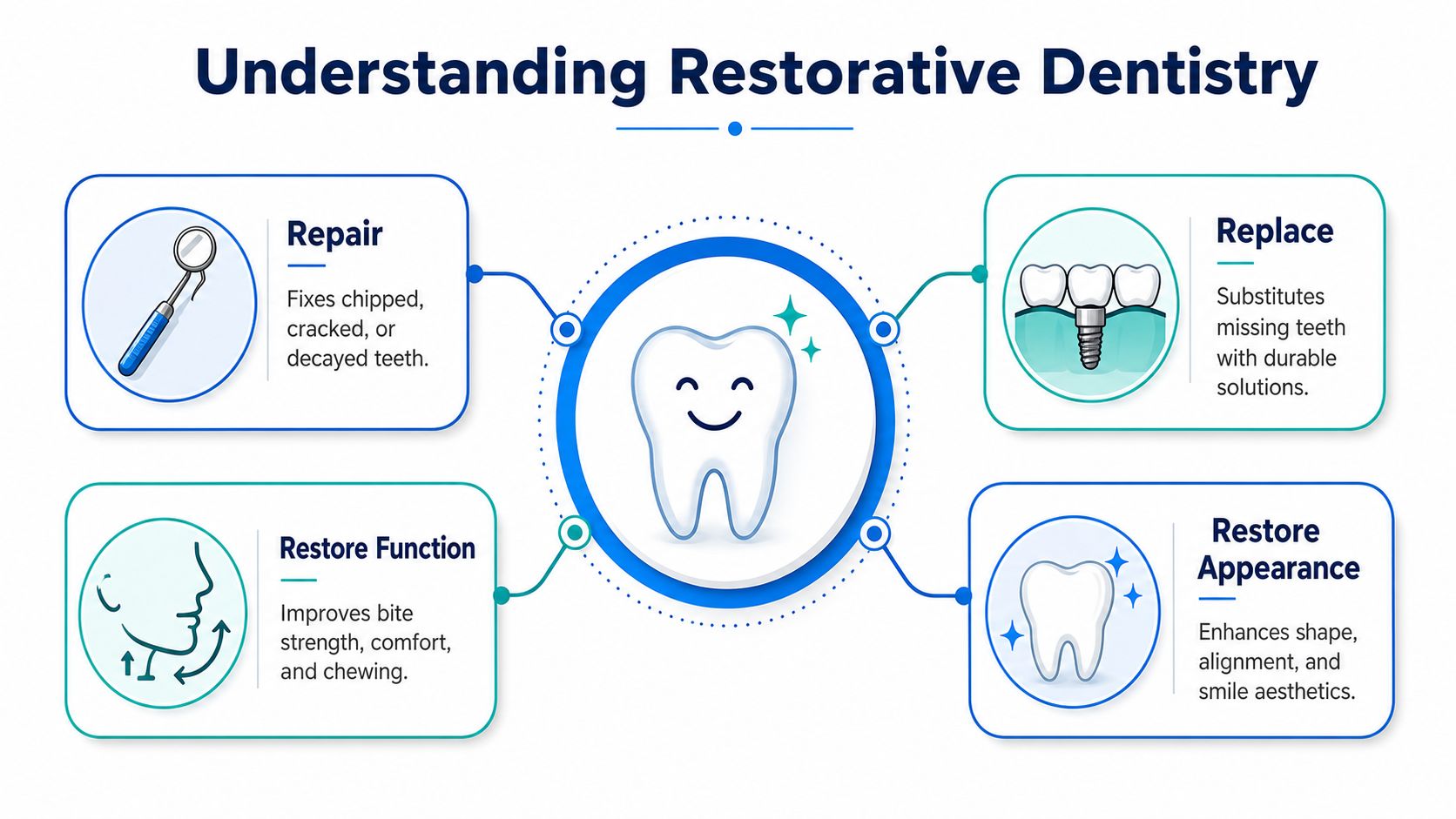
Restorative dentistry is the branch of dentistry focused on repairing or replacing damaged teeth to restore oral health and chewing function. In day-to-day care, that includes fillings, crowns, bridges, implants, and dentures, all chosen for the kind of problem a tooth or bite is facing. Cleveland Clinic's overview of dental restorations describes that same core idea clearly, repairing or replacing teeth so a person can use them normally again. Cleveland Clinic dental restorations
That focus on function is why restorative dentistry sits between two other familiar categories. Preventive dentistry tries to keep teeth and gums healthy before trouble starts. Cosmetic dentistry improves how teeth look. Restorative dentistry steps in once damage, decay, or tooth loss has already changed how the mouth works.
What that looks like in Scottsdale
At Eric Wiitala DDS in Scottsdale, that often starts with a small question, can the tooth be saved, or is replacement the better route? A cracked molar, a worn filling, and a missing tooth all call for different answers, even if they begin with similar discomfort. That kind of careful decision-making is what helps patients avoid guesswork.
Practical rule: the right restoration should solve a problem, not just change how a tooth looks.
For readers comparing options and trying to attract high-value dental patients to a well-run local practice, a useful outside resource is this guide to attract high-value dental patients from Transactional LLC. The clinical side still comes first, but the message matters too, patients usually want a place that explains the next step without pressure.
Why Damaged and Missing Teeth Affect More Than Your Smile
A broken tooth rarely stays a small problem for long. Food starts collecting in the rough edge, a cold drink feels uncomfortable, and chewing shifts to the opposite side. That is not just a cosmetic change, it is a sign that the mouth is working around a problem instead of working normally.
Small damage can change the whole bite
When a tooth is cracked or decayed, the surrounding teeth often take on extra load. People notice that with jaw fatigue, uneven chewing, or soreness after a meal that used to feel easy. If a tooth is missing, the gap can invite neighboring teeth to drift, which changes how the upper and lower teeth meet. The result is often a bite that feels “off” even before pain becomes obvious.
Tooth loss can also make eating less predictable. A person may start avoiding foods that require more chewing, not because they want to, but because the bite no longer feels stable. Dentures that don't fit well can add another layer of frustration, especially when they slip during speaking or leave sore spots on the gums.
Why waiting makes treatment harder
A damaged tooth can often be treated with a smaller restoration early on. Waiting gives decay, wear, or fracture more time to spread, which usually means the final solution gets more complex. That's one reason restorative care is not only about appearance or comfort, it's about preventing a small defect from becoming a larger repair job.
The wider oral-health effect matters too. The American Academy of Pediatric Dentistry guideline emphasizes goals such as removing cavitations, stopping demineralization, restoring tooth structure, preventing pulp infection, and preventing tooth shifting after structural loss. That clinical mindset is a reminder that a restoration is not just a patch, it's a way to keep the whole mouth more stable. AAPD restorative guideline
A tooth that hurts when biting is already telling the story. The sooner it's examined, the more options usually stay on the table.
In Scottsdale, that's why patients often come in for a symptom they can't quite ignore, not a dramatic emergency. The goal is simple, restore comfortable function before the mouth adapts around the problem.
How Restorative Dentistry Differs From Preventive and Cosmetic Care
Many patients use these terms interchangeably, but they solve different problems. A clear distinction helps a person ask for the right appointment the first time, instead of describing symptoms in a way that sends them down the wrong path.
Three different jobs
Preventive care is about keeping the mouth healthy. Cleanings, exams, and x-rays help catch changes early, before a cavity grows or a crack deepens. Restorative care fixes what's already damaged or missing. Cosmetic care focuses on appearance, things like shade, shape, symmetry, and surface improvement.
The lines can blur in real life. A crown can restore a broken tooth and improve how it looks. Dental bonding can close a chip, smooth a rough edge, or refine shape. The deciding factor is the underlying need, not just the final photo.
How patients usually decide
A good rule is simple, if the concern is disease, damage, or loss, the conversation belongs in restorative dentistry. If the concern is maintaining health, preventive care is the starting point. If the tooth is healthy but the color or contour bothers the patient, cosmetic care may be the better fit. That framework makes the visit feel less mysterious and helps set realistic expectations.
At Eric Wiitala DDS, patients can get preventive, restorative, and cosmetic care under one roof in Scottsdale, which makes planning easier when the problem is not neatly one category or the other. A person who needs a crown may also ask about whitening. Someone coming in for routine care may discover a worn filling that needs repair. Those are common overlaps, not unusual exceptions.
A useful way to think about it is this, preventive care tries to keep teeth in the game, restorative care gets damaged teeth back in the game, and cosmetic care improves how the lineup looks. The treatment path depends on which of those goals the tooth needs.
Common Restorative Treatments Offered in Scottsdale
Patients often want the shortest possible explanation, what fixes the tooth, what replaces it, and what kind of visit it takes. The answer depends on how much structure is left and whether the problem is a chip, a cavity, or a missing tooth.
From small repairs to full replacement
Tooth-colored, mercury-free fillings are usually the starting point for early decay or a small chip. The dentist removes the damaged area and rebuilds the tooth with a material that blends naturally. These visits usually feel straightforward, and the work is aimed at keeping as much natural tooth structure as possible.
Dental bonding uses a tooth-colored material to smooth a chip, reshape a small area, or close a minor defect. It's a conservative option, especially when the tooth still has plenty of healthy enamel. Patients usually notice that the tooth looks more even right away.
Porcelain crowns come into play when a tooth is cracked, heavily restored, or too weak for a filling alone. The crown covers the visible part of the tooth and helps protect it from further fracture. For many patients, this feels like a sturdier long-term solution rather than a quick patch.
Bridges replace one or two missing teeth in a row by anchoring an artificial tooth between neighboring teeth. That fixed design can make chewing feel more predictable than leaving a gap open. Single-tooth dental implants replace the missing root and top structure with a longer-term solution that stands independently. Full-arch implants and All-on-Four solutions help patients who are missing most or all of an arch, especially when loose dentures have become hard to manage.
The best option usually isn't the one that looks biggest, it's the one that preserves the most healthy tooth or bone while still restoring function.
For patients who want a deeper look at one part of the implant process, this internal guide on the implant crown procedure can help make the sequence easier to follow. For practice teams keeping their communication sharp, it also helps to review updated sales tools, especially when treatment planning involves multiple steps and patient follow-up.
| Treatment | Best For | Key Benefit |
|---|---|---|
| Tooth-colored filling | Small decay or minor damage | Conserves natural tooth structure |
| Dental bonding | Chips, small reshaping, minor flaws | Quick conservative repair |
| Porcelain crown | Cracked or heavily restored tooth | Strengthens and protects the tooth |
| Bridge | One or two missing teeth in a row | Replaces a gap with a fixed option |
| Dental implant | Single missing tooth or more complex replacement | Replaces the root and visible tooth |
| All-on-Four | Missing most or all teeth in an arch | Stabilizes a full-arch replacement |
What to Expect During Your Visit and Treatment Timeline
The unknown is often what makes dental treatment feel bigger than it is. A clear first visit usually lowers that stress fast, because patients can see how the day is structured and what happens next.
The first appointment
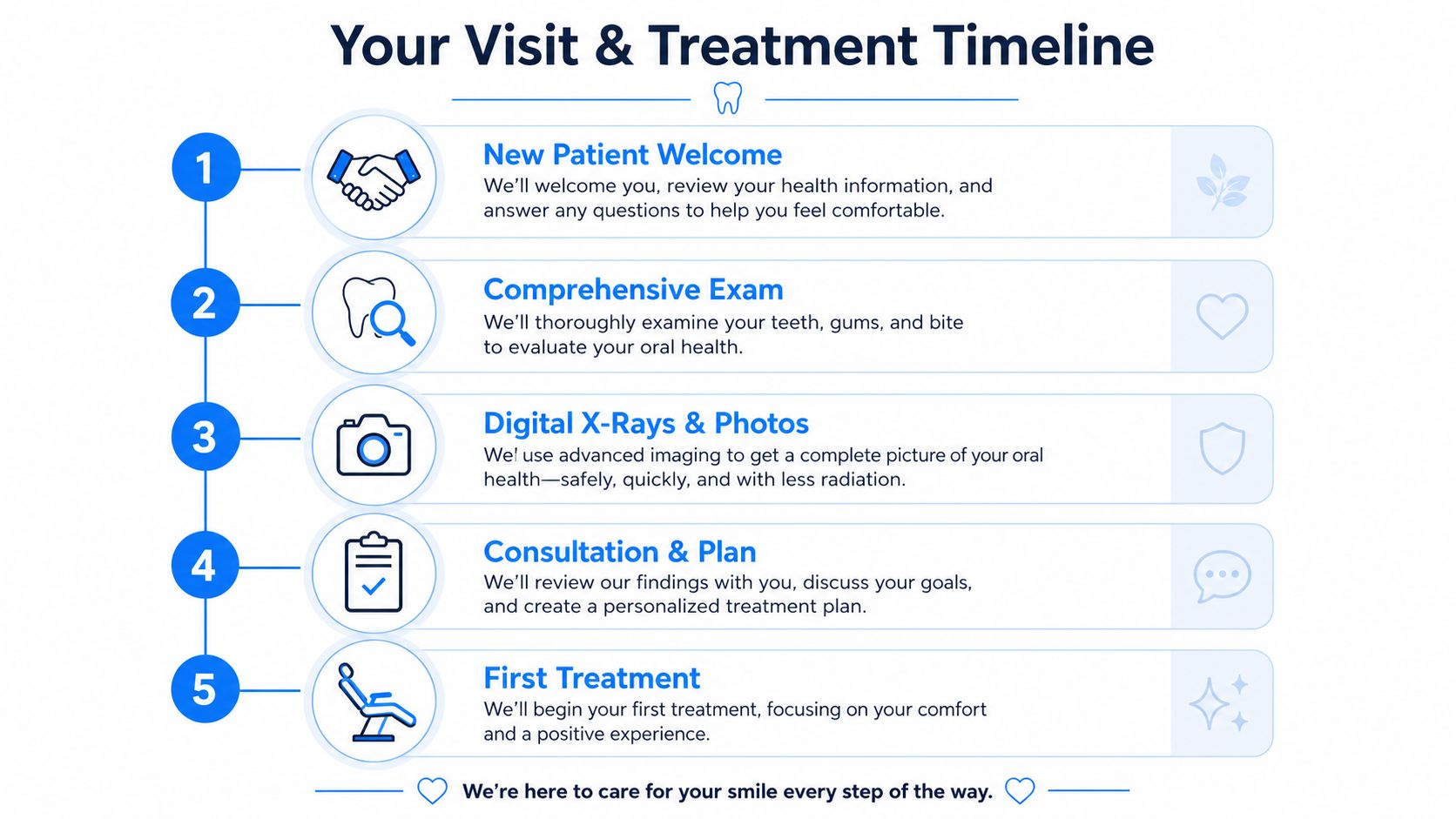
A new patient visit at Eric Wiitala DDS in Scottsdale usually starts with paperwork, help with insurance and billing questions, and a full exam. The team also takes x-rays so the dentist can see what's happening between teeth and under older restorations. From there, the conversation shifts to goals, pain points, and which teeth need attention first.
The office is at 9755 North 90th Street, Suite B250, Scottsdale, AZ 85258. The practice keeps consistent hours Monday through Thursday, with Friday by appointment, and patients can call (480) 657-6981 to get started.
How treatment is usually paced
A small filling may be finished in a single visit, often in under an hour depending on the tooth. A crown usually takes two visits, one for preparation and one for placement. Implants take longer because healing is part of the process, and full-arch work like All-on-Four is typically phased so each step has time to settle properly.
The office visit itself is usually calmer than patients expect. Local anesthesia keeps the area numb during most procedures, and the dentist explains what sensations are normal after the appointment. Mild soreness or sensitivity can happen after restorative work, but it's usually temporary and manageable with routine aftercare.
Before larger treatment starts, many patients also need a broader plan. That's where a more extensive approach, such as a full-mouth reconstruction, may come into the conversation when several teeth, the bite, and the supporting structures all need coordinated care.
The process becomes easier to trust once the steps are visible. Patients know where they're going, who they're seeing, and what the likely sequence looks like.
Here is a quick visual timeline for a typical restorative-dentistry visit.
Results, Lifespan, and Maintenance of Restorative Work
Restorative treatment works best when patients think of it as long-term care, not a one-time fix. The restoration itself matters, but the surrounding gum and bone matter too. If those supporting tissues stay healthy, the work has a much better chance of holding up over time.
What affects longevity
A bonded filling can last for years, but it still needs regular checks for wear, edge breakdown, or staining. Crowns and bridges often last a long time with good home care and routine exams. Dental implants can last decades when the surrounding tissues remain stable and the bite is managed well.
The biggest threats are usually predictable. Grinding puts stress on restorations. Gum inflammation can weaken the foundation around them. New clenching habits, missed cleanings, or a crown that no longer fits properly can all shorten the life of the work.
That's why maintenance at the Scottsdale office matters as much as the procedure itself. Routine cleanings and exams help the dentist see changes before they turn into failure. Periodontal evaluation also matters, because healthy supporting tissue is part of restoration longevity, not an optional extra.
Warning signs that need attention
Some problems deserve a call sooner rather than later:
- Loose or shifting restoration: A crown, bridge, or denture that no longer feels stable can be a fit issue or a sign of underlying wear.
- New sensitivity: A restored tooth that suddenly reacts to heat, cold, or biting may need an exam.
- Clicking or movement: A bridge or denture that clicks during chewing usually needs adjustment.
- Gum changes around a restored tooth: Bleeding, swelling, or tenderness can point to inflammation that should be checked.
Good restorations are maintained, not forgotten. A quick visit can catch small changes before they become larger repairs.
Patients who wear a night guard for grinding and keep up with daily brushing and flossing usually give their restorations a better chance of lasting. That habit is simple, but it makes a real difference.
Costs, Insurance, Financing, and When to Call the Office
Cost questions are common in restorative dentistry because treatment can range from a single filling visit to a multi-phase implant plan. Patients often want to know where the line falls between preserving a tooth, repairing it, or replacing it, and a clear estimate helps them make that choice with less pressure.
How the office handles the practical side
Treatment costs vary by procedure, because a filling, a crown, an implant, and a full-arch restoration each involve different materials and steps. The practice helps patients review insurance benefits, billing details, and financing options before treatment starts, so the financial side is part of the plan rather than a last-minute issue.
That same approach helps with timing. If the problem is pain, a loose crown, or swelling, waiting only gives the tooth more time to worsen. If the concern is slower to show up, such as chewing discomfort or a denture that no longer stays put, it still deserves an exam before the problem becomes harder to treat.

When to pick up the phone
A person in Scottsdale should call the office sooner if any of these show up:
- Pain when biting: That can point to a crack, a failing filling, or pressure in the tooth.
- A loose crown or bridge: Movement usually means the restoration needs attention.
- Sudden swelling: Swelling should be checked quickly, especially if it comes with pain or a bad taste.
- A denture that no longer fits: Fit changes can make eating and speaking harder, and the solution is often simpler when addressed early.
- Bleeding gums around a restored tooth: That can signal irritation or gum inflammation near the restoration.
As noted above, Eric Wiitala DDS is located at 9755 North 90th Street, Suite B250, Scottsdale, AZ 85258. If you are comparing options for implants, cosmetic enhancements, extractions, or urgent care, a consultation gives a clear picture of what can be preserved, repaired, or replaced.
For Scottsdale-area patients who are ready to stop guessing about a cracked tooth, a missing tooth, or a restoration that no longer feels right, schedule a visit with Eric Wiitala DDS. A straightforward consultation can clarify the best next step, explain the options in plain language, and get treatment moving with less stress.